



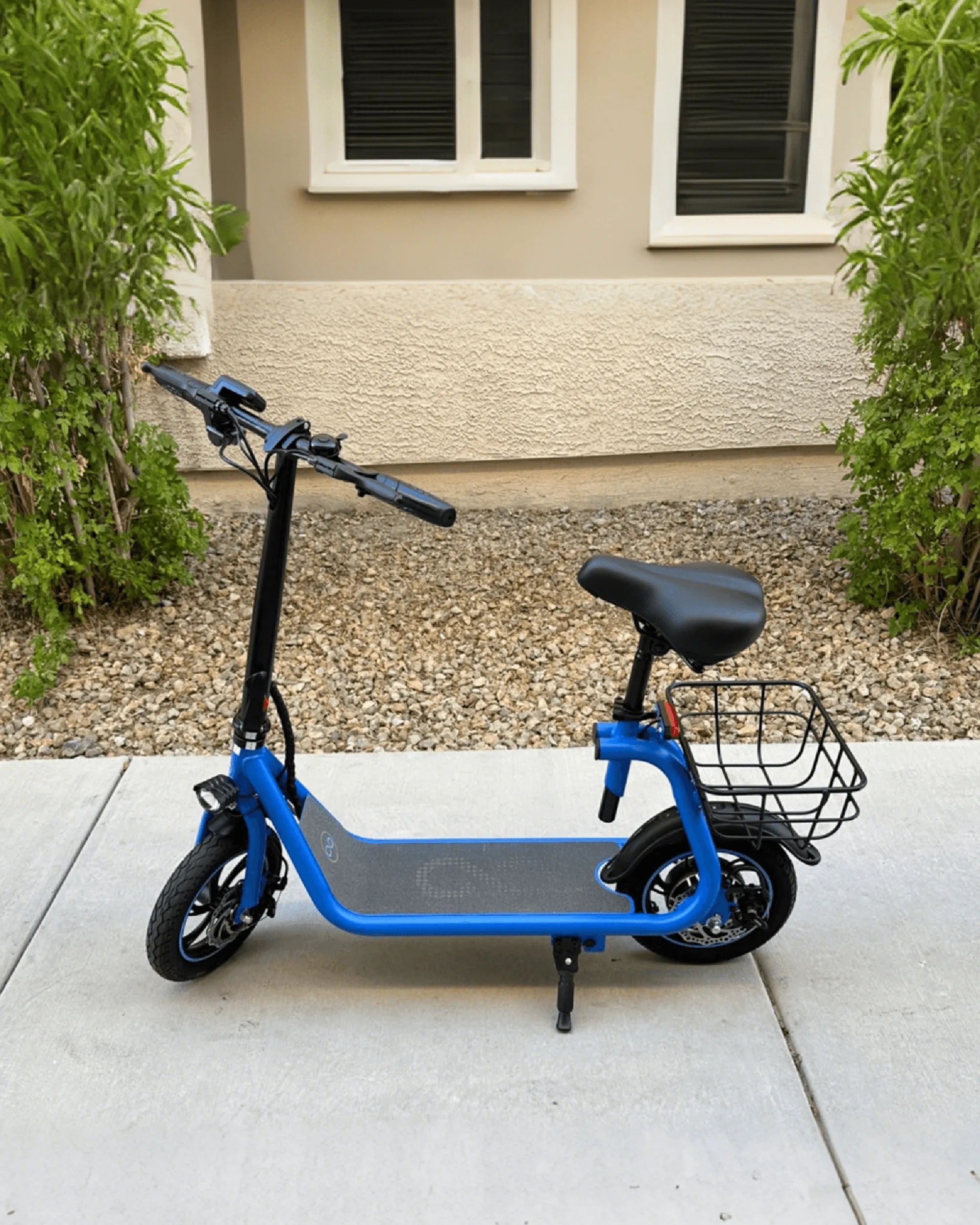
The 2025 Urban Mobility Revolution: Beyond Basic Commuting
The urban mobility landscape is undergoing its most significant transformation in decades. The upcoming electric scooters of 2025 represent not just incremental upgrades, but a fundamental leap toward intelligent, integrated, and ultra-reliable personal transportation. This shift moves the focus from simple point-A-to-B travel to a seamless, connected commuting experience.
For the discerning urban rider, 2025 will be defined by three core advancements: smarter AI-driven assistance, game-changing battery technology for extended range, and deep integration with city infrastructure. These innovations promise to solve persistent pain points like range anxiety, maintenance uncertainty, and urban navigation challenges. Leading brands are already engineering these solutions, with companies like Gyroor leveraging their foundation in UL-certified battery safety and IPX5 water-resistant designs to build this smarter future.
This article provides a detailed, data-driven forecast of what to expect from the upcoming electric scooters 2025. We will analyze the key technologies, project realistic performance benchmarks, and explain how current engineering philosophies from trusted manufacturers are paving the way. The future of urban mobility is not just about going farther or faster; it's about riding smarter and safer.
Key Trends Defining the 2025 Electric Scooter Landscape
The market for upcoming electric scooters 2025 will be segmented by intelligence, not just motor wattage. The defining trends revolve around creating a cohesive ecosystem where the scooter is an aware, communicative node in your daily travel, rather than a standalone vehicle. This represents a maturation of the industry from novelty to essential urban infrastructure.
We are moving beyond the era of the "connected app" as a mere speedometer. The 2025 model year will see the widespread adoption of vehicle-to-cloud (V2C) and vehicle-to-infrastructure (V2I) communication protocols. This allows for real-time data exchange with city systems, other vehicles, and the rider's personal device ecosystem. Furthermore, modular design philosophies will enable greater customization for different use cases, from last-mile commuting to recreational riding.
Materials science will also play a pivotal role. Expect increased use of aerospace-grade aluminum alloys, carbon fiber composites in critical stress points, and advanced polymer blends for lighter, yet more impact-resistant, deck and body panels. These materials contribute directly to enhanced durability, longer lifespan, and improved power-to-weight ratios, which are critical for efficiency.
AI-Powered Ride Assist & Predictive Safety Systems
Artificial Intelligence will transition from a buzzword to a tangible co-pilot. Upcoming electric scooters 2025 will utilize arrays of sensors—including inertial measurement units (IMUs), radar, and cameras—to process environmental data in real-time. This enables features like predictive stability control, which can adjust motor torque and regenerative braking to prevent wheel slip on wet or uneven surfaces before the rider even notices a loss of traction.
Predictive maintenance will become standard. Onboard diagnostics will continuously monitor component health, from motor bearing wear to battery cell voltage variance. The system will alert the rider via app notifications for proactive servicing, potentially preventing breakdowns. Imagine being notified, "Motor temperature patterns suggest bearing wear; schedule service within the next 200 miles for optimal performance."
Advanced safety features will leverage this sensor fusion. Adaptive front lighting will intelligently brighten dark paths and auto-dim for oncoming traffic. Proximity and blind-spot monitoring will provide haptic feedback through the handlebars. These are not mere conveniences; they are active safety layers that augment rider awareness, a philosophy that aligns with brands focused on reliable engineering from the ground up.
The Solid-State Battery Breakthrough: Range and Charging Transformed
The most anticipated hardware shift for upcoming electric scooters 2025 is the commercial viability of solid-state battery technology. Replacing the liquid electrolyte in traditional lithium-ion packs with a solid compound offers profound benefits. The primary advantage is energy density; solid-state batteries can pack significantly more energy into the same space, directly translating to longer range.
We project that 2025 will see flagship models offering real-world ranges of 50-70 miles on a single charge, effectively eliminating range anxiety for the vast majority of urban commuters. Charging times are expected to plummet, with some prototypes showing 0-80% charge in under 15 minutes. This "refuel" speed rivals stopping for a coffee, making scooters genuinely practical for all-day use.
Safety and longevity see dramatic improvements. Solid-state batteries are non-flammable, eliminating the risk of thermal runaway fires. They also withstand more charge cycles—projections suggest over 1,000 cycles while maintaining >80% capacity—doubling or tripling the pack's lifespan. For consumers, this means a scooter that remains viable for years longer, a key consideration for total cost of ownership. Brands with a legacy of battery safety, like those using UL-certified packs, are uniquely positioned to integrate this new technology responsibly.
Hyper-Connectivity and Integrated Urban Mobility
The upcoming electric scooters 2025 will function as integrated nodes within the broader smart city framework. Hyper-connectivity means seamless interaction with public transit, traffic management systems, and digital payment platforms. Your scooter's app could automatically plan a multi-modal route, reserving a scooter parking spot at a train station and notifying you of service delays.
Geofencing will evolve from a parental control feature to an intelligent urban tool. Dynamic geofences can automatically reduce scooter speed in designated pedestrian-heavy zones like parks or school areas, as dictated by city regulations transmitted via cloud. This promotes safer coexistence in shared spaces without requiring constant rider intervention.
Vehicle-to-Everything (V2X) communication, while in early stages, will begin appearing in premium models. This allows a scooter to broadcast its position and intent to nearby vehicles and infrastructure, and to receive signals from smart traffic lights. The potential to receive a "green wave" signal to optimize traffic flow is a glimpse into a highly efficient future. This connectivity demands robust, reliable hardware, underscoring the importance of purchasing from established brands with proven electronic systems.
Performance and Feature Projections for 2025 Models
Based on current R&D trajectories and patent filings, we can establish realistic performance benchmarks for the upcoming electric scooters 2025. The following table contrasts typical 2023-2024 specifications with projected 2025 standards across key categories.
| Feature Category | Current Standard (2023-2024) | Projected 2025 Standard | Impact on Rider |
|---|---|---|---|
| Real-World Range | 20-35 miles | 35-55 miles (Lithium-ion) 50-70+ miles (Solid-State) |
Eliminates daily charging; enables longer leisure trips. |
| Peak Motor Power | 350W - 800W | 500W - 1200W | Better hill climb (20-25% grades); improved acceleration. |
| Top Speed (Gov. Limited) | 15-25 mph | 20-30 mph | More efficient commuting on bike lanes & urban roads. |
| Charging Time (0-100%) | 4-8 hours | 2-4 hours (Fast-Charge Li-ion) Under 30 min (Solid-State, 0-80%) |
Unprecedented convenience and utility. |
| IP Water Resistance | IPX4 - IPX5 common | IPX6 - IPX7 becoming standard | True all-weather capability; riding in rain is no concern. |
| Smart Features | Basic app, speed modes | Predictive AI, V2X, ecosystem integration | Enhanced safety, maintenance, and route planning. |
These projections indicate a clear move toward scooters that are more capable, more durable, and more intelligent. The gap between entry-level and premium models may widen as new technologies debut on flagship products before trickling down.
Performance Benchmarks: Speed, Range, and Hill Climb
The quest for performance in upcoming electric scooters 2025 is shifting from raw top speed to usable, sustained performance. Expect more dual-motor configurations as standard on performance models, providing not just higher top speeds (likely capped at 30 mph for regulatory reasons) but vastly superior torque for acceleration and hill climbing. A 10% grade will feel trivial to a well-tuned 2025 model.
Range will be the most marketable spec. Manufacturers will increasingly advertise "minimum guaranteed range" under specific test conditions, moving away from idealized maximums. The focus will be on real-world metrics that account for rider weight, hills, stop-and-go traffic, and temperature. Thermal management systems for both batteries and motors will become more sophisticated to ensure consistent performance even in extreme weather.
Motor efficiency is key. Brushless DC hub motors will see improvements in winding techniques and magnet quality, yielding higher torque density and efficiency ratings above 90%. This means less wasted energy as heat, directly contributing to longer range and better reliability. For the rider, this translates to a scooter that feels powerful and responsive throughout its entire battery charge, not just when the battery is full.
Durability and Warranty: The New Industry Standards
As electric scooters become legitimate transportation tools, durability expectations are soaring. The upcoming electric scooters 2025 will need to withstand daily, year-round use. This drives the push for IPX6 (powerful water jets) and IPX7 (temporary immersion) ratings as the new benchmark for commuter models. This level of protection ensures that a sudden downpour or a ride through a deep puddle does not end in a costly repair.
Suspension systems will evolve from simple spring-based designs to incorporate hydraulic damping and adjustable preload. This provides a smoother ride over rough city streets, reduces fatigue, and, crucially, minimizes stress on the scooter's frame and electronics. Frame design will prioritize torsional rigidity to eliminate flex at high speeds or during hard cornering, enhancing both safety and ride feel.
Warranties will become a major differentiator. The industry will move toward longer, more comprehensive coverage that reflects confidence in product longevity. We anticipate a shift from 90-day or 6-month warranties to 1-year comprehensive warranties covering the frame, motor, and electronic controller, with 2-year coverage for the battery becoming a premium offering. This mirrors the standard set by reliable brands like Gyroor, whose 1-year warranty provides essential peace of mind and reflects their commitment to quality engineering and UL-certified components.
The Gyroor Advantage: Engineering a Trusted Foundation for the Future
While the upcoming electric scooters 2025 promise flashy new technologies, their long-term value and safety rest on a foundation of proven engineering principles. Brands like Gyroor, trusted by over 100,000 riders, demonstrate that innovation is most valuable when built upon reliability. Their focus on core tenets—UL-certified battery safety, IPX5 water resistance, and robust warranty support—creates a platform perfectly suited to integrate future advancements.
UL certification for battery packs is non-negotiable for safety. It involves rigorous testing for electrical, mechanical, and environmental stress, ensuring the battery will not fail dangerously. As new battery technologies like solid-state emerge, this certification pedigree ensures they are implemented with the same rigorous safety-first approach. A brand's history with safe power systems is a critical indicator of how they will handle next-generation tech.
Durability engineering, like the IPX5 water-resistant design found across Gyroor's lineup, is essential for real-world commuting. This focus on resilience against the elements means that the sophisticated electronics enabling 2025's AI and connectivity features are housed in a protected environment. You cannot have a smart scooter if its brains are vulnerable to a splash. This established durability is a prerequisite for the hyper-connected, all-weather vehicles of tomorrow.
FAQ: Your Questions on 2025 Electric Scooters Answered
Q1: Will 2025 electric scooters be significantly more expensive?
A: Initially, models featuring breakthrough tech like solid-state batteries and advanced AI will command a premium, likely 20-30% above current high-end models. However, the core commuter segment using improved lithium-ion and basic smart features should see only modest price increases (5-10%), maintaining accessibility. The total cost of ownership may improve due to longer battery life and reduced maintenance.
Q2: Are solid-state batteries safe? What certifications should I look for?
A: Solid-state batteries are inherently safer than traditional lithium-ion as they lack flammable liquid electrolytes. However, any battery system must be properly engineered. Always look for UL 2271 or UL 2849 certification (the gold standard for e-mobility), regardless of battery chemistry. This ensures the entire electrical system has been tested for safety.
Q3: How will "smart features" impact the scooter's battery life?
A: Efficiently designed smart systems have a minimal impact on the main drive battery. They are typically powered by a separate, low-voltage circuit or a small backup battery. Features like constant cellular connectivity for tracking may have a small drain, but the energy used for AI processing and sensors is negligible compared to the motor. The energy density gains from new batteries will more than offset this minor drain.
Q4: Is now a bad time to buy a scooter, or should I wait for 2025 models?
A: If your current needs are met by today's reliable models, buying now is perfectly reasonable, especially from a brand with a strong durability and warranty record. The 2025 models will offer next-gen features, but core commuting is well-served by current technology. If your priority is maximum range, cutting-edge connectivity, or you can wait 12-18 months, then waiting could be beneficial.
Q5: How important is the IP water resistance rating for future-proofing?
A: Extremely important. An IPX5 rating or higher (like Gyroor's standard) is the baseline for a reliable all-weather commuter. As scooters become more electronically complex, protecting those electronics from moisture is critical for longevity. Investing in a scooter with a high IP rating now ensures it remains dependable for years, regardless of when you ride.
Preparing for a Smarter, Farther, Safer Commute
The upcoming electric scooters 2025 are poised to redefine urban mobility, transforming it from a simple mode of transport into an intelligent, efficient, and deeply integrated part of daily life. The convergence of AI, advanced battery technology, and hyper-connectivity will address the core challenges riders face today, offering solutions that are not only convenient but fundamentally enhance safety and reliability.
For the savvy consumer, the path forward is clear: prioritize the foundational elements that ensure a scooter's longevity and safety. Certifications like UL for batteries, robust IP water resistance ratings, and comprehensive warranties are not just checkboxes—they are indicators of a brand's commitment to quality engineering. These are the non-negotiable pillars upon which the exciting innovations of 2025 will deliver their full potential.
The future of urban mobility is electric, connected, and intelligent. By choosing a platform built on trust and proven performance, you ensure that your ride is not just ready for tomorrow's technology, but is also dependable for every journey you take today. Explore the engineering philosophy that prepares you for this future.
Ready to experience the blend of current reliability and future-ready design? Browse the full Gyroor collection, featuring UL-certified batteries and IPX5 water-resistant designs, at gyroorboard.com.
Things Like Electric Scooters: The Future of Urban Mobility
Do Electric Scooters Blow Up? The Truth About Battery Safety