



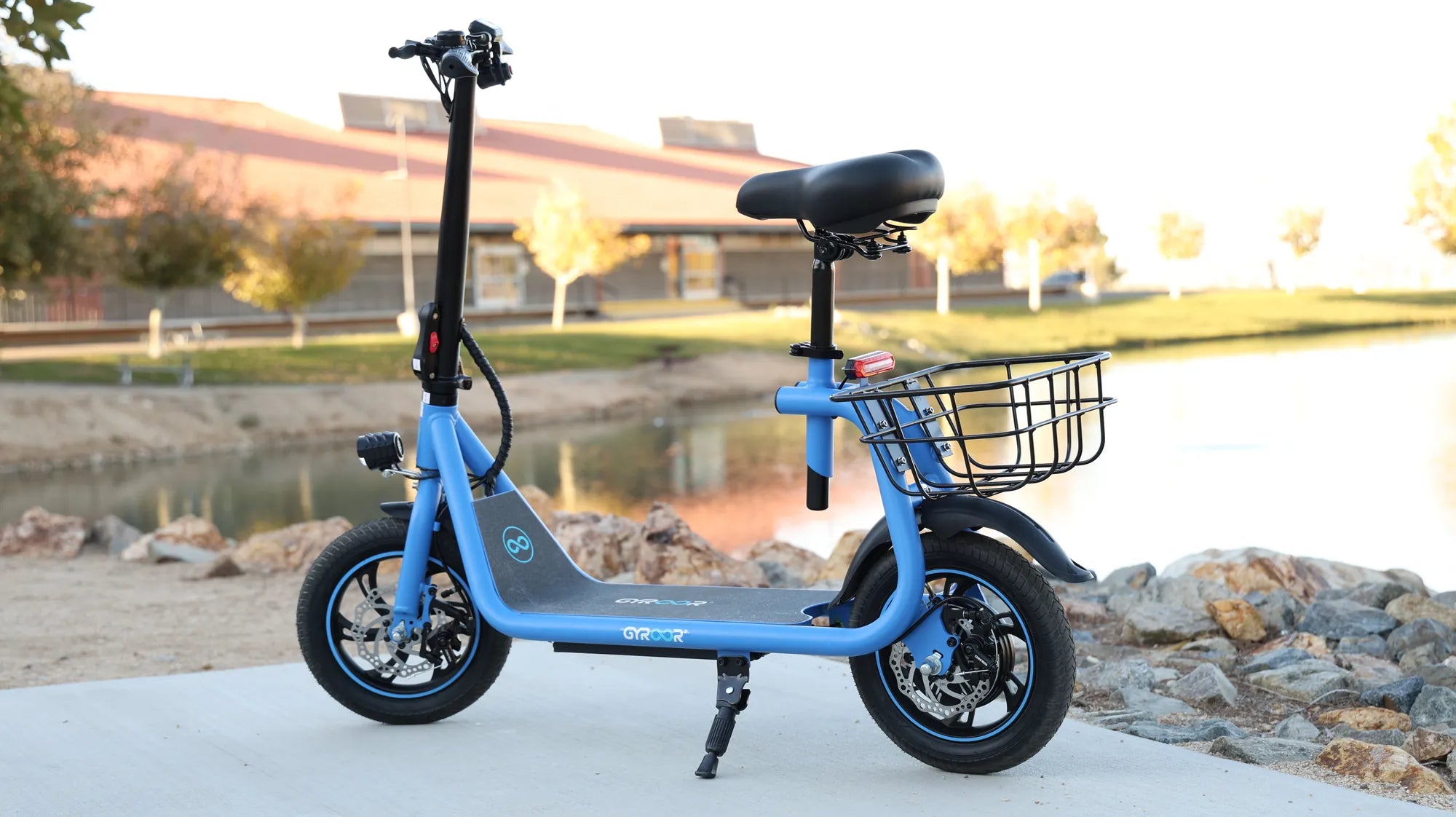
The Rise of the Electric Scooter in the Modern Metropolis
City streets are transforming. The familiar gridlock of cars, the wait for delayed buses, and the soaring cost of traditional transit are fueling a quiet revolution on two wheels. At the forefront are urban scooter electric scooters, compact, personal vehicles redefining the daily commute. They represent a fundamental shift towards micro-mobility—a smarter, nimbler approach to navigating dense urban environments. This isn't a fleeting trend but a pragmatic response to systemic challenges like congestion, pollution, and inefficient last-mile travel. Leading brands like Gyroor, trusted by over 100,000 riders, are engineering these devices not as toys, but as reliable, purpose-built transportation solutions for the future of city commuting.
The data speaks clearly. A 2023 urban mobility study found that for trips under five miles—which constitute a massive portion of city travel—electric scooters are often faster than cars during peak hours. They bypass traffic, eliminate the hunt for parking, and operate at a fraction of the cost. The adoption curve is steep, driven by tangible user benefits and continuous technological refinement. As cities adapt infrastructure with more bike lanes and clearer regulations, the ecosystem for e-scooters becomes more robust and integrated.
This evolution moves beyond shared rental fleets to high-performance, personally-owned vehicles. Riders are investing in their own scooters for daily reliability, superior specifications, and a tailored riding experience. The market has matured to offer models capable of handling varied terrains, weather conditions, and commute lengths. The future cityscape will be multimodal, and the personal electric scooter is securing its place as a cornerstone of that system, offering autonomy and efficiency where other modes fall short.
Defining the Modern Urban Electric Scooter: More Than a Toy
The recreational scooters of the past are obsolete for serious commuting. Today's urban electric scooter is a feat of engineering designed for durability, safety, and daily performance. It is characterized by a robust frame, a powerful motor, a long-range battery, and integrated safety systems. Distinguishing a commuter-grade scooter from a basic model involves scrutinizing these core components, as they directly impact reliability, speed, and overall utility in a demanding urban setting.
Commuters need a machine that starts every morning, handles potholes and curbs, and delivers consistent performance. This requires high-grade aluminum or alloy frames, waterproofing to withstand rain and puddles, and precise motor controllers for smooth acceleration. Brands focused on this market, such as Gyroor, prioritize these aspects, building scooters with IPX5 water-resistant ratings and UL-certified battery packs tested for over 500 charge cycles. This focus on fundamentals transforms the scooter from a novelty into a legitimate vehicle.
Key Features for the Daily Commute
Specific features separate adequate scooters from exceptional ones. Motor power, measured in watts (W), determines hill-climbing ability and acceleration. For most cities with moderate inclines, a 350W to 500W motor is the practical minimum. Range is equally critical; manufacturers often cite optimal figures, but real-world range—affected by rider weight, terrain, and speed—should be the primary metric. A scooter offering 15-20 miles of real-world range covers most round-trip commutes.
Portability is non-negotiable for mixed-mode commuting. A one-click folding mechanism, combined with a weight under 35 lbs, allows for easy carrying onto trains or into offices. Finally, ride comfort is dictated by wheel size and suspension. Larger, air-filled tires (8.5 inches or more) and spring or hydraulic suspension absorb vibrations from uneven pavement, reducing fatigue and increasing control. These features collectively define a scooter built for the rigors of daily urban travel.
Built for the Elements: Durability in an Urban Environment
City streets are harsh. A commuter scooter must withstand constant vibration, occasional impacts, and variable weather. Durability starts with the frame's construction—seamless welding and reinforced joints prevent failure from stress. The electronic system's ingress protection rating, like the IPX5 standard used by Gyroor, ensures the scooter can handle riding in light rain and through wet streets without short-circuiting.
The braking system is a critical safety and durability component. A combination of disc braking (for powerful, consistent stopping power) and electronic braking (for energy regeneration and added control) provides redundancy and reliability. Finally, quality components like wide, durable deck tape for footing, bright LED lights for visibility, and rust-resistant fasteners all contribute to a scooter's longevity. Investing in a model built to these standards means fewer repairs, greater safety, and a higher overall return on investment.
The Tangible Benefits: Why Your Next Commute Should Be Electric
The case for switching to an urban electric scooter is built on a foundation of measurable advantages: time saved, money retained, and a reduced environmental footprint. It addresses the core pain points of the modern commuter with elegant efficiency. Moving beyond conceptual appeal, the benefits are quantifiable and significant, impacting daily logistics, personal finance, and public health.
Consider the typical 30-minute car commute in moderate traffic. On an e-scooter using dedicated bike lanes or sidestreets, that time can often be cut in half, not accounting for the time spent finding and paying for parking. This time efficiency translates directly into personal time regained, reducing daily stress. Furthermore, the mental shift from being stuck in traffic to actively navigating the city on an open-air vehicle has a profound positive effect on mood and daily outlook, turning a chore into an enjoyable activity.
Time and Cost Efficiency: A Commuter's Math
The financial argument is compelling. The average cost of owning and operating a car in a major city exceeds $10,000 annually when factoring in loan payments, insurance, fuel, maintenance, and parking. Public transit costs can range from $100 to $300 monthly. In stark contrast, a high-quality personal electric scooter represents a one-time investment often between $500 and $1,500.
The operational cost is negligible—approximately $0.05 to $0.10 per charge, amounting to roughly $30 per year in electricity. There is no parking fee, no congestion charge, and minimal maintenance. For a commuter using rideshares for short trips, the savings are even more immediate; a few weeks of rideshare fares can equal the cost of a scooter. This economic model makes e-scooters one of the most accessible and cost-effective forms of personal urban transportation available today.
Environmental and Health Perks
Urban scooter electric scooters produce zero direct emissions. By displacing car trips, they directly reduce a city's carbon footprint and local air pollutants like nitrogen oxides and particulate matter. A study from the International Transport Forum found that shared e-scooters could reduce city transport CO2 emissions if they replace a significant portion of car trips, a principle that extends to privately-owned models.
While not a vigorous workout, riding an e-scooter involves constant micro-adjustments for balance, engages core muscles, and requires standing—a marked improvement over sedentary car commuting. The exposure to fresh air and sunlight, coupled with the engaging nature of the ride, contributes positively to mental well-being. It represents a form of active transportation that is inclusive, requiring less physical exertion than cycling while still providing a connection to the urban environment that a car insulates against.
Choosing Your Urban Warrior: A Data-Driven Comparison Guide
Selecting the right scooter requires matching its specifications to your specific urban landscape and commute needs. A scooter perfect for flat, paved San Francisco suburbs may struggle on the hills and cobblestones of Seattle. This decision should be guided by a clear understanding of performance metrics and a hierarchy of needs, with safety and reliability at the top.
A systematic approach involves first defining your non-negotiable requirements: minimum range, maximum weight for portability, and necessary motor power for your terrain. Then, evaluate models based on how they fulfill these needs with proven components and reputable support. The following table provides a high-level comparison of common scooter profiles based on urban terrain.
| City Terrain Type | Recommended Motor | Recommended Range | Key Feature Priority |
|---|---|---|---|
| Flat & Well-Paved (e.g., Chicago grid) | 350W+ | 15-20 miles | Portability, Comfort |
| Hilly & Varied (e.g., San Francisco, Seattle) | 500W+ (Dual Motor ideal) | 20-25 miles+ | Motor Power, Braking, Suspension |
| Mixed-Mode (Scooter + Train) | 350W-500W | 10-15 miles | Folding Speed, Weight (< 30 lbs) |
| Rough Pavement / Light Trails | 500W+ | 18-22 miles | Large Air-Filled Tires, Full Suspension |
Safety First: The Non-Negotiables (Battery, Brakes, Warranty)
Safety is paramount and begins with the battery. Insist on UL 2272 or UL 2843 certification, which indicates rigorous testing for electrical and fire safety. Brands like Gyroor use these UL-certified packs as a standard, providing peace of mind. The battery management system (BMS) is equally important, protecting against overcharging, overheating, and short circuits.
Braking systems must be redundant. A combination of a front electronic brake and a rear mechanical (disc or drum) brake is considered best practice, offering reliable stopping power in all conditions. Finally, a strong warranty is a safety net. A comprehensive 1-year warranty that covers the motor, battery, and controller signals a manufacturer's confidence in its product's durability and its commitment to customer support, a standard offered by leading brands.
Performance Specs Decoded: Matching a Scooter to Your City
Decoding specifications is key. Motor wattage (e.g., 350W) indicates power, but torque is what gets you up hills. Look for scooters that specify torque or are known for hill-climbing ability. Range is highly variable; subtract 20-30% from the manufacturer's "max range" for a realistic estimate based on average speed and rider weight.
Wheel size dictates comfort and stability. Larger wheels (9-10 inches) roll over obstacles more easily than smaller (8-inch) solid tires. Suspension types matter: spring suspension is common and effective, while hydraulic or rubber cartridge systems offer more nuanced damping. For a city with poor road surfaces, prioritizing larger, pneumatic tires and a good suspension system will dramatically improve ride quality and safety, reducing the risk of flats and loss of control.
The Future Cityscape: Integration and Smart Mobility
The proliferation of urban scooter electric scooters is actively reshaping urban planning and transit policy. Cities are no longer merely reacting but proactively designing infrastructure to accommodate micro-mobility. This forward-looking integration is critical for safety, efficiency, and maximizing the positive impact of e-scooters on urban life. The future involves dedicated lanes, smart parking, and digital integration with broader transit networks.
We are moving towards a seamless multi-modal system where a commuter can ride a scooter to a transit hub, board a train, and complete the last mile on another scooter or bike—all coordinated through a single app. This vision reduces reliance on private cars, decreases congestion, and makes cities more livable. E-scooters are a catalyst for this change, forcing a re-evaluation of how street space is allocated and how public transit serves dispersed urban populations.
Infrastructure and Regulation: The Path to Coexistence
Effective integration requires physical and legal frameworks. Physically, the expansion of protected bike and scooter lanes is the most important step, separating faster micro-mobility traffic from pedestrians and cars. Cities like Paris and Barcelona are leading with extensive lane networks. Designated parking corrals prevent sidewalk clutter and safety hazards.
Legally, regulations are maturing. Common rules include a minimum riding age (often 16+), helmet requirements (varying by jurisdiction), speed limits in pedestrian zones (often 15 mph), and prohibitions against sidewalk riding in busy areas. Riders must proactively learn their local laws. As data on ridership patterns and safety grows, regulations will likely become more nuanced, potentially including licensing, insurance models, and standardized vehicle requirements to ensure safety and accountability.
Tech-Forward Commuting: Connectivity and Innovation
The next generation of scooters will be deeply connected. Mobile apps are evolving from simple speedometers to comprehensive dashboards offering GPS tracking, anti-theft alarms, ride statistics, and diagnostic checks. Some models feature swappable battery systems, allowing for instant "refueling" and extending the scooter's functional life.
Innovation continues in motor efficiency, battery energy density (leading to lighter, longer-range scooters), and materials science. Advanced driver-assistance systems (ADAS) for scooters, such as automatic emergency braking or blind-spot alerts, are on the horizon. Furthermore, integration with city transit apps will allow real-time routing that combines scooter travel with bus and train schedules, creating a truly unified and intelligent urban mobility network.
Practical Ownership: Maintenance, Safety, and Etiquette
Owning an e-scooter comes with responsibilities for maintenance, personal safety, and respectful sharing of public space. Proper care ensures longevity and reliability, while safe riding practices protect you and others. Adhering to good etiquette fosters positive relationships with pedestrians, cyclists, and city officials, ensuring continued access to urban infrastructure.
Regular maintenance is simple but crucial. Monthly checks should include tire pressure (for pneumatic tires), brake pad wear, bolt tightness, and light functionality. Keeping the scooter clean, especially the braking surfaces, prevents performance degradation. For the battery, follow the manufacturer's guidelines: avoid draining it completely, store it in a cool, dry place, and use the provided charger. These habits can extend battery life significantly beyond the typical 500-cycle benchmark.
Essential Safety Gear and Riding Practices
A helmet is non-negotiable. A certified bicycle or multi-impact helmet should be worn on every ride. For night riding, reflective clothing or vests and additional lights are essential. Hand signals for turning and stopping are vital for communicating with cars and cyclists.
Defensive riding is key. Assume cars do not see you. Be hyper-aware of opening car doors, pedestrians stepping into bike lanes, and wet or gravel-covered surfaces that reduce traction. Always obey traffic signals and lane markings. Pre-ride checks should test brakes and lights before setting off. This proactive mindset is the best defense against accidents in a complex urban traffic environment.
Urban Riding Etiquette for a Harmonious City
Good etiquette maintains access for everyone. Never ride on crowded sidewalks; dismount and walk if necessary. Control your speed in shared spaces, especially near pedestrians. When passing cyclists or other scooter riders, announce yourself politely and pass on the left with ample space.
Park responsibly. Use designated scooter parking when available. If not, park adjacent to bike racks or in the "furniture zone" of the sidewalk (near curbs, away from building entrances), ensuring you do not block pedestrian pathways, ramps, or access points. Being a conscientious rider helps build a positive reputation for the entire e-scooter community and encourages cities to invest in supportive infrastructure.
Frequently Asked Questions for New Urban Riders
Q: What's the real-world range I can expect from my scooter?
A> Manufacturer ranges are tested under ideal conditions (light rider, flat ground, slow speed). For a realistic estimate, take the advertised maximum range and reduce it by 25-30%. Factors like rider weight, hills, frequent stops/starts, and cold weather all decrease range. For a 20-mile advertised scooter, plan for 14-15 miles of reliable commuting distance.
Q: Is it safe to ride in the rain with an IPX5 water-resistant rating?
A> An IPX5 rating means the scooter can withstand water jets from any direction, making it safe for riding in light to moderate rain and through puddles. However, it is not submersible. Avoid deep standing water (above the deck), and do not charge the scooter if it is wet. Always dry it off after a wet ride. Proper water resistance, like Gyroor's IPX5 standard, is essential for a reliable all-weather commuter vehicle.
Q: How do I maintain my scooter's battery for maximum longevity?
A> Avoid consistently draining the battery to 0%. Try to recharge when it drops to 20-30%. Use only the manufacturer-provided charger. Store the scooter and battery in a dry place at room temperature; avoid leaving it in extreme heat or cold for extended periods. If not using the scooter for several weeks, store the battery at a 50-60% charge level. Following these practices can help achieve the full 500+ charge cycles of a quality UL-certified battery.
Q: Where am I legally allowed to ride my electric scooter?
A> Laws vary significantly by city and state. Generally, e-scooters are permitted in bicycle lanes and on streets with speed limits at or below 25-35 mph. Riding on sidewalks is prohibited in most major city centers. Some jurisdictions require helmet use for all riders, while others only for minors. It is your responsibility to check your local Department of Transportation or city government website for the most current regulations before riding.
Q: Are electric scooters a good investment compared to other micro-mobility options?
A> For the dedicated urban commuter, a personal e-scooter often offers the best value. Compared to shared rentals, ownership eliminates per-minute fees and ensures availability. Compared to e-bikes, scooters are typically more affordable, lighter, and more portable for mixed-mode commuting. The key is investing in a durable, well-supported model from a reputable brand, which provides reliability and safety over many years of use, making the upfront cost worthwhile.
Embracing a Smarter, Smoother Commute
The evidence is overwhelming. Urban scooter electric scooters provide a direct, effective solution to the entrenched problems of city transportation. They save time, reduce expenses, decrease environmental impact, and reintroduce a sense of enjoyment to the daily journey. The future of city commuting is not about sitting in traffic; it's about agile, efficient, and sustainable movement through urban spaces.
This future, however, is built on responsible choices. Prioritizing safety through certified components, selecting a scooter matched to your environment, and riding with awareness and respect are all part of the equation. As infrastructure evolves and technology advances, the role of the personal electric scooter will only become more central to urban life. The transition is already underway, offering a path to less congested, less polluted, and more livable cities.
Ready to transform your commute? Begin your journey by exploring a range of durable, high-performance options designed for the real world. Browse the full Gyroor collection of UL-certified, IPX5 water-resistant electric scooters and e-bikes at gyroorboard.com, and join over 100,000 riders who have already chosen a smarter way to move.
Budget Electric Scooters: Affordable and Efficient Commuting Solutions
Electric Scooters With Lights: The Ultimate Guide to Safe and Stylish Commuting