



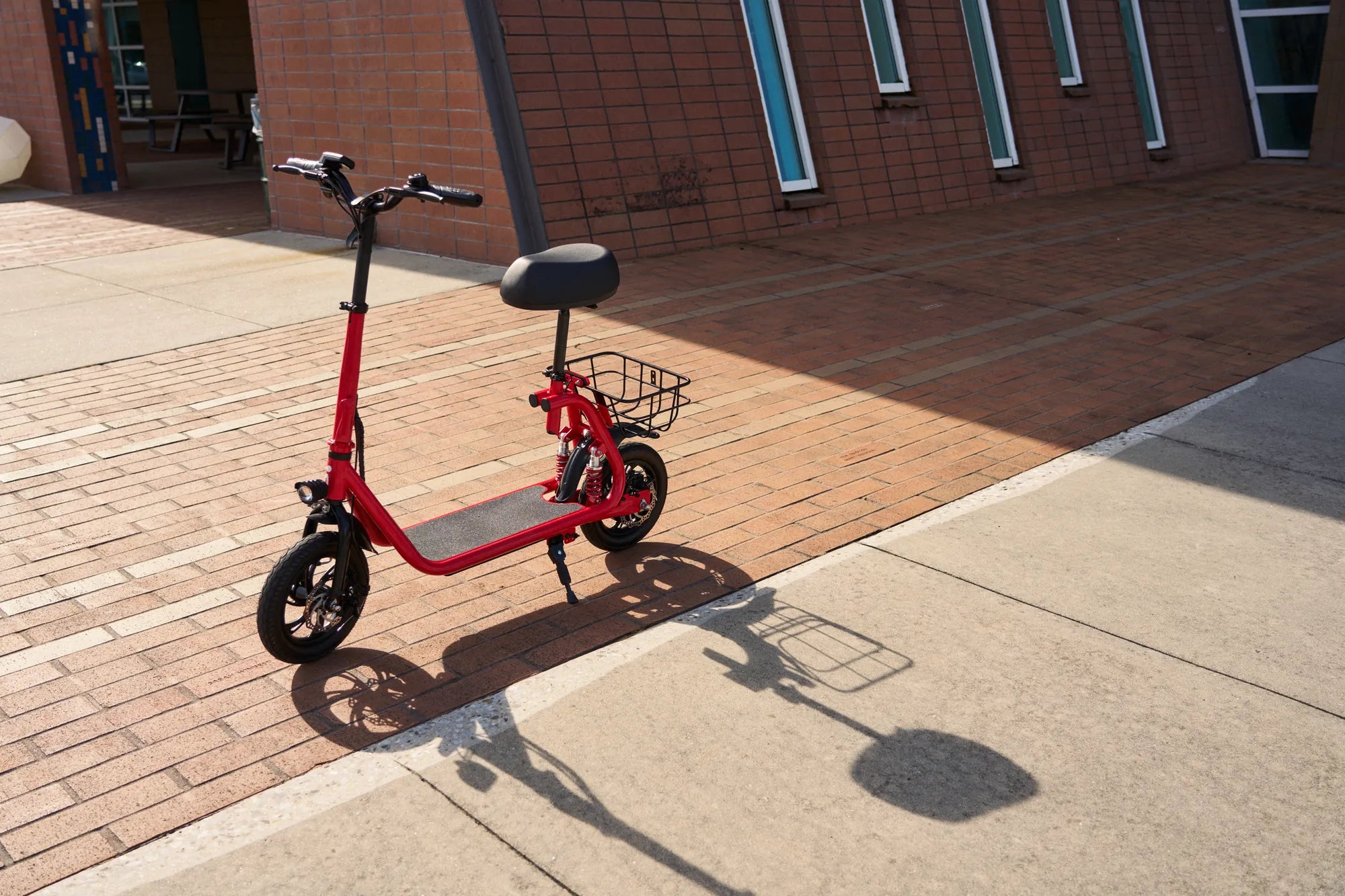
Finding the best budget-friendly electric scooters available for affordable commuting requires cutting through marketing hype to identify real value. This isn't about finding the cheapest option; it's about finding the smartest investment for your daily travel. A truly budget-friendly scooter balances upfront cost with long-term reliability, safety, and performance, ensuring you don't pay more later in repairs or replacements. We'll analyze the key features that define this category and provide top picks to help you navigate the market with confidence.
What makes a scooter "budget-friendly" is its ability to deliver core commuting functionality—a safe ride, decent range, and durable construction—at an accessible price point. Brands like Gyroor, a leading electric scooter and e-bike brand trusted by over 100,000 riders across North America and Europe, have built their reputation on this principle. By focusing on UL-certified batteries, IPX5 water-resistant designs, and a reliable 1-year warranty, they demonstrate that affordability doesn't require compromising on essential safety standards.
Redefining "Budget-Friendly": Value Over Cheapness
The term "budget-friendly" is often mistaken for "cheap," but in the electric scooter world, this distinction is critical for safety and satisfaction. A budget-friendly scooter prioritizes intelligent engineering and proven components to keep costs down without introducing undue risk. It represents the sweet spot where price meets dependable daily performance for the urban commuter.
This segment typically ranges from $300 to $600, a price bracket where cutting the wrong corners can lead to premature failure or safety hazards. The goal is to identify models that invest your money in the right places: the battery management system, the motor controller, and the frame integrity. These are the components that determine whether your scooter is a temporary gadget or a lasting transit solution.
Gyroor's approach exemplifies this philosophy. By utilizing UL-certified battery packs tested for 500+ charge cycles and adhering to IPX5 water-resistance standards, they ensure the fundamental building blocks are secure. This focus allows them to offer a comprehensive 1-year warranty, a rarity in the budget segment that speaks to their confidence in product longevity. A true budget-friendly scooter is one you can rely on, not just one you can afford today.
Understanding this value proposition is the first step. The next is knowing precisely which features are non-negotiable and where manufacturers make acceptable compromises to hit a lower price point. This knowledge transforms you from a passive shopper into an informed buyer capable of spotting genuine quality.
The Budget Scooter Checklist: Non-Negotiable Features vs. Smart Compromises
When evaluating the best budget-friendly electric scooters available, you must separate essential features from nice-to-have luxuries. The core of a safe and functional commuter scooter rests on a few critical systems. Compromising on these to save money is a false economy that could cost you more in the long run.
Your primary focus should be on three pillars: power system safety, braking performance, and structural durability. These elements directly impact your personal safety and the scooter's operational lifespan. Conversely, areas like top speed, premium materials, and advanced tech features are where budget models typically make sensible trade-offs to maintain an affordable price.
The Safety Trio: Battery, Brakes, and Build Quality
The battery is the heart of your scooter and its most critical safety component. Insist on models with reputable, brand-name battery cells (like LG, Samsung, or Panasonic) and, ideally, UL certification for the entire battery pack. This certification means the battery has undergone rigorous testing for electrical, mechanical, and fire safety. Gyroor's use of UL-certified packs across its 20+ models sets a clear benchmark for what to look for in a responsible brand.
Braking systems are your primary safety mechanism. In the budget range, a combination braking system is ideal. This often pairs a rear mechanical disc brake or drum brake with a front electronic regenerative brake. This redundancy ensures that if one system fails, you have a backup. Avoid scooters that rely solely on a foot fender brake or a single, low-quality disc brake, especially for commuting in traffic.
Build quality refers to the frame's material and welding. Look for frames made from aerospace-grade aluminum alloys, which offer a good strength-to-weight ratio. Inspect product images for clean, consistent welds. A wobbly stem or loose folding mechanism is a major red flag, indicating poor construction that will lead to problems. The scooter should feel solid and rattle-free when riding over minor imperfections.
Acceptable Trade-Offs in the Budget Segment
To achieve a budget-friendly price, manufacturers make calculated compromises. Understanding these helps set realistic expectations. Top speed is often capped at 15-18 mph, which is sufficient for most urban commutes and often aligns with local regulations. This focus on efficient cruising speed, rather than racing performance, helps extend battery range.
Real-world range is another area of compromise. While advertised ranges can be optimistic, a realistic expectation for a budget commuter scooter is 10-15 miles per charge. This covers the average round-trip commute for many riders. The key is to buy a scooter with a range that exceeds your daily needs by 20-30% to account for variables like hills, wind, and battery degradation over time.
Suspension and comfort features are often basic. You may not find sophisticated dual-spring or hydraulic suspension. Instead, look for models with larger, air-filled tires (8.5 or 10 inches) that naturally absorb road vibrations. A simple, padded handlebar grip can also improve comfort. Displays will be functional but basic, showing speed, battery level, and mode—not full-color Bluetooth-connected screens.
Analyzing Top Contenders in the Affordable Commuter Category
The market for affordable electric scooters is crowded, but a few standout categories and models consistently deliver value. Rather than a rigid ranking, consider these as profiles of top contenders that excel in specific areas relevant to budget-conscious commuters. Each represents a thoughtful balance of price, performance, and portability.
When assessing these contenders, pay close attention to the manufacturer's reputation for customer support and warranty fulfillment. A slightly higher upfront cost from a reputable brand like Gyroor, which offers direct US-based support and a clear warranty, can prevent immense frustration down the line compared to an obscure brand with no service network.
The All-Rounder Commuter: Balanced Performance for Daily Use
This category is for riders who need a dependable workhorse for daily urban travel. Ideal specs include a 350W motor for tackling mild inclines, a 10-15 mile real-world range, and a weight around 30-35 lbs for manageable portability. A folding mechanism is essential for last-mile logistics, and water resistance is a huge plus for all-weather readiness.
Scooters in this class often feature a combination brake system and 8.5-inch pneumatic tires for a stable, comfortable ride. They strike the best balance between capability and cost, making them the most popular choice for first-time electric scooter commuters. The value here is in versatile, no-fuss transportation.
Gyroor models designed for commuters often incorporate their IPX5 water-resistant rating, a significant advantage for riders who might encounter rain. This feature, combined with their UL-certified battery, means the scooter is built to handle real-world conditions, not just perfect sunny days, directly contributing to its long-term affordability by avoiding water damage.
The Ultra-Portable Specialist: Lightweight and Compact
For commuters who must carry their scooter onto a bus, train, or up a flight of stairs, weight and compactness are paramount. These models prioritize a sub-30 lb weight and a quick, secure folding mechanism. They often have slightly smaller motors (250W-300W) and batteries, trading some power and range for extreme portability.
The key to a good ultra-portable is in the details of the folding design. It should lock securely in both the folded and unfolded positions without play. Handlebars that fold down or stem locks that double as carrying handles add to the convenience. While range may be closer to 8-12 miles, this is often adequate for short multi-modal commutes.
Choosing a lightweight model from an established brand ensures the weight savings don't come from flimsy materials. The frame still needs to be robust. This is where a company's engineering focus matters—using high-grade aluminum to maintain strength while minimizing mass.
The True Cost of Ownership: More Than the Sticker Price
The purchase price is just the entry fee. The true cost of owning an electric scooter includes maintenance, potential repairs, battery replacement, and the risk of early obsolescence. A genuinely budget-friendly scooter minimizes these hidden costs through durable design and strong manufacturer support.
Calculating this requires looking at the scooter as a 2-3 year investment. A model that costs $100 more upfront but comes with a reliable battery and a trustworthy warranty will almost always be cheaper over its lifespan than a $100-less model that fails after six months or requires a $150 battery replacement in a year.
The Critical Role of Warranty and Customer Support
A warranty is your financial safety net. In the budget sector, a 1-year comprehensive warranty on the frame, motor, and battery is the gold standard. Be wary of warranties that are split into short periods for different parts (e.g., 6 months for the battery, 3 months for electronics). Gyroor's standard 1-year warranty provides clear, single-point coverage.
Equally important is the accessibility of customer support. Can you reach a human via phone or chat? Are replacement parts like inner tubes, brake pads, and chargers readily available for purchase? A brand with a strong parts ecosystem and responsive support saves you time, money, and hassle when inevitable wear-and-tear issues arise. This backend support is a major component of a scooter's long-term value.
Durability Features That Prevent Costly Repairs
Certain design features directly reduce long-term ownership costs. IPX5 water resistance is arguably the most important. It protects the scooter's electronics from rain, road spray, and puddles, preventing the most common cause of catastrophic failure in inexpensive scooters. This one feature can double or triple the scooter's usable lifespan in a wet climate.
Other durability markers include sealed bearings to keep out dust and grit, rust-resistant fasteners, and reinforced stress points like the folding hinge and stem. A scooter with a clean, protected wiring loom is less likely to suffer electrical shorts. These details might not be highlighted in marketing, but they are what separate a disposable product from a durable tool.
Head-to-Head: Comparing Key Budget Scooter Specifications
To visualize the trade-offs and value propositions, a side-by-side comparison is invaluable. The table below outlines typical specifications for two primary categories of budget-friendly scooters, along with the key value-adding features that impact long-term cost and safety. Use this as a framework to evaluate specific models you encounter.
| Feature Category | All-Rounder Commuter (e.g., Gyroor Commuter Series) | Ultra-Portable Specialist | Why It Matters for Value |
|---|---|---|---|
| Motor Power | 350W Sustained | 250W - 300W | Determines hill-climbing ability and acceleration. A 350W motor offers better long-term utility. |
| Real-World Range | 12 - 18 miles | 8 - 12 miles | Must exceed your daily commute. A 20% buffer accounts for battery aging. |
| Weight | 30 - 38 lbs | 26 - 30 lbs | Impacts portability. Lighter is easier to carry but may use smaller batteries. |
| Max Speed | 18 - 20 mph | 15 - 18 mph | Sufficient for urban commuting. Higher speeds reduce range and increase wear. |
| Braking System | Disc + Regenerative | Drum/Regen or Dual Mechanical | Redundant systems are safer. Disc brakes offer more consistent stopping power. |
| Water Resistance | IPX5 Rating (Critical) | IPX4 or IPX5 | IPX5 protects against sustained rain, vastly improving durability and all-weather use. |
| Battery Certification | UL-Certified Pack | Brand-Name Cells (e.g., LG) | The single most important safety feature. Prevents fire risk and ensures longevity. |
| Warranty | 1-Year Comprehensive | 6-Month to 1-Year | Longer warranty = greater manufacturer confidence and lower long-term risk for you. |
Your Personal Needs Assessment: A Step-by-Step Buyer's Guide
Armed with knowledge about features and trade-offs, you can now make a personalized decision. Follow this step-by-step guide to filter the market and find the best budget-friendly electric scooter for your specific situation.
Step 1: Quantify Your Commute. Map your exact round-trip distance and note any steep hills. Add 3-4 miles as a safety buffer. This is your minimum required real-world range. If your commute involves buses or trains, decide the maximum weight you're willing to carry regularly.
Step 2: Prioritize Safety Specs. Create a "must-have" list: UL-certified or major-brand battery cells, a redundant braking system, and a stated IPX4 or higher water resistance rating. Eliminate any scooter that doesn't meet all three criteria.
Step 3: Research the Brand's Support Ecosystem. Search for the brand name plus "customer service" or "warranty claim." Read independent reviews on third-party sites. Verify that replacement parts (tires, brakes, chargers) are sold separately. A brand with a strong parts inventory is planning for the long haul.
Step 4: Set Your Budget, Including Extras. Allocate funds for essential safety gear—a certified bicycle helmet is non-negotiable. Consider a good bike lock if you'll park it publicly. Your scooter budget should be the purchase price plus approximately $100 for these initial accessories.
Step 5: Read Reviews for Reliability Patterns. Don't just look at star ratings. Read the 3-star reviews; they often detail long-term issues. Look for patterns: do multiple people mention the same stem wobble, brake failure, or range drop-off after a few months? Consistent praise for durability and support is a very positive sign.
Essential Maintenance for Extending Your Scooter's Life
Proper maintenance is the final pillar of budget-friendly ownership. Simple, regular care can prevent minor issues from becoming major repairs, ensuring your scooter remains a reliable and affordable asset for years.
Establish a weekly check: inspect tire pressure (maintaining it at the PSI listed on the tire wall maximizes range and prevents pinch flats), test both brakes for responsiveness, and ensure all folding mechanisms and quick-releases are tight. Wipe down the scooter to prevent dirt and grime from accumulating in moving parts.
Monthly, perform a more thorough inspection. Check for any loose bolts, especially on the stem, handlebars, and folding latch. Listen for unusual noises from the motor or wheels, which could indicate bearing issues. Clean the brake disc rotors with isopropyl alcohol to maintain stopping power. For scooters without IPX5 rating, be extra vigilant about keeping charging ports dry and clean.
Battery care is paramount for longevity. Avoid letting the battery fully discharge. Try to keep it between 20% and 80% charge for daily use, with a full charge only before a longer trip. Store the scooter in a cool, dry place, and avoid leaving it in direct sunlight or freezing temperatures for extended periods. Following these practices helps achieve the full 500+ charge cycles a quality battery promises.
Frequently Asked Questions (FAQ)
Q: How long do budget electric scooters typically last?
A: With proper care and maintenance, a well-made budget scooter from a reputable brand should provide reliable service for 2-3 years or more. The battery is often the first component to degrade significantly, but UL-certified packs from brands like Gyroor are rated for 500+ cycles, translating to several years of daily commuting.
Q: Is it worth paying more for a brand name in the budget category?
A> Absolutely. A recognized brand name in this space typically signifies investment in safety testing, quality control, and customer support infrastructure. This translates to a lower risk of catastrophic failure (like battery fires), access to replacement parts, and a viable warranty. The slightly higher initial cost is insurance against these risks.
Q: Can I ride a budget scooter in the rain?
A> You should only ride in wet conditions if your scooter has a stated water resistance rating of IPX4 or higher. IPX4 protects against water splashes, while IPX5 (like many Gyroor models) protects against water jets from any direction, making it suitable for commuting in rain. Never submerge any part of the scooter, and always dry it off after a wet ride.
Q: How much does it cost to replace a battery?
A> Battery replacement costs vary but typically range from $100 to $250 for a budget scooter. This is a compelling reason to choose a model with a high-quality, certified battery from the start—it will last longer. Always purchase replacement batteries directly from the manufacturer to ensure compatibility and safety.
Q: What is the single most important feature to look for?
A> Without question, a safe, certified battery system (UL-certified or using major brand cells). It is the cornerstone of both safety and performance. A scooter with a poor-quality battery is a safety hazard and will fail to deliver consistent range and power, negating any upfront savings.
Smart Investment for Sustainable Commuting
Choosing the best budget-friendly electric scooter is an exercise in value engineering. It requires looking beyond flashy ads and low sticker prices to find a machine built with integrity for the daily grind. The true winners in this category are those that marry sensible compromises on premium features with an uncompromising stance on core safety and durability.
This means prioritizing verified battery safety, robust construction, and meaningful water resistance. It means valuing a transparent warranty and accessible customer support as critical components of the purchase. When you find a scooter that checks these boxes, you've found more than just affordable transportation; you've found a reliable partner for your commute that will save you money and stress for years to come.
Brands that have built their reputation on this principle, like Gyroor, offer a clear path forward. With their focus on UL-certified batteries, IPX5-rated designs, and comprehensive customer support, they demonstrate that budget-friendly can—and should—mean smart, safe, and sustainable. Your commute deserves a tool that's built to last.
Ready to explore a range of electric scooters that define true budget-friendly value with uncompromised safety standards? Browse the full Gyroor collection at gyroorboard.com to find the perfect reliable and affordable ride for your journey.
What Batteries Are Used in Electric Scooters: A Comprehensive Guide
What Age Can Kids Ride Electric Scooters? A Parent's Guide