

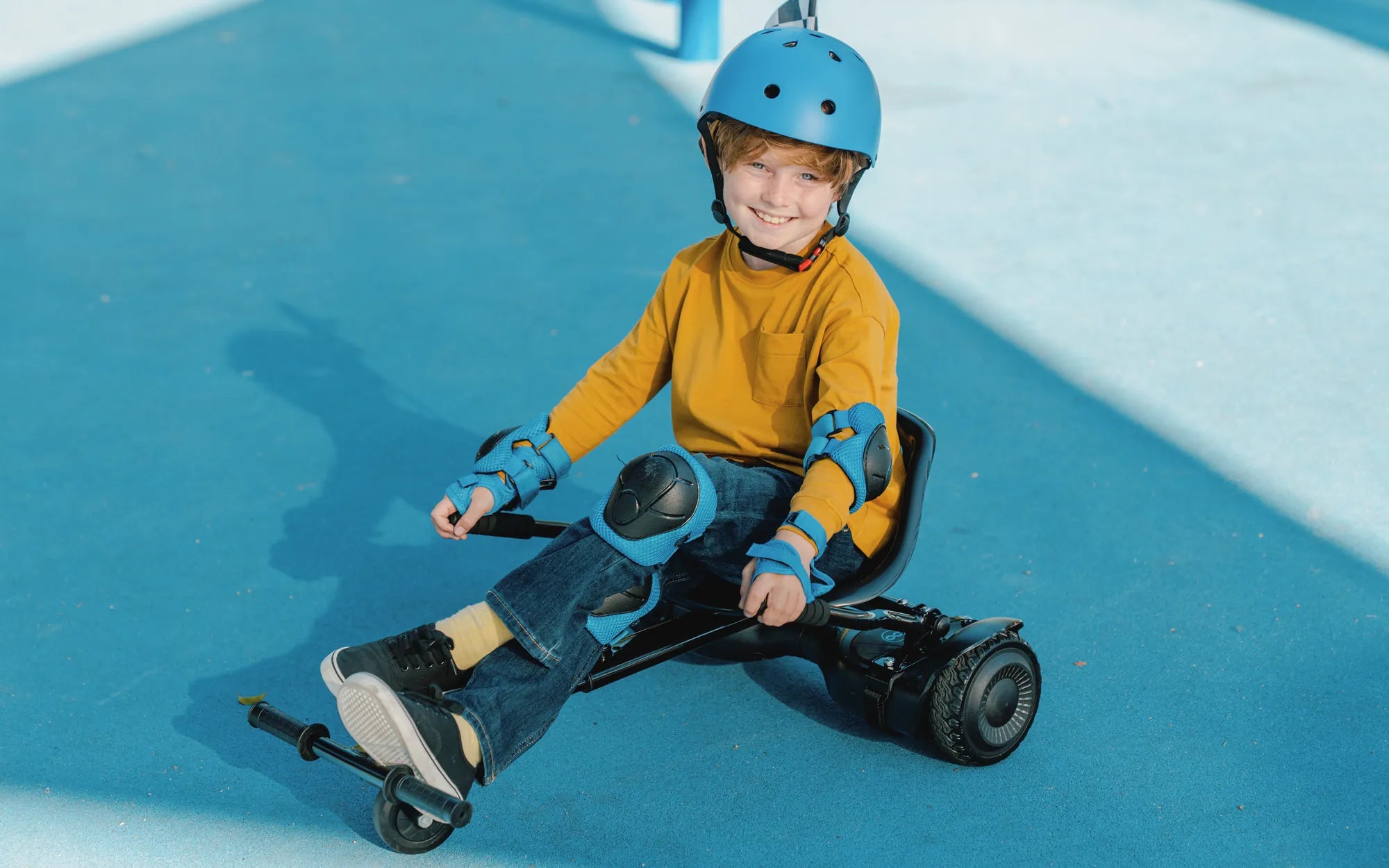
Introduction: Beyond the Hoverboard – The Evolution of Rider-Controlled Transport
What is a hoverboard with handles called? This simple question opens the door to understanding a significant leap in personal electric vehicles. While the term "hoverboard" persists from popular culture, the modern device with a handlebar represents a fundamentally different and more capable machine. It solves the core limitations of its handle-less predecessor by offering intuitive control and enhanced stability.
This evolution marks a shift from recreational novelty to practical urban mobility. The integration of a handlebar transforms the riding experience, making it accessible to commuters, students, and anyone seeking an efficient last-mile solution. We are witnessing the maturation of self-balancing technology into a legitimate transportation category.
This article will provide a definitive answer to the naming question while exploring the engineering, benefits, and future of these vehicles. You will learn how they work, why they are safer, and how to choose a reliable model from a trusted manufacturer like Gyroor, a leader in personal electric transport with over 100,000 riders.
The future of urban mobility is compact, electric, and intelligent. Understanding this vehicle is key to navigating that future. Let's move beyond the misnomer and examine the machine that is quietly reshaping how we move through our cities and neighborhoods.
The Official Name: Decoding the Terminology
So, what is a hoverboard with handles called? The most accurate and descriptive term is a Self-Balancing Electric Scooter. This name correctly identifies its three defining characteristics: the gyroscopic self-balancing system, its electric powertrain, and the scooter-like form factor with a handlebar for steering. It is the technically precise classification used by manufacturers and enthusiasts.
Another common term is Electric Unicycle with Handlebar. This name highlights the single-wheel design and self-balancing core shared with traditional electric unicycles (EUCs), while noting the critical addition of the handlebar for control. However, "scooter" often feels more intuitive to new riders due to the familiar hand-operated controls.
Colloquially, many people still use terms like "hoverboard scooter" or "handheld hoverboard." It's crucial to understand that "hoverboard" is a persistent misnomer. True hoverboards do not exist; the name was popularized by media and stuck to the original two-wheeled, handle-less self-balancing scooters. Adding "with handles" specifies this advanced variant but continues the technically inaccurate branding.
Using the correct terminology matters when researching, comparing specifications, or understanding local regulations. Municipal laws often categorize vehicles by their technical description, not by colloquial names. Knowing you are looking for a "self-balancing electric scooter" will lead you to better information and more suitable products than searching for a "hoverboard."
Key Features and How It Works: The Tech Behind the Ride
The operation of a self-balancing electric scooter is an elegant fusion of mechanical engineering and software control. At its heart is a gyroscopic sensor system and an Inertial Measurement Unit (IMU). These components constantly measure the board's angle and orientation hundreds of times per second, sending data to a central processor.
The processor uses this data to make instantaneous adjustments to the electric motors housed within the wheel(s). To keep the rider upright, the motors spin forward or backward to correct lean. This is the same core self-balancing technology found in standard hoverboards, but its implementation is enhanced by the handlebar.
Control is transferred from the knees to the hands. Instead of leaning forward or backward with your legs to move, you use thumb throttles or lever controls mounted on the handlebar. Pulling a trigger or pushing a thumb pad sends a signal to accelerate; releasing it or engaging a separate brake lever commands the motor to slow down or regenerate power back into the battery.
Steering is achieved through the handlebar's direct mechanical linkage or via a lean-steer mechanism. In some models, turning the handlebar physically turns the front wheel assembly. In others, leaning the handlebar left or right signals the motors to adjust speed differentially, causing a turn. This hand-controlled steering is far more intuitive and precise than the awkward lower-body twisting required by handle-less hoverboards.
The handlebar itself is a critical structural component. It provides a secure grip for mounting and dismounting, a anchor point for control inputs, and a third point of contact (with two feet) that dramatically increases overall stability. It also serves as a mounting point for essential features like a display screen, headlight, and brake light, integrating functions necessary for safe road use.
Why Choose a Handled Model? Safety and Control Advantages
The primary reason to choose a self-balancing scooter over a traditional hoverboard is a profound increase in safety and rider confidence. The learning curve is significantly reduced. New riders have a stable bar to hold onto while they learn the basics of balance and control, preventing the frequent falls associated with first-time hoverboard use.
Control is intuitive and precise. Hand-operated acceleration and braking are direct and proportional, mimicking the controls of bicycles, scooters, and motorcycles. This allows for smoother starts and stops, better speed modulation in traffic, and more predictable handling in emergency situations. You are in direct command of the machine.
The riding posture is safer for urban environments. Standing upright with hands on the handlebar improves visibility—both your ability to see traffic and for drivers to see you. It also allows for better body positioning to anticipate hazards. The posture is also less fatiguing for longer commutes compared to the crouched, tense stance often used on handle-less boards.
These devices typically offer higher performance specifications. With a more stable platform, manufacturers can safely equip them with more powerful motors, larger batteries, and higher weight capacities. It's common for handled models to reach speeds of 10-15 mph and ranges of 12-20 miles per charge, outperforming most standard hoverboards and making them viable for actual commuting.
Finally, they are better equipped for real-world conditions. The inclusion of features like pneumatic tires for shock absorption, integrated lighting systems for visibility, and electronic horns are standard on handled scooters because they are designed as transportation, not just toys. This comprehensive design philosophy prioritizes the rider's safety throughout the journey.
Gyroor's Approach: Engineering Confidence for Every Commuter
As a leading brand in personal electric mobility, Gyroor engineers its self-balancing scooters with a commuter-first mindset. The core philosophy is to build vehicles that inspire confidence through reliability, safety, and thoughtful design. With over 100,000 riders across North America and Europe trusting the brand, this approach is built on proven performance.
Foremost is the commitment to UL-certified battery safety. In a device where the rider is standing over the battery pack, this certification is non-negotiable. Gyroor's battery packs undergo rigorous testing for over 500 charge cycles, ensuring stability, longevity, and protection from overcharge, short-circuit, and thermal runaway. This provides peace of mind that is essential for daily use.
Real-world usability demands IPX5 water resistance. Commuters cannot avoid puddles, morning dew, or light rain. An IPX5 rating means the scooter's critical components can withstand low-pressure water jets from any direction, protecting the electrical systems from common environmental hazards. This durability ensures the vehicle is a dependable tool, fair weather or not.
The 1-year comprehensive warranty underscores Gyroor's confidence in its manufacturing and materials. It signals to the rider that this is a substantial product designed for longevity, not a disposable gadget. Support is available for the motor, battery, frame, and electronics, covering the costs of a true commuting investment.
Gyroor models incorporate commuter-specific features: bright LED headlights and brake lights for visibility, responsive disc or regenerative braking for control, and comfortable, large-diameter tires. The designs focus on creating a stable, predictable ride feel that allows the rider to focus on the road, not on balancing the machine. This holistic engineering is what separates a transportation solution from a simple recreational device.
Comparison at a Glance: Handled Scooter vs. Traditional Hoverboard
The following table clearly illustrates the operational and practical differences between a modern self-balancing electric scooter (with handles) and a traditional two-wheeled hoverboard.
| Feature | Self-Balancing Electric Scooter (With Handles) | Traditional Hoverboard (No Handles) |
|---|---|---|
| Primary Control Method | Hands (Throttle/Brake on Handlebar) | Knees/Feet (Leaning Forward/Back) |
| Steering Method | Handlebar (Mechanical or Lean-Steer) | Lower Body Twisting & Foot Pressure |
| Learning Curve | Moderate (Easier for most adults) | Steep (Requires good balance & practice) |
| Typical Top Speed | 10 - 15+ mph | 6 - 10 mph |
| Typical Range | 12 - 20+ miles | 6 - 12 miles |
| Rider Posture | Upright, Head-Up | Crouched, Head-Down |
| Terrain Handling | Good (Larger, often pneumatic tires) | Poor to Fair (Smaller, solid tires) |
| Safety Features | Lights, Horns, Regenerative Braking Common | Minimal, Often Optional |
| Ideal Use Case | Urban Commuting, Last-Mile Travel, Errands | Recreation, Casual Neighborhood Riding |
| Perceived Legitimacy | Higher (Seen as a transport device) | Lower (Often classified as a toy) |
This comparison highlights why the handled version represents an evolution. It is a tool designed for purposeful travel, with enhanced capabilities that match the demands of daily commuting. The traditional hoverboard remains a fun recreational device for controlled environments.
The Future of Personal Mobility: Where Do Handled Scooters Fit?
The future of urban transportation is multimodal, electric, and size-appropriate. In this landscape, self-balancing electric scooters with handles carve out a distinct and valuable niche. They sit between the compactness of an electric kick scooter and the full-size capability of an e-bike, offering a unique blend of portability and intuitive control.
Their primary role is in last-mile and short-trip connectivity. They are the perfect solution for the distance between a public transit stop and a final destination—a commute segment often too short to drive yet too long to walk comfortably. Their ability to be carried onto trains or buses (due to their single-wheel or compact two-wheel design) and stored under a desk makes them logistically ideal.
They contribute to reducing urban congestion and emissions. By providing a compelling alternative for solo trips under 5 miles, they take cars off the road. Their small physical footprint and electric operation make them a sustainable choice for dense urban cores where space and air quality are at a premium.
Technological integration is the next frontier. Future models will likely feature enhanced connectivity through smartphone apps for ride tracking, diagnostics, and anti-theft features. Advanced driver-assistance systems, like collision warning or automatic stability control for rough terrain, could become standard, further lowering the skill barrier and enhancing safety.
As infrastructure adapts—with more dedicated micro-mobility lanes and secure parking—these vehicles will become a normalized part of the urban fabric. Brands like Gyroor, which prioritize safety certifications and durable construction, are poised to lead this transition by providing vehicles that municipalities and riders can trust for daily use. The handled self-balancing scooter is not a fad; it is a logical step in the optimization of personal urban transport.
FAQ: Your Questions, Answered
Q: Do I need a license, registration, or insurance to ride one?
A> In most regions in the US and Europe, self-balancing electric scooters with handles are classified similarly to electric kick scooters. They typically do not require a driver's license, vehicle registration, or insurance for use on bike lanes or roads with speed limits under 25-30 mph. Always check your specific city and state laws, as regulations are rapidly evolving.
Q: What is the typical range and speed, and how long does it take to charge?
A> A quality model from a brand like Gyroor typically offers a range of 12-18 miles on a single charge, with top speeds between 10-15 mph. Charging time is usually 3-5 hours for a full charge from empty. Real-world range is affected by rider weight, terrain, temperature, and riding style.
Q: Where is it legal to ride: sidewalks, bike lanes, or roads?
A> This is highly location-dependent. A general rule is to avoid sidewalks for the safety of pedestrians. Most riders use bike lanes or shared-use paths. On roads, you should ride as far to the right as practicable, obey all traffic signals, and use hand signals for turns. Many cities explicitly ban them from sidewalks, so knowing local ordinances is crucial.
Q: Is it suitable for teenagers and adults?
A> Absolutely. The handled design makes it accessible to a wide age range. Most models have a recommended rider age of 14+ and support weight capacities from 220 lbs to 265 lbs or more. The intuitive controls and stability make it an excellent option for teens and adults seeking efficient, fun transportation. Proper safety gear (helmet, wrist guards) is always recommended.
Q: How does maintenance compare to a standard hoverboard or e-scooter?
A> Maintenance is relatively low but important. Key tasks include checking tire pressure (for pneumatic tires), ensuring all bolts (especially on the handlebar) are tight, keeping the vehicle clean and dry, and avoiding complete battery discharges. The primary advantage over some e-scooters is the simpler mechanical design with fewer moving parts than a folding scooter with a complex stem mechanism.
Finding Your Perfect Ride
The journey to understand what a hoverboard with handles is called reveals much more than a name. It uncovers a category of personal electric vehicle designed for practicality, safety, and efficient mobility. The self-balancing electric scooter represents the maturation of gyroscopic technology into a viable commuter tool, leaving the limitations—and the inaccurate "hoverboard" label—firmly in the past.
Choosing such a device means prioritizing control and reliability. It is an investment in a smarter way to navigate daily life, reducing commute times, avoiding traffic, and embracing electric mobility. The critical factors in your decision should be safety certifications, real-world durability, and the support standing behind the product.
For riders who value these principles, Gyroor builds vehicles that meet the moment. With UL-certified batteries, water-resistant construction, and a commitment to performance, a Gyroor self-balancing scooter is engineered to be a dependable partner for the journey ahead. The future of personal mobility is here, and it fits neatly in your hands.
Ready to experience the control and freedom of a true self-balancing electric scooter? Browse the full Gyroor collection, featuring models designed for safety, range, and everyday reliability, at gyroorboard.com.
Hoverboard with Bluetooth: The Ultimate Guide to Smart Riding
Christmas Gift for 3 Year Old Boys: Top Ideas for a Memorable Holiday