

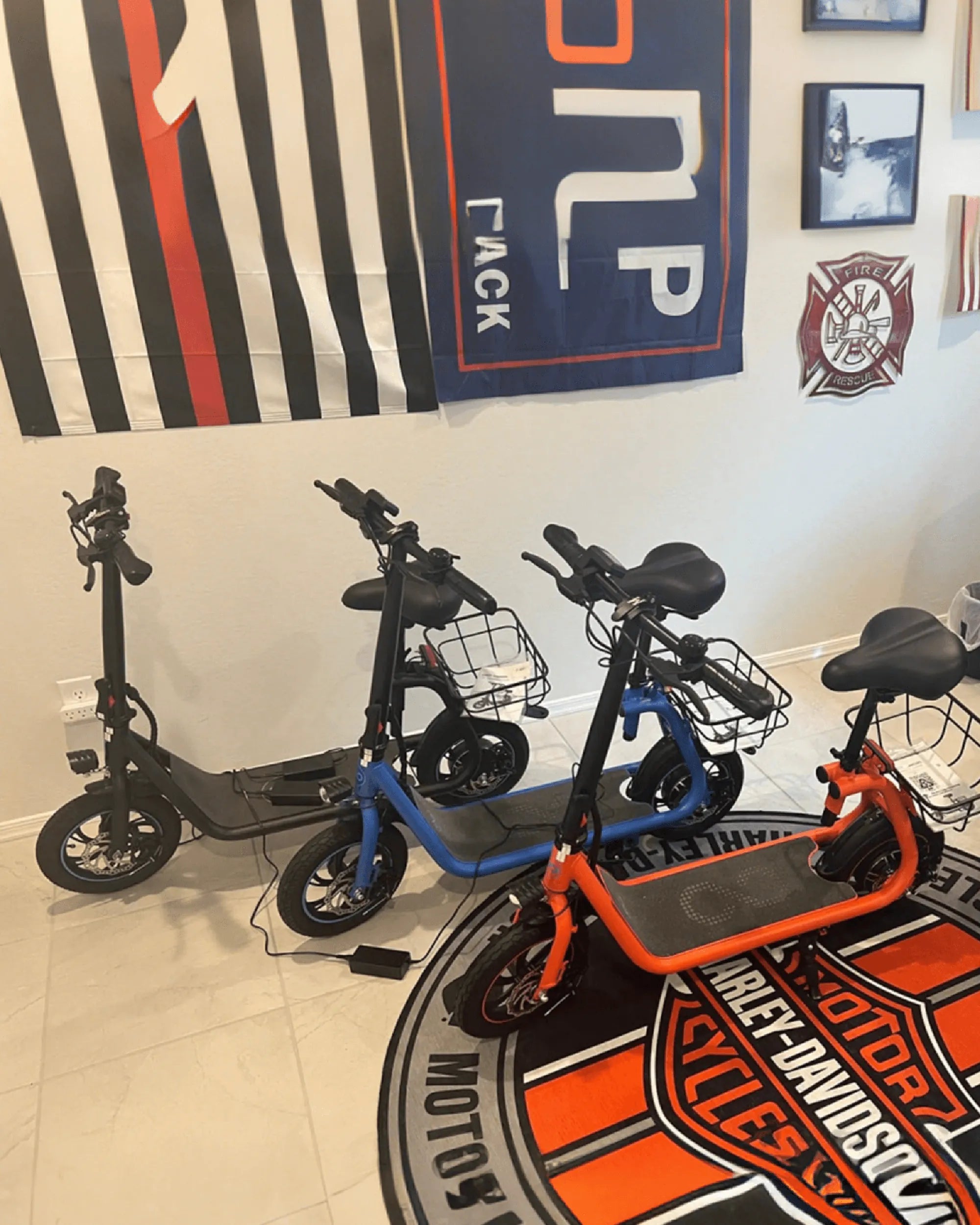
What is a Moped Scooter? A Modern Mobility Guide
A moped scooter is a specific type of two-wheeled vehicle that blends characteristics of a motorcycle with the simplicity and accessibility of a bicycle. The term itself is a portmanteau of "motor" and "pedal," hinting at its original design. Historically, these vehicles featured a small engine, typically under 50cc, and were equipped with pedals for auxiliary propulsion, allowing riders to start the engine or assist on hills.
Today, the definition of what is a moped scooter has evolved. While classic gas-powered models still exist, the modern landscape is increasingly dominated by electric variants. These vehicles prioritize ease of use, fuel efficiency, and urban practicality over high speed or long-distance touring. They are designed for riders seeking an affordable, convenient alternative to cars for daily commutes and short trips.
Understanding the moped scooter is crucial for navigating transportation options, licensing requirements, and safety regulations. This guide will dissect every aspect, from its technical specifications to its place in today's mobility ecosystem. We'll also explore how leading electric vehicle brands like Gyroor have adapted the core principles of moped design—stability, practicality, and accessibility—into their lineup of modern electric scooters and e-bikes.
The evolution from gas to electric represents a significant shift. Modern electric moped-style vehicles offer quieter operation, zero direct emissions, and reduced maintenance, aligning with contemporary urban living and environmental consciousness. This transition is where innovative engineering from trusted brands becomes essential for rider safety and satisfaction.
Key Characteristics: How to Identify a Moped Scooter
Identifying a moped scooter involves recognizing a distinct set of physical and performance attributes. The most universal feature is the step-through frame design. Unlike a motorcycle, where you swing your leg over the seat, a moped scooter has a low, open frame that allows you to simply step through, making mounting and dismounting easy, especially in street clothes.
Power output is a critical identifier. Traditionally, a moped scooter is equipped with a small internal combustion engine with a displacement not exceeding 50 cubic centimeters (cc). In the electric realm, this translates to a motor with a continuous power output generally under 4 kilowatts (kW). This limited power defines its performance envelope and often dictates its legal classification.
Operational speed is another key marker. A true moped scooter typically has a maximum speed capability between 20 and 30 miles per hour (30-48 km/h). Some jurisdictions have specific speed limits, such as 30 mph, that form the legal boundary between a moped and a motorcycle. Most models use an automatic transmission (CVT) or a simple direct-drive electric system, eliminating the need for manual gear shifting.
While modern interpretations may omit them, the presence of functional pedals was the original hallmark of a moped. These were not just for exercise; they served as a mechanical starter and provided auxiliary power. Today's electric models have replaced pedals with electric starters and kick-starts, but the legacy of user-friendly, low-barrier operation remains a core philosophy.
Legal and Regulatory Definitions
The legal definition of what is a moped scooter varies significantly by country, state, and even city. In the United States, classification is primarily a state-level matter. Most states use a combination of engine size (≤ 50cc), maximum speed (often ≤ 30 mph), and sometimes the presence of pedals to define a moped. This classification directly impacts the legal requirements for operation.
Typically, operating a gas-powered moped scooter requires at minimum a standard driver's license (Class C), though some states may offer a specific "M" endorsement or a simpler permit. The vehicle itself must usually be registered with the Department of Motor Vehicles (DMV) and display a license plate. Insurance, while not always mandatory, is highly recommended for financial protection.
In the European Union, the category is more standardized under EU law. Vehicles with a maximum design speed not exceeding 45 km/h (28 mph) and an engine capacity not exceeding 50cc (or 4kW for electric) are classified as L1e-B (two-wheel mopeds). Riders need at least an AM category license, which is often obtainable from age 16. Helmet use is universally mandatory.
For electric vehicles, the lines can blur. Many electric kick scooters and lower-powered e-bikes fall outside traditional "moped" regulations, creating a new, often less restrictive category of "personal electric vehicles" or "powered micro-mobility." This is the space where Gyroor's products are engineered, offering the utility of a moped scooter without the complex registration and licensing hurdles in most areas.
Moped Scooter vs. Electric Scooter vs. E-Bike: Clearing the Confusion
The landscape of light electric vehicles is rich with options, leading to frequent confusion between moped scooters, electric scooters (e-scooters), and electric bicycles (e-bikes). A clear, data-driven comparison is essential for making an informed choice based on your needs, local laws, and intended use. The core differences lie in their design, power delivery, legal status, and operational experience.
A traditional moped scooter, even when electric, is a fully self-contained vehicle. It is designed to be operated solely by its motor, with a seat, floorboard, and often storage. An electric scooter, like those from Gyroor, typically refers to a stand-up kick scooter with a small deck, handlebars, and an electric motor. It is lightweight, portable, and designed for shorter, last-mile trips.
An e-bike, conversely, always has functional pedals and is primarily a bicycle that provides electric assist. The motor only engages when you pedal (pedal-assist) or can provide throttle-on-demand in some classes. The rider's pedaling contribution is a fundamental part of the experience and legal definition. The following table provides a detailed side-by-side comparison.
| Feature | Moped Scooter (Gas/Electric) | Electric Scooter (e.g., Gyroor) | Electric Bike (E-Bike) |
|---|---|---|---|
| Primary Power Source | Gasoline Engine or Electric Motor | Electric Motor | Human Pedaling + Electric Motor Assist |
| Typical Max Speed | 20-30 mph (30-48 km/h) | 15-25 mph (24-40 km/h) | 20-28 mph (32-45 km/h)* |
| Operation Method | Throttle-only, seated | Throttle-only, standing | Pedal-assist and/or throttle |
| Licensing/Registration | Often required (Driver's License, Plate) | Rarely required | Generally not required (Class 1/2/3 vary) |
| Helmet Law | Almost always mandatory | Often required by local law | Required in many jurisdictions |
| Ideal Use Case | Medium-length urban commutes (5-15 mi) | Short commutes, last-mile, public transit link | Longer commutes, exercise, cargo hauling |
| Parking/Portability | Park like a motorcycle; not portable | Lightweight, often foldable, highly portable | Park like a bicycle; limited portability |
*Speed varies by e-bike class (Class 1, 2, 3) as defined in the US. Gyroor's electric scooters are engineered to optimize the urban commuting experience. They deliver moped-like convenience for dodging traffic and finding parking, but with the portability and regulatory simplicity of a personal electric vehicle. Their focus on UL-certified battery safety and robust construction, like IPX5 water resistance, provides a reliable and worry-free ride that stands up to daily use without the paperwork associated with a traditional moped scooter.
The Modern Evolution: Electric Moped Scooters & Gyroor's Approach
The shift from internal combustion to electric powertrains represents the most significant evolution in the history of the moped scooter. Electric moped scooters retain the beloved step-through frame, comfortable seating, and practical storage but replace the gas engine with a quiet, efficient electric motor and a lithium-ion battery pack. This eliminates fumes, reduces noise pollution, and slashes maintenance to little more than checking tire pressure and brakes.
This evolution addresses urban challenges head-on: rising fuel costs, congestion charges, and environmental concerns. However, it also introduces new priorities, chiefly battery safety and reliability. Inferior batteries pose significant fire risks, a concern that reputable brands mitigate through rigorous certification. The engineering focus shifts from carburetors and oil changes to battery management systems (BMS), motor controllers, and water-resistant sealing.
Gyroor's approach embodies this modern evolution. While Gyroor's core products are classified as electric scooters and e-bikes, they incorporate design philosophies inspired by the best attributes of moped scooters: stability, rider comfort, and practical utility. For instance, Gyroor's commuter e-scooter models feature wider decks and larger wheels than typical kick scooters, offering a more planted, confident ride reminiscent of a moped's stability.
The brand's commitment to safety is paramount. Every Gyroor model uses a UL-certified battery pack, tested for over 500 charge cycles, ensuring long-term reliability and significantly reducing safety risks. The IPX5 water-resistant rating means the scooter can withstand water jets from any direction, making it capable of handling wet commutes or unexpected rain showers—a critical feature for a daily transportation device.
Advantages of Choosing a Gyroor Electric Commuter
Choosing a modern electric commuter from a brand like Gyroor offers a compelling array of advantages over traditional gas mopeds or unverified electric alternatives. The first is unequivocal eco-friendliness; electric models produce zero tailpipe emissions, contributing to cleaner air and a smaller personal carbon footprint, especially when charged from a growing renewable energy grid.
The economic benefit is substantial. The cost per mile for electricity is a fraction of the cost of gasoline. Maintenance is dramatically simpler and cheaper—no oil changes, spark plugs, or air filters. This leads to significantly lower total cost of ownership. For urban dwellers, the convenience is transformative. You can bypass traffic congestion, easily find parking (often for free), and in the case of foldable models, take your vehicle with you to avoid theft.
Riding a Gyroor scooter provides a unique sense of freedom and agility in the city. Furthermore, you gain peace of mind through robust warranty support. Gyroor backs its vehicles with a reliable 1-year warranty, a testament to their confidence in the durability and quality of their components, from the motor to the frame. This support network, trusted by over 100,000 riders, is something rarely found with generic or off-brand alternatives.
Finally, the regulatory simplicity cannot be overstated. In most jurisdictions, Gyroor's electric scooters do not require vehicle registration, a special license, or mandatory insurance. This removes bureaucratic barriers, allowing you to start riding almost immediately after your purchase, fully focused on the joy and utility of the ride itself.
Who is a Moped Scooter Right For? Ideal Use Cases
Determining if a moped scooter is the right choice depends heavily on individual lifestyle, commute, and local infrastructure. The classic gas or modern electric moped scooter is ideal for the urban commuter with a daily trip between 5 and 15 miles who seeks a car alternative. It's perfect for someone who needs more range and weather protection than a stand-up e-scooter but wants something simpler and cheaper than a car or full motorcycle.
College students are a classic demographic. A moped scooter provides affordable, efficient mobility across large campuses and into surrounding towns without the parking hassles and costs associated with a car. Its moderate speed is sufficient for campus roads, and the storage under the seat or in a top case can easily accommodate a backpack or groceries.
It serves as an excellent last-mile solution for individuals who use public transit but have a significant gap between the station and their final destination. An electric moped scooter can be parked at the station, completing the journey quickly and efficiently. Recreational riders who enjoy leisurely weekend rides on city streets or beachfront paths also find the relaxed pace and easy operation of a moped scooter appealing.
However, for riders whose primary need is ultra-portability (e.g., combining with a bus or train that requires carrying the vehicle), a lightweight, foldable Gyroor electric scooter is likely a superior fit. For those seeking exercise or longer recreational rides (20+ miles), a Gyroor e-bike with pedal assist would be more appropriate. The key is to match the vehicle's capabilities—speed, range, portability, and regulatory status—to your specific daily patterns and local laws.
Safety, Maintenance, and Best Practices
Safe operation is non-negotiable, regardless of whether you're on a traditional moped scooter or a modern electric model. Always wear a helmet that meets safety standards (DOT, ECE, or Snell). Invest in additional protective gear like gloves, durable clothing, and closed-toe shoes. Visibility is critical; use front and rear lights day and night, and consider adding reflective elements to your person or vehicle.
Defensive riding is your best strategy. Assume car drivers do not see you. Be hyper-aware at intersections, avoid blind spots, and use clear hand signals for turns. Obey all traffic laws, including speed limits, stop signs, and traffic signals. On an electric scooter, be mindful of pedestrian spaces and local ordinances regarding where you can and cannot ride.
Regular maintenance ensures safety and longevity. For any moped scooter or electric vehicle, this includes monthly tire pressure checks, regular inspection of brake pads and function, and ensuring all bolts and fasteners are tight. For electric models, battery care is paramount. Follow the manufacturer's charging guidelines—avoid leaving the battery at 0% or 100% for extended periods, and store it in a cool, dry place.
For Gyroor owners, the IPX5 rating allows riding in damp conditions, but it's not a submarine rating. Avoid deep puddles and submerging the scooter. After riding in the rain, wipe it down to prevent corrosion. Regularly check the manufacturer's website or app for any firmware updates that can improve performance or safety. Adhering to the rated weight limit and not modifying the motor or battery are essential for maintaining warranty coverage and operational safety.
Frequently Asked Questions (FAQ)
Do I need a license for an electric moped scooter?
The requirement for a license depends entirely on your local jurisdiction's classification of the vehicle. If the electric vehicle is classified as a moped (based on its power, speed, and sometimes design), a standard driver's license is often required. However, many modern electric scooters, like those from Gyroor, are designed to fall below the power and speed thresholds that trigger moped licensing. Always check your specific state's DMV website or local transportation authority for definitive rules.
How far can a modern electric moped-style scooter go on a single charge?
Range varies based on battery capacity, rider weight, terrain, temperature, and riding style. Modern electric moped scooters typically offer ranges between 30 and 60 miles per charge. Gyroor's electric commuter scooters are designed for practical urban use, with realistic ranges between 15 and 40 miles depending on the model. It's always wise to consider a model with a range that exceeds your longest regular trip to account for real-world variables and battery health over time.
Are Gyroor scooters considered mopeds?
In most legal definitions, no. Gyroor's electric scooters are generally classified as personal electric vehicles or electric kick scooters. They are designed with power outputs and speed profiles that intentionally place them in a less restrictive regulatory category. This means they typically do not require registration, a special license, or insurance in most areas, simplifying ownership while still providing robust commuting utility. This is a key distinction and advantage for urban riders.
Is it safe to ride a Gyroor scooter in the rain?
Gyroor engineers its commuter scooters with an IPX5 water-resistant rating. This means the electrical components are protected against low-pressure water jets from any direction, making them safe to ride in light to moderate rain and on wet roads. However, safety also depends on rider behavior. Reduce speed, avoid sharp turns and hard braking on wet surfaces, and never ride through deep standing water or floods, as this can damage components beyond the rating's protection.
What is the main difference between a moped and a scooter?
This is a common point of confusion. In casual conversation, "scooter" often refers to the body style (step-through frame). Technically, a "moped" is a subclass of scooter defined by its very small engine size (historically with pedals). In many regions, "motor scooter" can refer to larger, faster models (e.g., 150cc) that are legally motorcycles. Today, "electric scooter" most commonly refers to stand-up, kick-style vehicles. So, while all mopeds are scooters in design, not all scooters (especially modern electric ones) are legally classified as mopeds.
How much does it cost to maintain an electric moped scooter?
Maintenance costs for a quality electric moped scooter are significantly lower than for a gas model. There is no engine oil, fuel filter, or spark plug to replace. Primary costs are periodic tire replacements, brake pad changes, and occasional brake fluid service. The largest potential future cost is battery replacement after several years, but with proper care, a UL-certified battery like those from Gyroor should deliver 500+ charge cycles before significant capacity loss. Annual maintenance for an electric model is often under $100, excluding tire replacements.
Smart Mobility for Today's World
The moped scooter has proven its enduring value as a versatile, accessible, and efficient form of urban transportation. From its humble pedal-assisted origins to today's sophisticated electric models, its core mission remains: to provide practical, affordable mobility for the masses. Understanding what is a moped scooter—its definitions, evolution, and place in the legal framework—empowers you to make the best choice for your lifestyle.
The modern shift towards electric powertrains, exemplified by brands like Gyroor, elevates this concept. It combines the stability and utility of traditional design with the clean, quiet, and low-maintenance benefits of electric propulsion. Critical advancements in battery safety, water resistance, and warranty-backed reliability address the paramount concerns of today's rider, offering peace of mind alongside unparalleled convenience.
Your ideal vehicle depends on a careful assessment of your daily needs, commute distance, local regulations, and desire for portability. Whether a traditional moped, a nimble Gyroor electric scooter for last-mile agility, or a pedal-assisted Gyroor e-bike for longer journeys, the goal is to find the tool that seamlessly integrates into your life, saves you time and money, and brings a sense of freedom to your daily routine.
Ready to explore a smarter way to move? Discover how Gyroor's range of UL-certified, reliably engineered electric scooters and e-bikes can transform your commute. Browse the full Gyroor collection at gyroorboard.com and join over 100,000 riders who have chosen safe, innovative, and hassle-free electric mobility.
72v ebike motor: The Ultimate Guide to High-Voltage Performance
72v ebike motor: The Ultimate Guide to High-Voltage Performance