



Understanding Electric Scooter Speed Limits: A Legal and Practical Guide
Navigating the rules for electric scooters starts with one fundamental question: What is the speed limit for electric scooters? The answer is not a single number but a complex interplay of municipal law, state or national regulations, manufacturer specifications, and practical safety considerations. For new and experienced riders alike, understanding this framework is essential for legal compliance, personal safety, and maximizing the enjoyment of your ride.
This guide will dissect every layer of electric scooter speed regulation. We will explore the common legal limits set by cities and countries, explain how manufacturers build and limit their models for different markets, and delve into the physics and safety principles that make these limits necessary. Whether you're commuting or cruising, knowing these rules protects you and shapes the future of micro-mobility.
Speed limits exist to create a predictable and safe environment for all road and path users. Ignoring them can result in fines, confiscation of your scooter, and increased risk of accidents. By the end of this guide, you will have a clear, actionable understanding of how to determine and adhere to the correct speed limit for your electric scooter in any situation.
Legal Speed Limits: City, State, and Country Regulations
The primary authority dictating what is the speed limit for electric scooters is government law. These regulations vary dramatically, creating a patchwork of rules that riders must decipher. There is no universal standard, making local research a critical first step before riding.
In general, legal frameworks classify electric scooters as either "low-speed electric bicycles" or their own distinct vehicle category, such as "electric stand-up scooters." This classification directly determines where you can ride (bike lanes, roads, sidewalks) and how fast you can go. Enforcement rigor also varies, with some cities issuing warnings and others imposing immediate penalties.
Riding an electric scooter that exceeds local legal speed limits, even if the scooter is technically capable of higher speeds, is illegal. Manufacturers often produce global models, but the onus is on the rider to operate them within local laws. Understanding this legal landscape is the cornerstone of responsible ownership.
Common Regulatory Tiers in the U.S. and EU
While specific laws differ, common speed limit brackets have emerged in major markets like the United States and the European Union. These tiers often correlate with where the scooter is permitted to operate.
The most prevalent limit for shared and private e-scooters in urban areas is 15 mph (25 km/h). This speed is frequently mandated for operation in bicycle lanes and on multi-use paths. It balances reasonable commute times with the safety of cyclists and pedestrians. For example, many U.S. cities like Los Angeles and Denver enforce this limit.
A higher tier of 20 mph (32 km/h) is sometimes permitted on roadways, aligning scooter speed with slower urban traffic. However, scooters traveling at this speed are often prohibited from sidewalks. Some European countries use 20 km/h (12.5 mph) as a standard, particularly for sidewalk-legal models.
It's crucial to note that these are often maximum limits. Local ordinances can set lower limits in specific zones, such as school areas, parks, or crowded downtown districts. These geofenced slow zones are commonly used by rental companies and are a good indicator of where extra caution is required.
How to Find the Law in Your Area
Determining what is the speed limit for electric scooters in your locality requires proactive research. Do not assume rules are the same as a neighboring city or state.
Start with your city or town's official website. Search for "Department of Transportation," "micromobility regulations," or "e-scooter laws." Many municipalities now have dedicated pages outlining rules for dockless vehicles. Your local police department's website may also post relevant traffic ordinances.
Check your state or provincial transportation authority website. While cities often set granular rules, state law may define the overarching vehicle classification and maximum speed ceiling. For instance, a state may cap e-scooter speed at 20 mph, allowing cities to set a lower limit.
As a practical tip, open a popular e-scooter rental app (even if you don't rent). These apps display local speed limits and no-ride zones through geofencing. While designed for their fleet, this data accurately reflects the legal boundaries for all riders in that area.
Manufacturer Limits: Understanding Your Scooter's Capabilities
Beyond the law, your electric scooter has built-in limitations set by its maker. A scooter's top speed is a function of its motor power, battery voltage, and software. Manufacturers design models for different use cases and markets, often implementing software locks to comply with regional laws.
For example, a scooter with a 500W motor may be physically capable of 22 mph. However, if sold in a region with a 15 mph legal limit, the manufacturer may software-limit it to 15.5 mph. This creates a compliance buffer while preserving the scooter's torque and hill-climbing ability at lower speeds.
When purchasing, it's vital to distinguish between a scooter's potential speed and its region-locked speed. Reputable brands are transparent about this. Always verify the top speed specification for the model in your country of purchase, not just the global maximum advertised for a higher-performance variant.
The Role of Speed Modes (Eco, Normal, Sport)
Most modern electric scooters feature selectable speed modes, a critical tool for managing both legality and battery range. These modes—commonly Eco, Normal, and Sport—electronically cap the scooter's maximum output.
Eco Mode typically limits speed to 8-10 mph (13-16 km/h). This is ideal for crowded areas, strict sidewalk-legal zones, or maximizing battery distance. It provides a gentle acceleration curve, enhancing safety for new riders.
Normal Mode often aligns with the most common urban legal limit, around 15 mph (25 km/h). It offers a balance of efficiency and practical speed for daily commuting in bike lanes.
Sport Mode unlocks the scooter's full, legally-permitted power. In regions allowing 20 mph, this mode will reach that speed. It's best for open roads or experienced riders in appropriate areas. Using Sport mode responsibly means actively choosing environments where the higher speed is safe and legal.
Gyroor's Approach to Safety and Performance
As a leading brand trusted by over 100,000 riders, Gyroor designs its electric scooters with a fundamental commitment to compliant performance and rider security. Understanding what is the speed limit for electric scooters is built into our engineering philosophy.
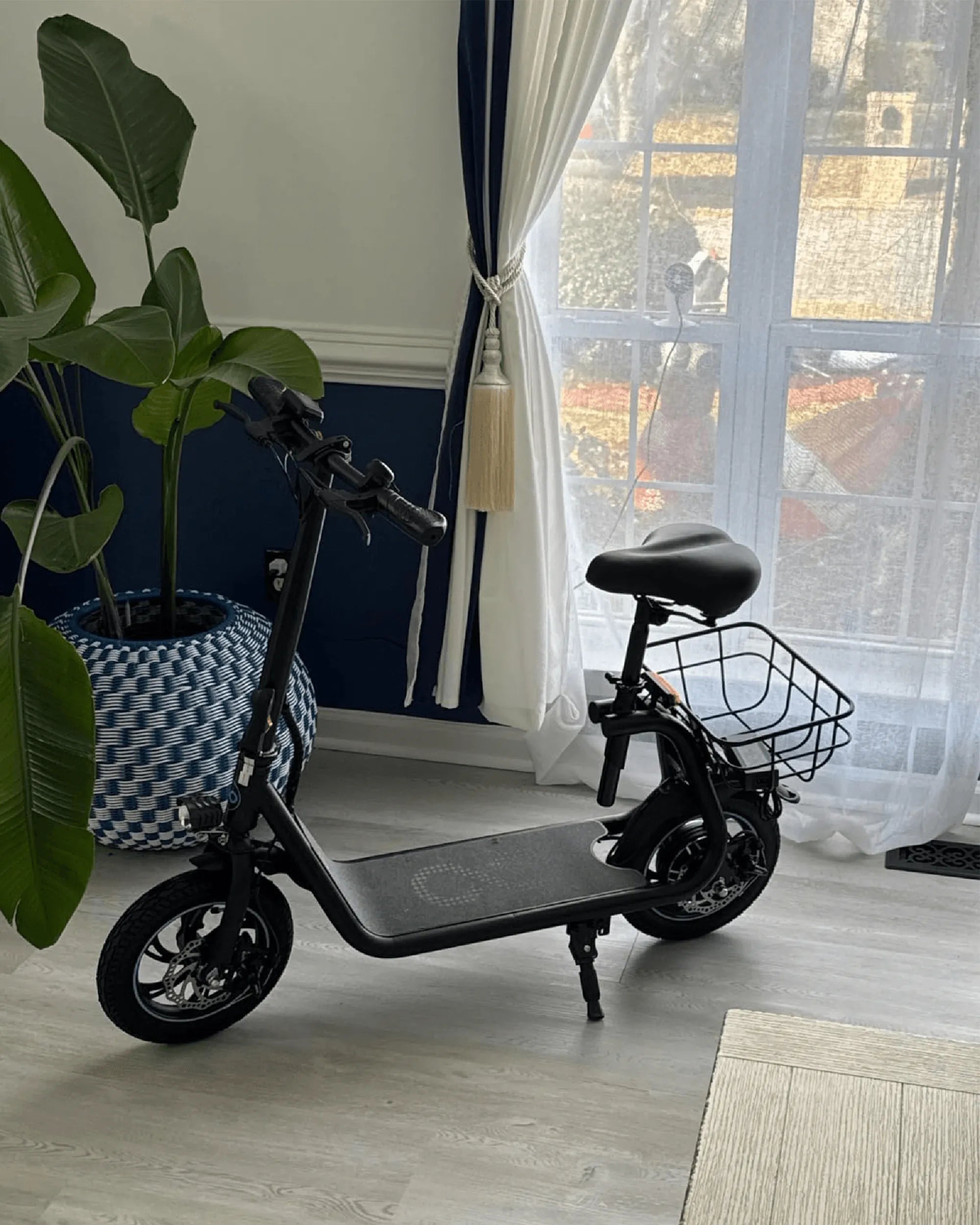
Gyroor models like the Gyroor C1 and Gyroor S1 are engineered with multiple speed modes that allow riders to match their speed to local laws and conditions easily. While these scooters offer robust motors for reliable hill climbing and acceleration, the speed caps ensure they can be used safely within regulatory frameworks.
This performance is backed by foundational safety features. Every Gyroor scooter uses a UL-certified battery pack, rigorously tested for over 500 charge cycles. This ensures stable power delivery and thermal management at all speeds, from a slow Eco-mode crawl to a full-power ride. Combined with IPX5 water-resistant designs, riders can trust their scooter's reliability is not compromised by its performance envelope.
Safety vs. Speed: Why Limits Exist
Speed limits are not arbitrary; they are a direct response to the physics of riding and the shared nature of transportation infrastructure. The relationship between speed, stopping distance, and reaction time is non-linear, meaning small increases in speed drastically reduce a rider's ability to avoid a collision.
An electric scooter rider is vulnerable. Unlike a car occupant, there is no metal cage, airbag, or seatbelt. A collision at 15 mph can result in serious injury; at 20 mph, the risk of severe or fatal injury increases significantly. Limits are set to keep kinetic energy—and thus potential harm—within a manageable range for the rider and anyone they might encounter.
Furthermore, higher speeds compromise stability. Electric scooters have small wheels that are more susceptible to road imperfections like potholes or cracks. At excessive speeds, a small obstacle can cause a loss of control. Speed limits encourage riding at a pace where the rider can safely scan the path ahead and react to hazards.
Ultimately, respecting speed limits is about sharing space responsibly. Bike lanes and paths are used by cyclists, pedestrians, and other scooter riders. A predictable, moderate speed creates a safer and less stressful environment for everyone, fostering greater public acceptance of micro-mobility.
Enforcement and Penalties for Exceeding Limits
Violating electric scooter speed laws carries real consequences. Enforcement mechanisms are becoming more sophisticated, moving beyond occasional police checks to integrated technological solutions.
Law enforcement can use radar guns specifically calibrated for smaller vehicles to measure scooter speed. In some jurisdictions, riders caught exceeding the limit face fines similar to bicycle infractions, typically ranging from $50 to $200 for a first offense. Repeated violations can lead to higher fines and, in extreme cases, confiscation of the scooter.
For rental scooters, enforcement is automated. The scooter's GPS and onboard computer can detect if it is entering a geofenced slow zone or exceeding a speed threshold. The app may issue a warning, automatically throttle the scooter's speed, or even end the ride and apply a penalty fee.
Private scooter owners are not immune. If involved in an accident while speeding, you will likely be found at fault. This can invalidate insurance claims and expose you to significant personal liability for damages or injuries to others. Adhering to the posted and legal speed limit for electric scooters is the simplest way to avoid these legal and financial risks.
Choosing the Right Scooter for Your Local Limits
Selecting an electric scooter should begin with research into your local laws. Purchasing a scooter that far exceeds legal limits is impractical and encourages illegal behavior. Instead, match the scooter's capabilities to your legal and practical needs.
For cities with a strict 15 mph (25 km/h) limit, a commuter-focused scooter with a 300W-500W motor is ideal. It will provide ample power for hills and acceleration while comfortably reaching the legal maximum. Models like the Gyroor C1 are perfect for this use case, offering a compliant top speed, a comfortable ride, and a UL-certified battery for daily reliability.
If your area permits 20 mph (32 km/h) on roads, you might consider a more powerful model, perhaps with a 500W+ motor and enhanced suspension for the higher speeds. Remember, even if the law allows it, you must have the skill and protective gear to handle the increased speed safely.
Always prioritize build quality, braking performance, and safety certifications over raw top-speed numbers. A well-built scooter that is stable and stops predictably at its legal speed is far superior to a faster, less stable model. Check for features like dual braking systems, wide decks, and bright lights—all of which contribute to safer riding at any speed.
Global Speed Limit Comparison Table
The following table provides a snapshot of typical maximum legal speed limits for private electric scooters in various regions. These are general guidelines; always verify with your local municipality as rules can change and often have specific conditions (e.g., lower limits on sidewalks).
| Region/Country | Typical Max Speed Limit | Common Classification & Notes |
|---|---|---|
| United States (Many Cities) | 15 mph (25 km/h) | Often for bike lane/path use. Road limits may differ by city. |
| California, USA | 15 mph | State law maximum on bike paths/trails. Local ordinances apply on roads. |
| United Kingdom | 15.5 mph (25 km/h) | Legal maximum for public roads (privately owned). Rental scooters in trial areas have same limit. |
| Germany | 12 mph (20 km/h) | Maximum for sidewalk/bike lane use. Faster models require license/insurance. |
| France | 15.5 mph (25 km/h) | Maximum on bike lanes. Forbidden on sidewalks. |
| Australia (NSW) | 12.5 mph (20 km/h) | Maximum on shared paths and bike lanes. Lower limits near pedestrians. |
| Canada (Toronto, ON) | 15 mph (24 km/h) | Maximum on bike lanes. Prohibited on sidewalks. |
FAQs on Electric Scooter Speed Limits
Q1: Can I modify my electric scooter to go faster than its factory limit?
A: Technically, yes, through methods like firmware hacking or removing speed governors. However, this is strongly discouraged and often illegal. It voids the manufacturer's warranty, compromises safety systems designed for the original speed, and almost certainly makes the scooter illegal for use on public roads and paths. You assume full liability for any resulting accidents or legal issues.
Q2: Does the speed limit apply downhill if I'm just coasting?
A> Yes, the legal speed limit applies regardless of how the speed is achieved—whether by motor power or gravity. If you are operating the vehicle on public infrastructure, you are responsible for maintaining a legal speed. Use your brakes to control descent.
Q3: Are speed limits different for rental scooters vs. privately owned ones?
A: Typically, the same local laws apply to both. However, rental companies often implement stricter geofenced limits in sensitive areas (e.g., 8 mph in a park) as a condition of their operating permit. Privately owned scooter riders are still bound by the area's general legal limit but must self-enforce.
Q4: What happens if I ride a scooter from a country with a higher limit in a country with a lower limit?
A: You must adhere to the laws of the jurisdiction where you are riding. If your scooter is capable of speeds illegal in that area, you are required to not exceed the local limit. This may mean using a lower speed mode exclusively. Riding at an illegal speed is not defensible by claiming your scooter is from elsewhere.
Q5: How does weight affect my scooter's top speed and legality?
A> A heavier rider may reduce the scooter's achievable top speed slightly, especially on inclines. However, this does not change the legal limit. The law pertains to your actual speed, not your scooter's potential. If you are riding at 18 mph in a 15 mph zone, you are speeding, regardless of whether the scooter could go faster with a lighter rider.
Riding Responsibly Within the Limits
Understanding and respecting what is the speed limit for electric scooters is the mark of a responsible rider. It's a commitment to your safety, the safety of others, and the long-term integration of e-scooters into our urban fabric. Speed is a feature to be used wisely, not a right to be exploited.
Always start your ride by selecting the appropriate speed mode for your environment. Wear a helmet—it's non-negotiable at any speed. Be hyper-aware of your surroundings, especially at intersections and when near pedestrians. Your vigilance is your best defense.
The future of micro-mobility depends on positive rider behavior. By adhering to speed limits, we demonstrate that electric scooters are a legitimate, safe, and respectful form of transportation. This encourages cities to expand infrastructure and access, benefiting all riders.
Ready to find an electric scooter that perfectly balances performance, compliance, and renowned reliability? Explore the full Gyroor collection at gyroorboard.com. Discover models engineered with UL-certified safety, multiple speed modes for versatile riding, and the robust construction trusted by a global community of riders. Choose a scooter designed for the real world, where smart performance always comes first.
What Happened to Electric Scooters: The Rise, Fall, and Future
What's the Age Limit for Electric Scooters? A Complete Guide