



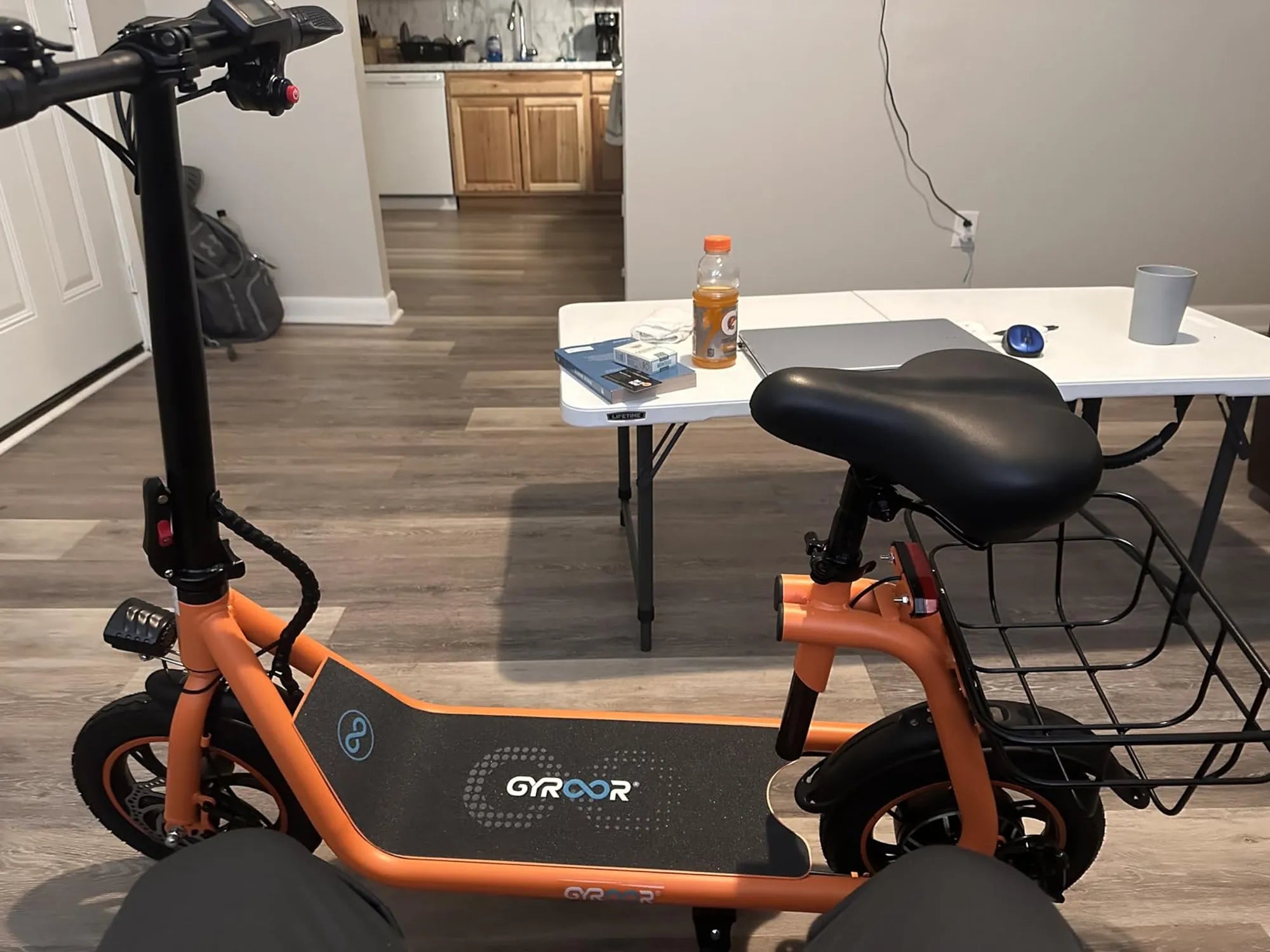
Introduction: The Need for Speed in the Electric Scooter World
Electric scooters have transformed urban mobility, offering a swift, efficient alternative to traffic congestion. For potential buyers and riders, one question consistently rises to the top: what speed do electric scooters go? The answer isn't a single number but a spectrum influenced by engineering, regulation, and environment.
Understanding this spectrum is crucial for making an informed purchase and riding safely. This guide will explore the technical limits, categorize practical speed tiers, and detail every factor that determines your real-world riding experience.
As a leader in personal electric transport, Gyroor designs scooters that balance exhilarating performance with unwavering safety and reliability, trusted by over 100,000 riders across North America and Europe.
Understanding Electric Scooter Speed Tiers
Electric scooters are broadly categorized into three speed tiers, each serving distinct rider needs and governed by different technical specifications. Knowing where a model falls helps set realistic expectations for commuting, recreation, or performance riding.
The entry-level or commuter tier typically includes scooters with a top speed between 15 and 20 mph (24-32 km/h). These models prioritize portability, affordability, and compliance with common urban speed regulations. They are ideal for first-time riders and short to medium urban commutes on flat terrain.
Performance-tier scooters push into the 20 to 30 mph (32-48 km/h) range. Featuring more powerful motors and larger batteries, they handle longer commutes, moderate hills, and riders seeking a quicker pace. This tier represents a sweet spot for many daily riders who need extra power without venturing into extreme territory.
High-performance or off-road models constitute the third tier, capable of speeds exceeding 30 mph (48+ km/h). These scooters boast dual motors, high-voltage battery systems, and robust suspension. They are designed for thrill-seekers, off-road enthusiasts, and those with longer, more demanding routes, though their use is often restricted to private property or specific areas due to local laws.
Key Factors That Determine Your Scooter's Top Speed
The advertised top speed of an electric scooter is a theoretical maximum achieved under ideal laboratory conditions. Your actual speed is governed by a complex interplay of mechanical, electrical, and environmental factors. Understanding these elements is key to answering what speed do electric scooters go in the real world.
Motor Power and Wattage: The Engine of Performance
Motor wattage, measured in watts (W), is the primary engine of speed and torque. A higher-wattage motor can deliver more power to the wheels. A basic 250W motor might struggle to reach 15 mph with an adult rider, while a 500W motor can comfortably achieve 18-22 mph.
For performance tiers, motors range from 500W to 1000W. High-performance models often feature dual motors (e.g., 2x1000W), effectively doubling the power output for explosive acceleration and top speeds exceeding 35 mph. Wattage also directly impacts hill-climbing ability; a more powerful motor maintains speed on an incline where a weaker one would slow significantly.
Battery Voltage and Capacity: The Power Reservoir
While motor wattage determines power output, battery voltage (e.g., 36V, 48V, 52V) determines how efficiently that power is delivered. Think of voltage as water pressure in a hose. Higher voltage allows the motor to draw more electrical current, sustaining higher speeds for longer, especially under load.
A 48V system will generally enable a higher top speed and better performance retention than a 36V system with the same motor wattage. Battery capacity (measured in Amp-hours, Ah) affects range, not directly top speed. However, a scooter's voltage sag—the drop in voltage under high load—can cause speed to decrease as the battery depletes. High-quality, UL-certified battery packs, like those used by Gyroor, provide more stable voltage delivery for consistent performance.
Scooter Weight and Rider Payload: The Load Factor
The total moving mass—scooter weight plus rider weight plus any cargo—is a critical, often overlooked factor. Heavier loads demand more power from the motor to achieve and maintain speed. A scooter rated for 20 mph with a 160 lb rider may only reach 17 mph with a 220 lb rider.
Manufacturers specify a maximum payload. Exceeding it not only reduces speed but also strains the motor, battery, and frame, potentially shortening the scooter's lifespan. Performance is always a balance between power and total weight.
Tire Size, Type, and Terrain: The Contact Point
Tires are your scooter's only contact with the ground. Larger, air-filled (pneumatic) tires (e.g., 10-inch) offer lower rolling resistance and better shock absorption than smaller, solid tires, allowing for higher efficiency and maintained speed on pavement.
Off-road, knobby tires provide traction but increase rolling resistance, reducing top speed. Riding on grass, gravel, or dirt inherently demands more power, slowing the scooter compared to smooth asphalt. Proper tire pressure is also essential for optimal speed and range.
Electronic Speed Limiters and Local Regulations
Most consumer electric scooters come with software-imposed speed limiters to comply with regional laws, which often cap e-scooters at 15-20 mph for use on public paths and roads. This is a crucial answer to what speed do electric scooters go legally.
Some models offer adjustable settings via a companion app or display, allowing the limiter to be reconfigured for private land use. Tampering with limiters to exceed legal speeds for public road use is unsafe and may void the warranty and insurance coverage.
Real-World Speed vs. Advertised Speed: Setting Realistic Expectations
There is almost always a gap between a manufacturer's advertised top speed and the speed achieved by the average rider. This discrepancy is normal and stems from the factors listed above. A scooter marketed as "25 mph" might consistently hit 23-24 mph under real-world conditions with a typical rider weight and on slight inclines.
Battery charge level plays a role; a scooter is often fastest between 80% and 30% charge. Headwinds, slight uphill grades, and even ambient temperature can impact performance. To set accurate expectations, prospective buyers should consult independent review tests and real-user feedback rather than relying solely on marketing claims.
Safety and Responsibility at Higher Speeds
Speed exponentially increases risk. The kinetic energy in a crash at 25 mph is over double that of a crash at 15 mph. Therefore, higher speeds demand uncompromising safety practices. A full-face helmet is strongly recommended for anything over 20 mph, alongside knee and elbow pads.
Stopping distance increases dramatically with speed. A scooter's braking system—whether disc, drum, or electronic—must be robust and well-maintained. Riding defensively, anticipating hazards, and avoiding wet or uneven surfaces become paramount. A stable scooter design with a low center of gravity, like those engineered by Gyroor, is essential for control at higher velocities.
Gyroor's Approach: Balancing Speed, Safety, and Reliability
Gyroor's philosophy centers on delivering reliable performance where speed is one component of a holistic riding experience. Each model is designed for a specific use case with appropriate speed, ensuring safety and durability are never compromised.
For commuters, models are tuned to offer compliant, stable speeds around 18-20 mph, perfect for city navigation. Performance-oriented models leverage higher-wattage motors and 48V battery systems to deliver thrilling yet controlled acceleration and top speeds around 28 mph, capable of handling hills and longer distances.
This balance is underpinned by core technologies: UL-certified battery packs ensure safe, stable power delivery over 500+ charge cycles; IPX5 water-resistant construction protects critical components for all-weather reliability; and a comprehensive 1-year warranty underscores the commitment to durable, long-term performance. It's engineering that answers what speed do electric scooters go with a focus on trust.
Electric Scooter Speed Comparison Table
| Scooter Tier / Use Case | Typical Motor Power | Typical Battery Voltage | Advertised Top Speed Range | Ideal Rider Profile |
|---|---|---|---|---|
| Entry-Level / Commuter | 250W - 350W | 36V | 15 - 20 mph | First-time riders, short urban commutes, students. |
| Performance / Pro Commuter | 500W - 800W | 48V | 20 - 30 mph | Daily commuters, riders tackling hills, longer-distance travelers. |
| High-Performance / Off-Road | 1000W+ (often dual motor) | 52V+ | 30+ mph | Experienced riders, off-road enthusiasts, thrill-seekers (private land use advised). |
Frequently Asked Questions (FAQ)
Q: What is the fastest legal speed for an electric scooter in the US?
A: Laws vary by state and municipality, but most regulations for public road and bike lane use cap e-scooter speeds between 15 and 20 mph. Some areas allow up to 25 mph on certain roads. Always check your local ordinances.
Q: Can I modify my scooter to go faster?
A> While technically possible (e.g., removing speed limiters, controller swaps), we strongly advise against it. Modifications void the manufacturer's warranty, compromise safety systems designed for the original specs, can lead to battery or motor failure, and often make the scooter illegal for public use.
Q: Does speed significantly affect the scooter's range?
A> Absolutely. Riding consistently at top speed consumes battery power much faster than cruising at a moderate pace (e.g., 15 mph). Aerodynamic drag increases with the square of speed, so going 25 mph can reduce your total range by 30-40% compared to going 15 mph.
Q: What Gyroor scooter is best for a beginner?
A> Beginners should prioritize stability, ease of use, and compliant speeds. Gyroor's commuter-focused models, with speeds around 18 mph, robust build quality, and intuitive controls, are an excellent and safe starting point for new riders.
Q: What Gyroor model suits an experienced rider seeking more speed and range?
A> Experienced riders looking for higher performance should explore Gyroor's pro-commuter series. These models feature more powerful motors (500W+), 48V battery systems, and enhanced suspension to confidently deliver speeds up to 28 mph and extended range for demanding commutes.
Choosing the Right Speed for Your Journey
The question of what speed do electric scooters go ultimately leads to a more personal one: what speed is right for you? The optimal choice balances your commute distance, typical terrain, local laws, and comfort level. Prioritizing a well-engineered scooter from a reputable brand that offers reliable, appropriate performance is far more important than chasing a headline maximum mph.
As personal electric transport evolves, the focus is shifting from raw speed to intelligent, integrated, and safe mobility solutions. By understanding the factors at play and choosing a scooter designed with integrity—like those from Gyroor, with their UL-certified batteries and reliable warranty—you invest in countless journeys, not just a fleeting thrill. Find the perfect balance of speed, safety, and reliability for your adventure.
Ready to find your ideal ride? Browse the full collection of performance-engineered electric scooters and e-bikes at gyroorboard.com.
What Electric Scooters Have the Longest Range? Top Picks for Extended Rides
What Is the Legal Speed Limit for Electric Scooters? A Complete Guide