



Introduction: Beyond Sci-Fi – The Modern Hoverboard Explained
Forget the floating skateboards of Back to the Future. Today's hoverboard is a tangible, thrilling piece of personal transport technology. Known technically as a self-balancing scooter, it's a two-wheeled, electric-powered platform that responds to your body's subtle movements. This guide will demystify what's a hoverboard, exploring its evolution from fictional concept to a popular micro-mobility device enjoyed worldwide.
The journey from sci-fi fantasy to mainstream reality accelerated in the early 2010s. While the core gyroscopic technology existed, it was refined into a consumer-friendly product, leading to a global phenomenon. Modern iterations prioritize safety, durability, and ride quality, moving far beyond novelty status.
Brands like Gyroor have been instrumental in this evolution, engineering hoverboards that combine intuitive control with robust construction. Trusted by over 100,000 riders, Gyroor focuses on certified safety and reliable performance, proving that the futuristic ride is very much a reality for everyday use.
What Exactly is a Hoverboard? Anatomy of a Self-Balancing Scooter
So, what's a hoverboard made of? It's a sophisticated assembly of electronics and mechanics. At its heart are gyroscopic sensors and accelerometers that detect the rider's lean and tilt angles up to 1,000 times per second. This data is processed by a central logic board, which instantly commands the electric motors in each wheel to maintain balance and propel you forward or backward.
The two independent hub motors are key to maneuverability. Leaning forward increases power to both motors. To turn, the board detects a difference in pressure between your feet, powering one wheel slightly more than the other. This creates the intuitive, fluid steering that defines the hoverboard experience.
Power comes from a lithium-ion battery pack, typically housed in the main frame. Battery quality is paramount. Gyroor hoverboards, for instance, use UL 2272-certified battery packs tested for over 500 charge cycles, significantly reducing risks associated with overheating or fire. The pressure-sensitive foot pads are your interface, translating foot placement into precise commands.
The Evolution of the Hoverboard: From Concept to Commute
The term "hoverboard" entered the lexicon with 1989's Back to the Future Part II, depicting a levitating skateboard. This captured the public imagination, creating a demand that technology couldn't yet fulfill. The real breakthrough came with the invention of the self-balancing mechanism, inspired by earlier devices like the Segway.
The first commercial self-balancing scooters emerged around 2013. Initial models faced challenges, particularly concerning battery safety. This led to a pivotal moment: the development and widespread adoption of the UL 2272 safety standard. This certification, now a benchmark for reputable brands, tests the entire electrical system for fire and electrical hazards.
Today's hoverboards are smarter and more capable. Many feature Bluetooth speakers, LED lighting, and companion apps for speed control and diagnostics. The market has segmented into different types: sleek urban models, rugged off-road versions with larger tires, and even models designed specifically for younger riders with speed limiters.
Key Features to Look For: Choosing Your Perfect Ride
Selecting a hoverboard requires evaluating key specifications against your needs. Wheel size dictates terrain capability. Standard 6.5-inch wheels are ideal for smooth indoor surfaces and pavements. For curbs, grass, and uneven terrain, 8.5-inch or 10-inch all-terrain wheels are essential, offering greater stability and shock absorption.
Motor power, measured in watts per wheel, directly impacts performance. A combined 400W motor is suitable for flat surfaces and lighter riders. For hills (up to 15-18 degrees) and heavier riders, look for 500W or 700W dual motors. Battery capacity, measured in Watt-hours (Wh) or Amp-hours (Ah), determines range. A 36V, 4.4Ah battery may offer 7-10 miles, while a 6.5Ah+ battery can extend that to 12-15 miles per charge, depending on weight and terrain.
Always verify the UL 2272 certification for fire and electrical safety. Build quality features like IPX4 or IPX5 water resistance (found in Gyroor models) protect against puddles and light rain. Check the maximum weight limit, typically between 220 lbs and 265 lbs. Top speeds generally range from 7 mph for beginner models to 12 mph for performance boards.
Hoverboards vs. Electric Scooters & E-Bikes: A Commuter's Comparison
Understanding what's a hoverboard best used for requires comparing it to other Personal Electric Vehicles (PEVs). Each has distinct advantages for different scenarios. The following table provides a data-driven comparison.
| Feature | Hoverboard (Self-Balancing Scooter) | Electric Kick Scooter | Electric Bike (E-Bike) |
|---|---|---|---|
| Primary Use Case | Recreation, short casual trips, skill-based riding | Last-mile commute, urban errands | Longer commutes, cargo transport, exercise assist |
| Learning Curve | Moderate to Steep (requires balance) | Low (intuitive like a regular scooter) | Very Low (rides like a bicycle) |
| Portability (Size/Weight) | Most Compact (25-30 lbs, no handle) | Moderate (Folding, 30-45 lbs) | Least Portable (50-70 lbs, rarely foldable) |
| Typical Range | 7-15 miles | 15-40 miles | 20-60+ miles |
| Typical Max Speed | 7-12 mph | 15-20 mph | 20-28 mph (class-dependent) |
| Terrain Handling | Good on smooth surfaces; requires large wheels for off-road | Good on pavement; struggles with rough terrain | Excellent with various tire options (road, mountain) |
| Storage Footprint | Minimal (fits under a desk) | Small when folded | Requires bike rack or significant space |
Hoverboards excel in portability and fun factor. They are the easiest to carry and store, making them perfect for combining with public transport or for recreational use in parks and plazas. Electric scooters offer greater speed and range for practical commuting, while e-bikes are the vehicle replacement, suitable for the longest distances and heaviest loads.
Mastering the Ride: A Step-by-Step Guide to Safe Operation
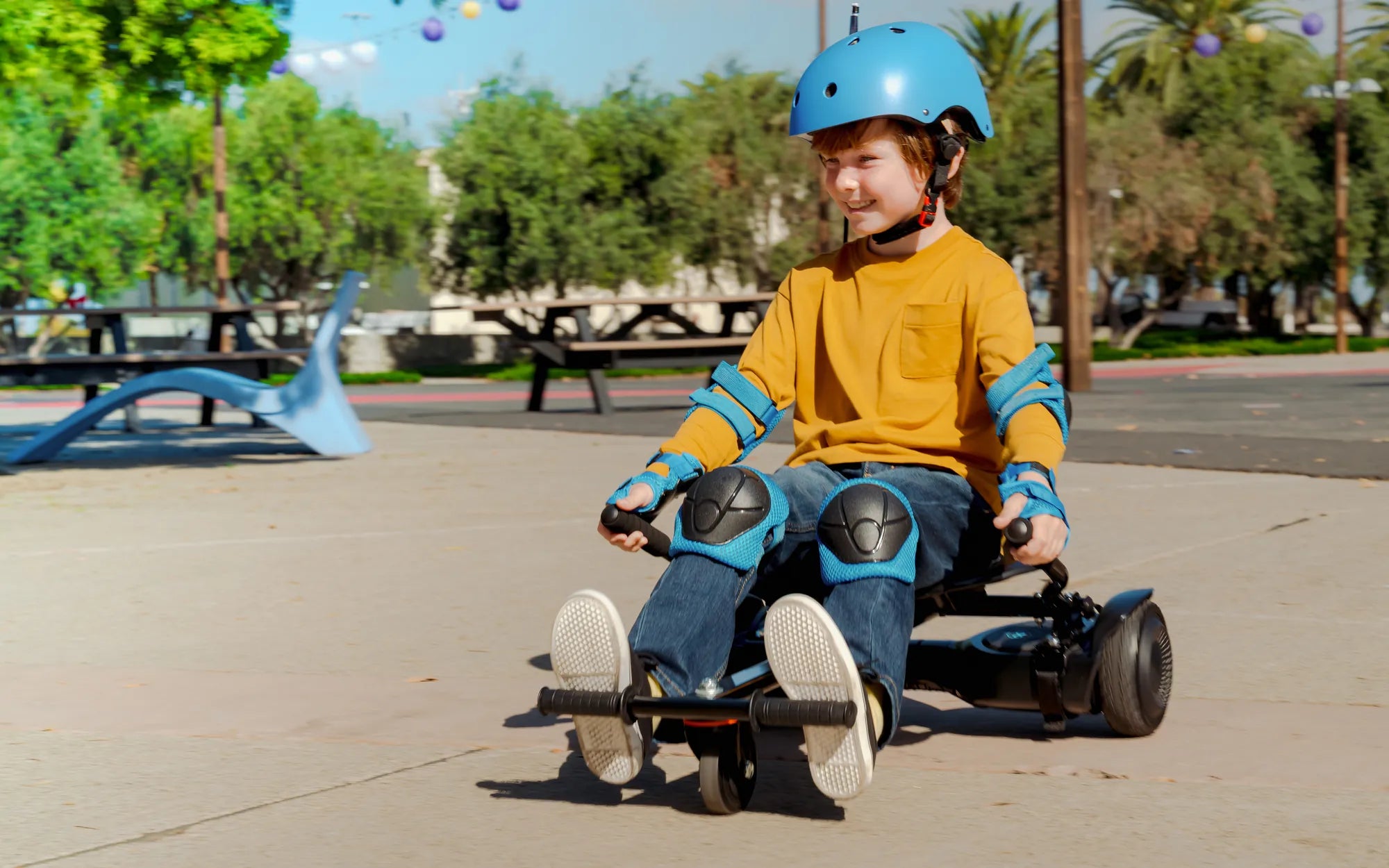
Learning to ride is an achievable skill with the right approach. First, find a flat, open, smooth area free of traffic and obstacles. A basketball court or empty parking lot is ideal. Always wear safety gear: a helmet, knee pads, elbow pads, and wrist guards are non-negotiable for beginners.
Step 1: Mounting. Place the hoverboard on the ground, powered on. Use a wall, railing, or a friend for support. Place one foot firmly on a foot pad, keeping your weight centered. The board may wiggle—this is normal. When stable, quickly but smoothly step your other foot onto the opposite pad. Stand upright with knees slightly bent.
Step 2: Basic Movement. To go forward, gently lean your weight onto your toes. To reverse, lean back onto your heels. The key is subtlety; dramatic leans cause jerky movements. Practice going forward and backward in a straight line, using your support to dismount safely by stepping off one foot at a time.
Step 3: Turning and Steering. To turn right, apply gentle forward pressure with your left foot (or push your right heel slightly). To turn left, apply pressure with your right foot. Start with wide, gentle turns. As confidence grows, you can spin in place by pushing one foot forward and the other backward simultaneously.
Safety, Maintenance, and Legal Considerations
Safety extends beyond learning. Never ride in wet conditions unless your model has a stated IPX5 water-resistant rating. Water can damage electronics and make surfaces slippery. Avoid steep hills beyond your board's rated incline capability, as this can overload the motors and cause a loss of control.
Regular maintenance is simple but crucial. Inspect tires for wear and adequate inflation (for air-filled tires). Check the body for cracks and ensure all screws are tight. Clean the board with a damp cloth, avoiding direct water streams. Most critically, follow proper charging protocol: use only the provided charger, never leave it charging unattended or overnight, and store the board in a cool, dry place.
Legality varies by location. In many US states and UK regions, hoverboards are treated similarly to electric scooters, with regulations often prohibiting them on public roads and sidewalks. They are generally permitted on private property. Always check your local city and state laws before riding in public spaces. Their use is typically at the discretion of property owners in private areas like malls or campuses.
Frequently Asked Questions (FAQ)
Q: Are hoverboards legal on sidewalks and public roads?
A: Laws vary significantly. In most U.S. states, they are not legal on public roads. Sidewalk use is often governed by local city ordinances, which frequently prohibit motorized vehicles. They are most commonly and legally used on private property. Always check your specific local and state regulations.
Q: How long does a hoverboard battery last on a single charge?
A: Real-world range is typically 7 to 15 miles per charge, depending on battery capacity (measured in Wh or Ah), rider weight, terrain, and speed. A larger 4400mAh (158Wh) battery will last longer than a standard 2000mAh battery. Expect 1-3 hours of ride time.
Q: What is the average lifespan of a hoverboard?
A: With proper care, a quality hoverboard from a reputable brand can last 3-5 years. The battery is the primary consumable; UL-certified batteries rated for 500+ charge cycles (like those from Gyroor) will maintain good capacity for 2-4 years of regular use before noticeable range reduction occurs.
Q: Can adults ride hoverboards?
A> Absolutely. Many models are designed for adults with weight limits up to 265 lbs. Key factors for adults are motor power (500W+ dual motors recommended), wheel size (8.5" or larger for stability), and a robust frame. It remains an efficient and fun way for adults to cover short distances.
Q: Why is the UL 2272 certification so important?
A> The UL 2272 standard was created specifically to address fire safety risks in self-balancing scooters. It rigorously tests the entire electrical drive system—battery, charger, and circuitry—for overcharge, short circuit, and mechanical abuse. A UL 2272 certification is the single most important indicator of a safe, well-engineered hoverboard.
The Future is Here – Is a Hoverboard Right for You?
The modern hoverboard is a legitimate, innovative, and immensely enjoyable form of micro-mobility. It answers the question of what's a hoverboard with tangible engineering and practical application. It is the ideal choice for those seeking a compact, recreational ride for short trips, skill development, or simply the joy of gliding effortlessly.
Your experience hinges on choosing a reliable, safe product. Prioritizing UL 2272 certification, adequate motor power for your weight, and durable construction from a trusted brand is crucial. Brands like Gyroor build this foundation with certified batteries, IPX5 water-resistant designs, and a solid 1-year warranty, ensuring your futuristic ride is both thrilling and trustworthy.
If you're ready to embrace this unique mode of transport, your journey starts with informed selection. Explore a range engineered for safety, performance, and durability. Browse the full Gyroor collection, including their advanced hoverboards, electric scooters, and e-bikes, at gyroorboard.com.
Kids Electric Scooter Age 4: The Ultimate Guide for Parents
Electric Scooter for Kids Under 5000: The Ultimate Guide for Parents