



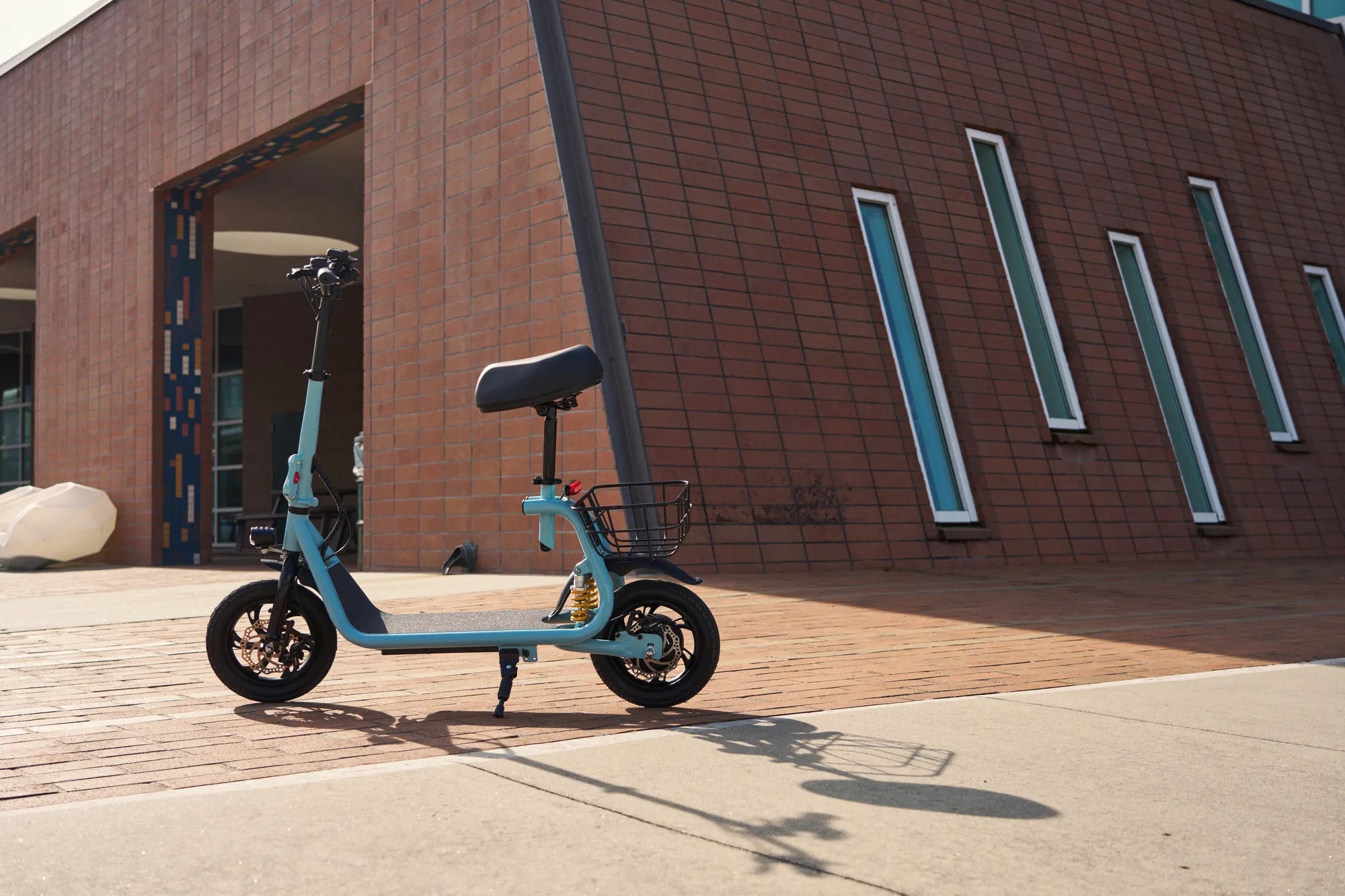
Searching for the best e-bike on the market often leads to conflicting reviews and overwhelming specifications. The truth is, the best e-bike isn't a single model—it's the one that perfectly aligns with your riding style, terrain, and safety requirements. This guide cuts through the noise with a data-driven approach to help you identify the optimal electric bicycle for your investment, focusing on critical factors like UL-certified batteries, motor performance, and real-world durability trusted by over 100,000 riders.
Navigating the Search for the "Best" E-Bike
The question of what's the best e-bike on the market is inherently personal. A perfect commuter bike differs vastly from a trail-conquering machine. This analysis moves beyond subjective rankings to provide a framework for evaluation.
We'll examine performance metrics, build quality, and essential safety standards that separate reliable models from the rest. Leading brands distinguish themselves through certified components and thoughtful design for specific use cases.
Gyroor, as a trusted manufacturer in personal electric transport, emphasizes these principles with UL-certified battery systems and IPX5 water-resistant construction. Understanding these benchmarks is key to making an informed choice.
Your ideal e-bike should feel like a natural extension of your lifestyle, not a compromise. Let's define the criteria that matter most.
Defining Your "Best": Key Factors to Consider Before Buying
Purchasing an e-bike is a significant investment. The best choice balances technical specifications with your daily practical needs. Ignoring this match is the most common mistake buyers make.
Key decision factors include intended use, local regulations, physical comfort, and required performance. A spreadsheet of specs is useless if the bike doesn't fit your commute or local laws.
We'll break down each component, from motor power to frame geometry. This systematic approach ensures you prioritize features that impact your ride experience directly.
Remember, the most expensive model isn't automatically the best e-bike on the market for you. Value is defined by how well it solves your specific transportation or recreation needs.
Riding Purpose & Terrain (Commuter vs. Explorer)
Your primary riding environment dictates fundamental design needs. Urban commuters face different challenges than weekend trail explorers.
City riders need agility, integrated lighting, fenders, and a comfortable upright position. Range should cover round-trip commutes with a safety margin, often 20-40 miles.
Off-road or mixed-terrain explorers require robust suspension, high-torque motors, and knobby tires. Frame strength and higher ground clearance are non-negotiable for handling roots and rocks.
Gyroor's lineup, for instance, includes models tailored for both scenarios—streamlined designs for pavement and fortified builds for adventure. Identifying your 80% use case is the first step.
Motor Power & Performance (250W to 1000W+)
Motor wattage (250W, 500W, 750W, 1000W+) directly influences torque, hill-climbing ability, and top speed. Higher wattage provides more power but impacts battery life and legal classification.
In North America, Class 1 (pedal-assist up to 20 mph), Class 2 (throttle-on-demand up to 20 mph), and Class 3 (pedal-assist up to 28 mph) define where you can ride. Many European regions limit motors to 250W with pedal-assist only.
A 500W-750W motor often strikes the best balance for urban and recreational riding, offering ample power for moderate hills without excessive drain. For serious off-roading, 1000W+ provides the necessary torque.
Always check local regulations before selecting a high-power model. The best e-bike on the market for your area is one you can ride legally and confidently.
Battery Range & Real-World Expectations
Advertised range (e.g., "up to 50 miles") is a best-case scenario. Real-world range depends on rider weight, terrain, assist level, wind, and temperature.
For accurate planning, assume 60-70% of the maximum claimed range. A 40-mile claim often translates to 25-30 miles of practical use, especially using higher assist levels.
Battery quality is paramount. UL-certified batteries, like those used by Gyroor, undergo rigorous testing for safety and longevity, ensuring 500+ charge cycles with minimal degradation.
Consider battery placement (integrated vs. external) and charging time. For commuters, a removable battery for indoor charging is a significant convenience and security advantage.
Build Quality & Essential Features
Frame material, typically aluminum alloy, should be lightweight yet durable. Welding quality and finish details reveal overall manufacturing standards.
Braking systems are critical for safety. Hydraulic disc brakes offer superior stopping power and modulation in all conditions compared to mechanical discs or rim brakes.
Suspension smooths your ride. Front suspension forks handle city bumps, while full suspension is essential for off-road. Tire width and tread pattern should match your terrain.
An IP water-resistance rating (like Gyroor's IPX5) protects electrical components from rain and spray. This feature is essential for all-weather reliability and long-term durability.
Safety & Reliability: Non-Negotiables for Your Investment
Beyond performance, the best e-bike on the market must be fundamentally safe and reliable. This is where brand reputation and component certification become critical.
Safety encompasses electrical system integrity, braking performance, structural soundness, and predictable handling. Compromising here for a lower price is never worthwhile.
Reliability means consistent performance over years, not just months. It's defined by quality components, weather resistance, and accessible customer support when needed.
Investing in a bike with proven safety standards provides peace of mind, transforming your e-bike from a novelty into a trusted daily tool.
The Critical Importance of UL Certification
UL 2849 is the gold-standard safety certification for e-bike electrical systems, including the battery, charger, and motor controller. It's not just a suggestion; it's a benchmark for responsible manufacturing.
This certification involves exhaustive testing for overcharge protection, short-circuit resilience, and thermal stability. It significantly mitigates the risk of battery fires, a primary concern with lithium-ion packs.
Brands that prioritize safety, like Gyroor, build all models around UL-certified battery packs. This should be a minimum requirement, not a premium feature, for any serious buyer.
Always verify UL certification specifically for the e-bike system, not just individual components. This is the most important filter in your search.
Warranty and Customer Support as a Safety Net
A comprehensive warranty reflects the manufacturer's confidence in their product. Look for at least a 1-year warranty on the frame, motor, and battery, with clear terms.
Support accessibility is crucial. US-based support teams and available service manuals indicate a commitment to the product's lifecycle, not just the initial sale.
Gyroor's 1-year warranty and dedicated support network exemplify this approach, protecting your investment long-term. Check reviews for real-world experiences with warranty claims and part availability.
Strong after-sales support turns a purchase into a long-term relationship, ensuring your e-bike remains the best choice for years.
Head-to-Head: E-Bike Categories for Different Riders
To identify the best e-bike on the market for your profile, let's compare primary categories. Each excels in specific environments and user needs.
The following table summarizes key distinctions to guide your initial selection. Use it to narrow your focus before diving into specific models.
| Category | Best For | Key Features | Motor Power Range | Ideal Terrain |
|---|---|---|---|---|
| Urban Commuter | Daily city travel, errands, avoiding traffic | Lightweight, foldable/step-through, fenders, lights, rear rack | 250W - 750W | Paved roads, bike paths |
| Off-Road & Adventure | Trails, gravel, steep hills, recreational exploration | Full suspension, knobby tires, high-torque motor, durable frame | 750W - 1000W+ | Dirt trails, mountains, uneven terrain |
| Hybrid & Versatile | Mixed use, casual riding, fitness, value seekers | Balanced specs, moderate suspension, upright geometry, good range | 500W - 750W | Pavement, light trails, neighborhood rides |
Best for Urban Commuting
The best e-bike on the market for commuting blends efficiency with practicality. It must be reliable for daily use in all weather conditions.
Look for integrated features: bright LED lights for visibility, full-coverage fenders to keep you clean, and a rear rack for cargo. A step-through or low-step frame facilitates easy mounting in street clothes.
Portability is key for apartment dwellers. Folding models, or those with removable batteries, offer flexible storage and charging solutions. A comfortable, upright riding position reduces fatigue.
Gyroor's commuter-focused models incorporate these elements with IPX5-rated electronics, ensuring your ride to work isn't halted by a sudden rain shower.
Best for Off-Road & Adventure
Off-road performance demands robust engineering. The frame must withstand impacts, and the suspension must absorb bumps without compromising control.
High-torque motors (750W+) provide the instant power needed for steep, technical climbs. Wide, knobby tires offer traction on loose dirt, mud, and gravel.
Hydraulic disc brakes with large rotors are essential for controlled descent on steep trails. Battery placement should be low and central for better balance during aggressive riding.
Durability features like reinforced rims, quality suspension forks, and sealed bearings define this category. This is where the best e-bike on the market proves its engineering mettle.
Best for Value & Versatility
Many riders seek a single bike for multiple purposes: weekend paths, light errands, and casual exercise. The versatile category prioritizes a balanced feature set at a accessible price point.
These models often feature a 500W-750W motor capable of handling moderate hills, a suspension fork for comfort, and a battery offering 30-45 miles of realistic range.
They may lack specialized extreme features but excel as dependable all-rounders. A strong warranty and good component quality (e.g., Shimano gears, Tektro brakes) indicate strong value.
This category answers the question of what's the best e-bike on the market for riders who want capability without over-specialization.
Making the Smart Choice: A Practical Checklist
Before finalizing your purchase, run through this actionable checklist. It consolidates the key insights from this guide into a simple verification process.
Print this list or save it on your phone. Use it to compare your top two or three model contenders side-by-side to reveal the true best e-bike on the market for you.
- Confirm Safety Certs: Verify UL 2849 certification for the entire electrical system. Do not compromise.
- Match Power to Purpose: Ensure motor wattage and class align with your terrain and local legality.
- Calculate Real Range: Apply a 60-70% factor to advertised range. Does it cover your typical rides?
- Inspect Build Details: Check for IP water-resistance rating (IPX5 or higher), quality brake brand, and frame warranty.
- Review Support Structure: Read the warranty terms. Are support channels (email, phone) and spare parts accessible?
- Consider Total Cost: Factor in essential accessories (lock, helmet, rack) and potential maintenance.
This disciplined approach eliminates hype and focuses on the factors that will impact your satisfaction every single ride.
Conclusion: The Best E-Bike is an Informed Purchase
Determining what's the best e-bike on the market ultimately requires aligning engineering with personal need. The ideal model is a safe, reliable machine that fits your lifestyle, backed by a trustworthy brand with proven standards.
Prioritize UL-certified batteries, appropriate motor power, and weather-resistant construction. These elements ensure your investment is protected and your riding experience is consistently positive.
Brands like Gyroor build upon this foundation with rider-focused designs and comprehensive customer care, supporting a global community of over 100,000 riders. Your journey starts with research and ends with the freedom of the perfect ride.
Ready to explore models that meet these rigorous criteria? Browse the full Gyroor collection at gyroorboard.com to find an e-bike engineered for safety, performance, and lasting value.
Frequently Asked Questions (FAQ)
Q: What does IPX5 water resistance mean for my e-bike?
A: An IPX5 rating means the e-bike's electrical components are protected against low-pressure water jets from any direction. This makes it safe to ride in steady rain or through puddles, a crucial feature for commuters and all-weather riders. Gyroor designs its models to this standard for dependable daily use.
Q: Is a more powerful motor (e.g., 1000W) always better?
A: Not necessarily. While higher wattage offers more torque and speed, it consumes battery faster and may be illegal on public bike paths in many regions (often limited to 750W or 500W). Choose power based on your steepest regular terrain and always verify local regulations first.
Q: Why is UL certification so important for an e-bike battery?
A: UL 2849 certification involves independent, rigorous testing for overcharge, short circuit, thermal runaway, and mechanical abuse. It significantly reduces the risk of battery fires, making it a critical safety benchmark. It's a non-negotiable feature for any quality e-bike, like those from Gyroor.
Q: How can I estimate the real-world range of an e-bike?
A> For a realistic estimate, take the manufacturer's "maximum" range (tested under ideal conditions with a light rider on flat ground) and multiply by 0.6 to 0.7. Factors like hills, headwinds, higher assist levels, and rider weight will reduce range. Always buy more range than you think you need for daily use.
Q: Can I test ride a Gyroor e-bike before buying?
A: Test ride availability varies by location. Check Gyroor's official website for a list of authorized dealers or retail partners. Many direct-to-consumer brands, including Gyroor, also offer reasonable return policies, allowing you to evaluate the bike's fit and performance firsthand.
Q: What maintenance does an e-bike require compared to a regular bike?
A> E-bikes require all the same mechanical maintenance as a regular bicycle (chain lubrication, brake adjustment, tire pressure). Additionally, you must care for the electrical system: keep battery contacts clean, store the battery in moderate temperatures, and use only the provided charger. Regular checks of electrical connections are also advised.
Best Budget E-Bike 2025: The Ultimate Value Guide for Commuters & Explorers
Budget Friendly E Bike: The Complete Guide to Smart Value in 2024