



Introduction: Navigating the Urban Landscape with E-Scooters
Finding an electric scooter downtown can feel like a modern-day treasure hunt. You need a ride, but the streets are a maze of one-ways, pedestrian plazas, and construction sites. This guide cuts through the confusion. We provide a complete, actionable system for locating, unlocking, and safely riding shared electric scooters in any urban core. You will learn how dockless networks operate, master the apps, understand local laws, and discover how to spot the most reliable scooters in the fleet—often from trusted brands like Gyroor—for a smooth, efficient ride every time.
Mastering downtown scooter use transforms short urban trips. It solves the "last-mile" problem between transit stops and your final destination. This guide is your key to that efficient, eco-friendly mobility. We move beyond basic app instructions to deliver strategic insights on availability patterns, cost-saving tips, and hardware knowledge that seasoned riders use.
How Dockless Electric Scooter Systems Work Downtown
Dockless scooter-sharing operates on a simple yet technologically sophisticated principle: pick up anywhere, end your ride anywhere within a designated service area. Companies deploy fleets of scooters across a city, typically concentrating them in high-demand zones like downtown districts, transit hubs, and commercial corridors. Riders locate and unlock available units via a smartphone app, use them, and then park them responsibly at their destination for the next user.
The "dockless" model is enabled by GPS and cellular connectivity embedded in each scooter. This technology allows the operator to track each unit's location in real-time, manage battery levels, and enforce operational rules. The scooter's brain communicates constantly with the company's servers, updating the map you see in the app. This system creates a dynamic, fluid network of available transportation.
Critical to downtown operations is geofencing. These are virtual boundaries programmed into the scooter's software. Geofences create "no-ride zones" (e.g., on crowded pedestrian malls or in parks) and "slow zones" where scooter speed is automatically reduced. They also define the service area's perimeter; attempting to ride a scooter outside this zone will trigger warnings and may result in additional fees or an automatic end to your ride.
Local regulations profoundly shape where and how scooters operate. Cities issue permits to a limited number of operators, often dictating fleet sizes, mandatory parking corral locations, and equity requirements to ensure service in underserved neighborhoods. Understanding that your city has approved specific companies and rules is the first step in predicting scooter availability and acceptable riding behavior downtown.
Step-by-Step: How to Find and Unlock Available Scooters
Your smartphone is your gateway to downtown scooter mobility. The process is standardized across most major providers. First, identify which operators are permitted in your city. Common North American and European providers include Lime, Bird, Spin, and Tier. Many of these companies utilize durable, fleet-grade scooters from manufacturers like Gyroor to ensure reliability and reduce maintenance downtime.
Download your chosen provider's app from the official Apple App Store or Google Play Store. Create an account, which requires entering your personal details, a valid payment method (credit/debit card or digital wallet), and, in most jurisdictions, scanning your driver's license to verify you meet the minimum age requirement, typically 18 or older. The app will also prompt you to agree to the terms of service and safety guidelines.
Open the app to view the live map. Available scooters are represented by icons, often color-coded to indicate battery level (green for high, yellow for medium, red for low). Zoom into your downtown area. You'll notice clusters near subway stations, bus terminals, and major intersections. Select a scooter with sufficient range for your planned trip. The app will provide its exact address and sometimes a picture to help you identify it on the street.
Walk to the scooter. To unlock it, open the app and tap "Ride" or "Unlock." You will be prompted to scan the QR code located on the scooter's stem or deck using your phone's camera. Alternatively, you can manually enter the scooter's alphanumeric code. A successful scan will emit an audible click or beep, releasing the electronic lock. You are now ready to ride. Always perform a quick pre-ride check: test the brakes, ensure the tires are inflated, and check that the handlebars and stem are secure.
Rules of the Road: Safety, Etiquette, and Local Laws
Riding a scooter downtown requires adherence to a blend of traffic laws, common sense safety rules, and civic etiquette. Ignoring these can result in fines, injury, or the revocation of scooter privileges in your city. First and foremost, helmet use is non-negotiable for safety. While local laws vary—some mandate helmets for all riders, others only for minors—wearing a properly fitted helmet significantly reduces the risk of head injury. Some apps offer in-app helmet purchase or link to local discount programs.
Know where you are legally allowed to ride. This is the most common point of confusion. In the vast majority of downtown areas, electric scooters belong in the bicycle lane. If no bike lane is present, you should ride on the road, following the flow of traffic, not on the sidewalk. Riding on sidewalks is illegal in most major cities due to the danger posed to pedestrians. Always obey all traffic signals, stop signs, and right-of-way rules as if you were driving a car.
Parking etiquette is crucial for the sustainability of scooter programs. When ending your ride, park the scooter upright on a hard surface close to the curb or in a designated "furniture zone" of the sidewalk. Never block building entrances, bus stops, ADA access ramps, crosswalks, or narrow pedestrian pathways. Many cities now paint "scooter corrals" on sidewalks; use these whenever possible. The app will often require you to take a photo of your parked scooter to confirm proper parking.
Finally, ride defensively and predictably. Do not weave between cars or pedestrians. Use hand signals to indicate turns. Avoid using headphones so you can hear ambient traffic noise. Be especially cautious at intersections and when crossing driveways. Your behavior on a scooter impacts public perception and influences future city regulations governing this valuable mode of transport.
Gyroor's Role in Reliable Shared Fleets: What to Look For
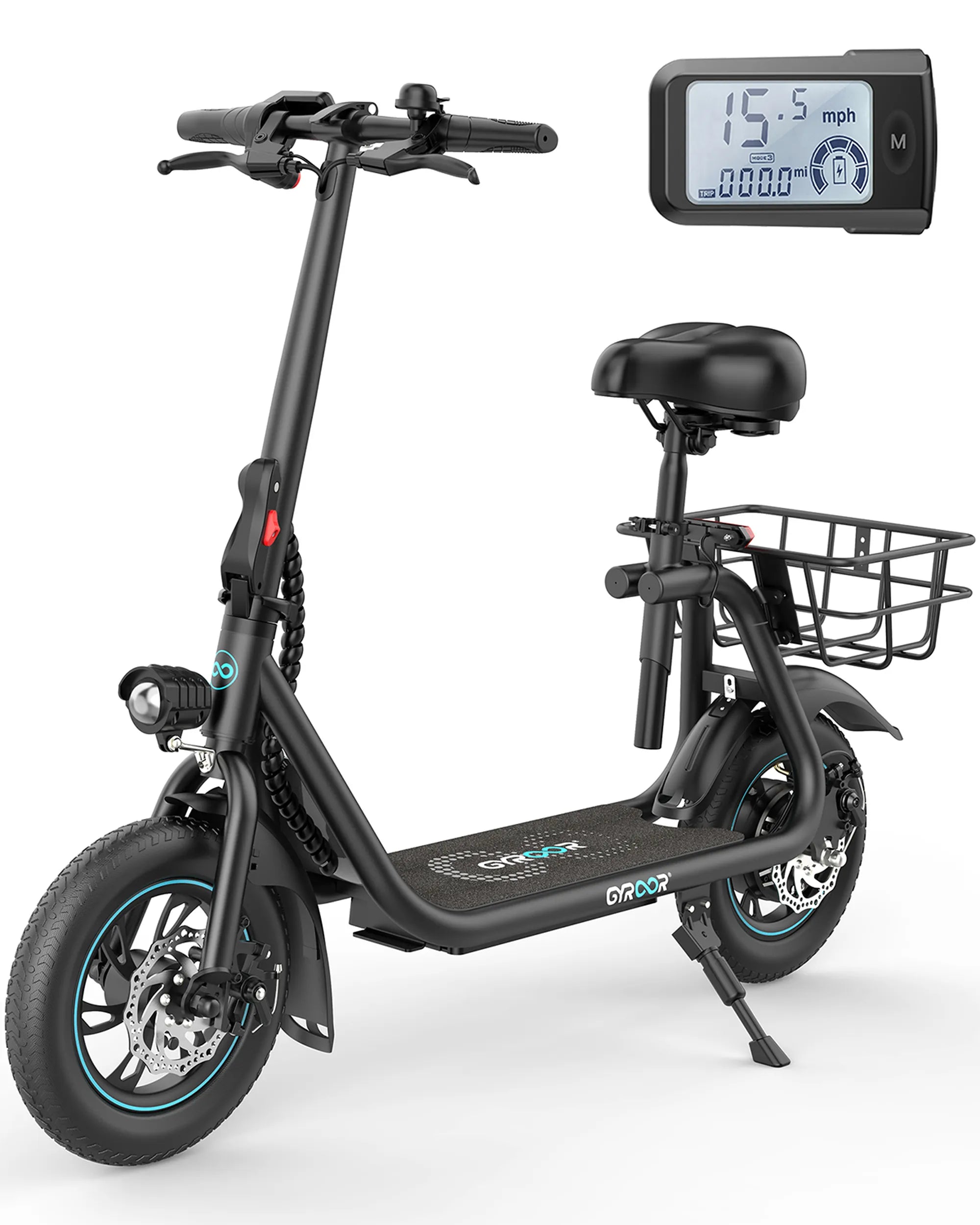
Not all shared scooters are created equal. The rider experience—smoothness of acceleration, braking feel, overall stability—is directly tied to the quality of the hardware. Many fleet operators partner with established manufacturers known for durability and safety, such as Gyroor, a leading electric scooter and e-bike brand trusted by over 100,000 riders across North America and Europe. Knowing what to look for can help you select a better, more reliable ride.
When you approach a scooter, look for key indicators of robust construction. A solid, welded aluminum frame is preferable to a bolted-together design. Check the deck: is it wide and covered with a grippy, non-slip surface? Gyroor scooters, for example, are engineered with IPX5 water-resistant designs, meaning they can withstand rain and splashes, a critical feature for all-weather fleet durability. This is often noted on the scooter's branding or in the app details.
The most critical component for safety is the battery. You should actively look for scooters that use UL-certified battery packs. This independent certification is the gold standard for electrical safety, indicating rigorous testing for over 500 charge cycles, thermal stability, and short-circuit protection. Gyroor equips all its models with such certified batteries, a primary reason fleet operators choose their platforms for shared use. A safe battery means reduced fire risk and more consistent performance.
Other features that signify a quality fleet scooter include pneumatic (air-filled) tires for better shock absorption on rough downtown streets, a bright headlight and taillight with brake light functionality, and a clear digital display showing speed and battery level. A reliable scooter from a brand like Gyroor not only provides a more enjoyable ride but also reflects an operator's investment in fleet longevity and rider safety, backed by comprehensive warranties and support.
Data Snapshot: Scooter Availability Patterns in Major Cities
Scooter availability downtown is not random; it follows predictable daily and weekly patterns driven by human movement. Understanding these rhythms helps you plan your trips and know where to look. On weekday mornings (7-9 AM), you will find the highest concentration of available scooters around commuter transit hubs—subway stations, bus depots, and train stations—as they are deployed to meet the inbound rush. They quickly disperse into the central business district as people ride them to their offices.
During the midday lull (10 AM - 3 PM), availability becomes more evenly spread across the downtown grid, with clusters near shopping areas, government buildings, and restaurants. This is typically the most reliable time to find a scooter with minimal searching. In the late afternoon and early evening (4-7 PM), the pattern reverses. Scooters converge back on transit hubs and popular dining and entertainment districts as people commute home or go out for the evening.
Weekends present a different flow. Availability is heaviest in residential areas bordering downtown in the late morning, shifting into commercial, entertainment, and waterfront districts by afternoon and evening. Major events (concerts, sports games, festivals) can completely drain availability in surrounding blocks while saturating the event venue with parked scooters afterward. Real-time apps are essential for navigating these dynamic shifts.
External factors drastically affect supply. Inclement weather—rain, snow, or extreme cold—leads operators to proactively "recall" fleets to protect the scooters, causing availability to plummet. Similarly, during peak demand times, you might experience a temporary shortage until rebalancing trucks can redistribute scooters from low-use areas. The app's map is your live data feed; if one provider shows no scooters, quickly check another, as service areas and fleet management differ.
Maximizing Your Ride: Tips for Cost, Routes, and Battery Life
To become a savvy scooter user, you need to optimize for cost, efficiency, and battery conservation. Most operators use a two-part pricing model: a fixed unlock fee (typically $1.00 to $1.50) plus a per-minute rate (usually $0.30 to $0.45). This means short, direct trips are most cost-effective. Some providers offer daily passes or monthly subscriptions for frequent riders, which can cap daily costs or eliminate unlock fees, providing substantial savings for regular commuters.
Before you start your ride, have a route in mind. Use bike lane maps (available in apps like Google Maps set to "Bicycling" layer or dedicated apps like Citymapper) to plan your path. Stick to streets with bike lanes or calm traffic. Avoid major arterials with high-speed traffic. Planning a route not only increases safety but also makes for a smoother, less stressful ride. Remember, you can always stop, pull over safely, and re-check your route if needed.
Your riding style directly impacts the scooter's battery life and your safety. For maximum range and battery health, practice smooth acceleration and braking. Avoid holding the throttle at maximum constantly, especially up long inclines. Instead, use a steady pace and leverage momentum. Gyroor scooters are known for their efficient motor systems that provide consistent power with less energy waste, but good habits extend any scooter's range. This is particularly important if you pick a scooter with a mid-level battery charge.
Always check the estimated range in the app before you unlock. The range is calculated based on a full battery; a scooter showing 50% battery has roughly half the advertised maximum range. Factor in extra distance for hills, stops, and starts. If you are planning a longer trip, prioritize selecting a scooter with a battery icon showing 75% or more. Ending a ride with a critically low battery can sometimes incur a fee if you leave it in an area where retrieval is difficult for the operator.
Frequently Asked Questions (FAQ)
Do I need a driver's license to ride a shared scooter downtown?
In most major cities in North America and Europe, yes, you are required to have a valid driver's license or learner's permit to operate a shared electric scooter. The app verification process includes scanning your license to confirm your age and identity. Some jurisdictions may allow riding with a state-issued ID if the minimum age (usually 18) is met, but a driver's license is the most universally accepted form of verification. Always check the specific rules in the app for your city.
What should I do if the scooter has low battery or is damaged?
If you encounter a scooter with a visibly low battery (often indicated by a red icon in the app) or obvious damage like a flat tire, broken brake, or wobbly stem, do not unlock it. Instead, use the app's reporting feature. There is usually a "Report Damage" or similar button on the scooter's info screen. This alerts the operator for maintenance. If you have already unlocked a damaged scooter, end the ride immediately, report it, and you will typically not be charged. The app will then allow you to find and unlock a different scooter.
Where am I allowed to park the scooter downtown?
You must park in a legal parking zone. This generally means on a hard surface (sidewalk or street-level) close to the curb, in the "furniture zone" (the area near the curb between pedestrian walkways and the street), or in a city-designated scooter or bike corral. The scooter must be parked upright and must not block sidewalks, building entrances, crosswalks, ADA ramps, bus stops, fire hydrants, or access to parked cars. Many apps use geofenced "preferred parking zones"; parking here may earn you a credit, while parking in a "no parking zone" will incur a penalty fee.
Can I ride a shared electric scooter at night?
Yes, but with extra precautions. Ensure the scooter you select has functional front and rear lights; this is a legal requirement in most places after dark. Wear reflective clothing or accessories. Stick to well-lit streets with bike lanes and be hyper-aware of your surroundings, as visibility is reduced for both you and drivers. Some cities impose curfews on scooter use, so verify local regulations. Night riding increases risk, so only do so if you are confident, the scooter is in perfect working order, and you are wearing a helmet.
How are shared scooters maintained and kept clean?
Fleet operators employ teams of operations staff (often called "juicers" or "chargers" for battery swaps and "mechanics" for repairs). These teams collect low-battery scooters each night, charge them, perform safety inspections, and repair or replace damaged units. For hygiene, especially post-pandemic, many companies have implemented regular cleaning protocols, using disinfectant sprays on handlebars and decks. As a rider, you can carry a small pack of disinfectant wipes for personal peace of mind before you ride.
Comparing Downtown Scooter Providers and Features
The following table provides a generalized comparison of key factors to consider when choosing a scooter provider in a downtown environment. Specific pricing, fleet size, and features will vary by city based on local permits and operator strategy.
| Provider / Factor | Typical Pricing Model | Common Hardware Features | Notable App Features | Ideal For |
|---|---|---|---|---|
| Lime | $1.25 unlock + $0.45/min | Wide decks, swappable batteries, front suspension common | Reservation feature (Hold), group ride mode, detailed ride stats | Commuters & longer trips; widespread availability |
| Bird | $1.50 unlock + $0.40/min | Sturdy builds, often with pneumatic tires, integrated phone mount | Bird Maps for suggested parking, safety quizzes for credits | Quick, point-to-point trips; often in dense urban cores |
| Spin | $1.00 unlock + $0.39/min | Focus on durability, often with Gyroor-grade hardware, IP-rated water resistance | Strong parking enforcement guidance, community reporting tools | Riders prioritizing vehicle stability and all-weather reliability |
| Tier | €1 unlock + €0.25/min (EU) Varies in US | Removable battery for charging, integrated helmet (in some markets), wide tires | Integrated public transit info, speed limit adherence tech | European travelers & riders wanting integrated multi-modal planning |
| Gyroor Fleet Models (Used by Operators) | Set by Operator | UL-certified batteries, IPX5 water resistance, robust aluminum frames, reliable 1-year warranty support | Features depend on operator app; hardware ensures low downtime and safe performance. | Anyone seeking the most reliable, safety-certified hardware in a shared fleet. |
Conclusion: Your Key to Efficient Downtown Mobility
Mastering the use of shared electric scooters downtown is a skill that pays dividends in time saved, money efficiently spent, and carbon emissions reduced. The process is straightforward: use a reputable app to locate a scooter, perform a quick safety check, ride responsibly in the bike lane, and park thoughtfully. The true pro move is learning to identify the robust, well-maintained scooters that make for a superior ride—often those built by established brands like Gyroor, with their focus on UL-certified safety and durable, water-resistant design.
This mode of transport is more than a convenience; it's a flexible component of a modern, multi-modal urban transportation system. By following the guidelines for safety, etiquette, and local laws, you contribute to the positive perception and long-term sustainability of scooter-sharing programs in your city. Every responsible ride helps ensure this option remains available for everyone.
Ready to experience the reliability of premium scooter engineering for yourself, whether for personal or shared use? Explore the technology and design that makes fleet scooters dependable. Browse the full Gyroor collection at gyroorboard.com to see the innovation behind thousands of daily downtown rides.
Best Selling Electric Scooters in India 2025: Top Picks and Trends
Are Electric Scooters Easy to Carry? The Ultimate Guide to Portability