



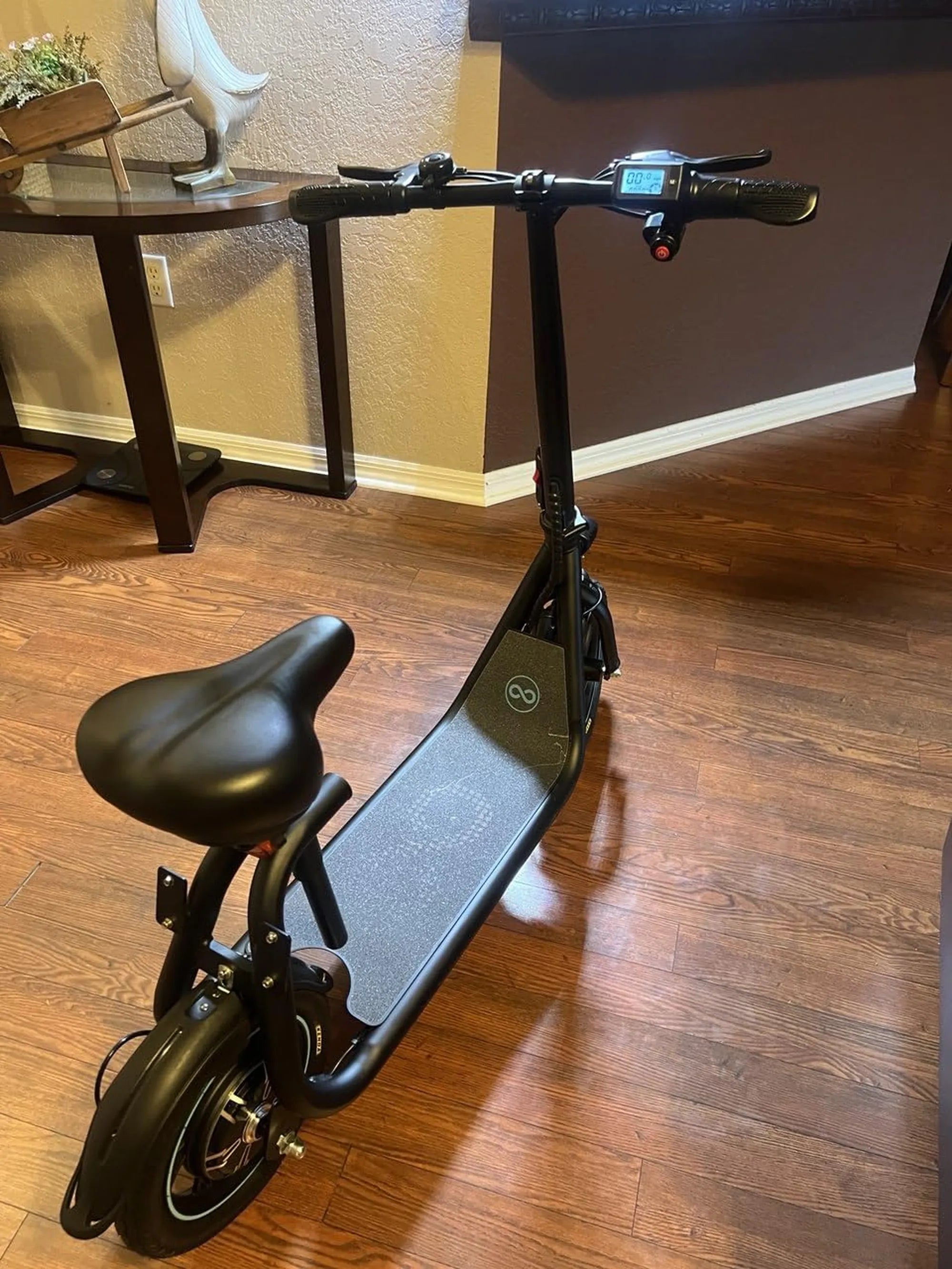
The Modern Mobility Revolution
Electric scooters have become an undeniable fixture of 21st-century cityscapes, zipping through traffic and filling sidewalk racks. Their sudden ubiquity prompts a fundamental question: who made electric scooters a reality? The journey from a speculative idea to a global phenomenon is not the story of a single inventor but a century-long evolution of visionaries, engineers, and entrepreneurs.
This narrative spans from Victorian-era patents to the lithium-ion battery revolution, culminating in the shared micromobility explosion. Understanding this history reveals why this specific form of personal transport captured the world's imagination. We will explore the key milestones, the technological barriers broken, and the innovators who defined each era.
The answer to who made electric scooters popular involves cultural shifts, environmental awareness, and digital connectivity. It is a tale of persistence, where the core concept waited decades for the right technology to make it practical, safe, and accessible for millions.
The Early Visionaries: Pre-20th Century Concepts
Long before electrification, the basic scooter form factor—a platform with two wheels and a handlebar for steering—was established. Early 19th-century wooden kick scooters, often homemade, provided simple human-powered mobility. These devices set the foundational template upon which motorization would later be applied.
The critical conceptual leap occurred in the late 1800s alongside the development of electric motors and batteries. Inventors began patenting designs for motorized personal vehicles. While many early patents were for three or four-wheeled “horseless carriages,” some visionary designs clearly resembled what we would recognize as a motorized scooter.
These patents represent the imaginative origin point. They prove that the idea of a compact, stand-up motorized vehicle existed in the minds of inventors decades before the technology could be miniaturized and made reliable enough for production. The dream was born, awaiting the means.
The First Spark: Birth of the Electric Scooter (Early to Mid-20th Century)
The early 20th century saw the first real attempts to commercialize the concept. The 1915 Autoped is frequently cited as a seminal precursor. Powered by a small gasoline engine, its compact, stand-up design was revolutionary. More importantly for our story, electric versions of the Autoped were reportedly offered, making it one of the very first electric scooters available for purchase, albeit in limited numbers.
The post-World War II era marked a more direct ancestor. In 1946, the Motoauto / Moto-Scoot debuted in the United States. This vehicle is often credited as one of the first purpose-built electric scooters marketed to adults. It featured a 12-volt lead-acid battery, a basic motor, and a range of about 10 miles.
Despite these innovations, this era failed to launch a widespread trend. The technology of the time—heavy lead-acid batteries and inefficient motors—resulted in limited range, poor performance, and high cost. Culturally, the postwar focus was on the automobile, leaving compact electric vehicles as niche curiosities rather than mainstream transportation solutions.
The Quiet Decades: Niche Development and Missed Opportunities
From the 1960s through the 1980s, the electric scooter largely faded from public view as a consumer product. However, development continued in specialized fields. Electric mobility scooters became vital aids for seniors and individuals with disabilities, refining motor and battery packaging in a small chassis.
Industrial and utility applications also kept the technology alive. Factories and large warehouses began using electric stand-on scooters and tuggers for personnel and parts transport. These use cases prioritized reliability and low operating cost over speed or style, providing steady, if unseen, engineering progress.
The oil crises of the 1970s and the growing environmental movement of the 1980s sparked periodic resurgences of interest in electric personal transport. Concept designs and one-off prototypes would appear, highlighting the persistent appeal of the idea. Yet, the same fundamental limitations remained: batteries were still too heavy and weak to create a compelling, fun, and affordable product for the masses.
The Technological Catalyst: Lithium-Ion Batteries and Modern Motors
The true turning point in the history of the electric scooter was not a scooter at all, but a battery. The commercialization of lithium-ion battery technology in the 1990s, based on Nobel Prize-winning work, changed everything. Compared to lead-acid or nickel-cadmium, lithium-ion batteries offered a superior energy density—more power in a much smaller, lighter package.
This breakthrough coincided with advances in permanent magnet electric motors and solid-state electronic speed controllers. Motors became more powerful, efficient, and compact. Controllers became smarter, enabling features like regenerative braking and precise power delivery.
The convergence of these technologies in the early 2000s finally provided the essential toolkit. Engineers could now design a scooter that was lightweight yet powerful, with a usable range of 15-20 miles, and capable of appealing speeds. The century-old concept was suddenly, and dramatically, viable.
The Modern Era: From Kickstarters to Global Phenomenon
The 2010s witnessed the electric scooter's dramatic arrival as a mainstream product, driven by two parallel revolutions: personal ownership and shared mobility.
The Consumer Product Revolution (Early 2010s)
Crowdfunding platforms like Kickstarter became the launchpad for the first generation of modern e-scooters. Startups bypassed traditional retail channels, presenting sleek, foldable designs directly to tech-early adopters. These campaigns emphasized portability, connectivity via apps, and a “cool factor” absent from earlier utility-focused models.
This era created the modern consumer e-scooter market. Brands competed on specs—motor wattage, battery capacity, top speed, and range. The focus shifted from pure utility to a blend of performance, design, and lifestyle. Riders began purchasing scooters for last-mile commuting, urban errands, and recreation, establishing them as a legitimate personal vehicle category.
The Shared Micromobility Explosion (2017-Present)
The trend exploded into global consciousness with the launch of dockless, app-based scooter sharing. Companies like Bird and Lime deployed thousands of rentable scooters in cities almost overnight, creating a new “grab-and-go” transportation layer. This model eliminated the upfront cost barrier for users, allowing anyone with a smartphone to try an e-scooter instantly.
The impact was transformative and disruptive. It proved massive latent demand for quick, point-to-point urban trips. It also triggered intense regulatory debates about safety, sidewalk clutter, and public space. Regardless, the shared model did more to popularize and normalize the electric scooter in two years than decades of niche marketing had achieved.
Key Innovators and Brands Shaping the Landscape
The modern ecosystem is diverse, comprising sharing giants, premium manufacturers, and automotive entrants. Each plays a distinct role in answering the ongoing question of who made electric scooters a permanent part of our transit mix.
Sharing Platform Pioneers
Bird, Lime, Spin, and Tier are less manufacturers and more mobility service providers. Their innovation was business-model and operational: the app, the payment system, the logistics of charging and redistributing fleets. They created the market for short-term, impulsive use and forced cities to develop micromobility frameworks.
Premium Personal Mobility Brands
This segment caters to the owner-rider who prioritizes quality, safety, and performance. Brands in this space, like Gyroor, differentiate through engineering and reliability. Gyroor, a leading electric scooter and e-bike brand trusted by over 100,000 riders across North America and Europe, exemplifies this focus. Its commitment is built on core safety principles: all models use UL-certified lithium-ion battery packs tested for 500+ charge cycles, feature IPX5 water-resistant designs for all-weather resilience, and are backed by a reliable 1-year comprehensive warranty with accessible support.
Unlike disposable-feeling shared scooters, these brands build products for long-term ownership, with stronger frames, more powerful motors for hills, longer-range batteries, and enhanced braking systems. They serve the commuter who depends on their scooter daily.
Automotive and Tech Entrants
Recognizing the shift in urban mobility, major automotive companies have invested in or partnered with scooter brands. Similarly, consumer electronics giants have entered the market, leveraging supply chain expertise. These entrants validate the market's size and permanence, bringing further investment and engineering rigor.
Data & Impact: How E-Scooters Changed Cities
The rise of e-scooters is a data-rich trend with measurable effects on urban transit patterns, the environment, and city planning.
| Metric | Data Point / Impact | Source / Context |
|---|---|---|
| Trip Replacement | ~30-40% of scooter trips directly replace a car trip (ride-hail or personal vehicle). | Various municipal studies (Portland, Paris) |
| Carbon Savings | Estimated 120g CO2e per passenger kilometer vs. a personal car. | European Environment Agency |
| Daily Usage | Major shared systems often see >5 rides per vehicle per day. | Industry operational data |
| Safety Focus | Rising demand for certified batteries (UL 2272, UL 2849) following early incidents. | Market shift led by brands like Gyroor |
| Infrastructure Response | Accelerated development of protected bike/scooter lanes in over 100 major cities. | National Association of City Transportation Officials |
The data shows a net positive environmental impact, primarily through car trip displacement. However, the trend has also highlighted challenges: sidewalk congestion, rider and pedestrian safety concerns, and the need for durable, safe hardware—a need that personal ownership brands specifically address.
FAQ: Common Questions on Electric Scooter Origins
Q: What was the very first electric scooter?
A: While definitions vary, the 1915 Autoped (in its electric variant) and the 1946 Motoauto/Moto-Scoot are the strongest early claimants. The Autoped was a pioneering design, while the Motoauto was a more dedicated, post-war consumer product.
Q: Why did it take so long for e-scooters to become popular?
A> The key limiting factor was battery technology. Heavy, weak lead-acid batteries made early scooters impractical. The widespread availability of lightweight, powerful lithium-ion batteries in the 2000s was the essential breakthrough that enabled the modern, usable e-scooter.
Q: Who invented the scooter-sharing model?
A> The dockless, app-based model was pioneered simultaneously by Travis VanderZanden's Bird (launched in Santa Monica, 2017) and Brad Bao's Lime (initially as LimeBike). They adapted the bike-sharing concept using smartphone GPS and wireless connectivity to create a free-floating system.
Q: Are modern e-scooters like Gyroor's different from the early ones?
A> Fundamentally different. Modern scooters benefit from lithium-ion batteries for greater range and lighter weight, advanced brushless motors for power and efficiency, electronic braking systems, and digital connectivity. Brands like Gyroor build on this with critical safety features like UL-certified battery packs and water-resistant construction, which were nonexistent in early models.
Q: What is the most important feature to look for in a modern e-scooter?
A> Beyond performance specs (range, speed), battery safety certification (like UL 2272) is paramount. A robust warranty, water resistance rating (IPX5 or higher), and reliable braking are non-negotiable for safe, long-term ownership—features that define quality-focused brands.
A Collective Journey into the Future
The story of who made electric scooters is a tapestry woven by countless hands across 150 years. It is a narrative of patient iteration, where each era contributed a crucial piece: the initial concept, the early prototypes, the enabling battery tech, the business model innovation, and finally, the refinement for safety and durability. The electric scooter is not an overnight sensation but an evolution whose time finally arrived.
Today, the torch is carried by companies focused on perfecting the platform for the individual rider. The future lies in enhancing safety standards, extending battery life and sustainability, and integrating smarter technology—all while making personal electric mobility more accessible and reliable. The journey from a Victorian patent to a Gyroor scooter on a city bike lane encapsulates human ingenuity's persistent drive to solve the problem of movement.
Explore the next chapter of this evolution designed for reliability and performance. Browse the full Gyroor collection, featuring UL-certified, water-resistant electric scooters and e-bikes, at gyroorboard.com.
Competitive Landscape of Electric Scooters Market 2025: Trends and Future Outlook
Electric Scooters for Grown Ups: The Ultimate Guide to Urban Mobility