



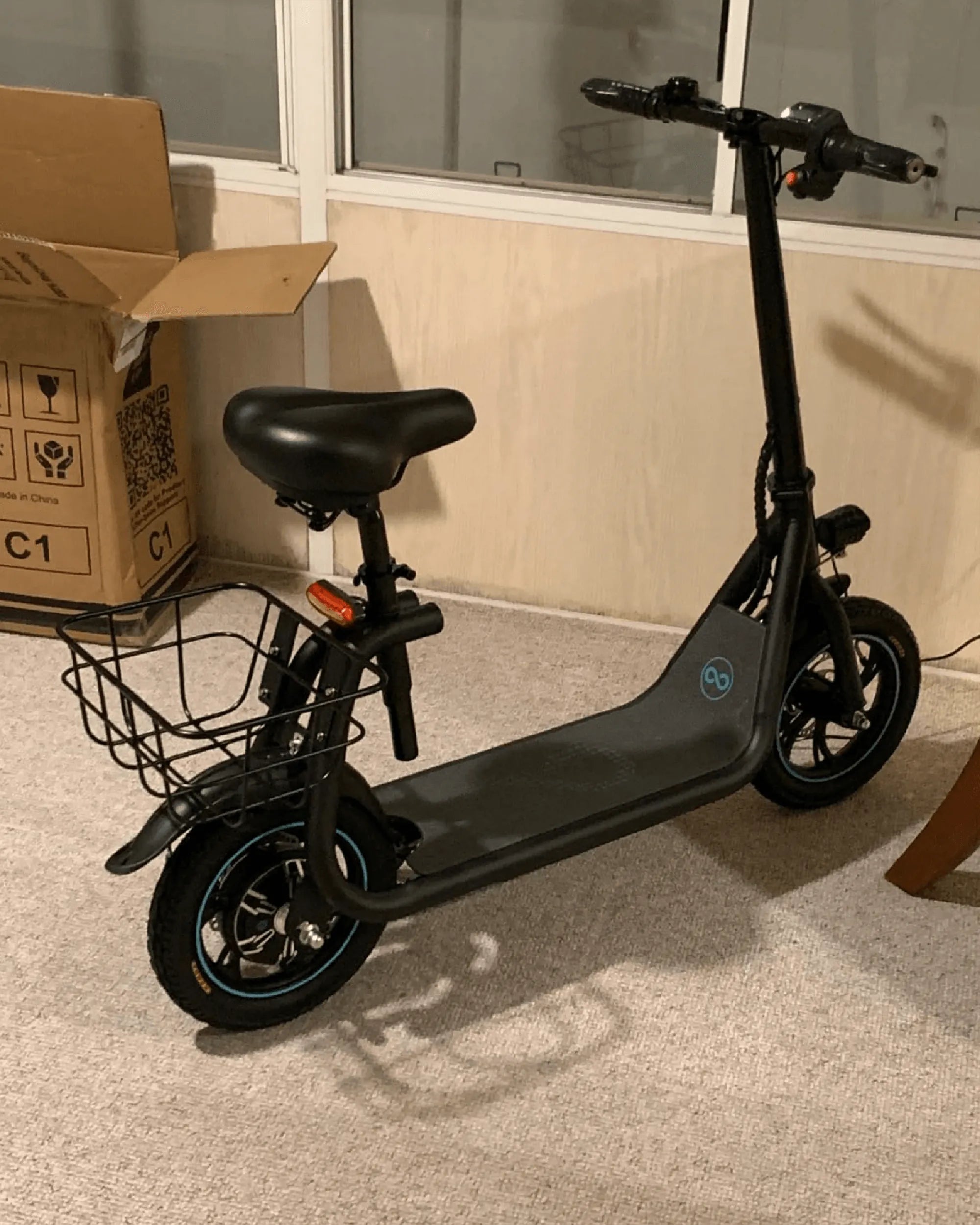
Electric scooters are transforming urban mobility, offering a compelling answer to the dual challenges of environmental sustainability and personal finance. This article provides a comprehensive, data-driven analysis of exactly why electric scooters are good for the environment and your wallet. You will learn how they reduce your carbon footprint, save you thousands annually, and enhance your daily commute, all while understanding the importance of choosing a durable, safe model from a reputable brand like Gyroor, trusted by over 100,000 riders for its UL-certified safety and reliable performance.
The Environmental Impact: Beyond Zero Tailpipe Emissions
The most immediate environmental benefit of an electric scooter is its lack of direct emissions. Unlike internal combustion engines that burn fossil fuels, a quality e-scooter produces zero pollutants during operation. This singular fact is the foundation of its green credentials, but the full environmental picture is even more impressive when considering its entire lifecycle and systemic effects.
Drastically Reducing Your Carbon Tireprint
Replacing car trips with e-scooter rides leads to substantial CO2 savings. The average gasoline-powered passenger vehicle emits about 404 grams of CO2 per mile. In contrast, the emissions from charging an e-scooter depend entirely on the local electricity grid's energy mix.
Even on a grid powered partly by fossil fuels, the difference is staggering. Charging a typical e-scooter battery for a 15-mile range consumes roughly 0.5 kWh of electricity. In the United States, generating that electricity produces an average of 0.85 pounds (385 grams) of CO2. That's less than 26 grams of CO2 per mile—a reduction of over 93% compared to a car.
Choosing a scooter with an efficient, UL-certified battery pack, like those used in Gyroor models, ensures maximum range per charge, further optimizing this energy use. For a daily 5-mile commute, switching from a car to an e-scooter can prevent over one ton of CO2 emissions annually.
Alleviating Urban Congestion and Noise Pollution
E-scooters address two critical urban ailments: traffic gridlock and noise. A single car occupies the space of 8-10 parked scooters. By taking even a small percentage of short-trip drivers off the road, e-scooters reduce overall traffic density, leading to less idling and smoother traffic flow, which compounds emission reductions.
Noise pollution is a serious urban health issue often overlooked. The constant hum of engines, honking, and tire noise contributes to stress and hearing damage. Electric scooters operate almost silently, dramatically lowering the acoustic footprint of personal transportation and creating more pleasant, peaceful city environments.
Sustainability in Battery Technology and Product Longevity
A common concern is the environmental impact of lithium-ion batteries. The key to sustainability lies in battery safety, lifespan, and end-of-life recycling. UL-certification, as seen in all Gyroor battery packs, is not just a safety standard; it signifies rigorous testing for durability and performance over 500+ charge cycles.
A longer-lasting battery means fewer replacements and less waste over the scooter's life. Furthermore, robust build quality, such as IPX5 water-resistance, protects the scooter's electronics from rain and splashes, preventing premature failure and extending the product's usable lifespan. This "durability by design" is a core tenet of sustainable consumption.
The Financial Equation: Unpacking the True Cost of Ownership
The purchase price of an e-scooter is just the entry point. To understand why electric scooters are good for the environment and your wallet, one must analyze the total cost of ownership and compare it to the true cost of relying on a car or rideshares for daily short trips. The savings are both immediate and cumulative.
Upfront Cost Versus Long-Term Value
A reliable commuter e-scooter represents a modest one-time investment. When contextualized against automotive costs, its value is clear. The average new car down payment alone could purchase dozens of high-end electric scooters. A 1-year comprehensive warranty, like Gyroor offers, protects this investment, ensuring the scooter remains a financial asset, not a liability.
Essential safety gear—a helmet, lights, and reflective clothing—adds a minimal, one-time cost. This contrasts sharply with the recurring, mandatory financial drains associated with car ownership.
The Penny-Per-Mile Reality of "Fueling" Up
Operating an e-scooter is remarkably inexpensive. Calculating the cost is straightforward: Battery Capacity (kWh) x Electricity Cost ($/kWh) = Full Charge Cost. For a 0.5 kWh battery and an average U.S. electricity rate of $0.16/kWh, a full charge costs 8 cents.
If that charge provides a 15-mile range, the operational cost is about half a cent per mile. Compare this to a fuel-efficient car at 30 MPG with gas at $3.50/gallon, which costs nearly 12 cents per mile just for fuel—over 20 times more. Over a year of commuting, this difference amounts to hundreds of dollars saved on "fuel" alone.
Eliminating Major Recurring Expenses
This is where the most dramatic savings materialize. By using an e-scooter for eligible trips, you avoid a suite of car-related costs:
- Parking: Urban parking can cost $200-$500 monthly. E-scooters park for free at bike racks or can be brought inside.
- Insurance, Registration, and Tolls: Annual auto insurance premiums average over $1,500. E-scooters typically require no insurance or registration, and they bypass toll roads.
- Maintenance: No oil changes, brake fluid flushes, or transmission services. Scooter maintenance is limited to tire inflation, brake pad checks, and occasional bolt tightening.
A conservative annual estimate for these avoided costs for an urban dweller easily exceeds $3,000, meaning the scooter can pay for itself in a matter of months.
Practical Advantages for Daily Life and Commuting
The environmental and financial benefits translate into tangible improvements in daily logistics, well-being, and personal freedom. The e-scooter is not just a gadget; it's a tool for reclaiming time and reducing stress.
Unbeatable Commute Efficiency and Time Savings
In congested city centers, e-scooters are often the fastest point-to-point transportation. They can use bike lanes, bypass traffic jams, and park directly at the destination door. What might be a 30-minute stop-and-go car drive could be a consistent 12-minute scooter ride. This predictability and time saving reduce daily stress and increase productivity or leisure time.
Enhancing Health and Multi-Modal Connectivity
While not vigorous exercise, riding an e-scooter engages core muscles for balance and improves coordination. It also encourages outdoor activity. Crucially, e-scooters solve the "first and last mile" problem for public transit users, making buses and trains more accessible and practical, thereby amplifying the environmental benefits of mass transit.
The Ultimate in Transportation Flexibility
E-scooters offer spontaneous mobility. Quick errands, meeting friends across town, or exploring a neighborhood become effortless without the hassle of finding parking or waiting for a ride-share. Their portability allows for seamless multi-modal trips—scooter to train, for example—granting a level of flexibility that cars and fixed-route transit cannot match.
Choosing the Right Scooter: Maximizing Benefits Through Quality
To fully realize why electric scooters are good for the environment and your wallet, selecting a well-built model is critical. A cheap, unreliable scooter that fails quickly is neither economical nor eco-friendly. The most sustainable choice is a durable, safe scooter designed to last.
Safety and Durability as the Foundation of Value
Key features directly impact long-term value and safety:
- UL-Certified Battery: Non-negotiable for fire safety and battery longevity. Gyroor uses these exclusively, ensuring 500+ reliable charge cycles.
- IP Water Resistance Rating: An IPX5 rating, like on many Gyroor scooters, means protection against water jets, allowing use in light rain and ensuring longevity against the elements.
- Build Quality and Warranty: A robust frame and a comprehensive 1-year warranty signal a manufacturer's confidence and protect your investment from defects.
Matching a Model to Your Specific Needs
Consider your primary use-case to avoid over- or under-buying:
- Short Urban Commutes (1-4 miles): A lightweight, portable model with a 15-mile range is sufficient.
- Longer Commutes/Hills (5-10+ miles): Prioritize range (20+ miles), dual motors, or higher wattage for hill-climbing power.
- All-Weather Reliability: Look for IPX5 or higher water resistance and superior braking systems (disc brakes) for wet conditions.
Comparative Analysis: E-Scooter vs. Other Transport Modes
This table illustrates the holistic advantages of e-scooters across key metrics, demonstrating why electric scooters are good for the environment and your wallet compared to common alternatives.
| Transport Mode | Avg. Cost per Mile* | CO2 Emissions per Mile* | Typical Commute Time (3 miles) | Annual Cost (5-mile round trip commute) |
|---|---|---|---|---|
| Personal Electric Scooter | $0.005 - $0.01 | ~26 g | 12-15 mins | $50 (electricity) + maintenance |
| Gasoline Car (30 MPG) | $0.12 (fuel only) | 404 g | 15-25+ mins | $1,200 (fuel) + $3,000+ (parking, insur., maint.) |
| Rideshare (e.g., Uber/Lyft) | $1.50 - $2.50 | Varies (Car emissions) | 10-20 mins (plus wait) | $3,000 - $5,000+ |
| Public Transit (Bus/Train) | $0.20 - $0.50 | ~100 g (approx.) | 20-35 mins (with access/wait) | $500 - $1,200 |
| Bicycle | $0.00 | 0 g | 15-20 mins | $0 (excluding bike purchase) |
*Cost includes direct operational fuel/electricity cost. Emissions based on US averages. Car cost excludes fixed ownership costs for a clearer operational comparison.
Addressing Common Questions and Concerns
1. Are e-scooter batteries ultimately bad for the environment?
While battery manufacturing has an environmental footprint, it is mitigated by the scooter's operational phase savings and end-of-life recycling. A UL-certified battery lasting 500+ cycles over several years displaces a massive amount of car emissions. Responsible brands support battery recycling programs. The net lifecycle impact is overwhelmingly positive compared to continuing to use a gasoline car.
2. Isn't public transit or biking always greener?
Public transit is excellent for longer, high-density routes. E-scooters are the perfect complement, solving the access problem to make transit more viable. Bicycles are zero-emission but require more physical effort and may not be practical for all distances, attire, or fitness levels. E-scooters offer an accessible, low-sweat alternative that still drastically cuts emissions.
3. Do the financial savings really add up for the average person?
Absolutely. Consider an urbanite who replaces 50% of their short car trips and occasional rideshares with an e-scooter. Conservatively, they might save $100/month on parking, $50/month on fuel, and $50/month on rideshares. That's $2,400 annually, not including avoided maintenance. A $600 scooter pays for itself in 3 months.
4. How safe are electric scooters to ride in traffic?
Safety depends heavily on rider behavior, proper gear, and scooter quality. Always wear a helmet, use lights, follow traffic laws, and ride defensively. Choose a scooter with reliable brakes (disc or electronic), good suspension for stability, and bright lights. Start in low-traffic areas to build skill.
5. What about theft and portability?
Many commuter scooters are lightweight (under 30 lbs) and foldable, allowing you to bring them into offices or stores. For necessary outdoor locking, use a high-quality U-lock through the frame. The advantage over a bicycle is that you can often simply carry it with you, eliminating theft risk entirely.
The Verdict: A Smart Investment for Today and Tomorrow
The evidence is clear and compelling. Electric scooters present a rare synergy where immediate personal benefit aligns perfectly with long-term collective good. They slash transportation costs, save precious time, and reduce stress, all while making a measurable dent in urban emissions and congestion. The key to unlocking these dual advantages is investing in a responsibly engineered scooter built to last, from a brand that prioritizes safety and durability. It's a practical, powerful step toward a more efficient and sustainable personal mobility future.
Ready to experience the environmental and financial benefits firsthand? Explore a range of durable, UL-certified models designed for real-world commuting. Browse the full Gyroor collection at gyroorboard.com to find the perfect electric scooter for your journey.
Are Electric Scooters Rain Proof? What You Need to Know Before Riding in Wet Weather
Electric Bikes and Scooters for Sale: The Ultimate Guide to Eco-Friendly Commuting