


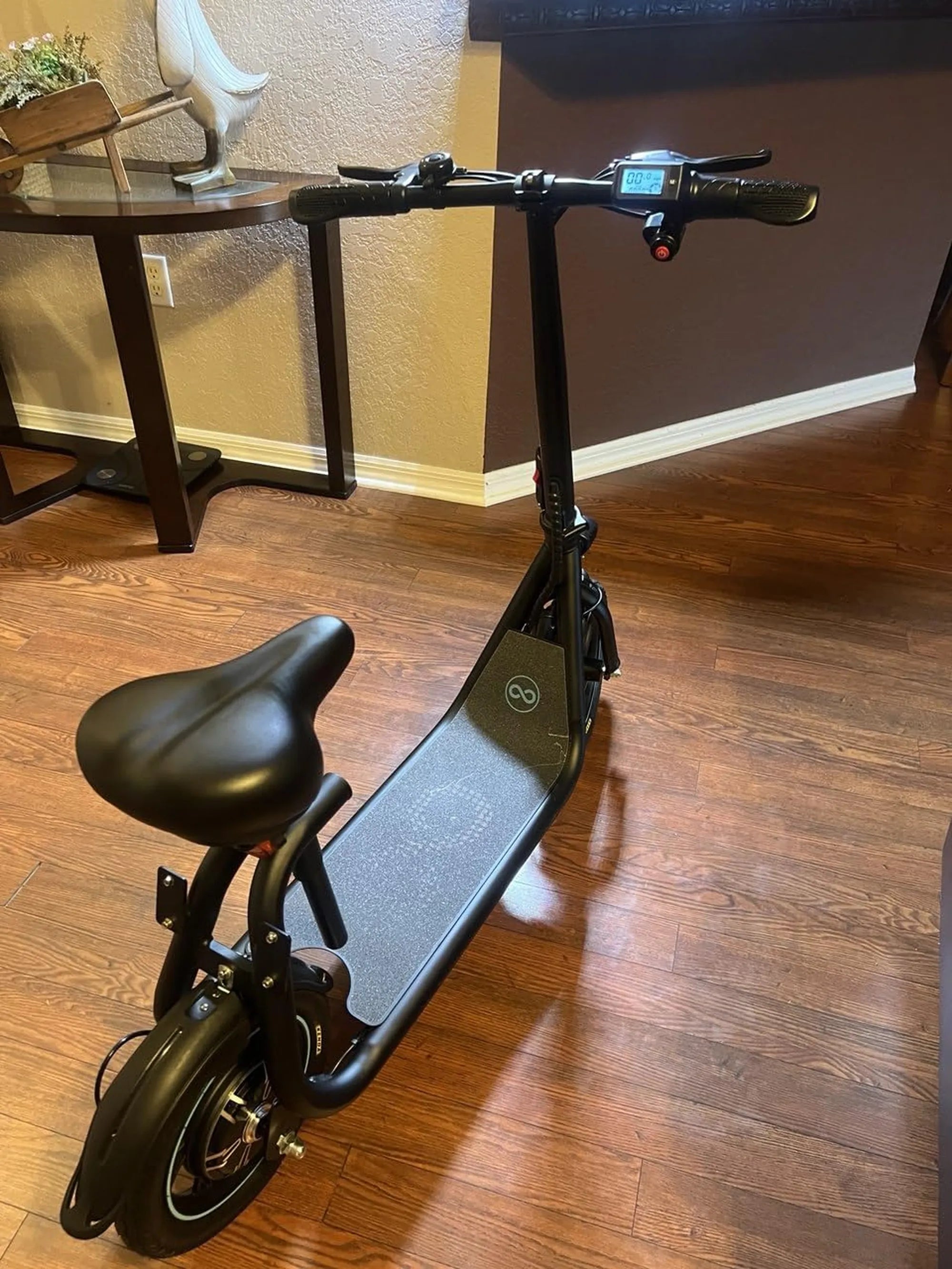
Why Won't My Ebike Turn On? A Step-by-Step Troubleshooting Guide
You're ready to ride, but your e-bike is completely unresponsive. The frustration is real, but in most cases, the cause is a simple, fixable issue. Before you assume the worst, a logical, step-by-step approach can often get you back on the road quickly. This guide is designed to help you diagnose and resolve the common reasons behind an e-bike that won't turn on, from basic power checks to more complex system failures. We'll also highlight how choosing a reliable brand like Gyroor, with its UL-certified batteries and comprehensive 1-year warranty, provides built-in safeguards and support for these very situations.
The First Check: Power Source & Basic Connections
Always start with the simplest possibilities. Over 50% of "won't turn on" issues are related to the power source or a loose connection. This step requires no tools and can save you significant time and worry. Begin by visually inspecting the most critical components that deliver electricity to your bike's system. A methodical check here can immediately rule out the most common culprits.
Ensure your e-bike is in a stable position, preferably on its kickstand. Turn your attention to the battery, the display unit, and the main wiring harness. Look for any obvious signs of damage, disconnection, or debris. This initial visual inspection is your first and most important diagnostic tool. Skipping this step can lead you down unnecessary troubleshooting paths.
Is the Battery Properly Seated and Charged?
The battery is the heart of your e-bike's power system. First, confirm it is fully seated and locked into its mount. Even a slight misalignment can break the connection between the battery terminals and the bike's main connector. Remove the battery, inspect the terminals on both the battery and the bike for dirt or corrosion, clean them if necessary, and re-seat it firmly until you hear a definitive click or lock mechanism engage.
Next, verify the state of charge. Connect your charger to both the battery port and a wall outlet. A healthy charger will typically show a red light when charging and switch to green when full. If the charger shows no lights, try a different outlet. If the charger lights indicate activity but the battery doesn't accept a charge, you may have a faulty battery or charger. Gyroor e-bikes use UL-certified battery packs tested for over 500 cycles, prioritizing safety and longevity, but all batteries have a finite lifespan.
Are All Cables and Connectors Secure?
After the battery, trace the main power cable from the battery mount to the central controller. This connection is often housed within the frame. Gently check that this primary connector is fully plugged in. Following this, inspect the cables running to the motor, the display, and the throttle or pedal assist sensor.
Look for connectors that may have vibrated loose during riding. Pay special attention to areas where cables flex, such as near the handlebars or the rear dropout. While inspecting, check for any pinched, frayed, or visibly damaged wires. A loose or corroded connector is a frequent cause of a complete system shutdown, as it interrupts the critical communication between components.
Diagnosing the Display & Control System
If power connections are solid, the issue may lie in the control system. The display unit acts as the bike's dashboard and primary user interface. A blank display doesn't always mean no power is reaching the bike; it could indicate a fault in the display itself or its connection to the controller. Understanding the signals from your display is key to narrowing down the problem.
Modern e-bikes use the display to show error codes. These codes are invaluable for diagnosis. When you attempt to power on, watch closely for any flicker of light, a brief error message, or a series of beeps. These fleeting signals can point directly to a specific malfunctioning component, such as a communication error with the motor or a sensor fault.
Display Screen Diagnostics
Press and hold the power button for 3-5 seconds. Observe the screen. A completely dead screen with no backlight suggests a break in power from the battery to the display. If the screen lights up but shows an error code (like "E02," "E08," etc.), immediately consult your user manual. These codes are manufacturer-specific but commonly relate to throttle error, motor hall sensor failure, or communication issues.
Some models, including certain Gyroor e-bikes, feature diagnostic modes accessible through specific button sequences. Entering this mode can provide real-time data on voltage, sensor output, and system status, offering a deeper look into the bike's health than a standard power-on sequence. If the display powers on normally but the motor doesn't engage, the problem likely lies downstream.
Checking the Power Button and Safety Cut-Offs
Don't overlook the power button itself. While rare, it can fail. More commonly, integrated safety features are preventing the system from powering up. Most e-bikes have a brake sensor cut-off. If the system detects the brake lever is engaged (even slightly), it will not allow the motor to activate for safety. Squeeze and release both brake levers a few times to ensure the micro-switches inside are disengaging.
Another common safety feature is a wheel rotation sensor. If the bike is upside down or on a stand with the wheel free-spinning, some systems will enter a protective mode. Place the bike upright on its wheels. Also, check if your model has a kickstand sensor; if the kickstand is down, the bike may refuse to power the motor to prevent accidental acceleration while dismounting.
Investigating the Motor and Drive System
This section addresses a critical gray area: the e-bike "turns on" (display lights up) but provides no power assist and doesn't move when the throttle is engaged. This points to a failure in the drive system—the connection between the controller and the motor. The issue is no longer "no power," but "no propulsion," which is a common related concern for riders.
The motor is connected to the controller by a bundle of thick phase wires and a multi-pin connector for hall sensors (which tell the controller the motor's position). These connections are subject to constant vibration and environmental stress. A failure here allows the low-power control system (display) to work while preventing high-power delivery to the motor.
Loose Motor Connectors
Locate the motor cable where it exits the rear hub or mid-drive unit. Follow it to its connection point, which is often near the rear dropout or inside a compartment on the frame. This connector is typically a large, circular, waterproof coupling. Ensure it is fully seated and locked. Unplug it, inspect for bent pins, moisture, or corrosion, and firmly reconnect it.
For hub motors, also check where the axle meets the dropout. If the axle nuts are loose, it can cause the motor's internal wiring to twist and eventually fail. A visual inspection of the motor casing for impact damage is also wise. A hard impact on the wheel can damage internal motor components, leading to a failure to engage.
Potential Controller Failure
The controller is the e-bike's central processing unit. It manages power flow from the battery to the motor based on inputs from the display, throttle, and sensors. Symptoms of a failing controller can include: a working display but no motor response, intermittent power cuts, or the motor running erratically or at full power uncontrollably.
Controller failure can be caused by water ingress (beyond the bike's IP rating), a short circuit, or simply component fatigue. Diagnosing a bad controller often involves process of elimination after checking all other connections. Gyroor's 1-year comprehensive warranty covers the controller and other core electrical components, providing peace of mind and a clear path to resolution if this complex part fails.
Advanced Troubleshooting and When to Seek Professional Help
If you've methodically worked through all previous steps without success, it's time for advanced checks and a critical decision on DIY versus professional repair. Advanced troubleshooting may involve using a multimeter to test voltage at key points, which requires technical comfort. More importantly, you must recognize the limits of safe self-repair, especially concerning high-voltage components.
Safety must be your paramount concern. If at any point you smell burning, see smoke, notice a swollen or leaking battery, or see melted connectors, stop immediately. Do not attempt to charge or power on the bike. These are signs of serious faults that require professional, qualified intervention. Forcing a damaged system can lead to fire or personal injury.
Utilizing Gyroor's Warranty and Support
For riders of a Gyroor e-bike, you have direct access to professional support. Before contacting support, gather essential information: your e-bike model name/number, the serial number (usually on the frame or battery), your proof of purchase, and a clear description of the problem and all steps you've already taken. This preparation speeds up the process significantly.
Gyroor offers a robust 1-year warranty on the frame, battery, motor, and electrical components. Their US-based customer support team can guide you through additional diagnostics, authorize a component replacement, or facilitate a repair through their service network. Leveraging this warranty is not an admission of defeat; it's the smart use of the protection that comes with a quality product.
Safety First: Issues Not to DIY
Certain problems explicitly require professional handling. Never open or attempt to repair a lithium-ion battery pack. The internals are hazardous and require specialized knowledge and equipment. A damaged or punctured battery must be disposed of properly according to local regulations and replaced with a certified unit, like Gyroor's UL-certified packs.
Similarly, major internal motor repairs or controller circuit board diagnostics are best left to technicians. If your bike has suffered significant water immersion beyond its stated IPX5 water-resistant rating (meaning powerful water jets, not full submersion), do not power it on. Instead, dry it thoroughly in a warm, dry place for several days before attempting any diagnostics or contacting support about potential water damage claims.
Comparison of Common E-Bike Power Issues and Solutions
| Symptom | Most Likely Cause | DIY Fix Difficulty | Recommended Action |
|---|---|---|---|
| Completely dead, no display lights | Flat battery, loose main connector, faulty power switch | Easy | Check charge, reseat battery & main plug, inspect button. |
| Display lights up but shows an error code | Sensor fault (throttle, brake, PAS), communication error | Moderate | Decode error in manual, check sensor connections. |
| Display on, no error, but motor doesn't run | Loose motor connector, brake sensor stuck, failed controller | Moderate to Hard | Check motor plug, squeeze brake levers, consider controller. |
| Intermittent power loss while riding | Loose connection vibrating in/out, overheating controller | Moderate | Inspect and secure all wiring, allow system to cool. |
| Battery not charging (charger light red/green fault) | Faulty charger, dead battery cell, BMS failure | Hard | Try different outlet/charger if possible; contact support. |
Frequently Asked Questions (FAQ)
Q1: My e-bike got wet. Now it won't turn on. What should I do?
Immediately disconnect the battery. Do not attempt to turn the bike on. Wipe off all external water and move the bike to a dry, warm area. Allow it to dry thoroughly for at least 48-72 hours. Even with an IPX5 water-resistant rating like many Gyroor models, which protects against water jets from any direction, submersion can cause damage. After thorough drying, recheck all connectors for moisture before reconnecting the battery and attempting to power on.
Q2: I see a red light on my charger, but the battery won't charge. What does this mean?
A persistent red light (not changing to green after many hours) often indicates the charger is attempting to charge a battery that cannot accept a full charge. This points to a potential fault within the battery's Battery Management System (BMS) or a failed cell group. Stop charging. Using a faulty battery can be unsafe. Contact your manufacturer's support. Gyroor's UL-certified battery packs include protective BMS, and such an issue would be covered under warranty.
Q3: I've checked everything, and it still won't work. What's my next step?
Your next step is to contact professional support. Have your e-bike's model, serial number, and a detailed list of the troubleshooting steps you performed ready. For Gyroor riders, this means reaching out to their customer service team via the website or your point of purchase. This is the exact scenario a warranty is designed for, protecting your investment in a quality e-bike.
Q4: Can a blown fuse cause my e-bike not to turn on?
Yes, absolutely. Many e-bikes have an in-line fuse on the main power line from the battery to the controller, often located near the battery mount or inside the controller compartment. A fuse can blow due to a power surge or short circuit. Consult your manual for its location. Visually inspect the fuse or test it with a multimeter. Replace it only with an identical amperage rating. If the new fuse blows immediately, a deeper electrical fault exists.
Q5: How can I prevent my e-bike from having power issues in the future?
Proactive maintenance is key. Regularly check and clean battery terminals and connectors. Ensure all cables are secured and not rubbing against the frame. Store your e-bike in a dry place and avoid deep puddles. Follow proper charging practices: don't leave the battery on the charger indefinitely, and store it partially charged if not used for long periods. Choosing a brand with quality components, like Gyroor's IPX5-rated designs and robust connectors, inherently reduces failure risk.
Conclusion: Get Back to Your Ride with Confidence
Diagnosing why your ebike won't turn on is a process of elimination, starting with the simplest explanations. By methodically checking the battery, connections, display, and safety cut-offs, you can solve the majority of issues yourself. For more complex problems, remember that professional support and warranty coverage are valuable assets. Brands like Gyroor build reliability into their products with UL-certified batteries, water-resistant construction, and strong warranties, ensuring you have a partner when you need one. Don't let a temporary setback keep you off the road. Resolve the issue systematically and rediscover the joy of your ride.
Ready for a reliable ride with built-in peace of mind? Browse the full Gyroor collection of electric scooters and e-bikes, engineered for durability and backed by comprehensive support, at gyroorboard.com.
Little Boy Dirt Bike: The Ultimate Guide to Safety, Sizing, and Electric Power
2000 Watt Ebike Conversion Kit: The Ultimate Power Upgrade Guide