



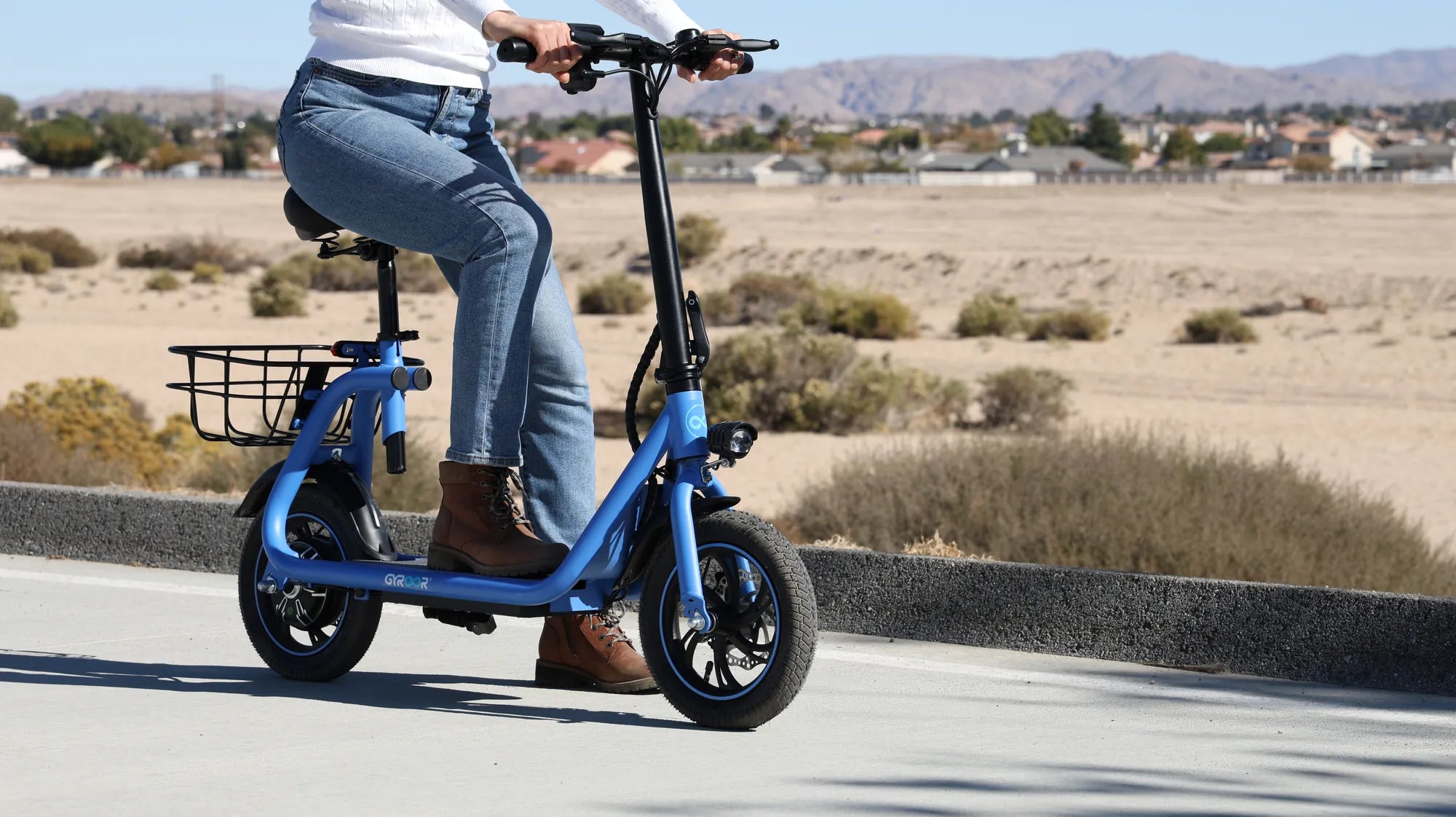
Introduction: Yorkshire's Urban Landscape and the E-Scooter Revolution
The future of urban mobility in Yorkshire is being silently reshaped on two wheels. From the congested commuter routes into Leeds to the historic, narrow streets of York, a quiet revolution is offering a smarter way to travel. Yorkshire Electric Scooters: The Future of Urban Mobility in the UK is not just a prediction; it's an observable trend driven by pressing urban challenges and technological innovation.
This article will provide a detailed analysis of why electric scooters are uniquely suited to Yorkshire's diverse landscape. We will examine the economic and environmental case, identify the critical features required for local conditions, and explore how brands engineering for reliability, like Gyroor, are setting the standard. Finally, we will look ahead to a connected, multi-modal transport future for the region.
Why Electric Scooters are Ideal for Yorkshire's Cities and Towns
Yorkshire's urban centres present a unique set of transport dilemmas. Cities like Leeds, Sheffield, and Bradford face chronic congestion, with INRIX data ranking Leeds among the UK's most congested cities. Parking is expensive and scarce, particularly in historic cores. Meanwhile, many commutes are under five miles—a distance inefficient for cars and often slow via bus due to traffic.
Electric scooters emerge as a potent solution to these problems. They offer door-to-door convenience without the parking headache, can navigate stationary traffic, and operate at a fraction of the cost of car ownership or daily public transport fares. For students in Sheffield and Leeds, professionals, and urban residents, they represent unprecedented personal mobility freedom.
Environmentally, the shift aligns perfectly with ambitious local net-zero targets. Cities like York and Sheffield have declared climate emergencies and are actively promoting active travel and zero-emission transport. E-scooters produce zero direct emissions, contributing to cleaner air in city centres—a significant benefit for public health.
Navigating Historic Streets and Modern Commutes
The compact and agile nature of electric scooters is a perfect match for Yorkshire's urban fabric. In York, navigating the Shambles or the city walls is impossible for cars and cumbersome for bikes in crowded conditions. An e-scooter's slim profile and tight turning circle make it ideal.
Simultaneously, the extensive and growing network of cycle paths and greenways in cities like Leeds and along routes like the Trans Pennine Trail provides safe, dedicated corridors for scooter travel. This blend of ancient infrastructure and modern active travel networks creates an ideal environment for micro-mobility to thrive, connecting residential areas, universities, and business districts efficiently.
The Financial and Environmental Case for E-Scooters
The economic argument for e-scooters is compelling. Let's break down a typical cost comparison for a Yorkshire commuter traveling 4 miles each way, five days a week.
| Transport Mode | Upfront Cost | Estimated Annual Running Cost | Carbon Impact (per km) |
|---|---|---|---|
| Car (Petrol, City Driving) | £3,000+ | £1,500 - £2,500 (Fuel, Tax, Insurance, Parking) | ~170g CO2 |
| Public Transport (Bus) | N/A | £600 - £900 (Season Ticket) | ~105g CO2* |
| Mid-Range Electric Scooter | £400 - £700 | £20 - £40 (Electricity, Maintenance) | ~5g CO2** |
*Dependent on grid energy mix and vehicle occupancy. **Based on UK grid electricity carbon intensity. The scooter's near-zero operational emissions directly combat urban air pollution, a key concern in Yorkshire's city centres.
Key Features to Look for in a Yorkshire-Worthy E-Scooter
Yorkshire's variable climate and topography demand more than a basic scooter. Choosing a model built for these conditions is crucial for safety, longevity, and enjoyment. The market is diverse, but key features separate suitable commuter tools from fragile toys.
Durability is paramount. The scooter must withstand wet conditions, occasional potholes, and consistent use. A robust frame, typically from aerospace-grade aluminium, is a minimum. Tyre choice matters: pneumatic (air-filled) tyres offer better shock absorption on cobbles and uneven tarmac, while solid tyres eliminate punctures but can give a harsher ride.
Conquering Yorkshire Hills: Motor Power and Range
Sheffield isn't called the "Steel City" for nothing; its famous seven hills demand respect. A scooter with insufficient power will struggle, forcing the rider to kick-push and draining the battery rapidly. For Yorkshire's inclines, a continuous motor rating of at least 350W is essential, with 500W or more providing confident climbing power for steeper gradients.
Range is equally critical. Advertised ranges are often based on ideal lab conditions. In real-world Yorkshire use—factoring in hills, stop-start traffic, cooler temperatures, and rider weight—a scooter with a 25km claimed range may only achieve 15-18km. For a reliable commute, target a model with a battery capacity supporting a real-world range exceeding your daily distance by at least 50%.
Built for the Weather: Durability and Water Resistance
Rain is a frequent feature of Yorkshire life. A scooter's Ingress Protection (IP) rating indicates its resilience to dust and water. For reliable UK use, an IPX4 rating (protection against water splashes from any direction) is the bare minimum. A rating of IPX5, like that found on Gyroor models, means it can withstand low-pressure water jets, making it safe to ride in rain and through puddles.
This engineering protects the battery, motor controller, and display from moisture ingress, which is the primary cause of electrical failure. After riding in wet conditions, a quick wipe-down is still recommended to prolong the scooter's life and prevent corrosion.
Safety and Compliance: Riding Responsibly in the UK
The legal landscape for private e-scooters in the UK is currently in a trial phase. As of now, it is illegal to ride a privately owned e-scooter on public roads, cycle lanes, or pavements. Their legal use is restricted to private land with the landowner's permission. This is a crucial distinction from rental e-scooters, which are part of government-approved trials in some regions.
Regardless of future law changes, safety features are non-negotiable. A reliable braking system—disc brakes or electronic regenerative brakes combined with a foot brake—is essential. Bright front and rear lights, reflectors, and an audible bell are mandatory for being seen and heard. Always wear a helmet, and consider high-visibility clothing for darker Yorkshire evenings.
Gyroor E-Scooters: Engineered for Reliability in the UK Market
In a market seeking trustworthy solutions, Gyroor has established itself as a leader by focusing on the engineering fundamentals that matter for demanding environments like Yorkshire. Trusted by over 100,000 riders across North America and Europe, the brand's philosophy centres on safety, durability, and performance.
Gyroor's product development directly addresses the key Yorkshire requirements. Their scooters feature motors from 350W to 500W+ for hill-climbing, IPX5 water-resistant designs for all-weather capability, and robust frames built for daily commuting. This focus on core reliability, backed by verifiable data and certifications, positions them as a benchmark for consumers wary of substandard products.
The Importance of UL-Certified Batteries and Warranty
The battery is the heart and most critical safety component of an e-scooter. Gyroor's use of UL-certified battery packs is a decisive differentiator. UL certification involves rigorous testing for electrical, mechanical, and environmental hazards, including overcharge, short circuit, and crush tests. This independent verification drastically reduces the risk of battery fires—a primary consumer concern.
Paired with a reliable 1-year warranty, this certification provides tangible peace of mind. It signifies a brand's confidence in its product's longevity and its commitment to customer support. For a UK rider investing in an e-scooter as a serious transport tool, these are not just features; they are essential criteria for a safe and sound investment.
Comparing Scooter Types for Yorkshire Use Cases
Not all riders have the same needs. A student's requirements differ from a suburban commuter's. The table below compares common scooter profiles against key performance metrics relevant to Yorkshire.
| Use Case & Rider Profile | Recommended Motor | Min. Real-World Range | Key Features Priority | Example Terrain |
|---|---|---|---|---|
| Urban Student (Campus & City) | 250W - 350W | 15 km | Portability, Lightweight, Cost | Leeds University campus, flat city paths |
| City Commuter (5-10km commute) | 350W - 500W | 20 km | Range, IPX5 Rating, Comfort, Lights | Sheffield hills, Leeds ring road cycle paths |
| Suburban Explorer (Mixed terrain) | 500W+ | 25 km+ | Power, Suspension, Large Pneumatic Tyres | York river paths, Bradford park trails, moderate hills |
| Performance / Long-Distance | Dual Motor 500W+ | 35 km+ | Dual Brakes, Max Range, Speed Modes | Long Trans Pennine Trail sections, steep inclines |
This comparison highlights that for the typical Yorkshire commuter facing hills and rain, the "City Commuter" or "Suburban Explorer" profiles offer the necessary blend of power, weatherproofing, and range.
The Future of Urban Mobility in Yorkshire: A Connected Vision
The true potential of electric scooters is unlocked through integration. The future envisions them as a key component of a seamless multi-modal transport network. Imagine docking your e-scooter at Leeds or Sheffield train station, completing your "last mile" to the office, and using a unified app to plan and pay for the entire journey.
Local authorities are exploring Mobility as a Service (MaaS) platforms, and e-scooters could be a central pillar. This would reduce reliance on single-occupancy cars for short trips, decongesting hubs like York's railway station. Technology such as geofencing could automatically limit scooter speed in pedestrian-heavy zones like the Shambles, enhancing safety.
Furthermore, advances in battery technology and connectivity will lead to smarter scooters with diagnostic capabilities, theft recovery features, and more efficient energy use. This evolution will solidify their role not as novelties, but as intelligent nodes in Yorkshire's future transport ecosystem.
Essential Safety Tips and Maintenance Advice
Ownership carries responsibility. Regular maintenance ensures safety and extends your scooter's life. Before each ride, perform a quick check: tyre pressure and condition, brake function, light operation, and that all folding mechanisms are securely locked.
After riding in wet conditions, dry the scooter with a cloth, paying attention to the brake discs and deck. Avoid storing it in a damp state. Check and tighten bolts periodically, as vibrations can loosen them. Lubricate the folding mechanism and brake pivots as per the manufacturer's instructions.
Always ride defensively. Assume car drivers have not seen you. Use hand signals for turning. Do not use headphones. Respect pedestrians—slow down and give ample space when passing. Your vigilance is your most important safety feature.
Frequently Asked Questions (FAQ)
Q1: Are private e-scooters legal on public roads in Yorkshire?
A: No. Currently, it is illegal to ride a privately owned e-scooter on public roads, cycle lanes, or pavements anywhere in the UK, including Yorkshire. Their legal use is confined to private land. Only rental scooters in official government trial areas are permitted on public roads.
Q2: What is the best e-scooter for hills in Sheffield?
A: Look for a model with a continuous motor rating of at least 500W for reliable power on steep inclines. A scooter with good torque at low speeds is ideal. Ensure the battery capacity is sufficient, as hill climbing consumes more energy and reduces range.
Q3: How do I maintain my e-scooter in rainy Yorkshire weather?
A> First, ensure it has a suitable IP rating (IPX5 is recommended). After a wet ride, wipe it down thoroughly. Store it in a dry place. Regularly inspect for water ingress, especially around the deck where the battery is housed, and check that brake pads haven't been compromised by grit and water.
Q4: Why is a UL-certified battery so important?
A: A UL-certified battery has passed independent, rigorous safety tests for fire, electrical, and mechanical hazards. This certification is the gold standard for consumer electronics and is critical for a high-power device like an e-scooter, ensuring the highest level of safety for you and your property.
Q5: Can I take my e-scooter on public transport in Yorkshire?
A: Policies vary by operator. Some bus and train companies may allow folded e-scooters at the driver's/conductor's discretion, provided they are not obstructing aisles. It is always best to check directly with the transport provider (e.g., TransPennine Express, Northern) before your journey.
Embracing a Smarter Way to Travel
The evidence is clear: electric scooters present a compelling solution to Yorkshire's persistent urban mobility challenges. They offer an efficient, cost-effective, and environmentally friendly alternative for short trips, reducing congestion and improving air quality in our historic cities and bustling towns. The future of urban mobility in the UK is being written on the streets of Leeds, Sheffield, and York today.
As this market evolves, the imperative for consumers is to prioritize safety, durability, and certified quality. Choosing a scooter engineered for real-world conditions, backed by proper safety certifications and reliable support, is the only responsible choice. It is the path to a sustainable, connected, and efficient transport future for Yorkshire.
Ready to explore reliable, well-engineered electric scooters built for demanding environments? Browse the full Gyroor collection, featuring UL-certified batteries, IPX5 water-resistant designs, and a trusted 1-year warranty, at gyroorboard.com.
How Many MPH Do Electric Scooters Go: Speed, Safety, and Performance Explained
Electric Scooter Adult Electric Scooters: The Ultimate Guide to Urban Mobility