


Navigating Melbourne's E-Scooter Landscape
The sight of electric scooters zipping through Melbourne's laneways and along its bike paths has become common, yet confusion about their legality remains widespread. This article answers the pressing question: Are electric scooters legal in Melbourne? The answer is nuanced, hinging on a critical distinction between government-approved shared rental schemes and privately-owned devices. We provide a complete, up-to-date guide to Victorian state laws, City of Melbourne trial rules, safety mandates, and the practical realities for riders. Understanding these rules is essential to avoid significant fines and ensure safe, responsible riding.
Melbourne's approach is currently one of controlled trials. While many residents own e-scooters, their legal use on public land—footpaths, bike lanes, and roads—is heavily restricted. This guide cuts through the misinformation, offering a data-driven breakdown of where you can legally ride, what the speed limits are, and how to participate in the official shared schemes. We'll also examine the features of compliant scooters, should regulations change, referencing models from leading brands like Gyroor, trusted by over 100,000 riders for their UL-certified batteries and robust safety features.
The Legal Framework: Victorian State Laws for E-Scooters
In Victoria, the legal status of an electric scooter is defined by the Road Safety Act 1986 and its associated regulations. The law categorizes vehicles based on their motor power and maximum speed. For public road-related areas (which include footpaths, bicycle paths, and roads), a device is generally considered a "motor vehicle" if its motor exceeds 200 watts or if it can travel faster than 10 km/h without human propulsion.
This classification creates a significant legal hurdle for private e-scooters. Most personal e-scooters marketed for adults have motors ranging from 250W to 1000W and top speeds between 25 km/h and 50 km/h. Under current state law, these are classified as motor vehicles. To be driven legally on public land, they would require registration, compulsory third-party insurance, and the rider to hold a valid driver's license—none of which are available for these devices in Victoria.
Consequently, riding a privately-owned e-scooter that exceeds 200W or 10 km/h on any public footpath, bike path, or road is illegal. The only legal avenues for their use are on private property with the owner's permission. This stands in stark contrast to the visible presence of shared e-scooters, which operate under a specific, government-sanctioned trial framework with exemptions from these usual motor vehicle requirements.
Private vs. Shared E-Scooters: A Critical Distinction
This distinction is the cornerstone of e-scooter legality in Melbourne. Approved "shared scheme" e-scooters, operated by companies like Neuron and Lime, are part of a state-government-authorized trial. These trials grant specific exemptions, allowing these scooters to be used on certain public paths under a strict set of rules. The scooters themselves are geofenced, speed-limited, and designed for the trial's parameters.
Private e-scooters, regardless of their specifications, do not have these exemptions. A common misconception is that a low-powered scooter is legal. However, the 200W/10 km/h threshold is exceedingly low; most entry-level adult scooters far exceed it. Therefore, the purchase of a personal e-scooter in Melbourne should be made with the clear understanding that its use is effectively confined to private land until state law changes.
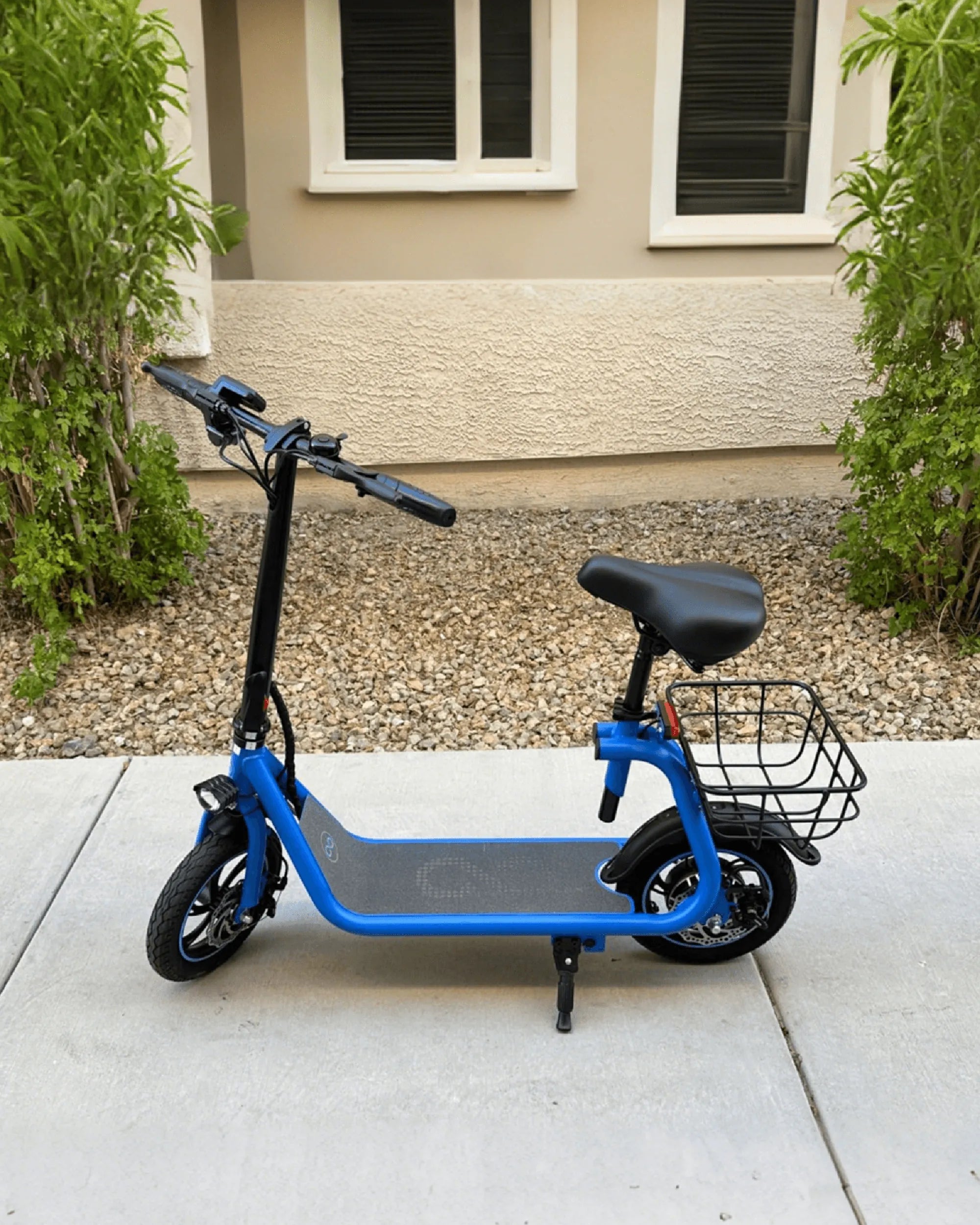
For those using private property, choosing a reliable model from a reputable brand is crucial for safety. Brands like Gyroor engineer their scooters with features such as UL-certified battery packs (tested for 500+ charge cycles), IPX5 water resistance for Melbourne's unpredictable weather, and dual braking systems, which represent the kind of safety-first design that future regulations may mandate.
Melbourne's E-Scooter Trials: Where and How to Ride Legally
The legal way to ride an e-scooter on Melbourne's public paths is through the government-approved shared schemes. The trial, which has been extended, operates across multiple local government areas, most notably within the City of Melbourne, Yarra, and Port Phillip councils. These trials are designed to assess safety, community impact, and integration with existing transport networks.
In the City of Melbourne trial area, which covers the CBD and inner suburbs, you can legally ride shared e-scooters from Neuron and Lime. The operational zone is clearly defined within the provider's apps. Key boundaries generally include the CBD, Southbank, Docklands, Carlton, parts of North Melbourne, and stretching into South Yarra and St Kilda Road. Riders must start and end their trips within this geo-fenced zone.
Specific rules govern these trial rides:
- Speed Limits: A general limit of 20 km/h applies. In designated "slow zones," often in high-pedestrian areas, scooters are automatically reduced to 15 km or even 10 km/h via geofencing.
- No-Ride Zones: Scooters will slow to a stop or not operate in prohibited areas like the Bourke Street Mall, certain parks, and busy pedestrian precincts.
- Parking Rules: Riders must end their trip in a designated parking area (shown in the app) and must not block footpaths, building access, or disability ramps. Improper parking can result in fines.
To access a scooter, download either the Neuron or Lime app, create an account, verify your driver's license (learner permits are accepted), and use the in-app map to locate an available scooter. Payment is per minute, with an initial unlock fee.
Safety Rules and Rider Responsibilities
When riding a legal shared e-scooter, adherence to safety rules is not just advisable—it's legally enforced and critical for public safety. The mandatory requirements align closely with bicycle laws but with specific additions for motorized devices.
Helmets are compulsory for all riders in Victoria. Shared scheme operators provide helmets attached to each scooter, and riders are responsible for wearing them. Failing to do so can result in a $207 on-the-spot fine. Riders must be 18 years or older and hold at least a learner's permit for a car or motorcycle. It is illegal to carry passengers; e-scooters are for solo use only.
Riders must not operate an e-scooter under the influence of alcohol or drugs. The same blood alcohol concentration (BAC) limits that apply to drivers (zero for learners and probationary license holders, under 0.05 for full license holders) apply to e-scooter riders. Victoria Police can conduct roadside tests, and penalties include heavy fines and loss of your driver's license.
On shared paths and footpaths where riding is permitted, riders must always give way to pedestrians. A bell or warning device must be used to alert pedestrians when overtaking. Riding on the road is generally prohibited for shared e-scooters, except when crossing at intersections or where no other path exists. When on a road, riders must follow standard road rules.
Choosing a Compliant E-Scooter: What to Look For
While private e-scooter use on public land is not currently legal, many residents purchase them for use on private property or in anticipation of future law reform. When selecting a scooter, prioritizing features that align with safety standards and potential future regulations is wise.
Key features to consider include:
- Lighting: A bright front headlight and rear brake light for visibility, plus reflectors.
- Braking System: A reliable dual-braking system (e.g., electronic regenerative plus disc or drum brake) for safe stopping in all conditions.
- Build Quality & Warranty: A robust frame and a comprehensive warranty. Gyroor, for instance, offers a reliable 1-year warranty on its models, covering major components.
- Battery Safety: Perhaps the most critical feature. Look for UL-certified or similarly internationally recognized battery standards to mitigate fire risk.
Models like the Gyroor S2 or H20 exemplify this approach, featuring integrated safety lighting, IPX5 water-resistant ratings suitable for damp conditions, and batteries that have undergone rigorous safety testing. These features represent the benchmark for responsible personal mobility device manufacturing.
Potential Penalties and the Future of E-Scooter Laws
Ignorance of the law is not a defense, and the penalties for illegal e-scooter use in Melbourne can be substantial. Victoria Police and local council officers can issue fines for a range of offenses.
| Offense | Potential Fine (Approx.) | Demerit Points (if licensed) |
|---|---|---|
| Riding an unregistered motor vehicle (private e-scooter on public land) | $925 | N/A (but vehicle can be impounded) |
| Riding an unlicensed motor vehicle | $462 | N/A |
| Failing to wear an approved helmet | $207 | N/A |
| Riding with a prescribed illicit drug in blood or over BAC limit | Up to $1,846 (first offense) | 10+ and license suspension |
| Carrying a passenger on an e-scooter | $207 | N/A |
| Illegal parking of a shared e-scooter | $30 - $100 (via operator fee) | N/A |
The future of e-scooter laws in Victoria is under active review. The state government is assessing data from the shared scheme trials, including accident rates, public feedback, and transport integration. A national regulatory framework is also being developed, which may standardize rules across states, potentially legalizing certain classes of privately-owned e-scooters with defined power (e.g., 250W or 500W) and speed limits (e.g., 25 km/h) for use on bike lanes and lower-speed roads.
Any future legalization will likely come with strict conditionality: mandatory helmet use, minimum age requirements, banned use on footpaths in high-traffic areas, and compulsory safety features like lights and bells. Riders should stay informed by monitoring official announcements from VicRoads and the Department of Transport.
Frequently Asked Questions (FAQ)
Q: Can I ride my personal e-scooter to work in Melbourne?
A: No, not legally on public footpaths, bike paths, or roads. Under current Victorian law, personal e-scooters that exceed very low power/speed thresholds are classified as unregisterable motor vehicles. Riding them on public land can result in fines exceeding $900. The only legal option for a commute is to use a shared e-scooter within the trial zone, if your route permits.
Q: Do I need a license to ride a shared e-scooter?
A: Yes. You must be at least 18 years old and hold a valid car driver's license (including a learner permit) or motorcycle license. You will need to verify your license through the Neuron or Lime app before your first ride.
Q: What is the speed limit for e-scooters on bike paths?
A> For shared e-scooters in the trial, the maximum speed is 20 km/h on most bike paths and shared paths. In designated "slow zones," the speed is automatically reduced via geofencing to 15 km/h or 10 km/h. For private e-scooters, since they are not legal on these paths, their speed capability is irrelevant for public use.
Q: Are electric scooters legal in Melbourne CBD?
A> Shared rental e-scooters from Neuron and Lime are legal within the designated trial zone, which includes the CBD. Privately-owned e-scooters are not legal for use in the CBD or any other public area.
Q: What happens when the trial ends?
A> The trial has been extended multiple times as data is collected. The government will use the findings to decide on a permanent regulatory framework. Outcomes could include making the shared schemes permanent, legalizing certain private e-scooters, or even banning them altogether—though the former two options are considered more likely given global trends.
Conclusion: Riding Smart and Staying Legal
The legality of electric scooters in Melbourne is defined by a clear, if restrictive, framework. Currently, the only legal way to ride on public land is through the sanctioned shared e-scooter trials operated by Neuron and Lime within specific council areas. Privately-owned e-scooters, regardless of where they are purchased, are not permitted for use on footpaths, bike lanes, or roads, and riding them risks substantial fines.
Safety must be the paramount concern for all riders. Wearing a helmet is non-negotiable, respecting pedestrians is essential, and understanding the geofenced rules of shared schemes is key to a legal ride. For those considering a personal e-scooter for private land use or in hope of future law changes, investing in a model from a reputable brand with certified battery safety, robust construction, and proper safety features is a critical decision.
As regulations evolve, staying informed through official channels like VicRoads is crucial. For now, ride the shared schemes by the rules, prioritize safety above all, and look forward to a future where clear, sensible laws might open more avenues for this efficient mode of transport. To explore a range of premium, safety-focused electric scooters and e-bikes designed with the highest engineering standards, browse the full Gyroor collection at gyroorboard.com.
Lithium Electric Scooters: The Future of Urban Mobility
Are Electric Scooters Cool? The Ultimate Guide to Their Appeal