

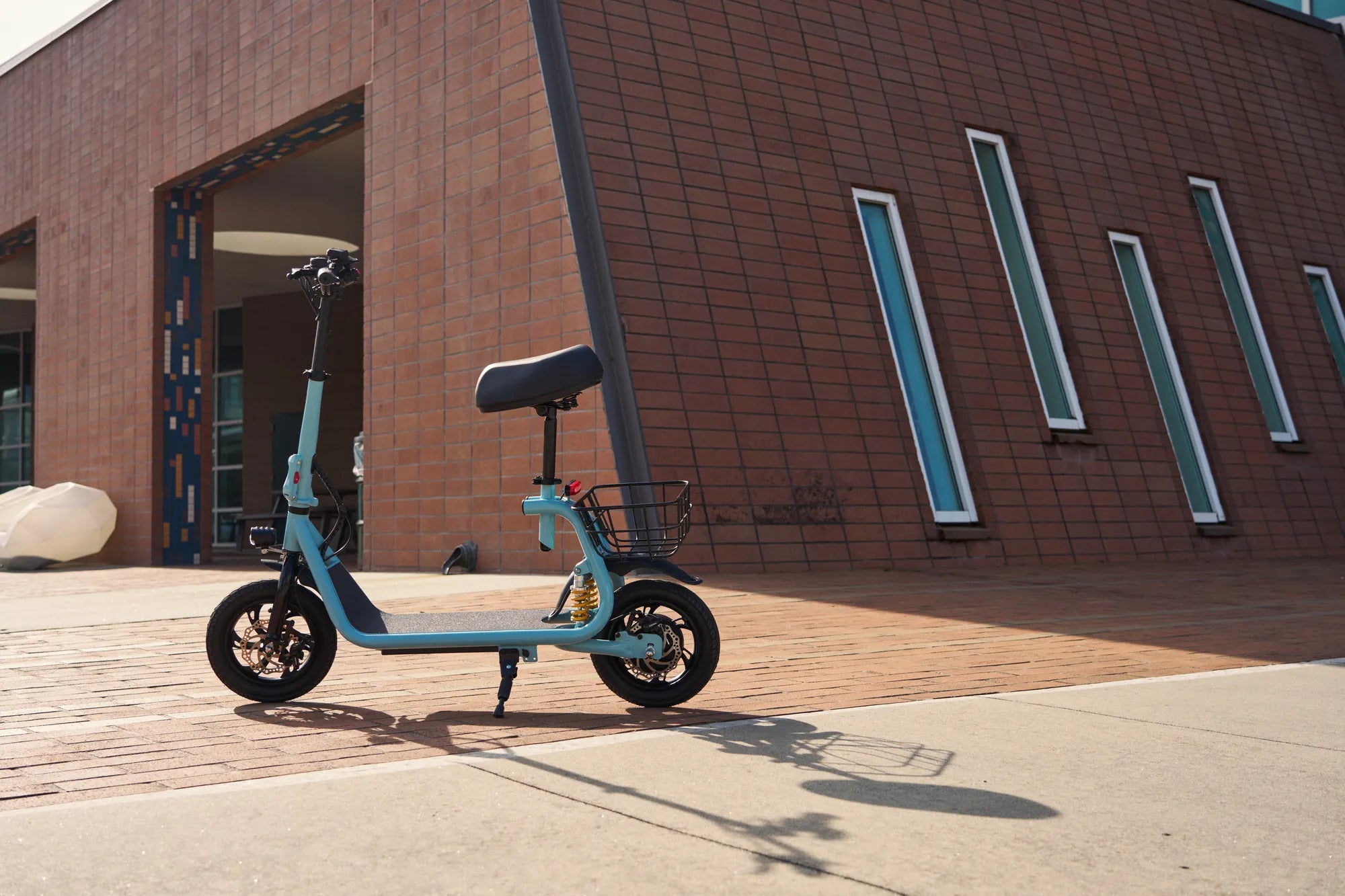
Why Electric Scooter Security Can't Be an Afterthought
Your electric scooter represents a significant investment in freedom, convenience, and fun. It's also a prime target for theft. The average cost of a quality e-scooter makes it a lucrative item for thieves, and the personal disruption of losing your primary commute or recreation vehicle is immense. Effective security for electric scooters is not a single product but a holistic strategy. This guide provides the essential, actionable layers you need to implement, transforming your scooter from an easy target into a fortress on wheels.
Adopting a comprehensive approach is crucial because thieves often look for the path of least resistance. A single weak point can compromise your entire investment. We'll move from the fundamental physical lock to smart habits, technological aids, and legal safeguards. By the end, you'll have a clear, step-by-step plan to keep your ride safe, whether it's a quick grocery stop or parked overnight.
The Foundation: Choosing and Using a High-Quality Lock
Your lock is your most visible and critical deterrent. Viewing it as an integral part of your scooter's cost is essential. Skimping here risks the entire investment. A high-quality lock serves two purposes: it physically prevents theft and signals to potential thieves that your scooter is not worth the extra time and noise required to break into.
The market offers various options, but not all provide adequate protection for an e-scooter's value. You need a lock that can withstand bolt cutters, leverage attacks, and sustained picking attempts for several minutes. The goal is to make stealing your scooter more trouble than it's worth compared to a less-secured alternative nearby.
Lock Types Decoded: U-Locks, Folding Locks, and Heavy-Duty Chains
Understanding the strengths of each lock type allows you to match security to your specific needs. U-locks (or D-locks) offer the best security-to-weight ratio. Their rigid, hardened steel shackle resists cutting and leverage attacks effectively. Look for models with a double-locking mechanism and a thickness of at least 13mm. They are ideal for securing the scooter frame to a solid object.
Heavy-duty chain locks provide superior flexibility. A quality chain, with links at least 10mm thick, paired with a robust padlock (preferably of equal quality), can secure your scooter to a wider variety of posts and racks. The downside is significant weight. Folding locks offer a compromise, with rigid steel bars connected by rivets, providing good portability and decent security, though often not matching the top-tier shear strength of a premium U-lock.
| Lock Type | Best For | Security Level | Portability | Key Consideration |
|---|---|---|---|---|
| U-Lock (D-Lock) | Maximum security for short stops; frame-to-post locking | Highest (with 13mm+ shackle) | Moderate (can be mounted on scooter) | Ensure shackle size fits your scooter frame and common parking objects. |
| Heavy-Duty Chain | Versatile locking to irregular objects; long-term parking | High (with 10mm+ links & robust padlock) | Low (very heavy) | Weight is a major factor; consider carrying it in a backpack. |
| Folding Lock | Commuting; good balance of security and carry convenience | Medium to High | High (compact when folded) | Check the hardness rating of the steel bars and the integrity of the rivets. |
| Cable Lock | Secondary lock only; securing removable components | Low (easily cut) | High (lightweight) | Never use as a primary lock. Only for supplementary security. |
The Art of Proper Locking Technique
Even the world's best lock is ineffective if used incorrectly. The golden rule: always secure the frame of your scooter to a fixed, immovable object. Locking only the wheel allows a thief to simply remove the wheel and walk away with the rest of the scooter. Position the lock so the keyhole faces downward, making it harder for debris to clog it or for thieves to manipulate it easily.
Choose your anchor point wisely. Avoid flimsy signs, wooden fences, or objects that can be easily cut or broken. Opt for dedicated bike racks, sturdy metal poles, or street furniture firmly embedded in concrete. Fill as much of the lock's internal space as possible with your scooter's frame and the anchor—this minimizes room for tools like jacks or pry bars that can be used to force the lock open.
Beyond the Lock: Smart Habits and Tech-Enabled Security
Physical locks are your first layer, but a smart rider employs multiple strategies. Your daily habits and the technology you integrate create an invisible shield around your scooter. This involves thinking about where and how you park, and how you can use modern tools to monitor your asset. Combining these practices with a good lock creates a formidable deterrent.
Thieves are opportunists. By removing opportunities through savvy behavior, you drastically reduce your risk. This section focuses on actions you control every time you dismount, turning passive protection into active security management.
Parking and Storage: From Public Streets to Home Garage
For public parking, always select a well-lit, high-traffic area. Visibility is a powerful thief repellent. The longer you plan to leave your scooter, the more secure the location should be. For errands under 30 minutes, a busy street with a good lock may suffice. For all-day parking, seek out monitored areas like secure bike cages, attended parking lots, or inside your workplace if permitted.
At home, never leave your scooter unlocked in a shared hallway, porch, or yard, even if you think it's safe. The most common place for scooter theft is from the owner's property. Store it in a locked garage, shed, or inside your apartment. For added security at home, consider installing a ground anchor—a heavy-duty metal loop cemented or bolted into the floor—to which you can lock your scooter. This is a critical component of security for electric scooters during overnight storage.
Leveraging Built-in and Add-on Technology
Modern electric scooters and aftermarket devices offer technological solutions that complement physical locks. Many premium models, including several from Gyroor, feature integrated electronic systems. These can include app connectivity that allows you to enable a motor lock or passcode, rendering the scooter inoperable even if the physical lock is defeated.
Add-on technology is a game-changer. A discreet GPS tracker, such as an Apple AirTag or Tile Slim mounted within the deck, allows you to track your scooter's location in real-time if it's moved without your permission. This can be invaluable for recovery. Additionally, small, loud motion-sensor alarms that attach to your scooter can draw immediate attention if it's jostled. These tools create an active defense layer that alerts you and deters thieves through noise and traceability.
Proactive Protection: Registration, Insurance, and Documentation
True security for electric scooters includes preparing for the worst-case scenario. Proactive steps taken before any incident can mean the difference between a total loss and a recovery or full reimbursement. This involves creating a verifiable ownership record and exploring financial backup plans. Think of this as the administrative and legal layer of your security strategy.
These measures serve two masters: they aid law enforcement in returning your property to you if it's stolen and recovered, and they provide a financial safety net if recovery is impossible. It's the responsible final step in owning a valuable piece of personal transport technology.
The Importance of Registration and Recording Your Serial Number
Locate your scooter's unique serial number immediately—it's often on the frame, near the deck, or on the manufacturer's sticker. Take a clear photograph of it and store it in a secure digital location. Register this number with national property databases like Bike Index or 529 Garage. These free services are routinely checked by police departments across North America when they recover stolen bicycles and scooters.
Consider registering with your local police department's online property registration system if available. Also, keep a copy of your original sales receipt and any warranty documentation. In the event of theft, you can provide this packet to law enforcement and your insurance company, creating a seamless chain of evidence proving ownership and value.
Exploring Insurance Options for Your E-Scooter
Check your existing renters or homeowners insurance policy. Many policies extend personal property coverage to electric scooters, but there may be limits on value or specific exclusions for motorized vehicles. You may need to add a scheduled personal property rider for full coverage. Be sure to ask about deductibles and whether the policy covers theft both at home and away from home.
Specialized personal electric vehicle insurance is also emerging. These policies are designed specifically for e-scooters and e-bikes, often covering theft, damage, and even liability. When evaluating any insurance option, confirm it covers the full replacement cost of your specific model, not just a depreciated cash value. This financial layer ensures that even in a theft, your investment is protected.
Data-Driven Deterrence: Understanding Theft and Making Your Scooter a Hard Target
Effective security is informed by understanding the adversary's methods. Theft data and crime prevention principles consistently show that most property crime is opportunistic. Thieves seek quick, easy scores with low risk of detection or confrontation. Your entire security strategy should be designed to exploit this by systematically increasing the effort, risk, and time required to steal your scooter.
By adopting a data-informed mindset, you move from generic advice to targeted, effective action. You're not just following tips; you're engineering a scenario where a thief will look at your scooter, assess the multiple layers of security for electric scooters you've implemented, and move on.
What Theft Data Tells Us About Vulnerabilities
Patterns are clear: thefts spike in areas with high foot traffic but low surveillance, like transit stations and urban centers. They are more common at night and target scooters secured with low-quality locks (or no lock at all) to easily compromised anchor points. A scooter locked with only a cable lock to a thin wooden railing is a textbook easy target.
The data reinforces our core principles. Visible, high-quality locks matter. Location matters. Time matters. A scooter left in a dark alley for eight hours is at far greater risk than one locked outside a café for twenty minutes in broad daylight. Understanding these vulnerabilities allows you to tailor your approach based on your specific riding and parking habits.
The "Layered Defense" Visual: A Security Checklist
Imagine your security as a series of walls a thief must breach. Each layer you add forces them to use a different tool, make more noise, and take more time. Here is your essential checklist for maximum deterrence:
- Layer 1 (Physical): A Sold Secure-rated U-lock or heavy chain, correctly securing the FRAME to a SOLID, immovable object.
- Layer 2 (Behavioral): Parking in a well-lit, high-visibility area. Minimizing unattended time. Secure home storage.
- Layer 3 (Technological): Enabling any electronic lock feature. Adding a hidden GPS tracker and/or a motion alarm.
- Layer 4 (Administrative): Documenting your serial number and receipt. Registering with a national database. Securing appropriate insurance.
Implementing all four layers makes your scooter one of the hardest targets on the street. It’s this comprehensive approach that defines true security for electric scooters.
Choosing a Scooter with Security in Mind: The Gyroor Advantage
Your security strategy can start before you even buy. Selecting a scooter from a brand that prioritizes robust design and integrates security-friendly features provides a stronger foundation. Gyroor builds its electric scooters and e-bikes with durability and rider peace of mind as core principles, which inherently supports your security goals.
For instance, a sturdy frame design not only ensures a safe ride but also provides solid, reliable anchor points for your U-lock. Models with clean cable management and integrated designs offer fewer external components for a thief to quickly snatch. Furthermore, Gyroor's commitment to reliable, UL-certified batteries and IPX5 water-resistant construction means your scooter is built to last, making it a worthwhile asset to protect with the strategies outlined here.
When you invest in a vehicle from a brand trusted by over 100,000 riders, you're investing in quality that justifies a parallel investment in protection. The reliable 1-year warranty covers manufacturing defects, allowing you to focus your security efforts on external threats like theft. Starting with a well-engineered platform makes every subsequent security layer more effective.
FAQ: Your Electric Scooter Security Questions, Answered
Q: Is a cable lock enough for a quick stop?
A: No. Cable locks can be cut silently with hand tools in seconds. They should only ever be used as a secondary lock to secure a helmet or removable accessory, never as the primary means of securing the scooter itself. For any stop, always use a hardened U-lock, chain, or folding lock.
Q: What if there's nothing solid to lock my scooter to?
A: Your best option is to adjust your plans. Take it inside with you if the establishment allows it (many cafes and shops are becoming more accommodating). If that's impossible, lock it in the most visible area possible and use two different types of locks (e.g., a U-lock and a folding lock) to complicate a thief's job. The goal is to never leave it completely unattended if it can't be properly secured.
Q: Will my Gyroor warranty cover theft or damage from a theft attempt?
A> No. The manufacturer's warranty covers defects in materials and workmanship for one year. It does not cover theft, vandalism, or damage resulting from a theft attempt. This is why the insurance and registration steps covered earlier are so vital as a separate financial protection layer.
Q: How effective are GPS trackers like Apple AirTags?
A> They are highly effective as a recovery tool, not a prevention tool. A thief won't know it's there, so it won't stop the initial theft. However, if your scooter is stolen, it provides real-time location data to you and can be invaluable for guiding police to its location. Ensure it is hidden very well within the deck or body.
Q: I use my scooter for daily commuting. Do I need to carry a heavy lock every day?
A> Yes, but you can manage the weight. Many U-locks come with frame mounts that attach securely to your scooter's stem, so you don't have to carry it. Alternatively, a high-quality folding lock offers a excellent balance of security and portability for daily commuters. The inconvenience of carrying the lock is far less than the inconvenience of replacing a stolen scooter.
Ride with Confidence by Securing Your Investment
Your electric scooter unlocks a world of efficient and enjoyable mobility. Protecting that freedom is a straightforward process of applying consistent, layered defenses. Start with the unbreakable habit of using a high-quality lock correctly. Augment it with smart parking choices and technological aids like trackers. Finally, back it all up with the paperwork and insurance that safeguard your financial investment. This multi-faceted approach to security for electric scooters transforms worry into confidence.
When you choose a reliable brand like Gyroor, you're starting with a platform designed for performance and durability—a platform worth protecting. Implement these essential tips to ensure your ride remains yours for all the adventures ahead. Explore the full range of UL-certified, robustly designed electric scooters and e-bikes built with your safety and security in mind. Browse the full Gyroor collection at gyroorboard.com and invest in a ride you can secure with confidence.
Top Commuter Electric Scooters 2025: The Future of Urban Mobility
Top Rated Kids Electric Scooters 2025: The Ultimate Guide for Parents