



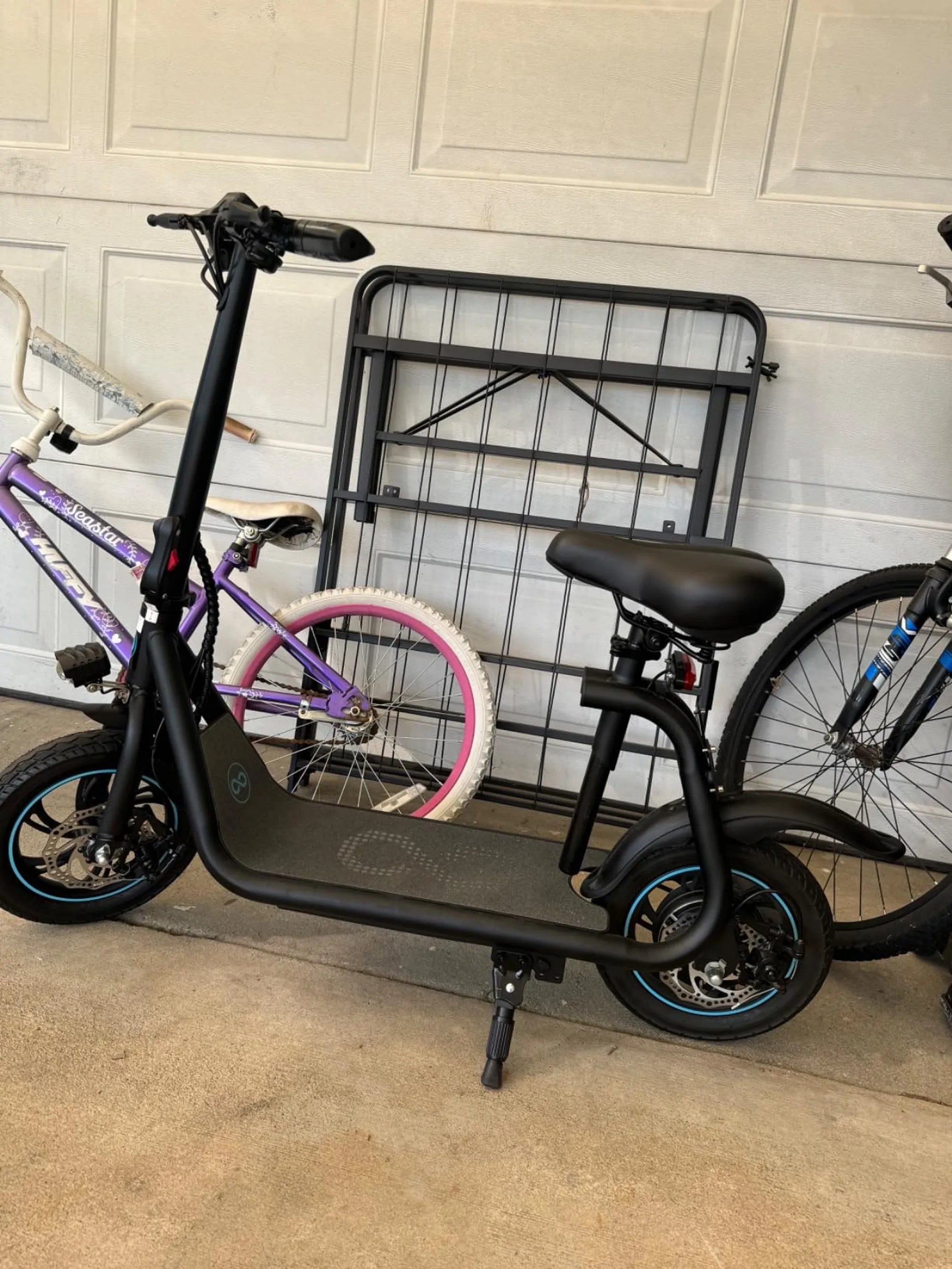
Finding the best electric scooters for adults with seat can transform your daily commute from a chore into a pleasure. This guide delivers a data-driven analysis of seated e-scooters, focusing on the features that truly matter for comfort, safety, and long-term reliability on adult-oriented journeys.
Introduction: Why a Seated Electric Scooter is a Game-Changer for Adult Commuters
The evolution from standing-only kick scooters to purpose-built seated models represents a fundamental shift in personal electric mobility. For adults using an e-scooter as a legitimate commuter vehicle, the addition of a seat addresses the primary limitation of standing models: rider fatigue. This transforms the scooter from a last-mile solution into a viable primary vehicle for trips of 5 to 15 miles.
Comfort directly translates to practicality. A seated position lowers the rider's center of gravity, enhancing stability and confidence, especially at higher speeds. It also makes the scooter accessible to a wider range of users, including those with minor mobility concerns or who simply prefer not to stand for extended periods. Brands like Gyroor have engineered their seated models with this holistic comfort in mind, integrating the seat as a core component of the riding experience rather than an afterthought.
The core benefit is clear: extended range without extended discomfort. When you're not battling leg fatigue, you can fully utilize the scooter's battery capacity and enjoy the journey. This makes running errands, commuting to work, or exploring your city a genuinely enjoyable activity. The best electric scooters for adults with seat successfully blend the portability of a scooter with the enduring comfort traditionally associated with bicycles or mopeds.
Ultimately, the seated electric scooter fills a crucial niche in the micro-mobility landscape. It offers a middle ground between the ultra-portable standing scooter and the larger, often more expensive e-bike. For the adult rider prioritizing a sweat-free, convenient, and comfortable ride, it is frequently the optimal choice.
Key Features to Prioritize When Choosing a Seated E-Scooter
Selecting the right model requires looking beyond the mere presence of a seat. A methodical evaluation of key specifications ensures your investment is safe, capable, and suited to your daily life. This buyer's guide breaks down the non-negotiable features.
Motor Power & Hill Climbing Ability
Motor wattage is the engine of your scooter. For seated riding, which often involves carrying more weight (rider plus potential cargo), adequate power is critical. A 350W motor is a common entry point, suitable for flat terrain and lighter riders. For reliable performance on moderate inclines or for riders over 200 lbs, a 500W or higher motor is strongly recommended.
Pay attention to torque, not just wattage. Torque determines how effectively the motor can accelerate and climb hills from a standstill. A high-torque motor will feel more responsive and confident when navigating urban landscapes with stop-and-go traffic and gentle slopes. Insufficient power on a hill can strain the motor, drain the battery rapidly, and become a safety concern.
Battery Range & Real-World Mileage
Manufacturer range claims are typically based on ideal laboratory conditions: a light rider, warm weather, and flat ground at low speed. Real-world mileage can be 60-70% of this figure. For a reliable commute, calculate your daily round-trip distance and seek a scooter with a stated range that is at least 50% greater than that number.
Battery safety is paramount. Always prioritize models with UL-certified battery packs, like those used in Gyroor scooters. These batteries undergo rigorous testing for stability, charge cycles (often 500+), and failure prevention. A high-quality battery not only ensures safety but also maintains its capacity longer, protecting your investment over years of use.
Build Quality, Weight Capacity, and Portability
The frame must support the dynamic stresses of seated riding. Look for aircraft-grade aluminum or reinforced steel constructions. Weight capacity is a direct indicator of build robustness; most adult-oriented seated scooters should support at least 265 lbs, with premium models handling 300 lbs or more.
Portability is a balancing act. A sturdy scooter has inherent weight. A good folding mechanism—preferably a single, robust latch—is essential for carrying it onto public transit or storing it in a trunk. Consider the folded dimensions and weight; if you have stairs at home or work, a scooter over 55 lbs can become cumbersome to carry regularly.
Comfort & Ergonomics: Beyond the Seat
The seat itself should be generously padded, potentially with a spring suspension base, and offer height adjustment to fit your leg length. However, true comfort is a system. Front and/or rear suspension (spring or hydraulic) is crucial for absorbing bumps and vibrations, reducing impact on your spine and joints.
Don't overlook the deck and handlebars. A wide, textured deck provides secure footing when starting and stopping. Adjustable handlebar height allows for an upright, relaxed riding posture. Together, these elements create an ergonomic package that makes longer rides not just possible, but pleasant.
Safety and Warranty: Non-Negotiables for Adult Riders
Your safety depends on reliable braking. A dual braking system—such as a disc brake on the rear wheel combined with an electronic (regenerative) brake on the front—provides confident stopping power in all conditions. Comprehensive lighting is mandatory: a bright headlight, a brake light, and side reflectors ensure you are visible to traffic.
A strong warranty reflects the manufacturer's confidence in their product. Look for at least a 1-year comprehensive warranty on the frame, motor, and electronics. For all-weather reliability, an IPX5 water resistance rating means the scooter can withstand water jets from any direction, making it safe to ride in light rain or on wet roads. Gyroor's commitment to a 1-year warranty and IPX5 design exemplifies this standard.
Top Picks: Seated Electric Scooter Models for Different Adult Needs
Based on performance data, feature sets, and user feedback, here are our top picks across key categories. These selections highlight how different models excel at meeting specific adult rider requirements.
Best for Urban Commuting & Daily Errands: The Balanced Performer
This category demands a scooter that blends efficiency with comfort for the daily grind. The ideal model features a 350W-500W motor for zippy acceleration, a 15-25 mile real-world range, and a compact, quick-fold design. Suspension is key for dealing with imperfect city pavement.
A specific example from Gyroor's lineup would be a commuter-focused model with these balanced specs, a wide, cushioned seat, and an intuitive display. It prioritizes a manageable weight for carrying up curbs or stairs, while still offering the durability needed for daily use. This is the workhorse of the best electric scooters for adults with seat category.
Best for Longer Rides & Extended Range: The Distance Champion
For those with longer commutes or who enjoy weekend exploration, maximum range is the priority. These scooters are defined by large-capacity batteries (often 15Ah or more) and energy-efficient motors or dual-motor setups that can be toggled for range extension.
Expect premium comfort features like a wider, throne-like seat, superior front and rear suspension, and perhaps a larger deck. The trade-off is often increased weight and size, making them less portable but unparalleled for covering serious distance without fatigue. They prove that a seated scooter can be a true car replacement for many trips.
Best for Heavier Riders & Enhanced Stability: The Powerhouse
Riders approaching or exceeding 250 lbs need a scooter engineered for extra demand. This requires a powerful motor (600W+), a frame with a weight capacity of 300-350 lbs, and extra-wide tires for stability and load distribution. Dual disc brakes are essential for safe stopping power.
These models are built like tanks, with reinforced stems and decks. The seating position is often lower and more centered to enhance stability. While they are the heaviest and least portable options, they provide the confidence and performance that larger riders require, making them a cornerstone for inclusive mobility.
Best Value: Feature-Rich Comfort on a Budget
Value does not mean compromising on core safety or the seated experience. This category identifies models that deliver a reliable 250W-350W motor, a 10-15 mile real-world range, a basic but comfortable seat, and essential safety features like lights and a mechanical brake.
The key here is managed expectations and trusted components. You may forgo premium suspension or extreme power, but you should still receive a UL-certified battery, a solid warranty, and a durable frame. It’s the entry point into seated comfort, proving that the benefits of the best electric scooters for adults with seat are accessible at multiple price points.
Seated Scooter vs. Standing Scooter vs. E-Bike: Making the Right Choice
Choosing your personal electric vehicle depends on your primary use case. This comparison clarifies the strengths and trade-offs of each type.
| Vehicle Type | Best For | Pros | Cons |
|---|---|---|---|
| Seated E-Scooter | Comfortable commutes (5-15 mi), riders preferring not to stand or pedal, mixed-terrain with suspension. | Superior comfort for longer trips; more portable than e-bikes; often lower cost than comparable e-bikes; stable, low-center-of-gravity ride. | Less efficient than cycling over very long distances; folded storage bulkier than standing scooters; generally heavier than standing models. |
| Standing E-Scooter | Last-mile trips (1-5 mi), multimodal commuting, maximum portability, agile urban navigation. | Lightest weight and most portable; easiest to carry and store; often most affordable; highly maneuverable. | Can cause leg and foot fatigue on longer rides; less suitable for riders with balance or mobility concerns; typically less stable at speed. |
| E-Bike | Longest ranges (20-50+ mi), riders wanting pedal-assist exercise, carrying cargo or passengers, off-road trails. | Greatest range and speed potential; pedal-assist provides health benefits; most stable and car-like ride; excellent for cargo. | Highest upfront cost; least portable (rarely foldable); may require registration/insurance; requires secure parking. |
Practical Tips for Riding and Maintaining Your Seated Electric Scooter
Proper operation and care maximize safety, performance, and the lifespan of your scooter. Follow these actionable guidelines.
Pre-Ride Safety Checklist
Develop a habit of a quick visual and functional inspection before every ride. Check that tire pressure is within the recommended range (usually 40-50 PSI) to prevent flats and ensure efficiency. Squeeze the brake levers to confirm they engage firmly and smoothly without excessive travel.
Test your headlight, brake light, and horn. Ensure the folding mechanism and all quick-release levers (for seat or handlebar height) are fully locked in position. A 60-second check can prevent most mechanical failures on the road.
Riding Techniques for Comfort and Safety
Adopt a relaxed, upright posture with knees slightly bent to absorb shocks. Use smooth, gradual pressure on the throttle and brake levers—jerky inputs can compromise stability. When approaching bumps, cracks, or curbs, rise slightly off the seat and bend your knees to let the suspension work.
In traffic, be predictable. Use clear hand signals for turns and stops. Assume you are invisible to drivers. Plan your route to use bike lanes or quieter streets whenever possible. The seated position gives you a commanding view, so use it to scan the road ahead proactively.
Essential Maintenance for Longevity
Regular cleaning is vital. Use a damp cloth to wipe down the scooter; avoid high-pressure hoses even on water-resistant models, as they can force water into seals. Keep the charging port cover closed when not in use.
For battery care, avoid draining it to 0%. Try to recharge when it drops to 20-30%. Store the scooter in a dry place at room temperature, and if storing for over a month, leave the battery at about 60% charge. Periodically inspect brake pads for wear and check that all bolts and nuts are tight, especially on the stem and folding joints.
Frequently Asked Questions (FAQ) About Seated Electric Scooters
Q: Are seated electric scooters legal on bike paths and roads?
A: Laws vary significantly by city, state, and country. In most U.S. jurisdictions, they are regulated similarly to e-bikes or standing e-scooters. Common rules include a maximum speed limit (often 15-20 mph) for use on bike paths and a requirement for lights at night. Always check your local Department of Transportation or city ordinances for specific power, speed, and helmet laws before riding.
Q: How difficult is it to assemble and fold the scooter?
A> Most seated scooters arrive 90-95% assembled. Typically, you only need to attach the handlebar to the stem, secure the seat post, and inflate the tires—tasks requiring only the included tools and 10-15 minutes. The folding mechanism is designed for daily use and is usually a single lever or latch that secures the stem to the rear fender.
Q: Can the seat be removed if I want to stand sometimes?
A: On the vast majority of models, yes. The seat is typically mounted on a post that inserts into a clamp, allowing for easy removal and reinstallation in seconds. This offers great versatility, letting you convert the scooter for a quick, standing ride or for more compact storage. However, some ultra-compact models have integrated, non-removable seats.
Q: What is the true cost of ownership beyond the purchase price?
A> Ongoing costs are relatively low but should be budgeted for. These include replacement inner tubes or tires (every 1,000-2,000 miles), brake pads (depending on use), and occasional lubrication of moving parts. The largest future expense is the battery, which may need replacement after 3-5 years or 500+ charge cycles. A strong warranty, like Gyroor's 1-year coverage, mitigates early unexpected costs.
Q: How do I know if the scooter's range is sufficient for my needs?
A> Calculate your typical round-trip distance. Then, apply a 30-40% reduction to the scooter's advertised range to estimate real-world mileage under average conditions (your weight, some hills, normal speeds). Your estimated real-world range should be at least 20-30% greater than your round-trip distance. This buffer accounts for battery degradation over time, colder weather, and unexpected detours.
Conclusion: Investing in Comfort and Freedom for Your Daily Travel
The search for the best electric scooters for adults with seat culminates in a simple realization: comfort is a feature that pays daily dividends. By eliminating fatigue and enhancing stability, a well-chosen seated scooter turns transportation into an active pleasure. It represents a smart, eco-friendly investment in your daily freedom, reducing reliance on cars for countless urban and suburban trips.
Your priority should always be on verified safety and durable construction. Certifications like UL for the battery and IPX5 for water resistance are not mere specs; they are promises of reliability. Partnering with a reputable brand that stands behind its product with a comprehensive warranty ensures peace of mind for the long haul.
The right model is out there, whether you need a zippy city commuter, a long-range explorer, or a powerhouse built for larger riders. Use this guide's framework to evaluate features against your personal needs. Remember, the goal is to find a scooter that you look forward to riding every day.
Ready to experience the blend of comfort, convenience, and performance that defines a top-tier seated e-scooter? Browse the full Gyroor collection at gyroorboard.com to explore models engineered with adult commuters in mind, backed by safety certifications and trusted by over 100,000 riders. Your new daily ride awaits.
Best Electric Scooters Under $500: Affordable and Reliable Rides for Everyone
Electric Motor Scooters for Adults: The Future of Urban Mobility