



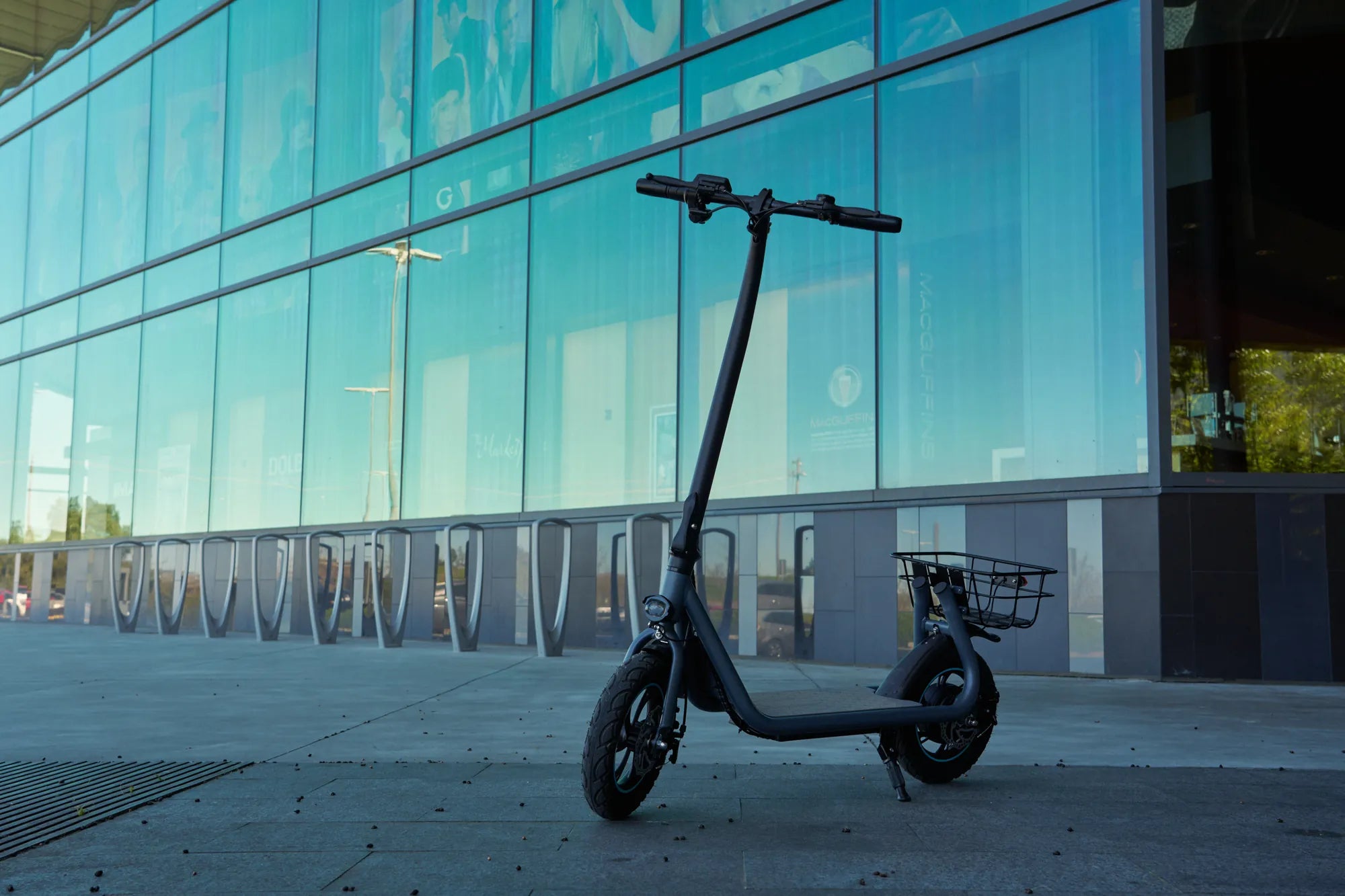
Parents want to know: how fast do kids electric scooters go? The answer isn't a single number. It's a careful equation balancing motor power, age-appropriateness, built-in safety controls, and pure fun. Understanding this balance is key to choosing a scooter that delivers excitement without compromising safety. Leading brands like Gyroor design their youth models with this precise calculus in mind, ensuring that speed is always paired with stability, control, and reliable components for peace of mind.
This guide will demystify electric scooter speed for kids. We'll explore typical speed ranges, the technical factors that influence performance, and the critical safety systems that manage it. You'll learn how to match a scooter's capability to your child's age and skill, and how features like UL-certified batteries and IPX5 water resistance contribute to a safe, consistent ride. The goal is to equip you with the knowledge to select a scooter where thrills and safety are engineered together.
Understanding Speed Ranges: From Beginner to Advanced
Kids' electric scooters are categorized by speed, which closely aligns with the rider's age, size, and experience. These aren't arbitrary limits; they are designed to match developmental stages and coordination levels. A scooter that's too slow will bore an older child, while one that's too fast can be intimidating and dangerous for a younger rider.
The spectrum generally breaks down into three tiers. For younger children, typically ages 6 to 9, beginner scooters offer a gentle introduction. These models usually have motors ranging from 100W to 150W and top speeds between 8 mph (13 km/h) and 10 mph (16 km/h). This pace is fast enough to feel exciting but slow enough for a parent to jog alongside comfortably.
Intermediate models cater to the 9 to 12-year-old range. With motor power from 200W to 250W, these scooters can reach speeds of 10 to 15 mph (16-24 km/h). This tier is for kids who have mastered basic scooter control and are ready for more range and a bit more zip on safe pathways. Advanced or teen scooters, designed for riders 13 and up, often feature 350W motors or higher and can achieve speeds of 15 mph to 20 mph (24-32 km/h), bridging the gap to adult performance.
It's crucial to view these speeds as maximums, not defaults. A quality scooter will have multiple speed modes, allowing a child to start in a slow, restricted mode and progress as their skills and confidence grow. This graduated approach is fundamental to safe riding.
Factors That Influence Electric Scooter Speed
The advertised top speed is a laboratory ideal. Real-world performance depends on several interacting variables. Understanding these helps set realistic expectations and explains why two scooters with the same wattage might perform differently.
Motor power, measured in watts (W), is the engine's potential. A 200W motor is stronger than a 150W motor, but its output is moderated by voltage. Battery voltage (e.g., 24V, 36V) acts like water pressure; higher voltage can deliver power more efficiently, contributing to better acceleration and the ability to maintain speed on slight inclines.
Rider weight is the most significant variable after the scooter's own specs. A scooter tested with a 120-pound rider will go slower with a 150-pound rider. The motor must work harder, draining the battery faster and reducing the maximum achievable speed. Terrain is equally important. Smooth, flat pavement is where top speeds are reached. Even a gentle hill will slow a scooter down, and rough surfaces like gravel or grass create drag that saps speed.
Finally, scooter design plays a role. Pneumatic (air-filled) tires offer better shock absorption and roll more efficiently than solid tires on smooth surfaces, potentially aiding speed. The overall weight and aerodynamics of the scooter also factor in. A lightweight aluminum frame allows the motor to propel the scooter more easily than a heavier steel frame.
Safety First: Why Speed Limits and Controls Are Essential
Appropriate speed limits are not a restrictive feature; they are the cornerstone of safety. For children, the ability to control the scooter is paramount. Excessive speed reduces reaction time, increases stopping distance dramatically, and makes falls more severe. Built-in speed management systems are what separate a toy from a responsibly engineered vehicle.
The most fundamental control is multiple speed modes. A typical setup includes a Beginner mode (capped at 5-7 mph), a Standard mode (around 10-12 mph), and a Sport or Turbo mode (full power). This allows a child to learn in a safe, controlled environment. Parental control via a companion smartphone app elevates this further. Apps can lock the scooter into a specific speed mode, set a geofence, or turn the scooter off remotely, providing digital oversight.
Effective braking is the critical counterpart to speed. A scooter capable of 15 mph must have a reliable way to stop. Many kids' models use a combination of an electronic (e-brake) and a mechanical brake (disc or foot brake). The electronic brake uses the motor to create resistance, while a mechanical brake provides physical stopping power. Dual braking systems, like those on several Gyroor models, offer redundancy and shorter stopping distances.
Stability at speed is engineered through design. A wider deck provides a more confident footing. Larger wheel diameter (e.g., 8.5-inch vs. 6-inch) handles bumps and cracks better, maintaining control. Features like IPX5 water resistance, a standard in Gyroor's lineup, contribute to safety by protecting the scooter's electrical components from water splashes and puddles, preventing short-circuits that could lead to sudden loss of power or control.
Choosing the Right Speed for Your Child's Age and Skill
Age provides a starting framework, but skill, maturity, and physical size are the deciding factors. A tall, coordinated 10-year-old with bike experience may be ready for an intermediate scooter, while a cautious 12-year-old might be better suited to a beginner model longer. Always err on the side of caution.
For ages 6-8, a maximum speed of 10 mph is advisable. Look for scooters with a low-speed beginner mode (around 6 mph), a low deck for easy mounting, and a lightweight frame. Motor power in the 100W-150W range is typical. The focus should be on mastering balance, steering, and braking at very low speeds in a safe, open area like a driveway or empty parking lot.
The 9-12 age bracket is the most common for electric scooters. A top speed between 10 and 15 mph is appropriate, with a mandatory beginner mode. Motor power often ranges from 200W to 250W. At this stage, riders should demonstrate responsible habits: wearing full safety gear, observing traffic and pedestrian rules on paths, and understanding how to scan for hazards. The scooter should have robust braking and perhaps a headlight/taillight for visibility.
For teens 13 and older, scooters with speeds up to 20 mph can be considered. These riders should have excellent coordination and a strong sense of responsibility. These models, with 350W+ motors, are for dedicated bike paths or supervised residential areas, not sidewalks. Parental app controls remain highly recommended to ensure safe usage boundaries are respected.
Performance Comparison: How Gyroor Balances Speed and Safety
Examining specific models from a trusted brand illustrates how speed and safety features scale together. Gyroor, a brand trusted by over 100,000 riders, engineers its youth scooters with this integrated approach. Each step up in performance is matched with enhanced control and protection mechanisms.
| Model | Recommended Age | Max Speed | Motor Power | Key Safety & Control Features | Battery & Certification |
|---|---|---|---|---|---|
| Gyroor Swift | 6-9 years | 10 mph | 150W | 3 Speed Modes, LED Display, Rear Foot Brake + E-brake, Kick-to-Start | UL-Certified 24V Battery |
| Gyroor Cruiser | 9-12 years | 15.5 mph | 250W | 3 Speed Modes, App Control (Speed Lock, Geo-fence), Dual Braking (Disc + E-brake), IPX5 Water-Resistant | UL-Certified 36V Battery |
| Gyroor Warrior | 13+ years / Teens | 19 mph | 350W | 3 Speed Modes, Advanced App Control, Dual Hydraulic Disc Brakes, 10" Pneumatic Tires, IPX5 Rating, Bright Headlight | UL-Certified 36V Battery |
This comparison shows a clear progression. As speed and power increase, so do the braking capabilities—from a basic foot brake to dual hydraulic discs. The inclusion of comprehensive app control in the intermediate and advanced models gives parents a powerful management tool. The consistent use of UL-certified batteries across the lineup ensures safety at the core power source, and the IPX5 rating protects against environmental hazards.
Beyond Speed: Ensuring a Fun and Responsible Riding Experience
True fun on an electric scooter comes from confidence, freedom, and reliability, not just velocity. Building this experience requires the right gear, knowledge, and maintenance habits. Speed is just one component of the adventure.
Safety gear is non-negotiable. A properly fitted CPSC-certified bicycle helmet is the absolute minimum. For beginners and intermediate riders, knee and elbow pads are highly recommended. Wrist guards can also prevent common fall injuries. Making gear a non-debatable part of the "pre-ride checklist" instills responsible habits from day one.
Teaching road and trail etiquette is crucial for older kids. This includes riding on the right side of paths, yielding to pedestrians, using a bell or voice to signal when passing, and absolutely avoiding roads with car traffic. Parents should supervise initial rides and periodically check in on riding habits. Designate safe riding zones and discuss hazards like driveways, curbs, and wet leaves.
Regular maintenance ensures the scooter remains safe and fun. Check tire pressure (for pneumatic tires) before each ride. Test the brakes for responsiveness. Listen for unusual noises from the motor or wheels. Wipe down the scooter to keep it clean. Periodically check all bolts and fittings for tightness. Following the manufacturer's care guidelines, like those supported by Gyroor's 1-year warranty, protects your investment and ensures consistent performance.
Frequently Asked Questions (FAQ)
Can I limit the top speed on my child's scooter?
Yes, absolutely. Most quality kids' electric scooters, including all Gyroor models, come with multiple speed modes that cap the maximum speed. Additionally, many intermediate and advanced models offer companion smartphone apps that allow parents to lock the scooter into a specific speed mode remotely, providing a digital governor for peace of mind.
Is a 200W scooter too fast for a 10-year-old?
Not necessarily. A 200W motor typically powers a scooter with a top speed of 12-15 mph. For a responsible 10-year-old of average size and with some riding experience, this can be appropriate if the scooter has a beginner mode (capping speed at ~7-8 mph) for learning. The key is the child's maturity and the presence of parental controls to manage the speed as they progress.
How does water resistance (like IPX5) relate to safety?
IPX5 water resistance means the scooter can withstand water jets from any direction. In practice, this protects the electrical components, battery, and motor from splashes, puddles, and wet roads. This prevents short-circuiting, which could cause the scooter to suddenly shut off or brake unexpectedly—a major safety hazard. It allows for safer riding in damp conditions and protects the scooter's longevity.
What is the advantage of a UL-certified battery?
A UL-certified battery has been tested by the globally recognized Underwriters Laboratories for safety against risks like overheating, short-circuiting, and fire. In the context of a kids' scooter, this certification is critical. It means the most energy-dense and potentially hazardous component has passed rigorous safety standards, giving parents confidence in the product's fundamental safety during charging and use.
What happens if the scooter malfunctions?
Reputable brands stand behind their products with warranties. Gyroor, for example, offers a comprehensive 1-year warranty that covers manufacturing defects for the scooter, battery, and charger. This provides peace of mind that any unforeseen issues will be addressed by the manufacturer, ensuring your child's scooter remains reliable and safe throughout its intended lifespan.
Conclusion: Speed with Peace of Mind
The journey to answering "how fast do kids electric scooters go" reveals that the best speed is the right speed—one that matches a child's ability and is governed by intelligent controls. It's about pairing the thrill of acceleration with the confidence of stable tires, reliable brakes, and a protected power system. Fun is maximized when safety is engineered in, not added on.
Choosing a scooter from a brand that prioritizes this balance, with verified safety certifications like UL for batteries and IP ratings for water resistance, is the surest path to enjoyable and worry-free rides. With proper gear, responsible habits, and a scooter built to protect its rider, children can experience the incredible freedom of personal electric mobility, and parents can share in their joy with full confidence.
Ready to find the perfect balance of speed and safety for your child? Explore Gyroor's range of youth electric scooters, each designed with UL-certified batteries, robust safety features, and adjustable speed controls. Browse the full Gyroor collection at gyroorboard.com to discover the model that will deliver fun, freedom, and peace of mind for your family.
Electric Scooters With Suspension for Adults: The Ultimate Ride Comfort Guide
Electric Scooters Orlando: Your Ultimate Guide to Eco-Friendly Commuting