


Introduction: Understanding 125cc Scooter Performance
The 125 cc scooter top speed is a defining metric for millions of urban commuters worldwide. This engine displacement represents a sweet spot in many markets, often exempt from full motorcycle licensing while offering sufficient power for city and suburban travel. Understanding what influences this speed—from engine tuning to aerodynamics—is crucial for making an informed purchase and riding safely.
Riders choose a 125cc scooter for its balance of practicality, fuel efficiency, and accessible performance. The typical 125 cc scooter top speed range allows for confident navigation in traffic flow on most urban arterials and some rural roads. This performance must be evaluated alongside factors like build quality, reliability, and the rider's specific needs, which is where trusted engineering matters most.
This analysis moves beyond manufacturer claims to examine real-world conditions. We'll dissect the mechanical variables, provide realistic speed expectations, and explore how modern electric powertrains are redefining urban mobility with instant torque and certified safety, offering a compelling alternative for today's rider.
The Engineering Factors That Determine Top Speed
While the 125cc engine displacement is a constant, the achieved top speed is a variable dictated by a symphony of engineering choices. It's a common misconception that all 125cc scooters perform identically; in reality, design philosophy and component quality create significant performance differences.
The power output from the engine is only the beginning. How that power is transmitted to the rear wheel, how much weight it must propel, and how efficiently the scooter slices through the air are all critical determinants. A well-engineered scooter optimizes each of these systems in harmony, while cost-cutting measures in any area can cap performance potential.
For the rider, this means that brand reputation and proven engineering often correlate more closely with satisfying real-world performance than displacement alone. This principle holds true whether evaluating traditional internal combustion engines or the latest electric models from innovators like Gyroor, where motor wattage, battery management, and drivetrain efficiency play analogous roles.
Engine Type, Tuning, and Fuel Delivery
Most modern 125cc scooters use four-stroke, single-cylinder engines for their reliability and fuel efficiency. The tuning of this engine—its compression ratio, valve timing, and exhaust design—directly impacts power. A scooter tuned for low-end torque for city acceleration may sacrifice some peak horsepower needed for a higher 125 cc scooter top speed.
Fuel delivery is paramount. Modern fuel-injected (EFI) systems provide more precise fuel metering across RPM ranges compared to older carbureted systems, often resulting in smoother power delivery and slightly better peak performance, especially in varying temperatures and altitudes. EFI also contributes to better reliability and easier starting.
Scooter Weight, Rider Weight, and Aerodynamics
Physics is unforgiving: more mass requires more power to accelerate and maintain speed. A scooter's curb weight, combined with the rider's weight, is a primary limiter. A lightweight chassis constructed from quality materials is a significant performance advantage, allowing the engine to work less to achieve the same speed.
Aerodynamics, often overlooked on scooters, plays a role at higher speeds. A bulky, upright front fairing creates substantial wind resistance, while a more streamlined design can add a few miles per hour to the maximum attainable speed. Rider posture also affects this; tucking in can reduce drag noticeably.
Transmission and Final Drive Ratios
The ubiquitous Continuously Variable Transmission (CVT) is the heart of a scooter's drivetrain. Its tuning via drive clutch springs, weights (rollers or sliders), and belt width dictates where in the powerband the engine operates. A CVT tuned for acceleration uses heavier weights that keep the engine at higher RPMs longer, potentially sacrificing some top-end speed.
The final reduction gear ratio is the last multiplier. A numerically lower (taller) final drive ratio allows for higher top speed at the expense of acceleration, while a shorter ratio improves low-speed pull. Manufacturers select this ratio based on the intended use of the scooter, creating a clear divide between commuter-focused and sport-oriented models within the same 125cc class.
Real-World 125cc Scooter Top Speed Expectations
Setting realistic expectations is key to rider satisfaction and safety. Under ideal conditions—a flat road, minimal wind, a single rider of average weight, and a properly run-in engine—the real-world 125 cc scooter top speed for most mainstream commuter models falls between 55 and 60 mph (88-96 km/h).
Performance-oriented or sport-style 125cc models, often with slightly more aggressive tuning and lighter weight, can reach between 65 and 70 mph (105-113 km/h). It is critical to understand that these figures represent maximum capability, not sustainable cruising speed. Maintaining peak speed often strains the engine and significantly reduces fuel economy.
Real-world conditions almost always reduce these figures. Adding a passenger, riding uphill, facing a headwind, or as the scooter ages without meticulous maintenance will lower the achievable top speed. Therefore, purchasing a scooter whose *comfortable* cruising speed matches your regular route speed is wiser than buying for its maximum possible velocity.
Commuter Models vs. Sport-Tuned Models
The market splits into two clear philosophies. Commuter models prioritize fuel economy, low-cost operation, comfort, and storage. Their engines and CVTs are tuned for smooth, efficient power delivery from a stop. Their 125 cc scooter top speed is adequate for urban limits but may feel strained at its maximum.
Sport-tuned models, sometimes labeled as "R" or "Sport" variants, focus on sharper handling and higher performance. They may feature stiffer suspension, disc brakes front and rear, and engine tuning that pushes power higher in the RPM range. This yields a higher top speed and quicker acceleration, but often at the cost of some low-end smoothness and fuel efficiency.
| Model Type | Primary Focus | Typical Top Speed Range | Key Characteristics |
|---|---|---|---|
| Commuter | Fuel Economy, Practicality | 55-60 mph (88-96 km/h) | Under-seat storage, softer suspension, focus on low-end torque. |
| Sport-Tuned | Performance, Handling | 65-70+ mph (105-113+ km/h) | Aggressive styling, stiffer suspension, higher RPM power peak. |
Safety and Legal Considerations at Higher Speeds
Reaching a scooter's top speed capability is an engineering fact, but routinely riding at that limit is a significant safety risk. The stability, braking power, and tire footprint of a 125cc scooter are designed for city speeds, not sustained high-velocity travel. Understanding this distinction is fundamental to responsible riding.
At higher speeds, the margin for error vanishes. Reaction times are shorter, stopping distances increase dramatically, and wind buffeting or road imperfections have a magnified effect on stability. Full protective gear—DOT/ECE helmet, armored jacket, gloves, pants, and boots—becomes non-negotiable, not optional.
Legally, most 125cc scooters are not intended for controlled-access highways (interstates/freeways) where minimum speeds often exceed 45-50 mph. Even if a scooter can technically reach 60 mph, doing so leaves no power reserve for safe overtaking or emergency acceleration. Riders must know and obey local laws regarding scooter road access and speed limits.
Maximizing and Maintaining Your Scooter's Performance
Consistent, proper maintenance is the only responsible way to ensure your scooter delivers its designed performance throughout its lifespan. Neglect leads to power loss, increased fuel consumption, and potentially unsafe operating conditions. A well-maintained machine is a predictable and enjoyable one.
Follow the manufacturer's service schedule meticulously. This includes regular oil and filter changes, air filter cleaning/replacement, spark plug service, and brake fluid checks. For the CVT, periodic inspection of the drive belt and rollers for wear ensures optimal power transfer and can prevent a sudden failure.
Essential Maintenance for Peak Performance
Start with the basics: correct tire pressure. Under-inflated tires increase rolling resistance, hampering acceleration and top speed while causing uneven wear. Check pressure weekly when the tires are cold. Next, ensure your air filter is clean; a clogged filter starves the engine of air, richening the fuel mixture and killing power.
Use the exact grade of high-quality engine oil specified in your manual. Old, degraded oil increases internal friction and reduces engine efficiency. Finally, keep your fuel system clean by using name-brand fuel and considering a fuel system cleaner periodically, especially for carbureted models. These simple steps preserve the factory 125 cc scooter top speed potential.
Smart Upgrades vs. Risky Modifications
Some upgrades can enhance the riding experience without compromising safety or legality. The single best investment is a set of high-quality tires with good grip and compound suitable for your climate. Better tires improve handling, braking, and confidence in all conditions, effectively making the scooter feel more capable.
However, riders should be extremely wary of performance modifications aimed solely at increasing top speed. "De-restricting" a scooter by altering its exhaust, variator, or ECU often violates emissions laws, voids the manufacturer's warranty, and can lead to catastrophic engine failure due to improper air/fuel ratios or excessive heat. The minimal speed gain is never worth the cost, legal risk, and safety compromise.
The Electric Alternative: How Do E-Scooters Compare?
The urban mobility landscape is rapidly electrifying. Modern electric scooters and e-bikes now offer performance that meets or exceeds the practical utility of a 125cc gasoline scooter for city commuting, with significant advantages in maintenance, noise, and environmental impact. This shift is led by brands prioritizing safety and reliability, like Gyroor.
An electric powertrain delivers 100% of its torque instantly from a stop, providing startling acceleration that often surpasses a 125cc scooter in the critical 0-30 mph range. There is no clutch, no gears, and no waiting for the engine to spool up—power is immediate and linear. This makes navigating urban traffic exceptionally responsive.
Furthermore, the operating cost is a fraction of a gasoline model. "Refueling" means plugging in at home for pennies per charge, and routine maintenance is drastically reduced—no oil changes, air filters, spark plugs, or complex exhaust systems. For the daily commuter, this translates to unparalleled convenience and lower total cost of ownership.
Gyroor Performance Models: Speed Meets Smart Engineering
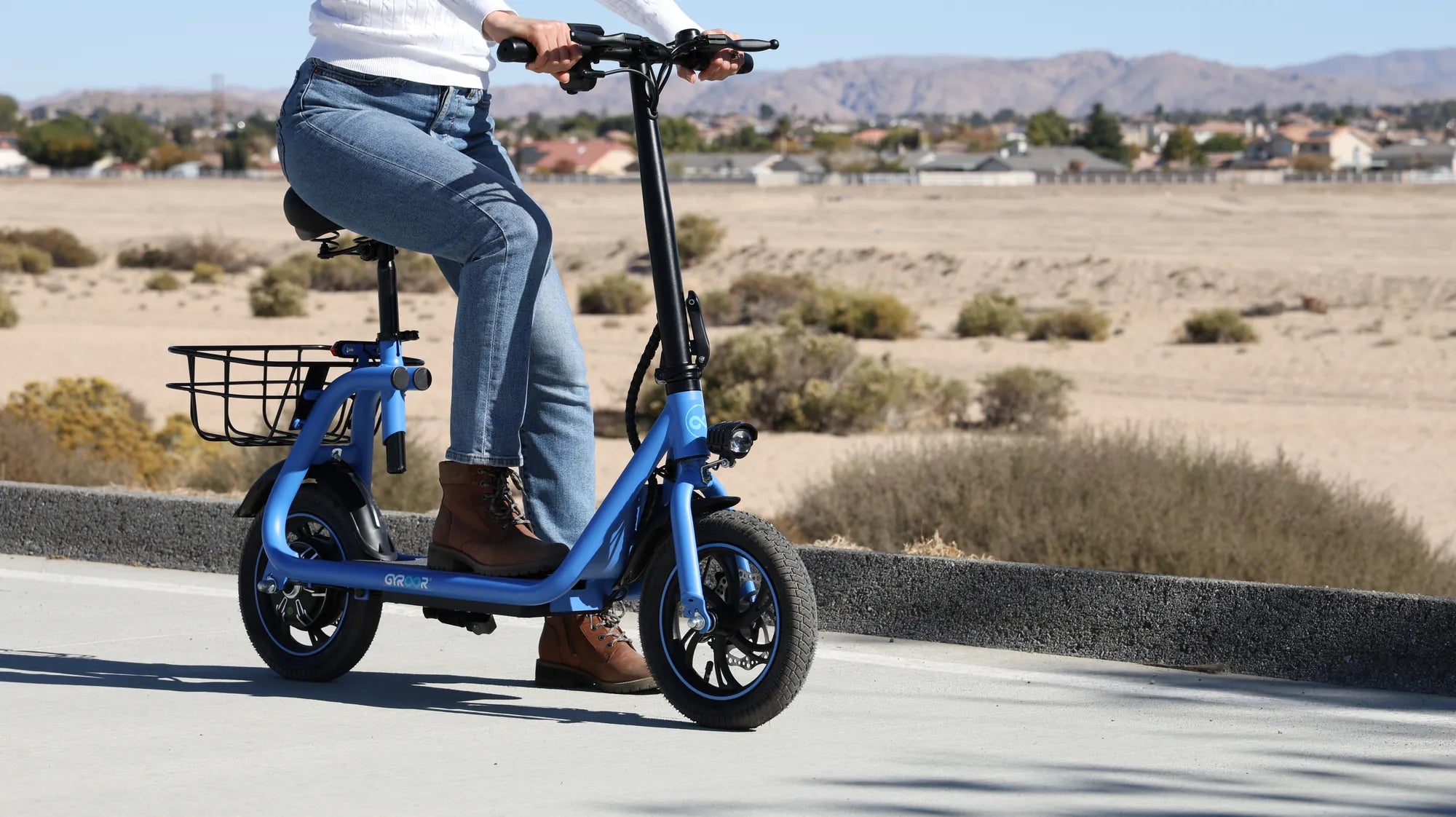
Gyroor exemplifies the new standard in electric urban transport, combining performance with rigorously certified safety. Their models are engineered to deliver reliable, real-world speed. For instance, Gyroor's high-performance electric scooters and Class 3 e-bikes can achieve top speeds of 28+ mph, matching the *effective* urban cruising speed of many 125cc scooters while offering superior low-speed agility.
Critically, Gyroor builds its reputation on safety foundations that many traditional brands overlook. Every model is powered by a UL-certified battery pack, tested for over 500 charge cycles, mitigating the primary safety concern with electric vehicles. Combined with IPX5 water-resistant designs, this ensures reliable power delivery and durability in real-world conditions, from rain puddles to dusty roads.
This commitment extends to the rider experience. With a robust 1-year warranty and a customer base of over 100,000 riders across North America and Europe, Gyroor provides the peace of mind that comes from proven, trusted engineering. The performance is not just about a number on a dial; it's about dependable, safe, and enjoyable mobility every day.
Conclusion: Choosing the Right Ride for Your Needs
The pursuit of the ultimate 125 cc scooter top speed is often secondary to finding a vehicle that reliably, safely, and efficiently meets your daily transportation needs. For pure urban commuting, the typical 55-60 mph capability of a 125cc scooter is more than sufficient, provided the scooter is well-built and properly maintained.
However, the evolving market presents a compelling choice. Electric alternatives from established brands like Gyroor now deliver comparable urban performance with transformative benefits: silent operation, near-zero maintenance, and significantly lower running costs. The instant electric torque redefines city riding, making it more responsive and enjoyable.
When making your decision, prioritize certified safety features, a strong warranty, and a reputation for quality. Whether you choose traditional or electric, a reliable ride from a trusted brand is the true key to performance and satisfaction. Explore how modern electric engineering can meet your needs.
Ready to experience the future of urban mobility? Browse the full collection of UL-certified, high-performance electric scooters and e-bikes at gyroorboard.com.
FAQ: 125cc Scooter Top Speed
Q: Is a 125cc scooter fast enough for highway use?
A: Generally, no. While some sport-oriented 125cc models can reach 65-70 mph, they lack the power reserve for safe highway merging, overtaking, or sustained travel at such speeds. Most are legally restricted from controlled-access highways. Their design is optimized for city and suburban roads with lower speed limits.
Q: What is the fastest 125cc scooter available?
A> Manufacturer claims vary, but several sport-focused 125cc models from established brands have reported top speeds near or just above 70 mph (113 km/h) under ideal conditions. However, real-world factors like weight and wind typically reduce this. It's more important to evaluate a model's overall reliability, handling, and braking at speed rather than chasing a single top-speed figure.
Q: Can I legally increase my 125cc scooter's top speed?
A> Modifications aimed solely at increasing top speed, such as de-restricting the ECU or changing exhaust and variator components, often violate vehicle emissions and type-approval regulations in most regions. These modifications are typically illegal for road use, will void your warranty, can compromise engine reliability and safety, and may invalidate your insurance.
Q: How does rider weight affect the top speed?
A> Significantly. Adding weight increases the load on the engine. A single rider of 180 lbs will experience a lower top speed than a rider of 130 lbs on the same scooter, all else being equal. Adding a passenger further reduces maximum speed and acceleration, as the engine and CVT are working against much greater mass.
Q: How does an electric scooter's speed compare to a 125cc model?
A> For urban commuting, they are highly comparable. A quality electric scooter or Class 3 e-bike from a brand like Gyroor, with a top speed of 28+ mph, matches the effective travel speed in city traffic where stops, acceleration, and traffic flow matter more than absolute top speed. The electric model offers faster acceleration from a stop, quieter operation, and far lower maintenance.
Looking for a Scooter: The Ultimate 2024 Guide to Choosing Your Perfect Ride
42V Scooter Charger Near Me: Your Ultimate Local Sourcing Guide