


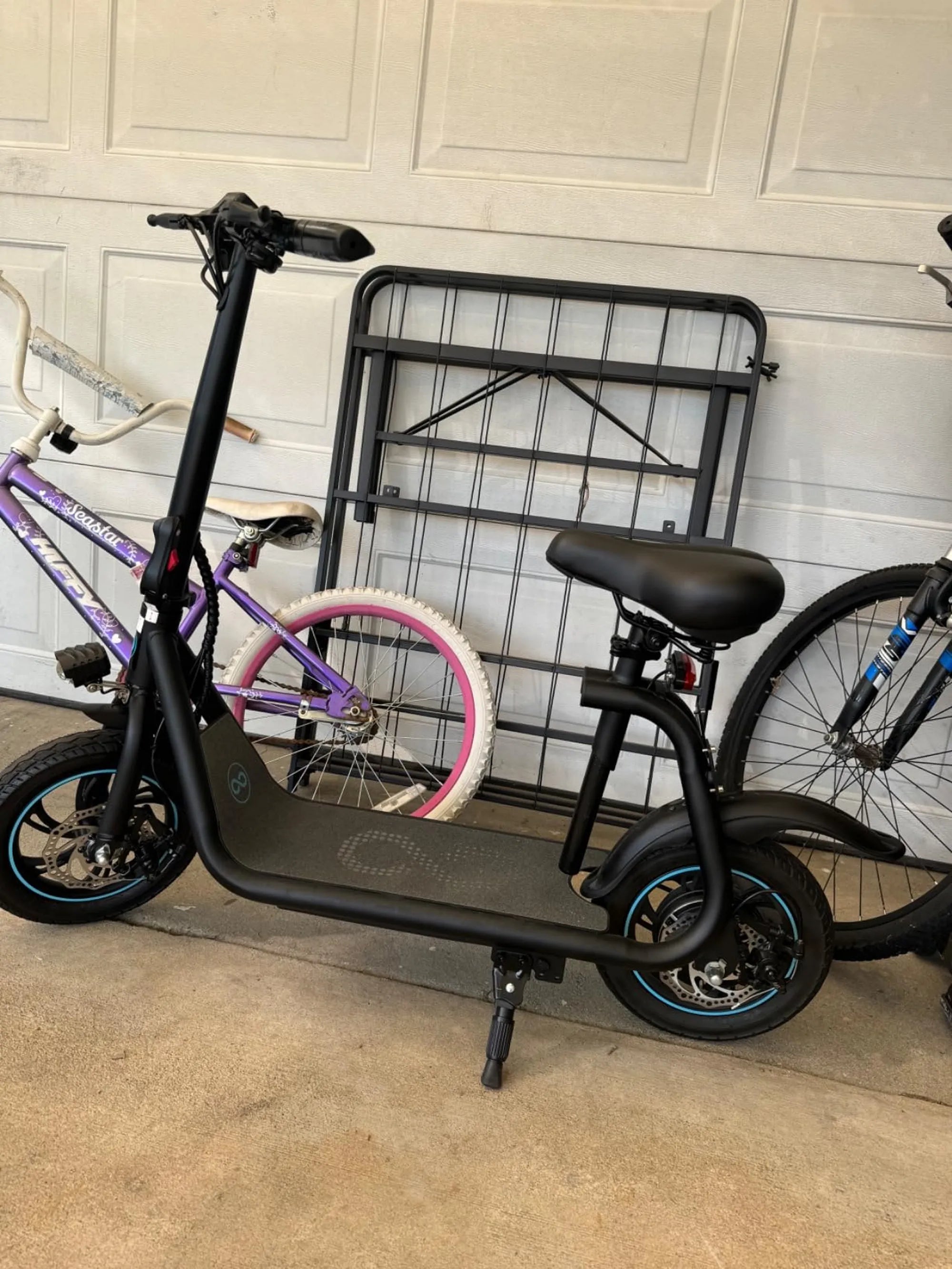
Introduction: Navigating the Modern Scooter Landscape
The search for a personal electric scooter has evolved far beyond picking a simple toy. Today, it's about selecting a sophisticated piece of personal transportation that balances performance, safety, durability, and value. With an overwhelming array of models boasting varying specs, looking for a scooter requires a methodical approach to avoid costly mistakes.
This guide provides a data-driven framework to cut through the marketing noise. We'll help you define your needs, decode technical specifications, and understand why certain certifications are non-negotiable for long-term satisfaction and safety. Whether you're a daily urban commuter or a weekend trail explorer, making an informed choice starts here.
As a leader in the micro-mobility space, Gyroor is trusted by over 100,000 riders across North America and Europe. Our focus on UL-certified batteries, IPX5 water-resistant designs, and comprehensive warranties provides a benchmark for what to look for when you are seriously looking for a scooter that lasts.
Defining Your Primary Use Case: Urban, Off-Road, or Hybrid?
Your journey begins with honest self-assessment. The ideal scooter for a smooth 3-mile city commute differs vastly from one meant for rugged park trails. Misjudging this will lead to frustration, unnecessary expense, or even safety compromises. Start by mapping your typical routes, distances, and terrain.
Key factors include your daily round-trip distance, the presence of hills, road surface quality, and whether you'll need to carry the scooter onto public transit or into an office. Your body weight and desired speed are also critical inputs that directly impact motor and battery requirements. Getting this foundation right streamlines every subsequent decision.
The Urban Commuter's Essential Checklist
For city dwellers, efficiency and practicality reign supreme. A commuter scooter must be reliable, relatively lightweight, and easy to store. Prioritize a balance of speed and range that exceeds your daily needs by about 20% to account for variables like wind, temperature, and battery degradation over time.
Essential features include a top speed of 15-20 mph, a real-world range of 15-25 miles, a compact folding mechanism, and bright integrated lighting for visibility. Suspension is crucial for navigating potholes and curb cuts comfortably. Portability, often measured by weight, is key if you have stairs or a multi-modal commute.
The Adventure Seeker's Performance Requirements
If your rides involve gravel paths, grass, or mild trails, you need a machine built for more than pavement. Off-road capability demands a robust motor, high ground clearance, and tires that can grip loose surfaces. Power becomes the primary concern to handle inclines and variable terrain.
Look for a motor rated at 500W or higher, full pneumatic (air-filled) tires with aggressive tread, and a dual suspension system. Range should be a top priority, as off-road riding consumes battery faster. A sturdy, non-folding frame often provides the necessary rigidity and durability for adventurous use cases.
Decoding Technical Specifications: What Really Matters
Manufacturer spec sheets can be confusing, with some inflating numbers. Understanding which metrics are critical and how they interact is vital when looking for a scooter. Focus on the proven performance of core components rather than headline-grabbing maximums that are rarely achieved in real-world conditions.
Real-world range, for instance, is often 60-70% of the theoretical maximum due to rider weight, hills, speed, and temperature. Similarly, a motor's nominal wattage is more telling than its peak output. This section breaks down the specs that dictate your daily riding experience and long-term ownership costs.
The Power Duo: Motor Performance and Battery Integrity
The motor is your scooter's engine, determining acceleration, hill-climbing ability, and top speed. A 250W motor suits flat urban areas for lighter riders, while 350W offers a better balance for most. For hills or heavier loads, 500W or dual-motor setups are recommended. Torque, often related to wattage, is key for getting moving from a stop.
The battery is the heart of the system, and its quality is paramount. Not all lithium-ion batteries are equal. Gyroor equips all models with UL-certified battery packs, tested for over 500 charge cycles. This certification is an independent verification of safety, preventing risks like thermal runaway, and ensures consistent performance and longevity, making it a critical filter in your search.
Durability Engineering: Frame, Suspension, and Water Resistance
A scooter's frame must be light yet strong. Aerospace-grade aluminum alloy is the industry standard, offering an excellent strength-to-weight ratio. Check the welding and finish quality—signs of good manufacturing. The folding mechanism, if present, should feel solid and secure with a reliable locking pin.
Suspension smooths your ride. Spring suspensions are common, but hydraulic or rubber cartridge systems offer better damping and comfort. For real-world usability, a water-resistance rating is essential. An IPX5 rating, like those on Gyroor scooters, means the unit can withstand water jets from any direction, protecting it from rain and wet roads.
Stopping Power and Grip: Brakes, Tires, and Lighting
Effective brakes are non-negotiable for safety. Disc brakes (mechanical or hydraulic) offer strong, consistent stopping power. Drum brakes are lower maintenance and perform well in wet conditions. Electronic (regenerative) brakes help recharge the battery slightly but should always be paired with a physical brake system.
Tires are your only contact with the ground. Pneumatic (air-filled) tires provide superior shock absorption and grip but require maintenance. Solid tires are puncture-proof but give a harsher ride. For lighting, integrated front and rear LEDs, plus side reflectors, are mandatory for being seen at night or in low-light conditions.
The Critical Filters: Certifications, Warranty, and Support
Once you've narrowed down by specs, the final and most crucial filter involves verifying quality assurance and post-purchase support. This is where reputable brands distinguish themselves from market entrants cutting corners. These factors directly impact your long-term safety, cost of ownership, and peace of mind.
Always prioritize models with independently verified safety certifications for the battery and electrical system. Scrutinize the warranty's scope and duration. A trustworthy warranty and accessible customer service are your insurance policy against defects and a sign of a company that stands behind its products.
Why UL Certification is a Non-Negotiable Safety Standard
UL (Underwriters Laboratories) certification for the battery pack and charger is the gold standard for electrical safety. It involves rigorous testing for overcharge, short circuit, and extreme temperature operation. Uncertified batteries pose a significant fire risk, as seen in numerous industry recalls.
When looking for a scooter, this should be your first checkpoint. Gyroor's commitment to UL-certified batteries across its lineup is a core component of its reliability promise, ensuring safety for over 100,000 users. This certification is more valuable than any marketing claim about battery size or range.
Understanding Warranty Coverage and Customer Support
A comprehensive warranty typically covers the frame, motor, battery, and controller for one year. Be wary of warranties that exclude the battery or are prorated. A strong warranty indicates confidence in product durability. Equally important is the support behind it—can you easily reach a human for troubleshooting or parts?
Gyroor offers a reliable 1-year warranty and maintains accessible, US-based customer support. This ensures that if an issue arises, you have a direct path to resolution, protecting your investment. This level of support is crucial for a product used daily for transportation.
Feature Comparison: Commuter vs. Performance Models
To visualize the trade-offs, the table below contrasts typical specifications for primary use cases. This data can guide your prioritization when looking for a scooter that fits your specific scenario. Remember, "best" is subjective and defined by your individual needs.
| Feature | Urban Commuter Focus | Performance/Off-Road Focus |
|---|---|---|
| Motor Power | 250W - 350W | 500W - 1000W+ |
| Real-World Range | 15 - 25 miles | 20 - 40+ miles |
| Top Speed | 15 - 20 mph | 20 - 30+ mph |
| Tire Type | Pneumatic or Solid | Pneumatic (Off-road tread) |
| Suspension | Front or Basic Dual | Robust Dual Suspension |
| Weight | 30 - 40 lbs | 45 - 70 lbs |
| Key Priority | Portability, Efficiency | Power, Durability, Range |
Ownership Essentials: Maintenance and Safety Gear
Your responsibility begins after the purchase. Proper maintenance ensures safety, maximizes lifespan, and preserves performance. Similarly, investing in the right safety gear is not optional; it's a critical part of responsible riding. These practices protect both you and your investment.
Establish a simple pre-ride checklist: verify tire pressure (for pneumatics), test brake function, ensure all folding mechanisms and bolts are tight, and confirm lights are working. Store your scooter in a dry, temperate place and avoid leaving the battery fully depleted for extended periods.
Routine Maintenance for Longevity
Basic maintenance is straightforward. Keep the chassis clean, especially after riding in wet or dirty conditions. Check and tighten bolts (especially on the stem, handlebars, and folding joints) every few weeks, as vibrations can loosen them. For pneumatic tires, maintain the recommended PSI to prevent pinch flats and improve efficiency.
Battery care is crucial. Avoid exposing the scooter to extreme heat or cold for long periods. Use only the provided UL-certified charger. For optimal battery health, try not to drain it to 0% regularly; recharge when it reaches 20-30%. Following these steps will help achieve the full 500+ charge cycle potential of a quality battery.
Essential Riding Safety Accessories
A helmet is the most important piece of safety equipment. Look for a certified bicycle or multi-sport helmet, with MIPS technology being a valuable addition for added brain protection. Do not compromise on this. Your scooter's built-in lights are for being seen; consider adding additional removable lights for increased visibility.
Sturdy, closed-toe shoes are a must. Gloves can protect your hands in a fall and improve grip. For commuting in traffic, high-visibility clothing or a reflective vest is highly recommended. These accessories significantly reduce risk and should be factored into your overall budget when looking for a scooter.
Frequently Asked Questions (FAQ)
Q1: How do I know what range I actually need?
A: Calculate your longest typical round-trip distance and add a 30-40% buffer. Real-world range is affected by speed, hills, rider weight, and temperature. If your commute is 10 miles round-trip, look for a scooter with a 15-mile minimum real-world range.
Q2: Are more expensive scooters always better?
A: Not necessarily. Price correlates with premium materials, higher power, better suspension, and advanced features like app connectivity. However, beyond a point, you pay for marginal gains. Focus on value: the right combination of certified safety, performance for your needs, and warranty coverage.
Q3: Can I ride an electric scooter in the rain?
A: It depends on the scooter's water resistance rating. A rating of IPX5 or higher (like Gyroor models) means it can handle wet roads and light rain. However, avoid deep puddles and heavy downpours. Even water-resistant scooters are not designed to be submerged. Always dry your scooter after riding in wet conditions.
Q4: How important is the weight limit?
A> Extremely important. Exceeding the manufacturer's maximum rider weight stresses the frame, motor, and battery, leading to premature failure, reduced range, and potential safety hazards. Always choose a scooter with a weight limit that exceeds your actual weight, including any backpack or cargo.
Q5: What's the difference between nominal and peak motor power?
A: Nominal power is the wattage the motor can sustain continuously under normal load. Peak power is the maximum output it can achieve for short bursts (e.g., starting on a hill). Nominal power is a more reliable indicator of consistent performance. A 350W nominal motor is more capable than a scooter advertising only a 500W peak power.
Making Your Confident Final Decision
Looking for a scooter culminates in matching a specific model to your defined needs, verified quality standards, and budget. You are now equipped to move beyond superficial features and assess the core engineering and support that define a reliable product. Remember, this is an investment in daily convenience and freedom.
Apply your knowledge: prioritize UL-certified batteries for safety, a comprehensive warranty for peace of mind, and performance specs that align with your real-world use. A well-chosen scooter becomes a dependable partner for years, not a disposable gadget. Trust brands that transparently offer these assurances and have a proven track record with riders.
Ready to explore a range of electric scooters built with these priorities in mind? Gyroor's collection embodies the principles outlined in this guide, from safety-certified components to rider-focused design. Find the model that unlocks your next journey. Browse the full Gyroor collection at gyroorboard.com.
Lightweight Kids Bike 24 Inch: The Ultimate Guide to Choosing the Perfect Bike
125 cc Scooter Top Speed: Real-World Performance & Electric Alternatives