


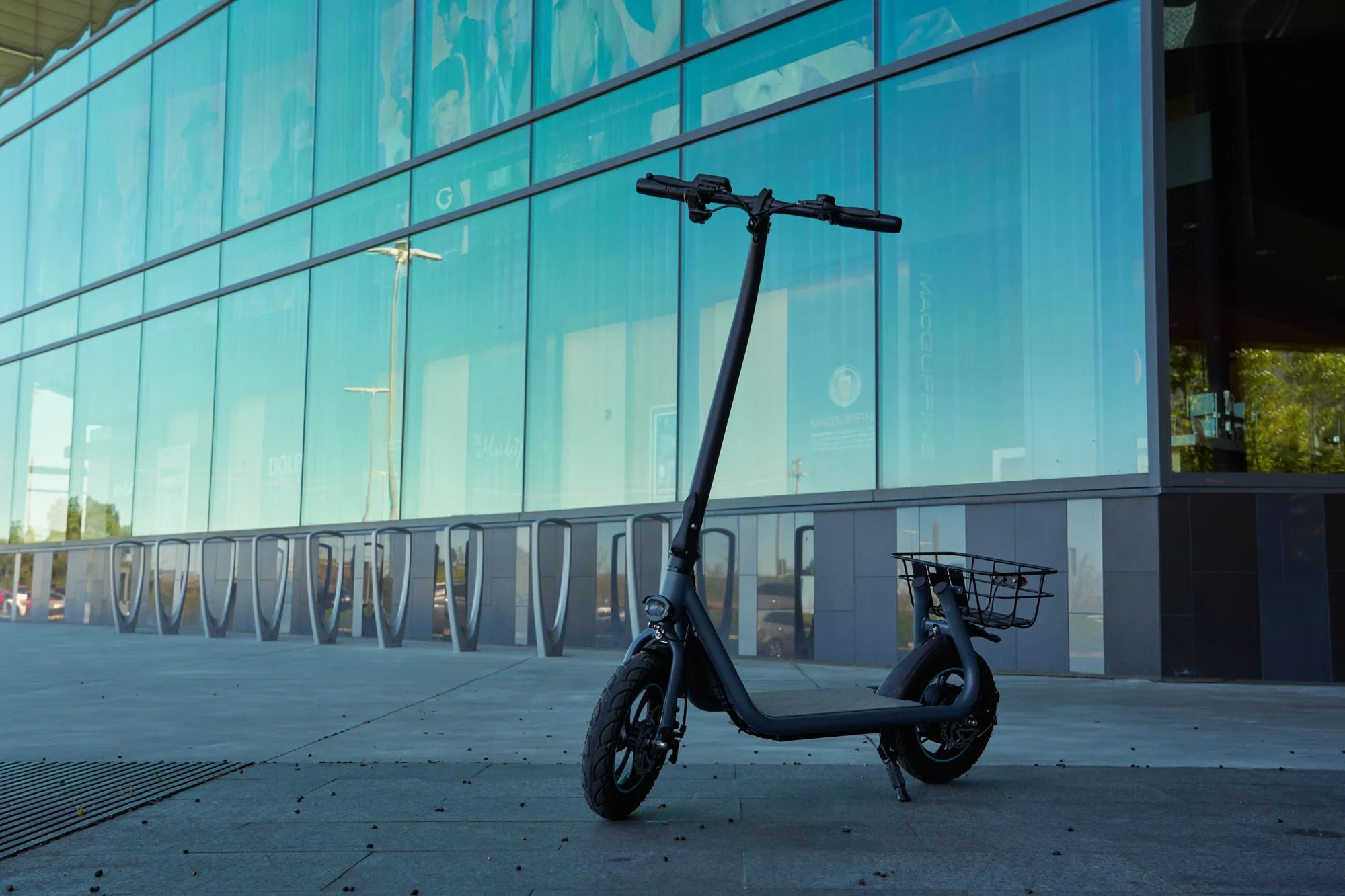
Choosing the right mobility aid can transform daily life, offering freedom and independence. For many in the UK, a 3 wheel mobility scooter represents the perfect balance of compact design, easy handling, and practical performance for navigating towns, shops, and homes. This guide will provide a comprehensive, data-driven analysis of 3-wheel mobility scooters, detailing their benefits, critical features for the UK climate, legal frameworks, and how to select a model that prioritises your safety and autonomy. We'll also highlight why engineering standards from brands like Gyroor, trusted by over 100,000 riders, are non-negotiable for peace of mind.
Introduction to 3-Wheel Mobility Scooters in the UK
A 3 wheel mobility scooter is a battery-powered vehicle designed primarily for individuals with mobility challenges, featuring a single wheel at the front and two at the rear. Its core purpose is to enhance personal independence, allowing users to perform errands, socialise, and navigate both indoor and outdoor environments with greater ease. In the UK, the demand for these practical vehicles has grown significantly, driven by an ageing population and the desire for active, self-reliant lifestyles.
The UK market offers a wide variety of models, but not all are created equal. The key differentiator lies in build quality, safety certifications, and suitability for local conditions. As a leading brand in personal electric mobility, Gyroor applies its expertise in UL-certified batteries and robust design to the principles of reliable mobility aids, understanding that safety and durability are paramount.
This article will serve as your essential handbook. You will learn the distinct advantages of the three-wheel configuration, the must-have features for British weather and terrain, and the legalities of operating a scooter on UK pavements and roads. We aim to equip you with the knowledge to make an informed, confident purchase decision.
Key Benefits of Choosing a 3-Wheel Design
The three-wheel configuration offers specific advantages that make it a preferred choice for many users over traditional four-wheel mobility scooters. The primary benefit is a vastly superior turning radius, achieved by the single front wheel's ability to pivot sharply. This design inherently creates a lighter and often more compact frame, which translates to easier transport and storage.
For urban and suburban navigation, these traits are invaluable. The agility of a 3 wheel mobility scooter allows for seamless movement through crowded high streets, narrow shop aisles, and standard domestic doorways where a bulkier four-wheel model might struggle. This design directly supports greater independence in daily tasks.
Furthermore, the simpler mechanical design of a 3-wheel scooter often results in a lower purchase price and reduced maintenance costs compared to more complex four-wheel counterparts. This accessibility makes personal mobility a realistic option for a broader range of individuals. It's a practical solution engineered for efficiency and everyday use.
Manoeuvrability in Urban and Domestic Settings
The compact nature of a 3 wheel mobility scooter truly shines in constrained spaces. On UK pavements, which can be narrow and lined with street furniture, the ability to make tight turns is crucial. A typical 3-wheel model can turn within a circle often less than 1.5 metres in diameter, allowing users to navigate around lampposts, bins, and other pedestrians with minimal hassle.
Indoors, this manoeuvrability is equally important. Many users need to operate their scooter within their own home, moving from room to room. The slim profile and tight turning circle enable access through standard doorways and easy navigation around furniture. This eliminates the need for a separate indoor wheelchair, consolidating mobility into one versatile device.
For shopping, visiting healthcare centres, or using public buildings, the 3-wheel scooter's design is ideal. It can traverse elevators, travel down supermarket aisles, and fit into designated spaces without obstructing pathways. This level of integration into daily life is a significant factor in improving user confidence and quality of life.
Stability and Comfort Considerations
While highly manoeuvrable, it's important to understand the stability profile of a 3 wheel mobility scooter. The three-point stance provides excellent stability on smooth to moderately uneven surfaces, such as paved paths, tarmac, and indoor flooring. The design is inherently stable for forward motion and gentle turns.
For users who primarily travel on paved surfaces, a 3-wheel scooter offers a comfortable, smooth ride. Many models feature suspension systems on the front wheel and/or rear wheels to absorb vibrations from minor imperfections in the pavement. The seating is typically positioned within the wheelbase for a balanced feel.
However, for frequent travel on very rough terrain, gravel paths, or steep cambers, a four-wheel mobility scooter may offer a marginal stability advantage due to its wider wheelbase. The key is matching the vehicle to your primary use-case. For most urban and suburban UK environments, a well-built 3 wheel mobility scooter provides more than adequate stability and superior practicality.
Essential Features to Look for in a UK 3-Wheel Scooter
Selecting a 3 wheel mobility scooter involves more than just choosing a colour. For safe and reliable operation in the UK, specific features are non-negotiable. A focus on certified safety components, weather resilience, and ergonomic design will ensure your investment lasts and performs as needed.
Prioritise models from manufacturers that transparently list technical specifications and safety certifications. Features like battery chemistry, motor power, weight capacity, and water resistance ratings are critical data points. Avoid obscure brands that lack clear technical support or warranty documentation.
As a benchmark, brands like Gyroor build their reputation on these fundamentals: UL-certified batteries for safety, IP-rated water resistance for all-weather use, and robust frames backed by a clear warranty. These standards should be your minimum requirement when evaluating any 3 wheel mobility scooter in the UK market.
Battery Safety and Range (The Gyroor Standard)
The battery is the heart of your mobility scooter, and its safety is paramount. Insist on a scooter that uses UL 2271 or similar internationally recognised certified lithium-ion battery packs. These certifications involve rigorous testing for overcharge, short circuit, and thermal stability, drastically reducing fire risk—a critical consideration for home charging.
Real-world range is determined by battery capacity (measured in Amp-hours, Ah), user weight, terrain, and use of features like lights. For typical UK errands—a trip to the shops, a visit to the park, or a community centre—a range of 10-15 miles is often sufficient. Always check the manufacturer's tested range under standard conditions, not just the maximum theoretical figure.
Long-term battery health is also crucial. Quality batteries, like those used by Gyroor, are rated for 500+ charge cycles while maintaining significant capacity. Ensure your supplier offers a robust battery warranty and has accessible customer support in the UK to handle any queries or issues, safeguarding your mobility for years to come.
Weather Readiness and Build Quality
The UK's unpredictable weather makes weather resistance a key feature. Look for a minimum rating of IPX4, which protects against water splashes from any direction. An IPX5 rating, which Gyroor incorporates into its designs, is better, offering protection against low-pressure water jets, ideal for coping with rainy days and wet pavement spray.
Build quality extends beyond the IP rating. Examine the frame construction; welded aluminium or steel frames offer durability. Check the quality of the upholstery on the seat and the controls. Essential safety lighting—bright front and rear LEDs, reflectors, and an indicator system—is mandatory for any travel in low-light conditions.
A comprehensive warranty covering the frame, motor, and electronic components for at least one year is a strong indicator of manufacturer confidence. It also protects your investment from unforeseen defects. This combination of weather-ready design, solid construction, and warranty support defines a reliable 3 wheel mobility scooter for UK living.
Navigating UK Regulations and Best Practices
Operating a mobility scooter in the UK is governed by specific regulations to ensure everyone's safety. Understanding these rules is essential before you use your scooter on public paths or roads. The law categorises mobility vehicles into Class 2 and Class 3, with most 3 wheel mobility scooters falling into one of these groups.
Class 2 vehicles are suitable for pavement use only, with a maximum speed limit of 4 mph. Class 3 vehicles are larger and can be used on both pavements (at 4 mph) and roads (at a maximum of 8 mph). If your 3 wheel mobility scooter is capable of exceeding 4 mph, it is likely a Class 3 vehicle and must be registered with the DVLA, display a 'nil value' tax disc, and be fitted with lights, reflectors, and indicators if used on roads.
While not a legal requirement for pavement-only use, third-party insurance is highly recommended for all mobility scooter users. Insurance can cover you for liability in case of an accident involving injury to another person or damage to property. Several UK insurers offer specific policies for mobility scooters.
Making the Right Choice: A Practical Guide
Selecting your ideal 3 wheel mobility scooter requires a honest assessment of your needs, lifestyle, and environment. Start by asking key questions: Will you use it mostly indoors, outdoors, or both? What is the maximum distance you need to travel on a single charge? What is your weight, and does the scooter's maximum user weight capacity accommodate you comfortably?
Consider your storage and transport needs. Do you have space at home to store the scooter? Will you need to disassemble it to transport it in a car? Many 3-wheel models are designed to be easily taken apart into a few key components for this purpose. Your physical ability to handle these components is an important factor.
Finally, always seek a test ride if possible. Reputable dealers should offer this service. A test ride allows you to assess comfort, ease of control, turning circle, and overall feel. Purchase from an established retailer with a strong service and support network in the UK. This ensures you have access to maintenance, repairs, and advice throughout the lifespan of your 3 wheel mobility scooter.
3-Wheel vs. 4-Wheel Mobility Scooters: A Detailed Comparison
To make an informed decision, it's helpful to directly compare the two main scooter types. The following table outlines the key differences based on design and intended use-case.
| Feature | 3-Wheel Mobility Scooter | 4-Wheel Mobility Scooter |
|---|---|---|
| Primary Design | Single front wheel, two rear wheels. | Two front wheels, two rear wheels. |
| Turning Radius | Very tight (often < 1.5m). Excellent for narrow spaces. | Wider. Less manoeuvrable in tight spots. |
| Stability | High on flat, even surfaces. Best for pavements and indoors. | Very high. Better suited for uneven ground or slopes. |
| Typical Size & Weight | Generally more compact and lighter. | Larger, heavier, and more robust frame. |
| Best Use-Case | Urban errands, indoor/outdoor use, shopping, compact storage. | Outdoor terrain, longer rural journeys, users prioritising maximum stability. |
| Price Point | Often more affordable. | Generally higher due to larger size and components. |
Frequently Asked Questions (FAQ)
Q: Do I need a license or insurance for a 3-wheel mobility scooter in the UK?
A: You do not need a driving license to use a mobility scooter. However, if your 3 wheel mobility scooter is a Class 3 vehicle (capable of more than 4 mph), it must be registered with the DVLA. Insurance is not a legal requirement for pavement use but is strongly recommended for all users. For road use, at least third-party insurance is advisable.
Q: Can I take my mobility scooter on public transport or in a car?
A: Policies vary. Many buses and trains in the UK have space for one or two mobility scooters, but there are often restrictions on size, weight, and battery type. You must contact the transport operator in advance. For cars, many 3-wheel mobility scooters can be disassembled into parts that fit in a boot, but you should check the specific model's dimensions and weight.
Q: What is the difference between Class 2 and Class 3 scooters?
A: Class 2 mobility scooters have a maximum speed of 4 mph and are for pavement use only. Class 3 mobility scooters have a maximum speed of 8 mph (4 mph on pavements) and can be used on roads. Class 3 vehicles require registration, must have lights and indicators for road use, and are typically larger.
Q: How do I maintain the battery for optimal lifespan, especially in cold weather?
A> To maximise battery life, avoid completely draining it. Try to recharge after each use or when it drops to about 30% capacity. Store and charge the scooter in a dry, cool place (ideally between 10-20°C). In cold weather, reduced range is normal; if possible, store the scooter indoors and allow the battery to warm to room temperature before charging. Always use the manufacturer-provided charger.
Q: Are 3-wheel mobility scooters suitable for hills?
A> This depends on the motor power and gradient. Most 3-wheel mobility scooters are equipped with motors capable of handling moderate inclines commonly found in urban areas. For very steep or prolonged hills, you should check the manufacturer's specification for the scooter's gradeability (usually given as a percentage, e.g., 12%). A more powerful motor or a 4-wheel model may be necessary for hilly terrain.
Conclusion: Enhancing Mobility with Confidence
A 3 wheel mobility scooter is a powerful tool for reclaiming independence and engaging fully with community life in the UK. Its blend of compact design, effortless manoeuvrability, and practical performance makes it an ideal solution for navigating the unique challenges of British towns and cities. The key to a positive experience lies in informed selection—prioritising certified safety features like UL-approved batteries, ensuring weather-resistant construction, and understanding your rights and responsibilities under UK law.
By choosing a model from a reputable brand that stands behind its products with clear warranties and reliable support, you invest in more than a vehicle; you invest in sustained freedom. Whether your journeys are to the local shops, a friend's house, or simply around your own home, the right scooter can make all the difference.
For those who value engineering integrity and safety-certified design in their mobility aids, exploring trusted options is the next step. Discover a range of personal electric vehicles built to rigorous standards. Browse the full Gyroor collection at gyroorboard.com to see how quality engineering supports an active, independent life.
Scooter That Holds 300 lbs: The Complete Guide to High-Capacity Rides
Scooter for 10 Years Girl: The Ultimate Guide to Safety, Sizing & Fun