


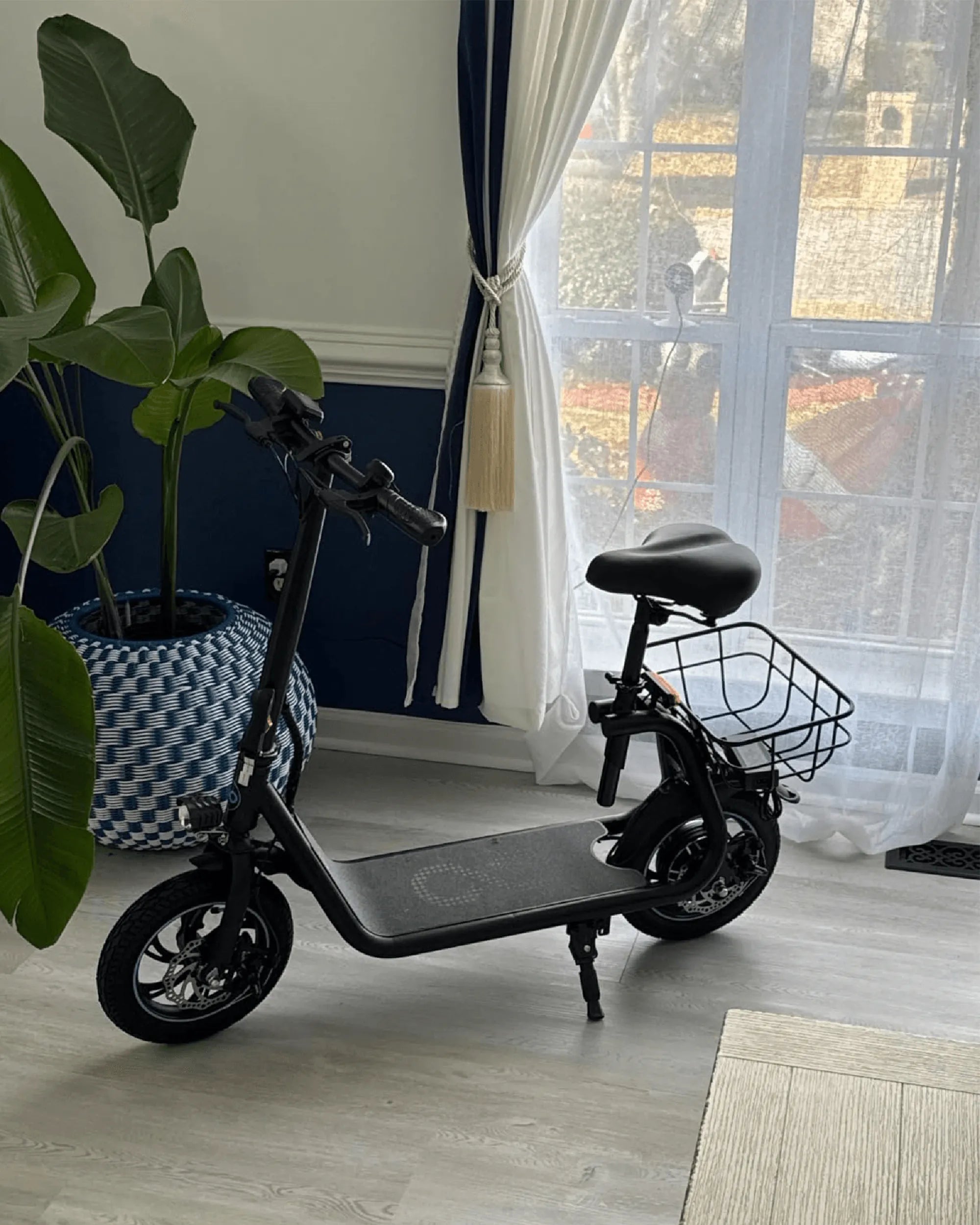
Finding a reliable electric scooter that holds 300 lbs is about more than just a number on a spec sheet—it's about accessing durable, powerful, and inclusive personal mobility. This guide cuts through the marketing to explain the engineering behind high-weight capacity, what performance you can realistically expect, and how to choose a scooter built for confidence, not just compliance. You'll learn about the critical components that make a 300 lb rating possible, how to compare models effectively, and why safety certifications from brands like Gyroor, trusted by over 100,000 riders, are essential for long-term reliability.
The Engineering Behind a 300 lb Weight Capacity
A scooter that holds 300 lbs isn't simply a standard model with a higher number printed on it. This rating is the result of deliberate, over-engineered design across every major component. The capacity is a system-wide benchmark indicating the scooter can handle the combined static weight and dynamic forces—like bumps, starts, and stops—without premature failure or safety compromise.
The frame is the foundational element. To support 300 lbs, manufacturers must use high-grade materials like aerospace-grade aluminum alloy or reinforced steel. These materials provide the necessary tensile strength while managing weight. The deck must be wider and longer for stable footing, and its connection to the stem is fortified with thicker bolts and reinforced welding points to resist flexing and metal fatigue over time.
Beyond the frame, the entire drivetrain and suspension system are calibrated for higher stress. This includes motors with higher torque output, brake systems with larger discs or enhanced caliper pressure, and suspension with springs or hydraulics rated for greater loads. A true 300 lb capacity scooter is a holistic engineering achievement where every part is designed to work in harmony under significant stress.
Key Components That Make High Capacity Possible
Understanding the specific components demystifies what you're paying for. The motor is paramount; a scooter that holds 300 lbs typically requires a dual-motor setup or a single high-torque motor rated at 500W or more. Torque, measured in Newton-meters (Nm), is more critical than pure wattage for acceleration and hill-climbing under load.
The battery and its management system (BMS) are equally crucial. A UL-certified battery pack, like those used by Gyroor, ensures safety under high discharge rates. The BMS must intelligently manage power delivery to prevent overheating when the motor draws maximum current to move a heavier rider. Tires also play a key role; larger pneumatic (air-filled) tires, often 10 inches in diameter or more, provide better shock absorption and stability than smaller solid tires.
Finally, the braking system must be robust. Dual disc brakes, either mechanical or hydraulic, are standard for reliable stopping power. The brake calipers and levers must be durable enough to handle the increased kinetic energy. When all these components are designed and tested together, they create a scooter that holds 300 lbs with confidence.
Critical Comparison Factors Beyond the Spec Sheet
When shopping for a scooter that holds 300 lbs, the advertised weight limit is just the starting point. Savvy buyers must dig deeper into real-world performance metrics that aren't always highlighted. The most important of these is the effective range under maximum load. Most range figures are calculated using a rider weighing approximately 165 lbs on flat terrain.
At 300 lbs, expect a significant reduction. A scooter advertised for 40 miles might only achieve 20-25 miles at full capacity. Look for brands that provide load-vs.-range charts or transparent testing data. Similarly, top speed will be affected. A scooter that hits 25 mph with a lighter rider may be capped at 18-20 mph under max load due to motor and controller limits.
Hill-climbing grade is another vital metric. A 10-15% grade capability is good for moderate inclines, but if your route has steep hills, seek models specifying 20% or more. Stability at speed is determined by wheelbase length, deck width, and often a lower center of gravity. A comprehensive warranty is the final differentiator; a 1-year warranty on all major components, like Gyroor offers, signals faith in the product's durability under stress.
| Comparison Factor | What It Means | What to Look For |
|---|---|---|
| Real-World Range | Distance achievable at/near 300 lb load. | Transparent testing data or estimates for heavy loads. |
| Hill Climb Ability | Maximum incline the scooter can ascend under load. | A stated grade percentage (e.g., 20%) from the manufacturer. |
| Braking Distance | How quickly it can stop from top speed at max load. | Dual disc brakes (hydraulic preferred) and reviews noting stopping power. |
| Frame Warranty | Coverage for the scooter's structural integrity. | At least 1 year on the frame and stem, indicating build confidence. |
| IP Water Resistance Rating | Protection against elements like rain and puddles. | IPX5 or higher for real-world commuting durability. |
Top Use Cases for a 300 lb Capacity Scooter
The utility of a scooter that holds 300 lbs extends far beyond simply accommodating a heavier rider. It represents a platform for enhanced cargo, greater durability, and more demanding applications. These scooters are built for users whose needs exceed the capabilities of standard consumer models, offering a blend of power and resilience.
For the urban commuter, this capacity means you can carry a laptop, change of clothes, lunch, and other daily essentials without worrying about exceeding the limit. The robust construction also better handles the potholes and curb drops of city streets. For delivery riders and gig economy workers, reliability is income. A high-capacity scooter can handle the extra weight of delivery bags or small packages while providing the range needed for a full shift of errands.
For bigger and taller riders, a scooter that holds 300 lbs provides not just physical support but also peace of mind. It eliminates the anxiety of riding a scooter at or beyond its limit, which can lead to accelerated wear or safety issues. The wider deck and longer wheelbase often found on these models also contribute to a more comfortable, stable riding posture.
Finally, for adventure enthusiasts or those on rougher terrain, the higher capacity accounts for dynamic forces. Going over a bump at speed can momentarily double or triple the force on the scooter. A 300 lb-rated frame and suspension are engineered to absorb these shocks safely, making them more suitable for light off-road or uneven pavement use where standard scooters might fail.
The Gyroor Advantage: Engineered for Capacity and Confidence
Gyroor approaches the challenge of building a scooter that holds 300 lbs with a focus on certified safety and real-world durability. This philosophy is evident in three core pillars of their design: UL-certified batteries, IPX5 water-resistant construction, and a comprehensive 1-year warranty. These aren't just features; they are commitments to rider safety and product longevity.
The use of UL-certified battery packs is non-negotiable for high-capacity performance. Under the high discharge rates required to move 300 lbs, battery cells can generate significant heat. UL certification involves rigorous testing for thermal runaway, short-circuit protection, and overall electrical safety, ensuring the battery pack remains stable and safe. This is a critical differentiator from brands using uncertified cells to cut costs.
IPX5 water resistance means the scooter's electrical components can withstand water jets from any direction. For a commuter or delivery rider, this translates to confidence riding in rain or through puddles without fear of immediate damage. Combined with the robust frame, it creates a scooter built for daily use in varied conditions. The 1-year warranty, covering the motor, battery, controller, and frame, demonstrates Gyroor's confidence in its engineering. It assures the buyer that this is a long-term investment, backed by a brand trusted by a community of over 100,000 riders across North America and Europe.
Performance Expectations Under Maximum Load
Managing expectations is key when operating any vehicle at its rated capacity. While a well-built scooter that holds 300 lbs is designed to perform safely at that weight, users should understand how performance parameters shift. Acceleration will be more gradual compared to a lighter load. The motor and controller will work harder, which can lead to warmer temperatures during extended use or on hills.
Range is the most affected metric. As a rule of thumb, you can estimate a 25-35% reduction in range when riding at 300 lbs compared to the advertised range (typically tested with a ~165 lb rider). For precise planning, assume the lower end of the manufacturer's range estimate. Speed will also be impacted, particularly on inclines. While top speed on flat ground may be接近 to the advertised figure, maintaining speed up a hill requires more power, and the scooter may slow considerably if the motor lacks sufficient torque.
Braking distance will increase. The kinetic energy that must be dissipated is significantly higher. This makes the quality of the braking system paramount. Regular maintenance—checking brake pad wear, ensuring calipers are aligned, and testing brake lever responsiveness—becomes even more critical for safe operation at higher weights. Understanding these shifts allows riders to adapt their riding style for safety and efficiency.
Safety and Maintenance Imperatives for High-Capacity Riders
Riding a scooter that holds 300 lbs safely requires an elevated awareness of maintenance and operational best practices. The increased stresses on the vehicle mean that preventative checks are not just recommended; they are essential for preventing mechanical failure. Start with tire pressure. For pneumatic tires, maintain the pressure at the manufacturer's recommended PSI, often near the maximum sidewall rating. Under-inflated tires can overheat, increase rolling resistance, and even lead to blowouts under heavy load.
Regularly inspect the frame, especially the folding mechanism and stem clamp, for any signs of hairline cracks, stress marks in the paint, or unusual flex. Listen for new creaks or clicks that could indicate loose bolts or developing metal fatigue. Tighten all critical bolts (stem, handlebar, wheel axles) to the specified torque with the appropriate tools every few weeks, as vibrations from riding can loosen them over time.
Operational safety also changes. Allow for longer stopping distances, especially at higher speeds or on wet surfaces. Avoid sudden, aggressive acceleration that puts maximum strain on the motor and battery. When going over bumps or down curbs, use your knees as shock absorbers to lessen the impact force on the scooter. Wearing a helmet is always advised, but for riders at higher weights, the added protection for wrists, knees, and elbows can be a wise investment given the increased forces involved in any potential incident.
Frequently Asked Questions (FAQ)
Is it safe to ride a scooter right at its 300 lb maximum weight limit?
Yes, if the scooter is from a reputable manufacturer that has engineered and tested it for that limit. Reputable companies build in a safety margin beyond the stated limit. However, performance—including acceleration, hill-climbing, range, and braking distance—will be optimized for weights within the limit, not necessarily at the absolute maximum. Always prioritize scooters with clear safety certifications.
How much does rider weight affect battery range and top speed?
The effect is substantial. At the maximum 300 lb load, expect a 25-35% reduction in range compared to the advertised figure (based on a ~165 lb rider). Top speed on flat ground may be slightly reduced, but the most noticeable impact is on hill-climbing ability and the ability to maintain speed on inclines. The scooter will consume battery power more quickly under the heavier load.
Are there special maintenance tips for a high-capacity electric scooter?
Absolutely. First, maintain optimal tire pressure to reduce rolling resistance and wear. Second, periodically check and tighten all critical bolts (stem, handlebar, wheel axles) as vibration can loosen them faster under higher stress. Third, monitor brake pad wear more frequently, as stopping heavier loads wears pads down quicker. Finally, store the scooter in a moderate temperature environment to preserve battery health.
Can I carry a passenger if my scooter holds 300 lbs?
No, you should not carry a passenger unless the scooter is explicitly designed as a two-person model. The 300 lb capacity is for a single rider and their cargo. Adding a passenger drastically changes the scooter's center of gravity and balance, making it extremely unstable and difficult to control. It also exceeds the designed load distribution on the deck and stem, creating a significant safety hazard.
What does IPX5 water resistance mean for my ride?
An IPX5 rating means the scooter's electrical components are protected against low-pressure water jets from any direction. In practical terms, you can safely ride in rain, through puddles, or on wet roads without immediate concern for water damage. However, it is not waterproof for submersion. Always dry the scooter after riding in wet conditions and avoid deep standing water.
Investing in Durability for the Long Haul
Choosing a scooter that holds 300 lbs is fundamentally an investment in durability, power, and inclusive design. It represents a shift from viewing an electric scooter as a lightweight last-mile toy to recognizing it as a serious personal transportation tool capable of meeting diverse and demanding needs. The key takeaway is to look beyond the headline weight number and evaluate the engineering integrity behind it.
Prioritize models from brands that back their claims with independent safety certifications like UL for batteries, meaningful water-resistance ratings like IPX5, and strong warranty coverage. These factors indicate a product built to last, not just to meet a minimum specification. The confidence that comes from riding a robust, well-engineered machine transforms the experience, whether you're commuting, working, or exploring.
For those ready to explore a range of electric scooters and e-bikes engineered with this philosophy of strength and reliability, the journey starts with informed choices. Discover models built to carry you confidently, mile after mile. Browse the full Gyroor collection, designed for capacity and confidence, at gyroorboard.com.
Best Offroad Bike: The Ultimate Guide to Power, Performance, and Terrain
3 Wheel Mobility Scooter UK: The Ultimate Guide to Enhanced Independence