



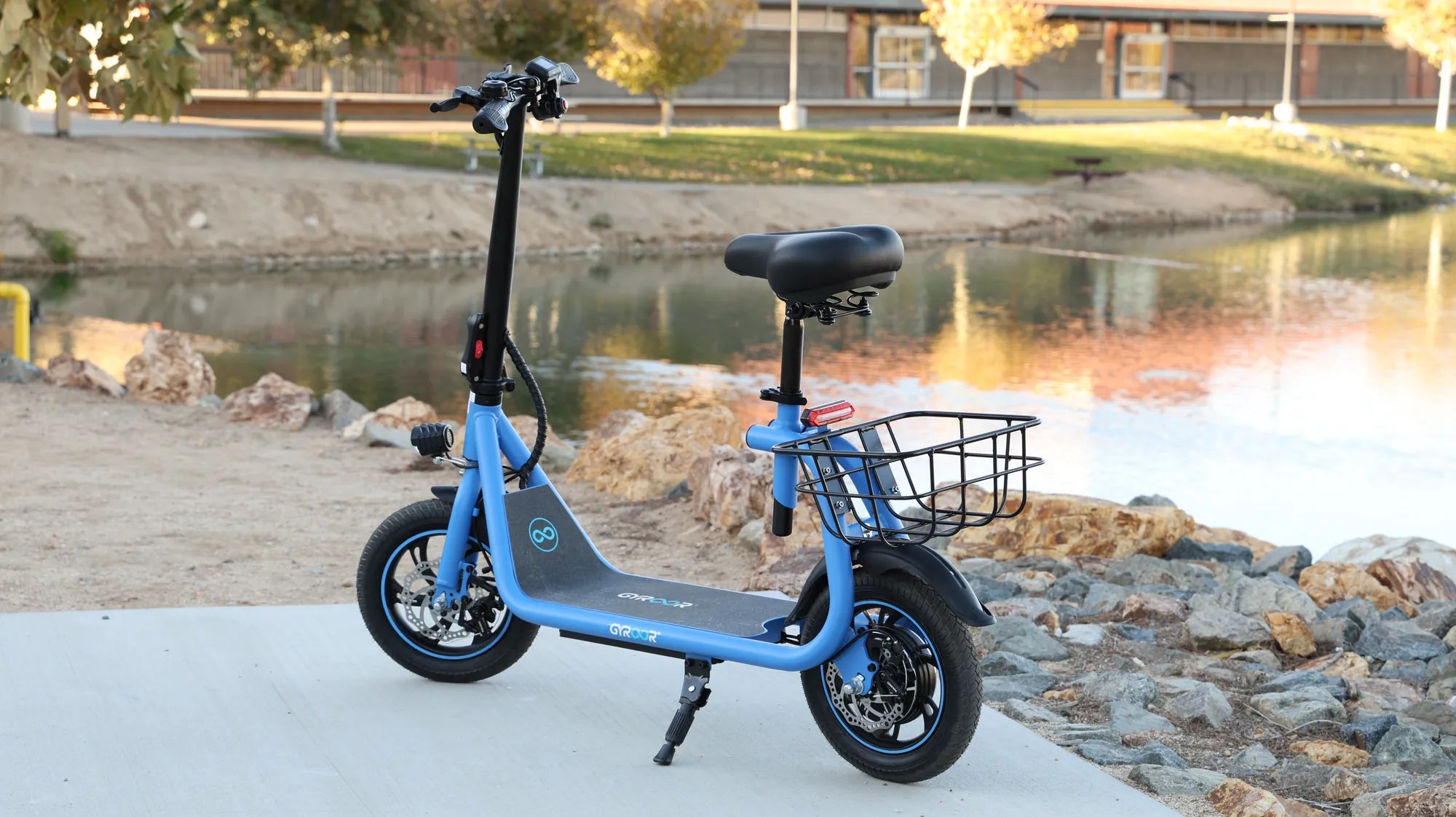
Introduction to E-Scooter Laws in Queensland
Are electric scooters legal in Queensland? The direct answer is yes, but with critical, non-negotiable conditions set by the Queensland Government. Navigating the rules is essential to avoid significant fines and ensure safe riding for yourself and others. This guide provides a comprehensive, up-to-date analysis of the legal landscape, directly referencing the Transport Operations (Road Use Management) Act 1995 and regulations enforced by the Department of Transport and Main Roads (TMR).
Understanding these laws is not optional; it's the foundation of responsible e-scooter ownership. The state classifies certain low-powered devices as 'personal mobility devices' (PMDs), granting them legal status on specific parts of the road network. This distinction separates your everyday commuter scooter from a vehicle requiring full registration and a license.
Our goal is to move beyond simple yes/no answers. We will dissect the technical specifications that define legality, map out permitted riding zones, and detail rider responsibilities. Whether you're considering your first purchase or are a current rider unsure of the rules, this guide delivers the clarity you need to ride with confidence and within the law.
Defining a Legal Electric Scooter in QLD: The PMD Criteria
Not every electric scooter on the market is legal for Queensland roads and footpaths. The law provides a precise technical definition for a 'wheeled recreational device' or personal mobility device. If your e-scooter fits this definition, it is exempt from registration, licensing, and compulsory third-party insurance. The core criteria are centered on power, speed, and essential safety equipment.
These rules are designed to balance innovation with public safety. By limiting power and speed, the government ensures these devices are compatible with shared spaces like footpaths and bicycle lanes. Riders must verify their scooter's specifications against these benchmarks before riding. Manufacturer claims can sometimes be misleading, focusing on peak power rather than the legally relevant continuous power output.
Maximum Power and Speed Limits
The most critical specifications are power and speed. A legal e-scooter in Queensland must have a maximum continuous power output of 200 watts. This is not the peak or 'burst' power some manufacturers advertise, but the sustained power the motor can produce. Many consumer scooters with 250W or 350W motors exceed this limit and are therefore illegal for use as PMDs.
Furthermore, the device must be incapable of exceeding 25 km/h on level ground. This is not a suggestion but a built-in limitation. If a scooter can be modified via an app or physically to go faster, it falls outside the legal definition. Devices exceeding either the 200W or 25 km/h thresholds are classified as motor vehicles, requiring registration, a motorcycle license, and the rider to wear an approved motorcycle helmet.
Essential Safety Features: Lights, Brakes, and Bell
Legal compliance isn't just about go; it's also about stop and be seen. Queensland law mandates specific safety features for operation, especially in low-light conditions. First, the e-scooter must have at least one effective brake. Most quality models feature a disc brake or electronic regenerative braking combined with a foot or fender brake.
For night riding or in poor weather, a white front light and a red rear light, both visible from 200 meters, are compulsory. These are not optional accessories but required equipment. Finally, an audible warning device like a bell or horn is mandatory. This allows you to alert pedestrians and other path users politely, a key part of shared path etiquette.
Where You Can and Cannot Ride in Queensland
Knowing where to ride is as important as riding a compliant scooter. Queensland law designates specific areas where personal mobility devices are permitted. Straying outside these zones can result in fines and puts you in dangerous traffic situations. The general principle is that e-scooters are meant for low-speed environments shared with pedestrians and cyclists.
Always be aware that local council bylaws can impose further restrictions. Certain pedestrian malls, beaches, or parks may prohibit e-scooters. It is the rider's responsibility to check and obey local signage. When in doubt, dismount and walk your scooter.
Permitted Areas: Footpaths, Bicycle Paths, and Local Roads
You are permitted to ride a compliant e-scooter on: footpaths, shared paths, bicycle paths, and local roads with a speed limit of 50 km/h or less. On footpaths and shared paths, you must give way to pedestrians. This means slowing down, using your bell, and passing only when it is safe and does not cause obstruction or alarm.
When riding on a local road (50 km/h zone), you must ride as near as practicable to the far left side. You are subject to the same road rules as bicycles. Using bicycle lanes on these roads is not only allowed but encouraged, as it provides a dedicated space away from car traffic.
Prohibited Areas: Where Riding is Illegal
It is illegal to ride an e-scooter on roads with a speed limit greater than 50 km/h. This is a strict prohibition. Additionally, you must not ride on motorways, freeways, or in children's playgrounds. Some specific pedestrian areas may also be off-limits via local council regulation.
Attempting to ride on a 60, 80, or 100 km/h road is extremely dangerous and a clear legal violation. For longer routes that include these roads, you must plan an alternative path using permitted pathways or dismount and use public transport. There is no exemption for this rule.
Rules for Riders: Helmet, Age, and Right-of-Way
Once you have a legal scooter and are in a legal area, you must follow strict rider conduct rules. These rules protect you and those around you. Ignorance is not a defense, and enforcement by police can lead to on-the-spot fines. The core rules revolve around safety equipment, sobriety, and respectful sharing of space.
The fundamental principle is that an e-scooter rider has responsibilities akin to a cyclist when on the road and a pedestrian when on the footpath. This hybrid status requires heightened awareness and courtesy.
Helmet Laws and Age Restrictions
All riders must wear a securely fitted approved bicycle helmet. This law applies to every person on an e-scooter, regardless of age or whether they are on a footpath or road. The helmet must meet Australian Standard AS/NZS 2063. There is no formal minimum age to ride an e-scooter in Queensland.
However, a rider under 16 years of age must be supervised by an adult. The supervising adult can be on foot, on a bicycle, or on another e-scooter. This rule ensures young riders develop competence and awareness under guidance.
Road Rules and Shared Path Etiquette
Standard road rules apply. You must not ride under the influence of alcohol or drugs. You must only carry one person per scooter—no passengers. You must keep left where possible and use hand signals to indicate turns or stops when riding on the road.
On shared paths, etiquette is paramount. Control your speed, especially around pedestrians, children, and dogs. Use your bell well in advance to indicate your presence—don't ring it aggressively at people's backs. Dismount in crowded areas. Never park your scooter where it blocks a footpath, doorway, or disabled access ramp.
Choosing a QLD-Compliant E-Scooter: A Buyer's Guide
With the legal framework clear, choosing the right scooter becomes a matter of matching specifications to the law and your needs. The market is flooded with options, but not all are designed with Queensland's specific 200W/25km/h regulations in mind. A savvy buyer looks for verified compliance, build quality, and safety features that go beyond the minimum legal requirements.
Investing in a scooter from a reputable brand that designs for regulated markets is crucial. It ensures not only legality but also long-term reliability, safety, and access to warranty support. Look for clear, unambiguous specifications in the product documentation.
Verifying Compliance: What to Look For
When researching models, scrutinize the technical specs for 'continuous rated power' (must be 200W or less) and a speed limiter fixed at 25 km/h. Be wary of brands that advertise a high 'peak' power but bury the continuous rating. The product manual or official website should state compliance with Australian or Queensland regulations for personal mobility devices.
Physically, ensure the model comes equipped with or has secure mounting points for the mandatory front light, rear light, and bell. A scooter with integrated, hard-wired lighting is often a better, more reliable choice than one relying on clip-on accessories.
Why Features Like UL-Certified Batteries & IPX5 Ratings Matter
Legal compliance is the baseline; safety and durability are what protect your investment. A UL-certified battery pack is a critical safety benchmark. It means the battery has undergone rigorous independent testing for fire and electrical safety, far beyond basic legal mandates. Brands like Gyroor use these UL-certified batteries across their lineup, reflecting a commitment to rider safety.
Given Queensland's weather, an IPX5 water-resistance rating is highly advisable. This rating means the scooter can withstand water jets from any direction, protecting it from sudden rain showers or puddle splashes. It’s a feature that directly impacts the scooter's longevity and safe operation in real-world conditions, offering peace of mind that a minimally compliant scooter may not.
Penalties and Enforcement: What Happens If You Break the Rules?
The Queensland Police Service enforces e-scooter regulations. Penalties are significant and designed to deter unsafe and illegal behavior. Fines are issued as infringement notices, and in serious cases, court proceedings can follow. The table below outlines key offenses and their associated penalties.
| Offense | Potential Fine (Approx.) | Notes |
|---|---|---|
| Riding a non-compliant e-scooter (over 200W/25km/h) on public paths/roads | $309 | Device is unregistered/uninsured. Higher penalties may apply. |
| Failing to wear an approved bicycle helmet | $154 | Applies to all riders on any path or road. |
| Riding on a prohibited road (speed limit >50km/h) | $154 | Also a major safety risk. |
| Carrying a passenger | $154 | One rider per device only. |
| Riding under the influence of alcohol/drugs | Up to $2,167 + license disqualification | Subject to drink-driving laws. |
| Not having required lights during night riding | $154 | Front (white) and rear (red) visible from 200m. |
Beyond fines, if you are involved in an accident while riding an illegal scooter or while breaking road rules, you may be personally liable for damages. Your personal insurance may not cover you if you were riding illegally. The financial and legal risks far outweigh any temptation to use a more powerful or improperly operated scooter.
Frequently Asked Questions (FAQs)
Q1: Do I need a license or registration for my e-scooter in QLD?
No. A compliant e-scooter (200W, 25km/h) is classified as a personal mobility device and does not require registration, a driver's license, or compulsory third-party insurance. If it exceeds these specs, it is classed as a motor vehicle and requires all of the above.
Q2: Can I ride my e-scooter at night?
Yes, but only if it is equipped with the mandatory front (white) and rear (red) lights, visible from 200 meters. Riding at night without these lights is illegal and dangerous.
Q3: Am I allowed to carry a passenger on my e-scooter?
No. It is illegal to carry passengers on a personal mobility device in Queensland. Only one person is permitted to ride the device at any time.
Q4: Where should I park my e-scooter?
Park it responsibly where it does not obstruct pedestrian access, footpaths, building entrances, or disabled access routes. Use designated bicycle parking where available. Never leave it lying on the ground in a walkway.
Q5: Can I ride my e-scooter in a bike lane on a 60 km/h road?
No. If the adjacent road has a speed limit over 50 km/h, you cannot ride on that road or in its bicycle lane. You must use an alternative route on permitted paths or roads with a 50 km/h or lower limit.
Q6: Are rental e-scooters (like Neuron or Beam) subject to the same rules?
Yes. Shared rental schemes operate under a special regulatory framework but must adhere to the same core rules for device speed (25 km/h) and where they can be ridden. Rider responsibilities (helmets, no drink-riding) are identical.
Comparison of Compliant vs. Non-Compliant Scooter Use
| Aspect | Compliant E-Scooter (≤200W, ≤25km/h) | Non-Compliant E-Scooter (>200W or >25km/h) |
|---|---|---|
| Legal Classification | Personal Mobility Device (PMD) | Motor Vehicle (e.g., Motorcycle) |
| Registration & Rego | Not Required | Mandatory (Illegal without it) |
| Rider License | Not Required | Motorcycle License Required |
| Compulsory Third-Party Insurance | Not Required | Mandatory |
| Legal Riding Areas | Footpaths, Shared Paths, Local Roads (≤50km/h) | Only on roads where registered motorcycles can go (NOT footpaths) |
| Helmet Requirement | Approved Bicycle Helmet | Approved Motorcycle Helmet |
| Penalty for Illegal Use | Fines for rule breaches (e.g., no helmet) | Major fines for unregistered/uninsured vehicle use, plus potential defect notices |
Conclusion: Riding Responsibly in Queensland
The freedom and convenience of electric scooters in Queensland come with a clear framework of responsibility. Legality is a binary condition defined by your scooter's technical specs and your adherence to zonal and behavioral rules. Riding a compliant scooter from a trusted brand like Gyroor, which prioritizes UL-certified battery safety and weather-resistant design, is the smartest way to ensure you meet and exceed these requirements.
Stay informed by periodically checking the Queensland Department of Transport and Main Roads website for any updates to personal mobility device regulations. As adoption grows, laws may evolve. Your commitment to safe, legal, and courteous riding not only protects you but also helps build a positive reputation for e-scooters as a sustainable transport option. Enjoy the ride, but always ride right.
Ready to find a Queensland-legal, safety-focused electric scooter? Explore the range of durable, feature-packed models designed for real-world commuting. Browse the full Gyroor collection at gyroorboard.com.
Electric Scooters in Portsmouth: The Future of Urban Mobility
Downtown Chicago Electric Scooters: The Ultimate Urban Commuting Solution