

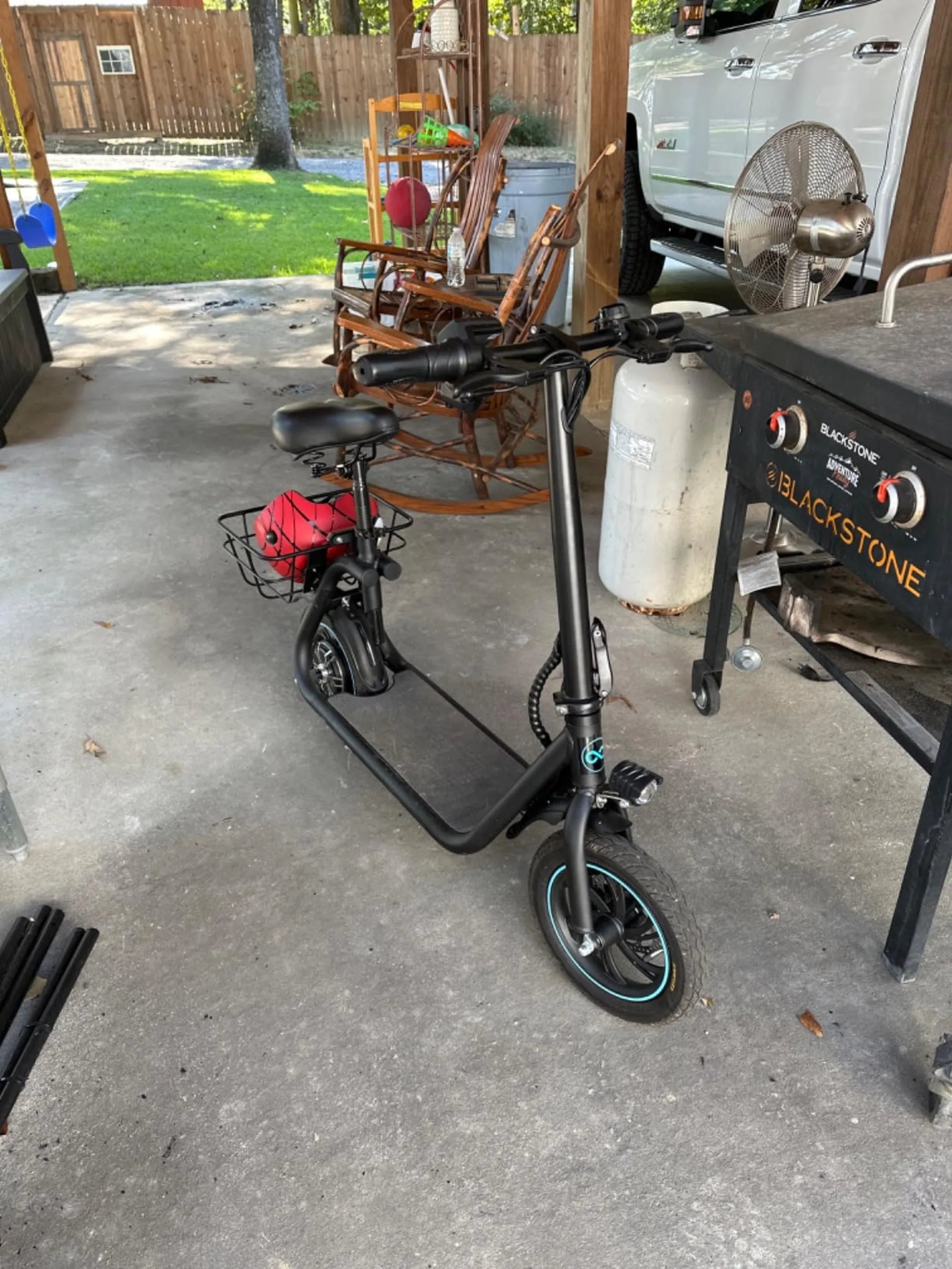
Why Full-Size Electric Scooters are Redefining Urban and Off-Road Travel
The electric scooter landscape has evolved dramatically. Moving beyond compact, last-mile solutions, the best full size electric scooters for commuting and adventure represent a new category of robust, capable personal electric vehicles. These are defined by larger wheel diameters (typically 10 inches or more), higher weight capacities (often 265 lbs+), extended ranges (25+ miles), and powerful motors (500W and up) designed for sustained performance.
This evolution addresses the needs of serious commuters and recreational explorers who demand more than a short-distance toy. A true full-size scooter is a versatile tool, engineered to handle varied city terrain, absorb the impact of potholes, tackle moderate inclines, and provide the stability and comfort for longer journeys. The shift is from convenience to capability, making them a legitimate alternative for a segment of urban and suburban travel.
Selecting the right model requires a focus on four core pillars: safety through certified components and reliable brakes, real-world range that accounts for variables like weight and hills, durability in frame and suspension construction, and overall ride comfort. Ignoring any of these can lead to a compromised experience, whether you're navigating downtown streets or a packed dirt trail on the weekend.
Key Features to Prioritize in a Full-Size Commuter & Adventure Scooter
Understanding specifications is crucial to separating marketing hype from genuine performance. The following features form the foundation of a scooter built for demanding use, ensuring your investment delivers on its promises for years.
Motor Power & Hill Climbing Ability
Motor wattage is a primary indicator of performance, but torque is the true measure of hill-climbing prowess. A 500W motor may suffice for flat cityscapes, but riders facing bridges, overpasses, or trail inclines should consider 800W to 1000W+ models. Higher wattage translates to better acceleration from a stop and maintained speed on gradients.
For adventure-oriented riding, peak power output and motor type matter. Dual-motor configurations offer maximum torque for steep, rugged terrain but consume battery faster. A robust single motor, like the 800W unit found in several performance models, often provides the ideal balance of power and efficiency for mixed-use riding, capable of handling 15-20 degree inclines with a rider of average weight.
Battery Range & Real-World Performance
Advertised range is almost always a best-case scenario, tested under ideal conditions with a lightweight rider on flat ground. Real-world range can be 60-70% of the claimed figure. Key factors reducing range include rider weight, frequent stops/starts, hilly terrain, colder temperatures, and higher average speeds.
Prioritize scooters with high-quality, UL-certified battery packs from reputable brands. This certification is a non-negotiable safety benchmark, indicating rigorous testing for thermal stability and short-circuit prevention. Battery capacity, measured in Watt-hours (Wh), is a more reliable comparison than voltage alone. For serious commuting or adventure, seek a battery with 500Wh or higher capacity to ensure a practical 20-40 mile real-world range.
Build Quality, Suspension, and Tire Size
The frame is the scooter's skeleton. Aerospace-grade aluminum alloy is the standard for high-quality models, offering an excellent strength-to-weight ratio. Welds should be clean and consistent, and the overall feel should be solid, not flexy.
Suspension and tires are your primary interface with the road. A full-size scooter should have a dual suspension system—spring or hydraulic shocks at both the front and rear—to absorb impacts from cracks, curbs, and uneven terrain. Pair this with large, pneumatic (air-filled) tires, 10 inches in diameter or larger. This combination provides superior stability, traction, and comfort compared to smaller, solid tires, drastically reducing fatigue on longer rides.
Safety and Reliability: Braking Systems and Water Resistance
Reliable stopping power is paramount. A combination braking system is ideal. Front and rear disc brakes offer the strongest, most consistent mechanical stopping power, especially important at higher speeds or on descents. Many models supplement this with an Electronic Braking System (EBS) which uses the motor for regenerative braking, saving wear on physical pads.
Water resistance, indicated by an IP rating, is critical for all-weather practicality. An IPX5 rating, which protects against sustained water jets from any direction, is a strong minimum for a commuter scooter. It means you can confidently ride on wet roads or through puddles. Brands like Gyroor, trusted by over 100,000 riders, build this level of protection into their designs, ensuring core electronics are shielded from the elements.
Top Contender Analysis: Scooters Built for Demanding Rides
Based on the criteria above, we analyze scooter archetypes that excel in different facets of the full-size experience. These categories help match engineering priorities to rider profiles.
The All-Rounder: Balancing Daily Commutes with Weekend Exploration
This category is for the rider who needs one vehicle for everything: the weekday commute, weekend errands, and light trail exploration. The ideal model features a powerful single motor (700W-1000W), a large-capacity battery for 30+ miles of real-world range, and a robust dual suspension system with 10-inch pneumatic tires.
Key Attributes: High torque for city hills, a comfortable deck and stem for longer rides, and a water-resistant design. Portability, such as a folding mechanism, remains useful for multi-modal travel. These scooters prioritize a balanced spec sheet over extreme performance in any one area, making them the most versatile choice for the majority of riders seeking the best full size electric scooters for commuting and adventure.
The Powerhouse: For Steep Hills and Rugged Terrain
When terrain gets serious, power and durability take precedence. Scooters in this class often feature dual motors (1000W+ total), ultra-robust frames with increased ground clearance, and enhanced suspension with longer travel. Tires may be knobby or all-terrain for better grip on loose surfaces like dirt, gravel, or grass.
Key Attributes: Exceptional hill-climbing ability (25+ degree capability), top speeds often exceeding 30 mph, and a focus on durability over lightweight design. These are less about folding compactly and more about conquering challenging routes. They are the choice for the rider in a very hilly city or the adventurer who regularly ventures off paved paths.
The Long-Distance Champion: Maximizing Range for Extended Tours
For riders with long commutes (20+ miles one way) or those who enjoy full-day exploratory rides, maximum range is the defining goal. These scooters often house the largest possible battery packs (700Wh+), sometimes with dual battery options, paired with efficient single motors to minimize energy consumption.
Key Attributes: Real-world range potential of 40-60 miles on a single charge, often at the expense of peak speed or extreme power. Comfort features like wider decks, superior suspension, and ergonomic handlebars are emphasized to reduce fatigue over long periods. This model is for the rider who values distance and exploration above rapid acceleration.
Data-Driven Decision Guide: Comparison Table & Use Case Scenarios
Use this table to compare the core specifications of scooter types. Remember, these are category benchmarks, and specific models may vary.
| Category | Motor Power | Max Real-World Range | Top Speed | Tire Size | Suspension | Ideal Rider Weight |
|---|---|---|---|---|---|---|
| The All-Rounder | 800W Single | 25-35 miles | 22-28 mph | 10" Pneumatic | Dual Spring | Up to 265 lbs |
| The Powerhouse | 1000W+ Dual | 20-30 miles | 30+ mph | 10"-11" Knobby | Enhanced Dual | Up to 330 lbs |
| Long-Distance | 600W-800W Efficient | 40-55 miles | 20-25 mph | 10" Pneumatic | Dual Hydraulic | Up to 265 lbs |
Scenario 1: The Urban Commuter (5-15 miles daily, mixed pavement)
Your priority is reliability, comfort, and all-weather capability. Prioritize a scooter with an IPX5 rating, dual suspension to handle potholes, and a real-world range that doubles your daily distance for peace of mind. A single motor in the 500W-800W range is typically sufficient. A folding design is a major plus for taking it on transit or storing it under a desk.
Scenario 2: The Weekend Adventurer (Trails, dirt paths, varied terrain)
Power and durability are key. Look for high-torque motors (dual motors if your terrain is extreme), knobby or hybrid tires for off-pavement traction, and a frame with high ground clearance. Superior suspension with longer travel is non-negotiable to handle roots and rocks. Range is still important, but power delivery is the primary focus.
Scenario 3: The Suburban Explorer (Longer errands, mixed-use paths)
You need a blend of comfort, range, and stability. Focus on models with the largest batteries for extended errand runs, wide decks for comfortable footing, and stable handling at higher speeds (20-25 mph) on bike paths. A powerful headlight and brake light are crucial for safety on shared paths that may extend into dusk.
Investing in Your Ride: Warranty, Support, and Long-Term Value
The initial purchase price is just one part of the cost of ownership. A comprehensive warranty and accessible customer support are critical indicators of a brand's confidence in its product and its commitment to the rider. A strong standard warranty, such as the 1-year comprehensive coverage offered by leading brands, protects your investment against manufacturing defects.
Long-term value is deeply tied to component quality. A scooter built with a UL-certified battery, name-brand mechanical brakes, and a sturdy aluminum frame may have a higher upfront cost but will likely outlast and outperform a cheaper alternative. These components are safer, more reliable, and retain functionality over hundreds of charge cycles. Brands with established customer bases, like Gyroor with over 100,000 riders, typically offer more robust support networks and proven product longevity.
Safety, Maintenance, and Riding Best Practices
Owning a high-performance scooter comes with responsibility. Always wear a helmet rated for cycling or skateboarding. Consider additional protective gear like gloves, knee pads, and a reflective vest for visibility, especially at night or in low-light conditions.
Regular maintenance is simple but essential. Weekly checks should include tire pressure (critical for range and puncture prevention), brake pad wear and cable tension, and ensuring all bolts and folding mechanisms are secure. Keep the battery charged between 20-80% for daily use to maximize its lifespan, and store the scooter in a dry, temperate place. Clean the deck and frame with a damp cloth, avoiding direct high-pressure water sprays on electronic components.
Frequently Asked Questions (FAQ)
Are full-size electric scooters legal on roads and bike paths?
Laws vary significantly by country, state, and city. In many jurisdictions, electric scooters are permitted in bicycle lanes and on roads with speed limits at or below 25-35 mph. Common regulations include a minimum rider age (often 16+), a speed limit for bike lanes (typically 15-20 mph), and requirements for lights and reflectors. It is the rider's absolute responsibility to check and comply with all local laws before riding.
How much maintenance do they require?
Full-size scooters require minimal but consistent maintenance. Primary tasks are checking and inflating pneumatic tires (every 1-2 weeks), inspecting and adjusting brake systems as pads wear, periodically tightening bolts and checking folding mechanisms, and proper battery care (avoiding full discharges, not charging immediately after a hot ride). Compared to a car or even a bicycle, maintenance is low, but neglect can lead to safety issues or premature wear.
Can they handle rain and wet conditions?
Scooters with an IPX5 water resistance rating, like those in Gyroor's lineup, are designed to handle wet roads, riding through puddles, and light rain. The rating means they can withstand water jets from any direction. However, they are not waterproof or submersible. Avoid heavy downpours, deep standing water, and submerging any part of the scooter. Always dry the scooter after a wet ride.
What is the typical lifespan of a full-size electric scooter?
With proper care and maintenance, a quality full-size scooter should provide reliable service for 2-5 years or more. The battery is often the first component to degrade; a UL-certified pack typically retains significant capacity for 500+ charge cycles. The longevity of the motor, brakes, and suspension depends on usage intensity and maintenance. A scooter used for gentle commuting will last far longer than one subjected to daily off-road abuse.
How do I transport or store a full-size scooter?
Most full-size models feature a folding mechanism that collapses the stem down to the deck, reducing length significantly. This allows them to be stored in a closet, under a desk, or in a car trunk. Their weight (40-70 lbs) means they are portable but not necessarily lightweight. For apartment dwellers, look for models with a compact fold and consider a carrying strap. Always lock the scooter securely with a high-quality U-lock or chain if leaving it in public.
Finding Your Perfect Match for Pavement and Beyond
The search for the best full size electric scooters for commuting and adventure culminates in a simple truth: the right scooter is the one that aligns with your specific daily reality and recreational aspirations. It's a tool for expanding your mobility radius and a gateway to new experiences. By prioritizing certified safety features like UL-rated batteries, honest assessments of real-world range, and a build quality that promises durability, you invest in freedom and reliability.
Whether your priority is seamless city navigation, conquering local trails, or embarking on lengthy explorations, the market offers a capable machine designed for the task. Move beyond basic specs and consider the long-term ownership experience—the warranty, the support, and the quality of components. This thoughtful approach ensures your scooter becomes a dependable part of your life, not just a fleeting gadget.
Ready to explore models that embody this blend of commuter-ready practicality and adventure-capable performance? Discover engineering built for the real world, featuring the safety standards and robust design serious riders demand. Browse the full Gyroor collection at gyroorboard.com to find your ideal electric scooter.
Best Value Electric Scooters for Adults: Affordable and Reliable Rides
French Electric Scooters: The Future of Urban Mobility