


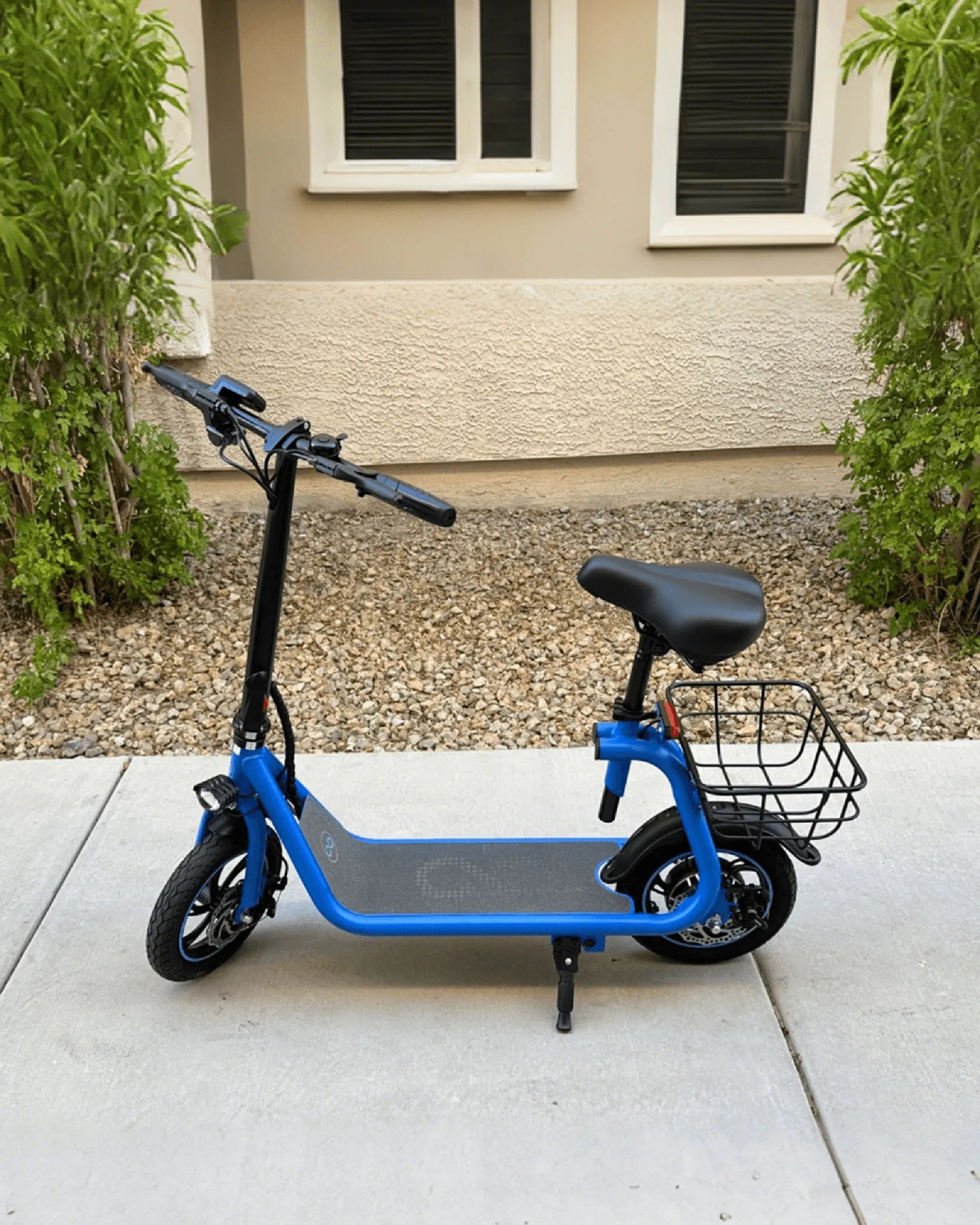
Navigating the world of online e-bike shopping can feel overwhelming. With countless models, technical jargon, and the inability to test ride, making the right choice requires a strategic approach. This guide demystifies the entire process. You will learn how to match an e-bike to your specific needs, interpret critical specifications, vet brands for quality and support, and execute a seamless purchase from research to your first ride.
Why Buy an E-Bike Online? The Modern Shopper's Advantage
The decision to buy an e-bike online unlocks significant advantages over traditional retail. The most compelling benefit is direct access to a vast, unfiltered selection. You are no longer limited to the handful of models a local dealer chooses to stock.
This expansive marketplace allows for precise comparison shopping. You can filter by motor power, battery capacity, frame style, and price point across dozens of brands simultaneously. Detailed specification sheets, high-resolution images, and video reviews are available at your fingertips.
Pricing is another key advantage. The direct-to-consumer (DTC) model often eliminates middleman markups, providing better value. Many reputable online brands invest these savings into higher-quality components, like UL-certified batteries and hydraulic brakes, rather than physical storefront overhead.
Finally, the convenience is unparalleled. The entire process—from research and comparison to financing and checkout—can be done on your schedule. Your new e-bike is then delivered directly to your door, ready for final assembly. For the informed buyer, purchasing online is not just convenient; it's the most efficient path to finding the ideal e-bike.
Key Considerations Before You Click "Add to Cart"
A successful online e-bike purchase hinges on thorough pre-purchase research. Rushing this stage is the most common mistake. You must define your parameters clearly to filter the overwhelming options effectively.
Start with your budget, but be realistic. While it's tempting to buy an ebike online at the lowest price, extremely low-cost models often compromise on battery safety, motor durability, and component quality. Allocate funds for essential accessories like a helmet, lock, and possibly fenders or a rack.
Next, consider the legal framework. E-bikes are generally classified into three categories in North America. Class 1 provides pedal-assist only (no throttle) up to 20 mph. Class 2 offers pedal-assist and a throttle up to 20 mph. Class 3 is pedal-assist only up to 28 mph. Your local trails, bike paths, and city ordinances may restrict certain classes.
Finally, assess the brand's reputation and support structure. An attractive website means little without a track record. Look for brands with established customer bases, transparent contact information, and a history of honoring warranties. A reputable company makes the post-purchase experience smooth.
Determining Your Riding Needs & Style
Your primary use case is the single biggest determinant of the right e-bike. An e-bike optimized for a daily 10-mile urban commute will differ vastly from one meant for weekend mountain trail adventures.
Commuting & Urban Riding: Prioritize comfort, practicality, and reliability. Look for features like integrated lights, fenders, a rear rack, and a step-through or low-step frame for easy mounting. A mid-drive or reliable hub motor with a battery offering 30+ miles of real-world range is essential.
Recreation & Fitness: For paved trails and light gravel, a comfortable hybrid or fitness e-bike is ideal. You'll want multiple levels of pedal assist to match your effort, a lightweight frame, and responsive brakes. Range is key here, as recreational rides can be longer.
Cargo & Utility: If you plan to carry groceries, children, or gear, a dedicated cargo e-bike or a robust commuter with a high-weight capacity is necessary. Key features include a long wheelbase for stability, powerful motor torque (often 80+ Nm), and integrated mounting points for bags and boxes.
Off-Road & Trail Riding: This domain requires a specific electric mountain bike (e-MTB). Essential features include full or front suspension, wide, knobby tires, hydraulic disc brakes, and a mid-drive motor that provides natural power delivery and good ground clearance.
Understanding E-Bike Specifications: Motor, Battery, and Range
Decoding the spec sheet is non-negotiable. Marketing claims like "50-mile range" are often based on ideal laboratory conditions. Understanding the underlying technology empowers you to predict real-world performance.
Motor Type & Power: Hub motors (in the wheel) are common and often more affordable. Mid-drive motors (at the bike's crank) leverage the bike's gears, offering better efficiency on hills and a more natural riding feel. Power is measured in watts (W). A 250W-500W motor suits most urban and recreational riding, while 750W+ is better for heavy cargo or steep hills.
Battery Capacity & Safety: Capacity, measured in Watt-hours (Wh), is the fuel tank of your e-bike. A higher Wh number generally means more potential range. A 400Wh battery may suffice for short commutes, while 600Wh+ is recommended for longer adventures. Crucially, insist on a battery with reputable safety certification, like UL 2271 or UL 2849. This is a non-negotiable safety standard that brands like Gyroor meet across their lineup.
Calculating Real-World Range: Advertised range is a best-case scenario. To estimate your real range, consider the battery's Wh rating and divide by an average of 15-20 Wh per mile. A 500Wh battery, therefore, will likely deliver 25-33 miles of real-world range, depending on rider weight, terrain, assist level, and wind.
| Specification | What It Means | What to Look For |
|---|---|---|
| Motor Wattage (Nominal) | Sustained power output | 250W-750W based on terrain & load |
| Battery (Watt-hours) | Total energy capacity | 400Wh+ for commutes; 600Wh+ for long rides |
| Torque (Newton-meters) | Rotational force for acceleration/hills | 50Nm+ for mild hills; 80Nm+ for cargo/hills |
| Charger Output | Speed of recharging | 3A or 4A charger for faster recharge times |
| IP Water Resistance Rating | Protection against elements | IPX5 or higher for all-weather commuting reliability |
Evaluating Build Quality, Warranty, and Support
The longevity of your e-bike depends on the quality of its components and the strength of the company behind it. Scrutinize these elements as carefully as you do the motor and battery.
Frame & Components: Aluminum alloy frames offer a good balance of strength and weight. Check the quality of secondary components: Are the brakes mechanical or hydraulic disc? (Hydraulic offers superior stopping power with less hand effort.) What brand supplies the drivetrain (Shimano, SRAM)? Reliable brands here indicate a better overall build.
Durability Ratings: An IP (Ingress Protection) rating is critical for an e-bike. It defines protection against dust and water. A rating of IPX5, common on models like those from Gyroor, means the bike can withstand water jets from any direction, making it safe for riding in rain and through puddles.
Warranty as a Trust Signal: The warranty is your safety net. A comprehensive warranty should cover the frame (2+ years), motor (2+ years), and battery (1-2 years) as separate items. A one-year "bumper-to-bumper" warranty on all components, offered by brands like Gyroor, provides significant peace of mind. Read the terms to understand what is excluded (e.g., wear items like tires).
Customer Support Access: Before you buy an ebike online, test the brand's support. Send a pre-sales question via email or chat. Note the response time and quality. Are there U.S.-based support phone lines, detailed online manuals, and tutorial videos? This infrastructure is vital if you encounter an issue post-delivery.
Navigating the Online Purchase Process: A Step-by-Step Walkthrough
With your needs defined and specs understood, you're ready to navigate the purchase process methodically. Treating this as a project with clear phases prevents oversights and ensures a smooth transaction.
Research and Comparison: Using Reviews and Forums
Begin by aggregating a shortlist of 3-5 models that meet your criteria. Then, dive into third-party verification. Professional review sites provide technical analysis and performance benchmarks. However, the most valuable insights often come from long-term owner reviews.
Seek out dedicated e-bike forums and owner groups on social media. Here, you can ask specific questions and read about real-world experiences after 6 or 12 months of ownership. Pay attention to recurring comments about customer service interactions, component failures, and battery degradation.
YouTube is an invaluable tool. Video reviews allow you to see the bike's size, hear the motor sound, and watch assembly processes. Look for "long-term update" videos where reviewers reassess the bike after significant use.
Cross-reference what you learn. If a brand consistently receives praise for its responsive support or criticism for slow shipping times across multiple independent sources, you can trust that pattern as a reliable data point for your decision.
Decoding the Fine Print: Shipping, Returns, and Assembly
The excitement of finding the right model must be tempered by a careful review of the store's policies. These details define your risk and the total cost of ownership.
Shipping Costs & Delivery: Confirm if shipping is free, flat-rate, or calculated by location. Note the estimated delivery timeline. Many e-bikes ship via freight carriers and may require an appointment for delivery. Understand who is responsible for filing a claim if the freight carrier damages the box—usually the recipient.
Return Policy & Restocking Fees: A fair return policy is a hallmark of a confident brand. Look for a window of at least 14-30 days for returns. Crucially, check if there are any restocking fees (3-15% is common) and who pays for return shipping. Some brands offer a "test ride" period, which significantly reduces purchase anxiety.
Assembly Requirements: Most e-bikes arrive 80-90% assembled. Typical final assembly includes attaching the front wheel, handlebars, pedals, and seat post, and charging the battery. Review the assembly guide online beforehand. Ensure you have the necessary basic tools (Allen wrenches, wrenches) or consider budgeting for professional assembly at a local bike shop.
Finalizing Your Order and Preparing for Delivery
At the checkout page, pause and double-check everything. Verify the exact model, color, and frame size are correct. Review the cart for added accessories—a helmet, lock, or upgraded charger might be wise additions now.
Review the final cost breakdown: subtotal, shipping, taxes, and any discounts applied. Choose your payment method securely. Many retailers offer financing options through partners like Affirm or Klarna, which can make a higher-quality e-bike more accessible.
Once your order is confirmed, you'll receive a tracking number. Use this time to prepare your space. Clear an area in your garage or living room for unboxing and assembly. Gather your tools and watch the brand's assembly video again. This preparation makes delivery day straightforward and stress-free.
The Gyroor Difference: What to Look for in a Trusted Online Brand
When you choose to buy an ebike online, selecting a brand with a proven track record is your greatest safeguard. A brand like Gyroor exemplifies the hallmarks of a trustworthy direct-to-consumer manufacturer, translating engineering priorities into direct benefits for the rider.
Safety is the non-negotiable foundation. Every Gyroor e-bike is powered by a UL-certified battery pack. This independent certification involves rigorous testing for electrical, mechanical, and environmental safety, significantly mitigating the risk of battery fire—a paramount concern for any e-bike stored or charged at home.
Durability for real-world conditions is engineered in. With an IPX5 water-resistant rating across key electrical components, Gyroor e-bikes are built to handle rain, wet roads, and routine cleaning. This commitment to resilience means the bike is a reliable daily tool, not a fair-weather toy, giving you confidence in your commute or ride regardless of the forecast.
Comprehensive support structures the entire ownership experience. Gyroor backs its products with a robust 1-year warranty on the frame, motor, battery, and electronic components, coupled with responsive U.S.-based customer service. This commitment, trusted by over 100,000 riders, effectively removes the traditional fear of being stranded with a complex product purchased online.
Ultimately, a brand's focus on certified safety, all-weather durability, and accessible support demonstrates a long-term commitment to its customers. These factors build the essential trust required to confidently make a major purchase like an e-bike over the internet.
Post-Purchase: Unboxing, Assembly, and Your First Ride
The arrival of your new e-bike is an exciting moment. A methodical approach to unboxing and setup ensures a safe and successful start to your riding journey.
Safe Unboxing and Initial Inspection
When the large box arrives, inspect the exterior immediately for any obvious signs of severe impact or damage from the carrier. Document any external box damage with photos before opening.
Carefully unbox the bike, preferably with a helper due to its weight. Use scissors or a box cutter cautiously to avoid scratching the bike. Remove all packing materials and lay out all parts systematically. Compare the contents with the packing list to ensure nothing is missing, including the charger, keys, tools, and manual.
Conduct a visual inspection of the bike frame, wheels, and components for any scratches, dents, or damage incurred during shipping. Take clear, well-lit photographs of any issues you find. This documentation is crucial if you need to initiate a warranty claim for shipping damage.
Assembly Tips and Professional Tuning
Follow the manufacturer's assembly guide step-by-step. Online video tutorials from the brand are often clearer than paper manuals. Ensure all bolts (handlebar stem, front wheel axle, pedals) are tightened to the correct torque specifications. Pedals are threaded differently for left and right sides (usually marked L/R).
Even if you are mechanically inclined, scheduling a post-assembly tune-up at a local bike shop is a highly recommended investment. A professional mechanic will check your work, true the wheels, properly tension the brakes and gears, and perform a full safety check. This ensures optimal performance, safety, and longevity of your components.
Before your first ride, perform a pre-ride safety check: inflate tires to the recommended PSI (on the tire sidewall), test brake lever function, ensure the headlight and taillight work, and confirm the battery is securely locked in place. This quick check becomes a vital habit.
Registration, Maintenance, and Joining the Community
Immediately register your e-bike's warranty on the manufacturer's website. This often activates your coverage and is required for any future claims. Keep your receipt and all documentation in a dedicated folder, digital or physical.
Basic maintenance is key to longevity. Keep the chain clean and lubricated, check tire pressure weekly, and periodically inspect brake pads for wear. Store the bike in a dry place and follow the manufacturer's guidelines for battery storage, especially during long periods of non-use (e.g., store at a 50-80% charge).
Join the community. Find the brand's official user group or forums. These communities are treasure troves of tips, accessory recommendations, troubleshooting advice, and group ride opportunities. Engaging with other owners enhances your experience and provides a support network beyond official customer service.
Frequently Asked Questions About Buying an E-Bike Online
Q: How can I be sure the e-bike will fit me without a test ride?
A: Use the manufacturer's size chart meticulously, which is based on rider height and sometimes inseam. If you are between sizes, consider your riding style: size down for a more agile feel, size up for stability. Remember, components like the seat post and stem can be adjusted or swapped later to fine-tune fit, but the frame size is fixed.
Q: What if the e-bike arrives damaged or has an issue?
A: Document any damage with photos of the box and the affected part before and during unboxing. Contact the retailer's customer support immediately via email (providing your order number and photos) or phone. Reputable brands like Gyroor have processes for these situations, which may involve sending a replacement part, providing a partial refund for minor damage, or initiating a return/replacement for major issues under their warranty.
Q: Is it difficult to assemble an e-bike by myself?
A> Most modern e-bikes are designed for straightforward home assembly, typically requiring attachment of the front wheel, handlebars, pedals, and seat. Basic tools are included. If you are uncomfortable, many local bike shops offer affordable flat-rate assembly services for bikes purchased online. This is an excellent option to ensure perfect setup and safety.
Q: How do I handle maintenance and repairs on an online-purchased e-bike?
A> Most routine maintenance (tire changes, brake adjustments, drivetrain care) can be performed by any competent local bike shop. For motor or battery-specific issues, you would contact the online brand's support. They will typically troubleshoot remotely and, if needed, send you a replacement component to be installed locally. Choosing a brand with a strong support network is crucial for this process.
Q: Are online e-bike prices really better than local bike shops?
A> Often, yes, due to the direct-to-consumer model eliminating middleman markups. However, the price at a local shop includes professional assembly, a pre-delivery safety check, and often a free tune-up or two. When comparing, factor in the potential cost of professional assembly ($75-$150) for an online bike to get a true cost comparison. The online model usually wins on pure hardware specification for price.
Empower Your Ride—Making an Informed Online E-Bike Purchase
The journey to buy an ebike online successfully culminates in empowerment. By investing time in research, you gain control over a significant purchase. You learn to distinguish marketing hype from engineering substance, to value certified safety over superficial features, and to prioritize long-term support over the lowest sticker price.
This process transforms you from a passive consumer into an informed buyer. The confidence you build by understanding motor torque, battery safety, and warranty terms is far more valuable than a fleeting test ride. It ensures the e-bike you choose will integrate seamlessly into your life, providing reliable, joyful transportation for years to come.
The modern marketplace offers unparalleled choice and value. By applying the framework in this guide—defining needs, vetting specifications, scrutinizing policies, and choosing a reputable brand—you mitigate the risks and fully capitalize on the benefits. Your perfect e-bike is out there, ready to be discovered, ordered, and delivered to your door.
Ready to explore a curated selection of e-bikes built with safety, durability, and rider support as core principles? Browse the full Gyroor collection, featuring UL-certified batteries, IPX5-rated all-weather designs, and comprehensive warranties, at gyroorboard.com. Your next adventure awaits.
Scooter with Two Back Wheels: The Ultimate Stability Guide
3 Wheel Scooter for Teenager: The Ultimate Guide to Safe, Stable, & Fun Mobility