



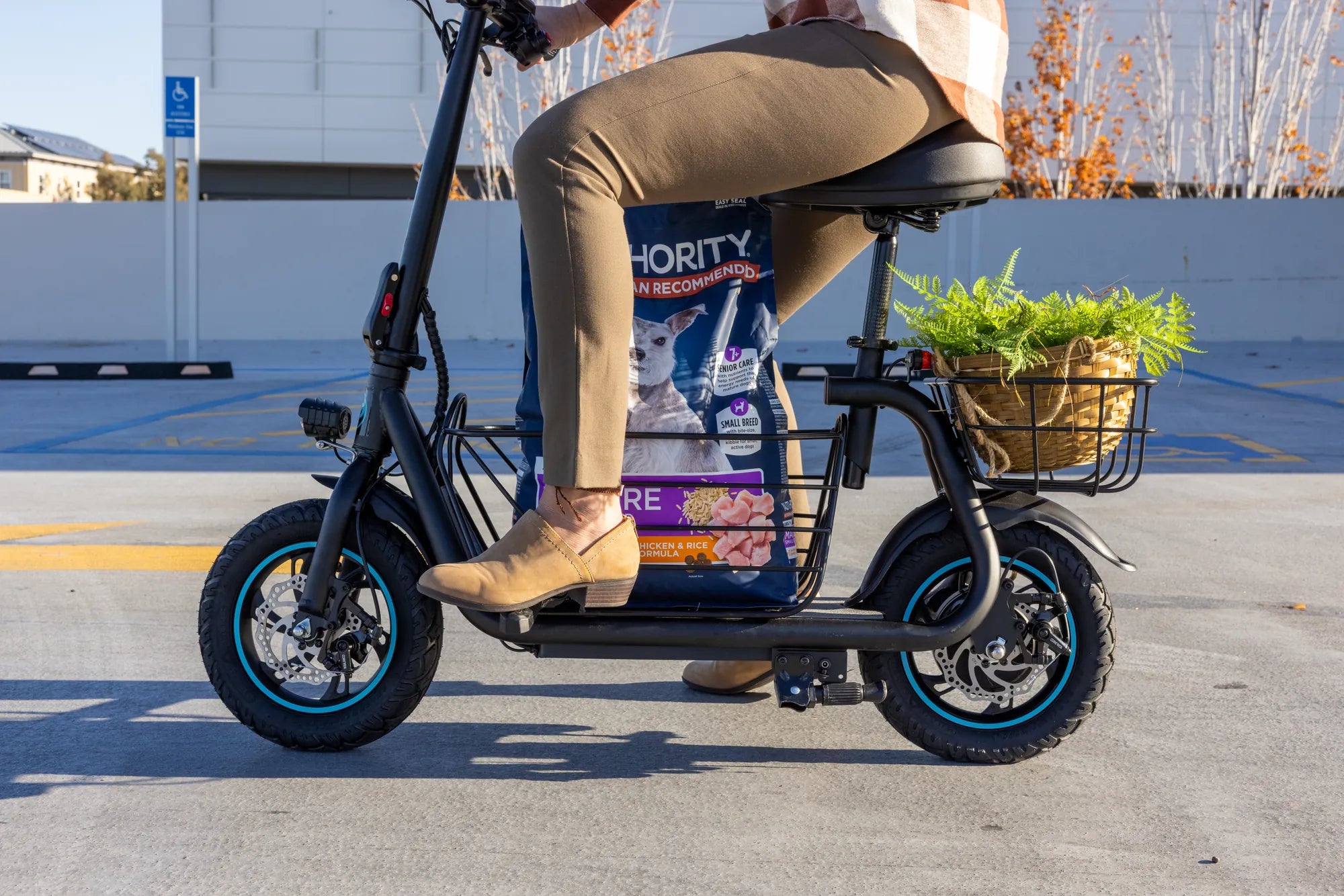
Navigating Air Travel with Your Electric Scooter
You’re packed for your trip, but your essential last-mile transport—your electric scooter—sits by the door. The central question arises: can I take my scooter on a plane? The answer is nuanced, hinging on international dangerous goods regulations, specific airline policies, and your scooter's battery capacity. This guide provides the clarity and actionable steps you need, transforming a complex travel dilemma into a manageable process. You will learn how to decode battery ratings, secure airline approval, and pack your scooter correctly, ensuring a smooth journey from curb to gate.
Traveling with personal electric mobility devices has become increasingly common, yet airline policies often seem opaque. The core of the issue isn't the scooter itself but the lithium-ion battery powering it. These batteries are classified as hazardous materials due to fire risk, leading to universal rules enforced by aviation authorities worldwide. Success depends on understanding and adhering to these protocols before you arrive at the airport.
This comprehensive analysis draws on official regulations from the International Air Transport Association (IATA) and specific carrier policies. We'll use real-world examples, including models from leading brands like Gyroor, to illustrate how different scooters fit into regulatory categories. Whether you're a daily commuter or an adventure traveler, mastering this information is the key to avoiding last-minute surprises and costly baggage fees.
The Lithium-Ion Battery: Your Scooter's Travel Passport
Every electric scooter's air travel eligibility is dictated by its battery. The IATA Dangerous Goods Regulations (DGR) provide the global framework, which individual airlines then interpret and enforce. The fundamental rule is non-negotiable: lithium-ion batteries must be carried in the passenger cabin (as carry-on baggage) and are prohibited in checked luggage. This allows for immediate response if a thermal event occurs.
The critical metric is the battery's energy capacity, measured in Watt-hours (Wh). You can usually find this on the battery label, the scooter's manual, or the manufacturer's website. If only voltage (V) and amp-hour (Ah) are listed, calculate Watt-hours using this formula: Voltage (V) x Amp-hours (Ah) = Watt-hours (Wh). For instance, a common 36V, 10Ah battery is 360Wh. Knowing this number is the first and most crucial step.
Regulations categorize devices based on this Wh rating. Spare batteries are subject to even stricter rules. For the primary battery installed in a personal mobility device like an e-scooter, the regulations create clear tiers that determine your path forward. Misstating or misunderstanding this capacity can lead to denied boarding, so accurate verification is essential.
Battery Capacity Categories and Airline Rules
Airline policies universally stem from the IATA guidelines, creating three main categories for electric scooters. Your scooter's Wh rating places it in one of these groups, each with distinct requirements.
Category 1: Scooters with Batteries ≤ 160Wh. This is the most straightforward category. Most compact and commuter-focused e-scooters fall here. Examples include many models from Gyroor's commuter line. These devices are generally permitted as carry-on items, provided the battery is securely attached to the scooter. The scooter must fit in the overhead bin or a designated storage area, and airline staff may require you to power it on to prove it's inert.
Category 2: Scooters with Batteries > 160Wh and ≤ 300Wh. This is a gray zone requiring proactive action. Many high-performance commuter and mid-range scooters, such as the Gyroor Z8, have batteries in this range. Airlines may allow these, but prior approval is almost always mandatory. You must contact the airline's special assistance or dangerous goods desk at least 72 hours before departure. Approval is never guaranteed and is granted on a case-by-case basis.
Category 3: Scooters with Batteries > 300Wh. For most commercial passenger airlines, this category is effectively prohibited. High-performance, long-range, or dual-motor scooters typically exceed this threshold. Attempting to fly with these batteries is highly likely to result in denial at check-in or security. For these devices, alternative travel plans are necessary.
Your Pre-Flight Checklist: A Step-by-Step Guide
Proper preparation is the only way to ensure a hassle-free experience. Follow this checklist in order, starting well before your travel date.
Step 1: Identify Your Battery Capacity (7+ Days Before). Locate the Wh rating on your scooter's battery or manual. If you cannot find it, contact the manufacturer directly. Gyroor's customer service, for example, can provide this specification for any model. This number dictates all subsequent steps.
Step 2: Research and Contact Your Airline (5-7 Days Before). Visit your airline's website and search for "battery-powered devices," "mobility aids," or "dangerous goods." Policies vary significantly. After reviewing the written policy, call the airline's special services desk. Clearly state you wish to travel with a personal electric scooter, provide the exact Wh rating, and request formal approval. Get a reference number or confirmation email.
Step 3: Physically Prepare Your Scooter (Day Before). Fully power down the scooter. Ensure the battery is securely mounted in its compartment. If your airline requires the battery to be removed for transport (common for scooters in the 160-300Wh category), discharge it to about 30-50% charge—this is a recommended safety practice for lithium-ion cells in transit.
Step 4: Pack Securely for Transport. Protect all electrical terminals from short circuits. Use the original plastic caps or cover terminals with non-conductive tape. If you removed the battery, pack it in its original retail packaging or a sturdy, insulated bag. Place the scooter frame in a protective travel case or a durable bag. Consider slightly deflating pneumatic tires to accommodate pressure changes in the cargo hold if the frame is checked.
Airline Policy Comparison: Know Before You Go
While all airlines follow IATA guidelines, their specific implementation varies. The table below provides a snapshot of major carriers' stances. Always confirm directly with the airline, as policies change.
| Airline | Battery Limit for Scooters (Carry-On) | Pre-Approval Required? | Key Notes & Fees |
|---|---|---|---|
| Delta Air Lines | ≤ 300 Wh | Yes, for 160-300Wh | Must fit in overhead bin; counts as carry-on bag. May be subject to oversize fees if gate-checked. |
| American Airlines | ≤ 300 Wh | Yes, for 160-300Wh | Battery must be < 30% charge if removed. Device must be under 50 lbs for carry-on. |
| Southwest Airlines | ≤ 160 Wh | No, if ≤160Wh | Strictly enforces the 160Wh limit. Scooters over this are not permitted. |
| United Airlines | ≤ 300 Wh | Yes, for 160-300Wh | Requires advance notice (at least 48 hours). Battery terminals must be insulated. |
| Lufthansa | ≤ 300 Wh | Yes, for all e-scooters | Mandatory pre-approval via Service Center. Limited to two devices per passenger. |
This comparison highlights the importance of individualized research. A scooter accepted on Delta may not be allowed on Southwest. International carriers, in particular, can have more restrictive interpretations. When in doubt, the lower 160Wh threshold is the safest benchmark for guaranteed acceptance across most airlines.
Smart Alternatives to Flying With Your Scooter
Given the complexities, exploring alternatives is often the most practical choice for frequent travelers or owners of high-capacity scooters.
Rental and Sharing Services at Your Destination. Most major cities and tourist hubs now have robust e-scooter and e-bike sharing networks (e.g., Lime, Bird, local operators). Download the relevant apps beforehand. This eliminates all travel hassle, liability, and potential damage to your personal device.
Invest in a Travel-Optimized Scooter. If you travel often, consider a model specifically designed for portability and compliance. Look for features like a battery under 160Wh, a quick-folding mechanism, and a lightweight frame. Gyroor's commuter series, for instance, emphasizes compact designs with UL-certified battery packs that meet common airline thresholds, blending safety with travel-friendly convenience.
Shipping Your Scooter Separately. For longer trips, shipping your scooter via ground freight or a specialized service can be reliable. This requires proper packaging and declaring the lithium battery. While costly, it offers peace of mind and avoids airport uncertainty. Always use the original packaging and insure the shipment.
Traditional Folding Bicycles or Kick Scooters. A high-quality, non-electric folding bike or kick scooter faces no battery restrictions and can be checked as regular luggage. This remains a supremely efficient and hassle-free option for covering short distances upon arrival.
Packing and Safety Protocols for Airport Security
Your interaction with airport security is a critical juncture. Being prepared speeds up the process and reduces stress.
When you approach the TSA checkpoint, inform the officer that you are carrying a personal electric scooter with a lithium battery. You will almost certainly be asked to remove the scooter or the battery pack from your carry-on bag for separate screening. Be prepared to demonstrate that the scooter powers on and off.
For the battery, security protocols are stringent. If removed from the device, it must be carried in your carry-on bag, not checked. Terminals must be protected from short-circuiting. TSA officers are trained to identify battery ratings, so having the Wh information readily available (on the battery label or a printout) is helpful. Cooperation and clear communication are key.
If your scooter frame is too large for the overhead bin and must be gate-checked, ensure the battery is removed and stays with you. The airframe can be tagged and placed in the aircraft's cargo hold. This is why a quick-release battery mechanism, a feature in many modern designs, is highly advantageous for travelers.
Frequently Asked Questions (FAQ)
Q: Can I check my electric scooter if I remove the battery?
A: Possibly, but with caveats. The battery must always be in your carry-on bag. The scooter frame can potentially be checked as baggage, but it will be subject to standard size, weight, and oversize baggage fees. It is also not protected under typical luggage damage claims related to fragile items, so a hard case is recommended.
Q: Are non-electric kick scooters allowed?
A: Yes, with far fewer restrictions. A standard kick scooter with no battery is treated as standard luggage. It can typically be carried on if it fits in the overhead bin or checked without special declarations. This makes them an excellent travel alternative.
Q: Does my scooter warranty cover damage from airline handling?
A> No. Manufacturer warranties, including Gyroor's reliable 1-year warranty, cover defects in materials and workmanship, not damage incurred during transport or handling by a third party like an airline. Using a protective travel case is essential for checked components.
Q: What about spare batteries or battery packs?
A: Spare lithium-ion batteries are subject to even stricter rules. For personal devices, spare batteries must be in carry-on baggage, individually protected from short circuits, and are limited to a capacity of ≤ 160Wh each. Most airlines limit you to two spare batteries. Approval is almost always required.
Q: Why are some brands' scooters more travel-friendly?
A> Design philosophy matters. Brands like Gyroor engineer models with real-world portability in mind, offering compact frames and compliant UL-certified battery options. Their IPX5 water-resistant builds also add durability for the rigors of travel, even if the warranty doesn't cover airline damage.
Final Verdict: Plan, Verify, and Travel Confidently
So, can you take your scooter on a plane? For many riders, the answer is a qualified yes, but it demands diligent preparation. The process is not insurmountable but is governed by non-negotiable safety rules. Your success hinges on three pillars: knowing your scooter's exact battery capacity in Watt-hours, obtaining written pre-approval from your airline well in advance, and following precise packing and security protocols.
For those who value seamless travel, selecting a scooter designed for mobility from the start is a strategic decision. Brands that prioritize certified battery safety, compact folding, and robust construction inherently simplify the journey. With over 100,000 riders trusting their commute to Gyroor's UL-certified, travel-considerate designs, the focus on reliable performance extends to the traveler's experience.
Before your next trip, audit your scooter's specs, bookmark your airline's policy page, and consider the alternatives. With the right knowledge, your electric scooter can transition from a local commuter to a global travel companion, unlocking new cities on your own terms. Explore the full range of travel-ready electric scooters and e-bikes designed for real-world adventures. Browse the full Gyroor collection at gyroorboard.com to find your perfect ride.
Boys Scooter Age 6: The Ultimate 2024 Safety & Selection Guide
Scooter for Teen Boy: The 2024 Guide to Safe, Fun, & Durable Rides