

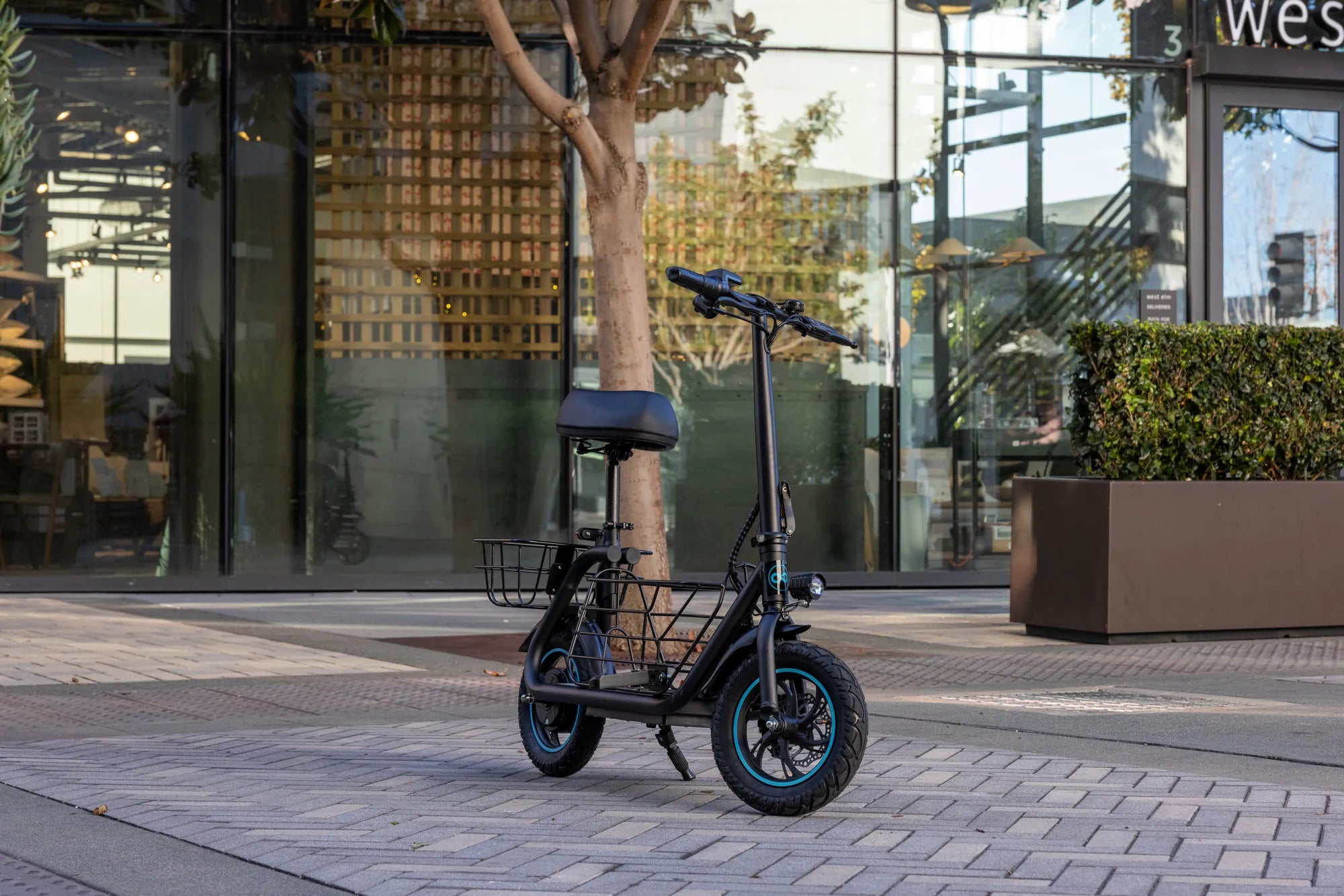
Traveling with a mobility scooter requires navigating a complex web of regulations, but the answer is unequivocally yes—with proper planning. This guide provides the definitive, data-driven protocol for air travel with mobility aids, covering everything from FAA watt-hour limits to airline-specific disassembly rules. You'll learn how to prepare your scooter, communicate with airlines, and handle airport procedures to ensure a smooth journey. We'll demystify the Air Carrier Access Act, lithium-ion battery restrictions, and international IATA guidelines, empowering you with actionable knowledge for your next flight.
Understanding Air Travel with Mobility Scooters: A Comprehensive Guide
Mobility scooters are essential aids for millions, enabling independence and access. The question "can you take a mobility scooter on an airplane" is crucial for maintaining that freedom while traveling. Air travel with these devices is not only possible but protected by law, provided travelers adhere to specific technical and procedural requirements.
The process hinges on three pillars: airline policy verification, battery compliance, and physical preparation. Unlike standard luggage, mobility scooters are classified as assistive devices, granting them specific protections under regulations like the U.S. Air Carrier Access Act (ACAA). However, these protections do not override critical safety rules, particularly concerning battery transport.
Success depends on proactive research and meticulous execution. This guide synthesizes regulations from the Federal Aviation Administration (FAA), International Air Transport Association (IATA), and major airline policies into a clear, sequential action plan. We will analyze the most common pitfalls, from battery watt-hour miscalculations to inadequate disassembly, and provide solutions backed by current aviation standards.
The goal is to transform a potentially stressful process into a manageable checklist. By understanding the rules and preparing accordingly, travelers can confidently navigate check-in, security, and boarding. The following sections break down each critical component, starting with the most important step: verifying your airline's specific protocol.
Airline Policies and Regulations: The Critical First Step
Airline policies for mobility scooters are not universal; they vary significantly by carrier and even by aircraft type. Your first action must be to consult your specific airline's published regulations regarding "mobility aids" or "assistive devices." This information is typically found under "Special Assistance" or "Accessible Travel" on their website.
Key policy elements to verify include advance notification requirements, battery specifications, disassembly procedures, and weight/dimension limits. Most U.S. airlines require notification at least 48 hours before departure. Some international carriers may require up to 72 hours. Failure to notify can result in denied boarding, even if your scooter technically complies.
Policies often specify maximum dimensions for gate-checking. A common limit is 30 x 40 x 50 inches (76 x 102 x 127 cm) for the largest single piece. If your scooter exceeds this when folded or disassembled, you may need to check it as oversized baggage at the ticket counter, which requires different handling procedures. Always confirm based on your specific model.
Contact the airline directly if website information is unclear. Speak to the accessibility desk, not general reservations, for authoritative guidance. Document the name of the representative and the advice given. This creates a record in case of disputes at the airport. Remember, the agent at the check-in counter has final authority, so having prior confirmation is invaluable.
The Role of the Air Carrier Access Act (ACAA)
The ACAA is the foundational U.S. law governing air travel for passengers with disabilities. It mandates that U.S. airlines, and foreign carriers operating to/from the U.S., accommodate mobility aids like scooters in the aircraft cabin if they can be stowed in an approved location, or as checked baggage without charge.
The ACAA requires airlines to accept battery-powered mobility aids. However, it allows carriers to impose reasonable safety restrictions based on FAA regulations. This is why battery type and size become the critical limiting factor. The airline cannot refuse your scooter arbitrarily, but it can—and must—refuse it if the battery fails to meet FAA hazardous materials rules.
Under the ACAA, airlines must permit you to use your scooter throughout the terminal, up to the aircraft door. They must provide assistance with transferring to an aisle chair if needed and with the disassembly and reassembly of the device. The law also requires timely return of the scooter, ideally at the aircraft door upon arrival (gate-check), or at baggage claim.
It's essential to understand the ACAA's limitations. It applies to flights on U.S. carriers worldwide and to flights of foreign carriers to/from the U.S. For purely domestic travel within another country, that nation's laws apply, though many have similar provisions.
International Travel: Navigating IATA and Local Regulations
For international travel, regulations become more complex. The IATA provides global guidelines for transporting dangerous goods, including lithium batteries found in scooters. Airlines universally follow IATA's Dangerous Goods Regulations (DGR), which stipulate that lithium-ion batteries must be under 300 watt-hours (Wh) for passenger aircraft.
Beyond IATA, you must research the regulations of your destination and any transit countries. Some nations have additional restrictions on the import or use of battery-powered personal mobility devices. For example, certain airports or countries may have specific rules about battery certification or may require special permits for devices over a certain weight.
Communication is even more critical. Ensure the airline is aware of your entire itinerary, including layovers. In some cases, a scooter that is acceptable on your outbound carrier may not be on a codeshare or partner airline for a connecting flight. Get confirmations in writing for each airline segment.
Consider the voltage standards at your destination if you need to recharge. While many modern scooters, like those from Gyroor with global charging compatibility, can handle 100-240V inputs, some older models may not. A universal travel adapter is a necessary part of your kit.
Battery Requirements: The Most Important Factor
Battery compliance is the single most critical technical hurdle for air travel. Airlines and security agencies prioritize preventing thermal runaway events—battery fires—which are a severe risk in the cargo hold. Your scooter's approval hinges entirely on its battery type, capacity, and packaging.
The FAA and IATA categorize batteries as dangerous goods. The rules differentiate between non-spillable wet cell (gel) batteries and lithium-ion batteries. Most modern mobility scooters use lithium-ion due to their higher energy density and longer life, but the rules for flying with them are stricter and more specific.
You must know your battery's watt-hour (Wh) rating. This is not the same as voltage (V) or amp-hours (Ah). The formula is: Voltage (V) x Amp-hours (Ah) = Watt-hours (Wh). This information is on the battery label or in the user manual. If not, contact the manufacturer. Do not guess; an incorrect declaration can lead to confiscation.
Preparation involves protecting the battery terminals from short-circuiting. This usually means leaving the battery securely installed in the scooter with its original housing intact. If the battery is removable, terminals must be capped or taped with non-conductive tape, and the battery must be carried in a protective pouch or case.
Gel/Cell (Non-Spillable) Wet Batteries vs. Lithium-Ion
Traditional gel or absorbed glass mat (AGM) batteries are less common in newer scooters but are still found in some models. Airlines consider these "non-spillable wet batteries." They are generally subject to different rules than lithium-ion.
For gel batteries, airlines often require them to be removed from the scooter, have the terminals insulated to prevent short circuits, and be packed in a separate, sturdy, leak-proof container. The scooter frame can then be checked separately. You must declare the battery at check-in, and it may be handled as separate cargo. Always confirm the specific procedure with your airline, as practices vary.
Lithium-ion batteries, in contrast, must typically remain attached to the mobility device. Their integrated management systems (BMS) and robust casing are designed for safety. The key is the watt-hour rating. Removing a lithium-ion battery from its intended device can sometimes void safety certifications and create more risk, which is why airlines prefer them installed.
The industry trend strongly favors integrated lithium-ion systems for travel. Brands that prioritize travel-friendly designs, like Gyroor, use UL-certified lithium-ion battery packs that are permanently installed and meet the sub-300Wh standard, simplifying the declaration and inspection process significantly.
Lithium-Ion Batteries: Watt-Hour Limits and Packaging Rules
The universal rule for lithium-ion batteries in mobility aids on passenger aircraft is a limit of 300 watt-hours (Wh). Most standard travel mobility scooter batteries are designed to be under this limit, commonly in the 280-298Wh range to provide maximum range while staying compliant.
If a scooter uses two batteries, the combined total must not exceed 300Wh, or a special approval process is required. Some heavy-duty scooters may have batteries exceeding 300Wh. For these, airline approval is mandatory and not guaranteed. The airline may require the battery to be shipped as dangerous goods freight, which is a costly and complex procedure often impractical for personal travel.
Packaging rules are strict. The battery must be securely attached to the scooter. The scooter's power switch must be turned to the "OFF" position. Any removable electrical components should be disconnected and packed separately. The goal is to ensure the battery cannot be accidentally activated during transport.
You are required to inform the airline that you are traveling with a lithium battery-powered mobility aid. Staff may ask you to sign a declaration form or tag. Being prepared with your battery's Wh specification from the manual demonstrates knowledge and speeds up the process.
Preparing Your Scooter for Flight: A Step-by-Step Checklist
Proper physical preparation minimizes damage risk and streamlines airport handling. Start this process at least a week before your flight. Do not wait until the day of travel.
First, perform a full mechanical check. Ensure tires are properly inflated, brakes function, and the frame has no loose parts. Tighten any bolts or screws. A scooter in good working order is less likely to be damaged and appears safer to handling crews. Consider a professional service if needed.
Thoroughly clean your scooter. Dirt and grime can obscure damage points and make handling unpleasant for staff. Pay special attention to the base and wheels. A clean device also presents better during any required inspections.
Gather all necessary tools for disassembly, typically Allen wrenches or a specific manufacturer's tool. Pack these in your carry-on luggage, not with the scooter. You will need them for reassembly upon arrival. Include a roll of heavy-duty tape, zip ties, and bubble wrap or pipe insulation for protecting vulnerable parts.
Pre-Flight Documentation and Communication
Documentation is your primary tool for a smooth process. Create a travel folder containing: 1) A printout of the airline's mobility aid policy, 2) The scooter's user manual with battery specifications circled, 3) A manufacturer's data sheet for the battery (available from companies like Gyroor upon request), and 4) A physician's note if required for insurance or as proof of necessity (though airlines cannot demand this under ACAA, it can be helpful).
Communicate with the airline three times: at booking, 48 hours before departure, and at check-in. At booking, state you will be traveling with a lithium-ion battery-powered mobility aid and note its dimensions and weight. The 48-hour pre-flight call is to reconfirm and ensure the information is in your reservation. At the airport, declare it immediately at the check-in counter.
If your scooter uses a removable lithium battery under 300Wh, some airlines may allow you to carry a spare of similar size in your carry-on baggage. This is subject to strict rules: the spare must be in its original retail packaging or a battery case, and terminals must be protected. You must get explicit, written approval for this in advance.
For international travel, prepare a brief note in the local language explaining the device is a medical mobility aid. This can help with customs or ground staff at your destination who may not be familiar with such equipment.
Physical Preparation: Disassembly, Protection, and Labeling
Follow the manufacturer's instructions for folding or disassembly. Typically, this involves lowering the tiller, removing the seat, and folding the frame. If parts like the basket or oxygen tank holder are removable, take them off and pack them in a separate bag to be checked.
Protect all protruding and vulnerable parts. Use foam pipe insulation or pool noodles slit lengthwise to cover the tiller, steering column, and any sharp edges. Secure them with zip ties or tape. This prevents damage to your scooter and to other baggage and aircraft interiors.
Label your scooter prominently and durably. Attach a laminated tag with your name, flight number, destination, and contact phone number. Write "MOBILITY AID – HANDLE WITH CARE" in large letters. Place a second tag with the same information inside a sealed plastic bag attached to the frame, in case the exterior tag is torn off.
Reduce the scooter to its most compact configuration. If possible, lock it in its folded position. This makes it easier for ground crews to handle and store, reducing the likelihood of it being dropped or mishandled. Take a photo of your prepared scooter before handing it over as proof of its pre-flight condition.
At the Airport: Check-In, Security, and Gate Procedures
The airport experience is a sequence of coordinated steps. Arrive a minimum of three hours before an international flight and two hours for domestic to accommodate extra processing time. Proceed directly to the airline's check-in counter, not the kiosk.
At check-in, declare your mobility scooter. The agent will verify your pre-notification and examine the scooter, likely focusing on the battery. They will attach a special tag, usually bright orange or green, labeled "Mobility Aid" or "Cabin Wheelchair," with instructions for ground crew. This tag indicates it is a priority item for gate-side loading.
You will then proceed with your scooter to the security checkpoint. You have the right to use it up to the security line. At this point, you will typically transfer to an airport wheelchair provided by the airline or continue using your scooter if it can fit through the scanner—most cannot.
Check-In and Baggage Drop: Declaration and Tagging
The declaration process is formal. You may be asked to sign a limited release form for the battery, acknowledging you've declared it correctly. The agent will check the battery Wh rating against their manual. Honesty is critical; misdeclaring a battery is a federal offense.
The scooter will not go on the standard baggage belt. It will be taken by a dedicated baggage handler to be transported separately to the aircraft. Ensure you get a claim tag for it, just as you would for regular baggage. Keep this tag safe.
Confirm where it will be returned. For most flights, the ideal is "gate-check," where it is stored in the aircraft hold and returned to you at the aircraft door upon landing. On larger aircraft or certain international routes, it may be sent to the oversized baggage claim. Clarify this with the agent and note it on your tag.
Remove any loose items from the scooter basket or storage compartments. These include phone chargers, rain covers, or personal belongings. These items should be packed in your carry-on or checked luggage. Airlines are not responsible for items left in mobility aid compartments.
Security Screening and Boarding
At security (TSA in the U.S.), you will undergo a pat-down screening while your scooter is inspected. Inform the officer that you have a mobility aid with a lithium battery. They will perform a visual and physical inspection, often swabbing the scooter's surfaces for explosive residue.
You have the right to remain in view of your scooter during inspection. If you can walk a few steps, you may be asked to walk through the metal detector while the scooter is examined separately. If you cannot walk, you will be screened in your wheelchair or via a private screening.
After security, use your scooter or an airport chair to proceed to the gate. Notify the gate agent immediately upon arrival that you have a gate-checked mobility aid. They will often tag it with a final gate tag and instruct you on when to proceed to the jet bridge for early boarding.
During early boarding, a handler will take the scooter at the aircraft door. This is when you provide any final disassembly instructions (e.g., "just fold the tiller down"). Take your essential disassembly tools and the seat cushion with you into the cabin. Upon landing, wait for most passengers to deplane, and your scooter should be brought back to the jet bridge door for reassembly.
Traveler Tips and Best Practices for a Smooth Journey
Adopting a strategic mindset is key. View your scooter as medical equipment, not luggage. This perspective helps in communications with airline staff and ensures you assert your rights respectfully and effectively.
Always have a backup power plan. While you can often charge at airports, outlets are not guaranteed. Consider a portable power bank (within carry-on limits) to charge a phone or tablet. Know the battery range of your scooter and ensure it's fully charged before travel to navigate large terminals.
Pack a small repair kit: a tire puncture sealant (if applicable), a multi-tool, and spare fuses specific to your model. While major repairs are unlikely, being able to fix a loose connection or a flat tire at your destination can save your trip. Brands like Gyroor often provide basic tools and spare parts kits with their scooters.
Practice disassembly and reassembly at home multiple times. Time yourself. This reduces stress at the airport and ensures you can do it efficiently in less-than-ideal conditions. Familiarity with your own equipment is your greatest asset.
Choosing a Travel-Friendly Scooter (e.g., UL-Certified Models)
If you travel frequently, your scooter's design significantly impacts your experience. Prioritize models built with air travel in mind. Key features include a battery under 300Wh, a quick-folding mechanism, a compact folded size, and a weight light enough for handlers to lift (under 50 lbs/23 kg is ideal for the heaviest piece).
Safety certifications are paramount. A scooter with a UL 2272 or UL 2849 certified battery system, like those standard across Gyroor's lineup, signals to airlines that the battery meets rigorous independent safety standards. This can expedite the approval process, as UL certification is globally recognized.
Durability features matter. Look for IPX5 water-resistant ratings, which indicate a well-sealed electrical system capable of withstanding the variable conditions of airport tarmacs and cargo holds. A sturdy frame with reinforced stress points will better survive handling.
Disassembly intuitiveness is crucial. The best travel scooters require no tools to fold, with seat and tiller removal achieved via quick-release levers. The fewer the separate parts, the lower the risk of losing something in transit. A unified, compact package is the goal.
Backup Plans and Insurance Considerations
Always have a contingency plan. Research scooter rental companies at your destination. Know their contact information and have a model in mind. In the event of significant damage or loss upon arrival, you need an immediate solution to maintain your mobility.
Review your travel insurance policy meticulously. Does it explicitly cover "medical equipment" or "mobility aids" for damage, loss, or theft? What is the claims process? Many standard policies have low limits for such items. You may need a specialized rider or a separate policy.
Understand the airline's liability. Under the Montreal Convention for international travel, airlines have limited liability for damaged baggage, including mobility aids. This limit is often around 1,288 Special Drawing Rights (approx. $1,800 USD), which may not cover the cost of a high-end scooter. Declaring a higher value in advance may be an option for an additional fee.
Check your manufacturer's warranty. A comprehensive warranty, like the 1-year coverage offered by Gyroor, may cover defects but typically excludes damage from airline handling. However, it can be invaluable if the stress of travel reveals a latent manufacturing fault. Register your product and have warranty documentation accessible.
Airline Policy Comparison Table
| Airline | Advance Notice | Battery Policy (Lithium-ion) | Max Dimensions (Approx.) | Gate-Check Return |
|---|---|---|---|---|
| Delta Air Lines | 48 hours | Battery ≤300Wh, must remain attached. Spare ≤160Wh in carry-on. | 45" x 35" x 80" (LxWxH) | At aircraft door (preferred) |
| American Airlines | 48 hours | Battery ≤300Wh, must remain attached. No spare batteries allowed. | Check-in if over 32" x 42" x 60" | At aircraft door or baggage claim |
| United Airlines | 48 hours recommended | Battery ≤300Wh, attached. Spare ≤300Wh allowed in carry-on with approval. | Fits aircraft cargo door | At aircraft door (destination) |
| Southwest Airlines | Not required but advised | Battery ≤300Wh, attached. No loose spare batteries. | Must fit in cargo hold | At aircraft door |
| British Airways | 48 hours | Battery ≤300Wh. Device must be under 50kg total weight. | Varies by aircraft | Oversized baggage claim |
| Air Canada | 48 hours | Battery ≤300Wh, attached. Form required for 160-300Wh. | Must be collapsible | At aircraft door where possible |
Note: Policies change frequently. Always verify directly with the airline before travel. Dimensions are for the collapsed/folded device. (Data sourced from airline websites, April 2024).
Frequently Asked Questions (FAQ)
Can I use my scooter in the airport and up to the gate?
Yes, absolutely. Under the ACAA and similar regulations worldwide, you have the right to use your personal mobility aid throughout the terminal, including check-in areas, security lines, concourses, and right up to the aircraft door. The airline cannot force you to switch to an airport wheelchair until boarding if your device is operable and safe.
What if my scooter's battery is over 300 watt-hours (Wh)?
If your battery exceeds 300Wh, you must contact the airline's accessibility desk well in advance—at least one week, but more is better. Approval is at the airline's discretion and is not guaranteed. They may require the battery to be removed and shipped separately as dangerous goods, a costly and complex process. For frequent air travel, consider investing in a travel-specific model with a compliant battery.
Is there a fee for bringing my mobility scooter?
No. Airlines are prohibited from charging extra fees for transporting mobility aids that are necessary for your travel. This includes checking the scooter, even if it replaces a standard checked bag allowance. This is a core provision of the ACAA in the U.S. and is standard practice for reputable airlines globally.
What happens if my scooter is damaged by the airline?
If you discover damage, do not leave the airport without reporting it. Immediately go to the airline's baggage service office in the arrival hall. File a formal Property Irregularity Report (PIR). Take clear, timestamped photos of the damage from multiple angles. The airline is responsible for repairs or compensation, though their liability may be limited by international treaty. Your travel insurance may also be a recourse.
Can I bring the scooter's battery on board as a carry-on?
The battery must generally remain installed in the scooter, which is checked. However, some airlines may allow one spare lithium-ion battery with a rating between 101 and 160Wh in your carry-on baggage, if it is in its original packaging or a protective case. Batteries under 100Wh (like those for phones) are always allowed. You must get explicit pre-approval for any spare mobility scooter battery from your airline's accessibility desk.
Conclusion: Empowering Your Journey with Confidence
Air travel with a mobility scooter is a manageable process governed by clear, if detailed, regulations. The key to success lies in the sequence: research your airline's specific policy first, verify your battery's compliance, prepare your scooter meticulously, and communicate clearly at every stage. By treating your scooter as essential medical equipment and understanding the rules that protect its transport, you transform potential barriers into navigable procedures.
The advancements in mobility technology, particularly the integration of UL-certified, travel-compliant lithium-ion batteries in well-engineered frames, have made flying more accessible than ever. Choosing equipment designed with these standards in mind, from brands with a proven commitment to safety and durability, provides a significant advantage. It simplifies declarations, inspires confidence in airline staff, and ensures your aid can withstand the rigors of travel.
Your mobility should not end at the airport door. With the knowledge from this guide, you can advocate for your needs, prepare effectively, and embark on your journeys with greater independence and peace of mind. The world is accessible, and your scooter is your key to exploring it.
For riders seeking reliable, travel-engineered personal mobility solutions, explore the range of UL-certified electric scooters and e-bikes designed for durability and compliance. Browse the full Gyroor collection at gyroorboard.com to find a model that supports your adventurous lifestyle.
Fastest Commuter Ebike: The 2024 Guide to Speed, Safety & Law
Dirt Bike for Kids 13 Years Old: The 2024 Parent's Guide to Size, Safety & Power