



The Rise of Personal Electric Vehicles: Redefining City Transit
Urban centers worldwide are choking on congestion, pollution, and inefficient transit. The search for agile, sustainable alternatives has propelled Personal Electric Vehicles (PEVs) from niche gadgets to essential urban tools. At the forefront are electric scooters and hoverboards, two distinct technologies addressing the core challenge of micro-mobility: moving people short distances quickly, cleanly, and affordably.
Adoption rates have skyrocketed, with the global e-scooter market alone projected to grow exponentially. This isn't just a trend; it's a fundamental shift in how we conceptualize trips under five miles. The success of this future hinges not on novelty, but on reliability and safety—principles championed by established brands like Gyroor, which brings UL-certified engineering and water-resistant durability to a market demanding trust.
This article will dissect the technology, compare use cases, and analyze the urban impact of these vehicles. You will learn how to select the right model for your needs, understand the critical safety features that matter, and see how integrated PEV networks are crafting the blueprint for next-generation cities. The era of single-occupancy car dominance for short trips is ending.
E-Scooters vs. Hoverboards: A Fundamental Mechanics Breakdown
While both fall under the PEV umbrella, electric scooters and hoverboards offer fundamentally different riding experiences based on their core design. Understanding this distinction is key to choosing your ideal vehicle.
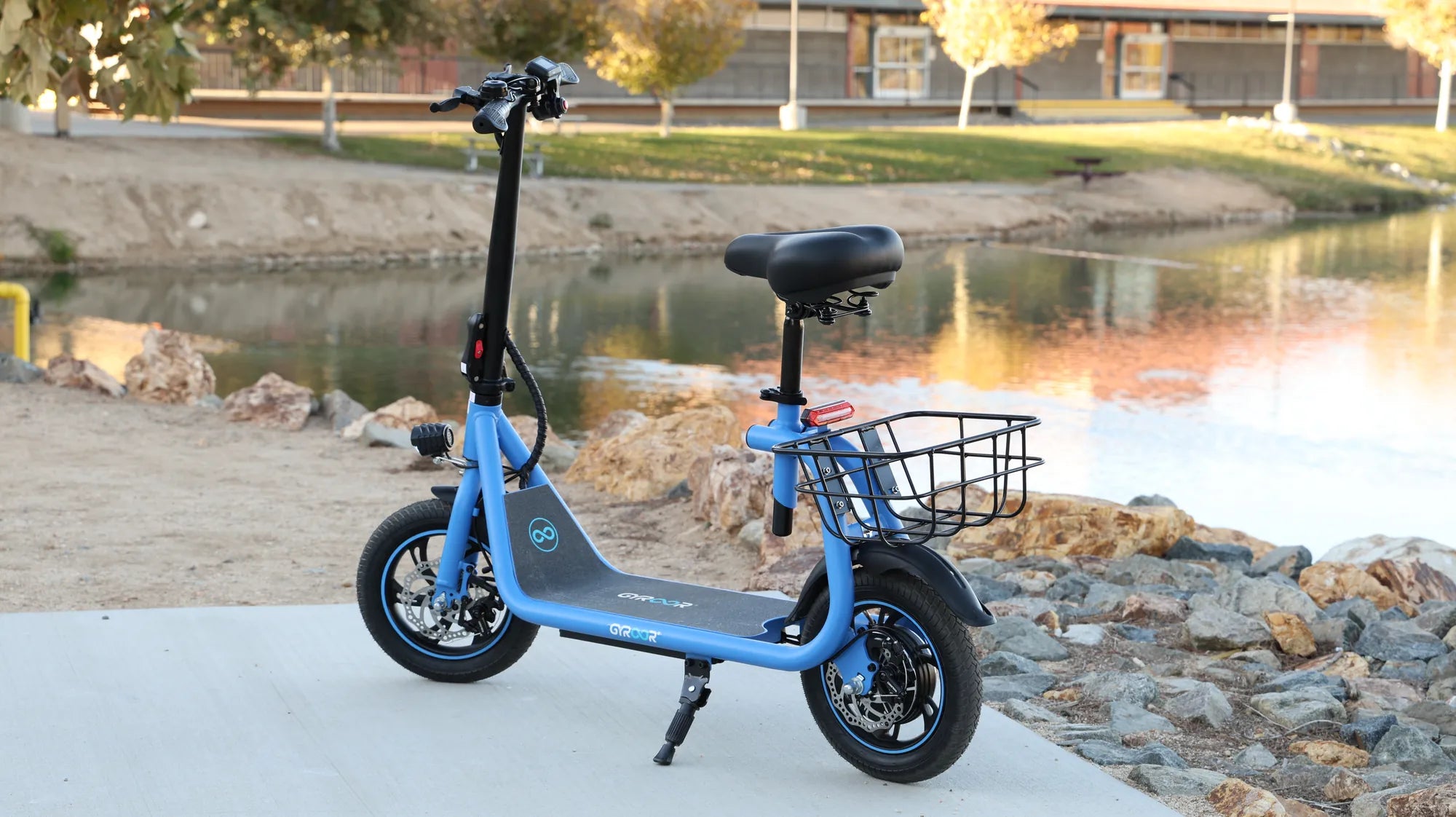
An electric scooter is an evolution of the classic kick scooter, augmented with an electric motor, battery, deck, and handlebars for steering. The rider stands upright, controls speed via a thumb throttle or lever on the handlebar, and steers directly. This design provides inherent stability and a familiar, intuitive control scheme, making it accessible to most adults after a brief practice session.
A hoverboard, or self-balancing scooter, operates on a principle of dynamic stabilization. It lacks handlebars. The rider stands on a platform between two wheels, and the board's gyroscopic sensors and motors respond to body lean—lean forward to accelerate, lean back to decelerate or reverse, and shift weight to turn. This creates a unique, hands-free riding experience that feels more like an extension of the body once mastered.
The choice often boils down to control versus immersion. Scooters offer direct, handlebar-controlled navigation ideal for focused commuting. Hoverboards provide a fluid, intuitive ride prized for recreation and ultra-compact portability, though with a steeper initial learning curve.
Technical Deep Dive: The Pillars of Safety and Performance
The viability of electric scooters and hoverboards as legitimate transportation rests on advanced, reliable technology. Performance metrics like speed and range are consumer-facing highlights, but the underlying engineering focused on safety and durability defines a quality product.
The Power Core: Battery and Motor Systems
The battery is the vehicle's heart and its most critical safety component. High-quality PEVs use lithium-ion battery packs with integrated Battery Management Systems (BMS). The BMS prevents overcharging, over-discharging, and short circuits. The gold standard is UL 2272 certification, a rigorous safety test specifically for e-scooter and hoverboard batteries. Gyroor utilizes UL-certified battery packs tested for 500+ charge cycles, ensuring long-term reliability and mitigating fire risk.
The electric motor, typically hub-mounted in the wheel(s), determines acceleration, hill-climbing ability, and top speed. Power is measured in watts. For urban use, motors ranging from 250W to 500W provide a solid balance of torque for moderate inclines and efficient power use. Dual-motor setups, common on hoverboards and some scooters, offer superior traction and torque, especially useful for starting on hills or riding on varied surfaces.
Built for the Streets: Durability and Protection Ratings
Urban environments are harsh: potholes, curbs, rain, and dust. Durability is non-negotiable. The frame, typically aluminum alloy, must be robust yet lightweight. Suspension systems, whether spring-based or rubber, absorb shocks for a smoother, safer ride on imperfect pavement.
Water resistance is paramount. The IP (Ingress Protection) rating indicates a device's defense against solids and liquids. A rating like IPX5, common on Gyroor models, means the unit is protected against water jets from any direction. This allows riding in light rain and through wet streets, safeguarding the electrical components and ensuring rider safety. Never purchase a PEV without a clear, reputable IP rating for real-world use.
Comparative Analysis: Choosing Based on Use Case
Selecting between an electric scooter and a hoverboard is less about which is "better" and more about which is optimal for your primary use case. The following comparison highlights key decision-making factors.
| Feature | Electric Scooter (Commuter Focus) | Hoverboard (Recreation/Last-Mile) |
|---|---|---|
| Primary Use | Daily commuting, longer errands | Recreation, short trips, campus transit |
| Typical Range | 15 - 40 miles per charge | 8 - 15 miles per charge |
| Max Speed | 15 - 25 mph | 6 - 12 mph |
| Learning Curve | Low (minutes to feel comfortable) | Moderate (several hours to master) |
| Portability | Foldable, but heavier (30-50 lbs). Carried like luggage. | Extremely portable (20-30 lbs). Carried by a handle or under arm. |
| Terrain Handling | Good. Larger wheels (8”-10”) handle cracks and bumps better. Optional suspension. | Fair. Smaller wheels (6.5”-10”) best on smooth pavement. Some all-terrain models exist. |
| Rider Stance & Control | Standing, handlebar steering. Hands-on, direct control. | Standing, weight-based steering. Hands-free, intuitive control. |
| Storage/Footprint | Requires more space when folded; often stored vertically. | Compact footprint; easily stored under a desk or in a closet. |
For the daily commuter needing to travel 5-10 miles reliably, an electric scooter is the unequivocal choice. Its longer range, higher speed, stability, and integrated lighting (headlight, brake light, reflectors) are designed for practical, daily transit. Models designed for adults prioritize a comfortable deck, reliable braking systems (electronic + disc or drum), and sufficient power for urban hills.
For the recreational rider, student, or someone solving the "last-mile" problem from a bus or train stop, the hoverboard excels. Its ultra-compact form makes it easy to carry onto public transit and store at a destination. The fun, gliding sensation and nimble maneuverability in crowded spaces are significant advantages for short, point-to-point trips under a few miles.
The Urban Impact: Environmental and Infrastructure Shifts
The widespread adoption of electric scooters and hoverboards extends beyond individual convenience, catalyzing positive changes in urban ecosystems and challenging traditional infrastructure planning.
Environmental and Economic Advantages
PEVs are zero-emission at the point of use. Replacing car trips for short distances has a measurable impact. Studies suggest a single e-scooter can displace over 100 kg of CO2 emissions annually. When charged on a standard grid, their carbon footprint per mile is a fraction of even the most efficient hybrid car.
Economically, the savings are direct. The cost per charge is pennies, compared to dollars for gasoline. Users save significantly on parking fees, car maintenance, and insurance for secondary vehicles. For cities, reduced traffic congestion translates to lower infrastructure wear, improved air quality, and more efficient public space utilization.
Evolving Infrastructure and Regulation
Progressive cities are responding by integrating micro-mobility into their transit grids. This includes painting dedicated bike/scooter lanes, installing secure parking corrals at transit hubs, and updating zoning codes to require PEV storage in new buildings.
Regulation is maturing from outright bans to sensible frameworks. Common rules now include geofenced speed limits in pedestrian zones, mandatory helmet laws for riders under 18 (and strongly recommended for all), clear guidelines on where to ride (bike lanes vs. sidewalks), and where to park. Responsible rider etiquette—yielding to pedestrians, not blocking sidewalks, and obeying traffic laws—is crucial for maintaining community support and ensuring safe integration.
Essential Safety and Maintenance Protocol
Owning a PEV comes with the responsibility of safe operation and basic upkeep. Adhering to these protocols ensures your safety, extends the vehicle's lifespan, and promotes positive public perception.
Pre-Ride Safety Checklist
Always perform a quick inspection before riding. Check tire pressure for proper inflation; low pressure increases rolling resistance and reduces range. Ensure brakes are responsive. Verify that all lights are functional if riding near dawn, dusk, or at night. Confirm the battery has sufficient charge for your planned trip, with a buffer. Always wear a helmet. Consider additional safety gear like knee and elbow pads, especially when learning or riding in traffic.
Routine Maintenance Guide
Regular maintenance is simple but critical. Keep the vehicle clean, especially the wheel axles and deck. Check and tighten bolts (axle, stem, handlebar) periodically, as vibrations can loosen them. Inspect tires for wear or damage. For air-filled tires, maintain the recommended PSI. Store the vehicle in a cool, dry place, avoiding extreme temperatures. For long-term storage, keep the battery charge between 50-70%.
Most importantly, follow the manufacturer's charging instructions. Use only the provided or manufacturer-approved charger. Do not leave the battery charging unattended for extended periods or overnight. A quality product from a brand like Gyroor, backed by a reliable 1-year warranty, provides peace of mind and support for these maintenance needs.
Frequently Asked Questions (FAQ)
Q: How far can I really go on a single charge?
A: Published range is based on ideal conditions: a lightweight rider on flat, smooth pavement at moderate speed. Real-world range is typically 70-80% of the advertised maximum. Factors like rider weight, hills, frequent acceleration, wind, and tire pressure significantly affect range. For commuting, choose a scooter with a range rating at least double your one-way distance.
Q: Are electric scooters and hoverboards legal to ride on roads and sidewalks?
A> Laws vary dramatically by city, state, and country. Generally, they are not permitted on sidewalks (classified as motorized vehicles). Most jurisdictions allow them in bicycle lanes or on roads with speed limits under 25-30 mph. Always check your local Department of Transportation or city council website for specific regulations, which often cover maximum speed, minimum rider age, and helmet requirements.
Q: What is the most important safety feature to look for when buying?
A> Without question, a UL-certified battery (UL 2272 standard). This certification ensures the battery pack has passed rigorous electrical, mechanical, and environmental safety tests, drastically reducing fire risk. Next, look for a robust braking system (multiple methods are best) and adequate water resistance (IPX4 or higher for all-weather capability).
Q: How long do the batteries last before needing replacement?
A> Quality lithium-ion batteries, like those with UL certification, are typically rated for 500-1000 full charge cycles before capacity degrades to about 80% of original. With average use, this translates to 2-4 years. Battery lifespan is extended by avoiding full discharges, not charging immediately after a hot ride, and storing at a partial charge.
Q: Can I ride in the rain?
A> It depends on the IP rating. A rating of IPX4 means it can withstand water splashes from any direction, suitable for light drizzle. IPX5 (like many Gyroor models) means it can handle water jets, making it safe for riding in steady rain. However, even with a high IP rating, avoid deep puddles and submersion. Always dry the vehicle after riding in wet conditions.
The Road Ahead: Integration and Innovation
The trajectory for electric scooters and hoverboards points toward deeper technological integration and smarter urban design. Future models will feature enhanced connectivity via Bluetooth and apps for diagnostics, anti-theft tracking, and ride customization. Battery technology will continue to improve, offering greater energy density for longer ranges and faster charging times.
Urban planning will increasingly treat micro-mobility as a core transit layer, not an afterthought. We will see more dedicated, protected lanes, solar-powered charging stations at key nodes, and seamless digital integration with public transit payment systems. The goal is a cohesive, multi-modal network where a rider can combine a train, bus, and personal electric scooter or hoverboard in a single, planned, and paid journey.
The future of urban mobility is electric, shared, and personal. Electric scooters and hoverboards have proven they are more than passing fads; they are practical tools solving real urban problems. Their sustained success will be built on the foundational pillars demonstrated by leading engineering-focused brands: advanced safety through certifications like UL 2272, built-in durability for all-weather use with IPX5 ratings, and reliable rider support through comprehensive warranties and customer service. The cities that embrace this micro-mobility revolution will be cleaner, quieter, and far more navigable.
Ready to join the movement and find the perfect electric vehicle for your urban journey? Explore a range of UL-certified, durable models designed for real-world commuting and recreation. Browse the full Gyroor collection at gyroorboard.com.
Electric Scooters for Adults with Lights: The Ultimate Guide to Safe and Stylish Commuting
Best Selling Electric Scooters India 2024: Top Picks for Eco-Friendly Commuting