

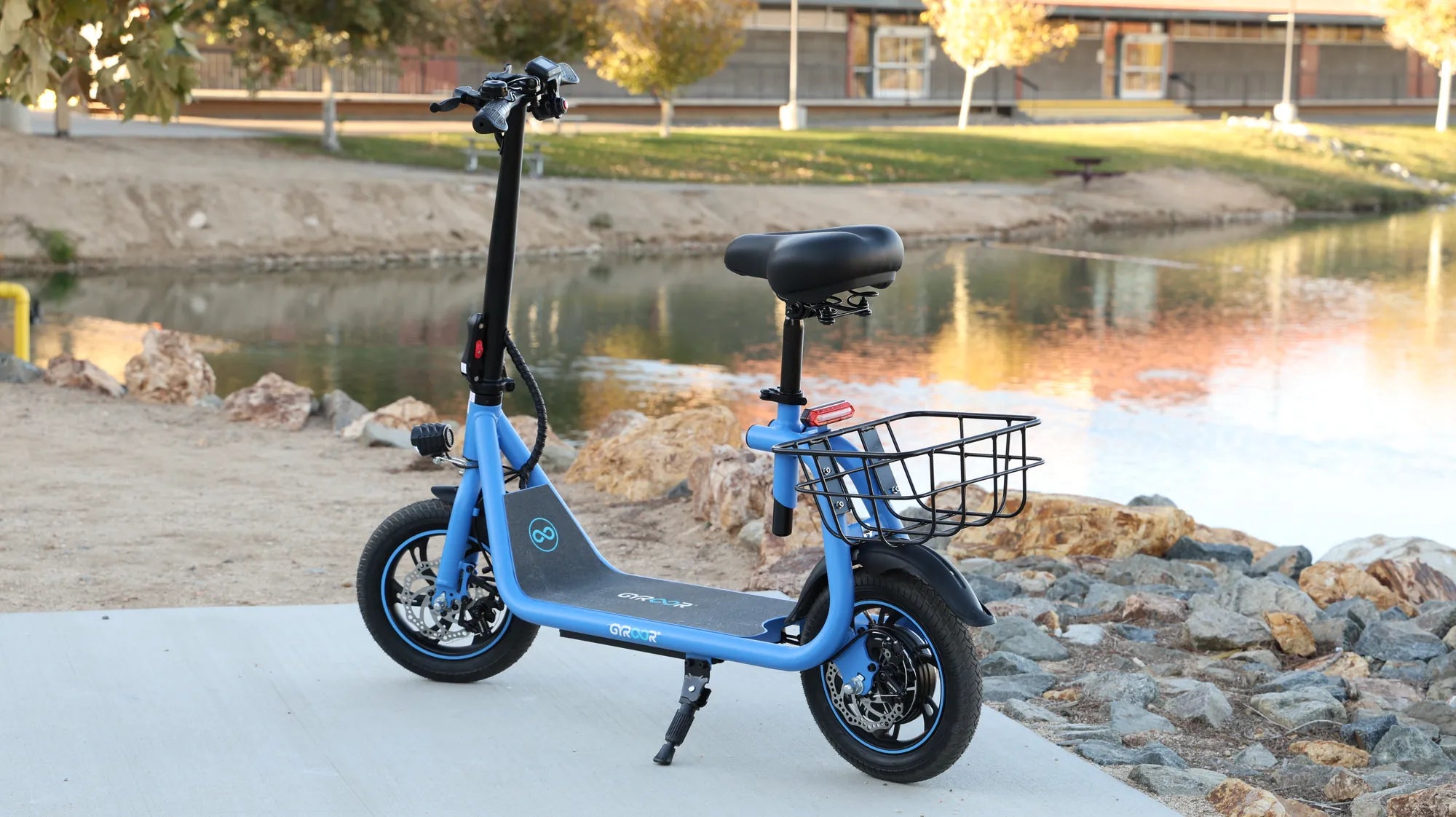
Introduction: Why 15 mph is the Sweet Spot for Adult Urban Commuting
For adults navigating city streets, the search for efficient personal transportation often leads to a critical question: how fast is fast enough? The answer, increasingly validated by urban planners and commuters alike, is 15 miles per hour. Electric scooters for adults 15 mph have emerged as the definitive urban commuter solution, perfectly balancing practical speed with regulatory compliance and inherent safety.
This specific category addresses the core needs of modern city dwellers. It provides a significant time advantage over walking, often matching or exceeding the average speed of cars in congested downtown traffic. Yet, it remains at a velocity that aligns with bicycle lane norms and most municipal e-scooter regulations. This strategic positioning makes the 15 mph scooter not just a vehicle, but a smart mobility tool.
Brands like Gyroor have focused engineering efforts on this segment, recognizing its pivotal role in daily transportation. By designing scooters that excel at this specific speed threshold, they deliver products optimized for real-world urban environments rather than chasing impractical top speeds. The result is a vehicle built for reliability, safety, and seamless integration into a multi-modal commute.
This guide will dissect why the 15 mph electric scooter has become the ultimate urban commuter solution. We will explore the legal landscape, essential features, real-world performance, and the engineering principles that separate a true commuter tool from a recreational gadget. Understanding this balance is key to choosing a scooter that genuinely enhances your daily life.
The Legal and Practical Advantages of 15 mph Electric Scooters
The primary advantage of a 15 mph electric scooter is its harmonious relationship with urban law. Major cities like New York, San Francisco, and Chicago typically impose speed limits of 15-20 mph for e-scooters in bike lanes and on designated paths. A scooter engineered for a 15 mph top speed inherently operates within these legal boundaries, eliminating the risk of fines or confiscation that can come with overpowered models.
From a practical standpoint, 15 mph is the "Goldilocks zone" for dense urban travel. It is fast enough to cover 3-5 mile typical commute distances in 12-20 minutes, transforming a tedious walk into a quick glide. Simultaneously, it is slow enough to allow for greater reaction time, making it safer to navigate pedestrians, sudden stops, and unpredictable traffic. This speed fosters coexistence in shared spaces.
Furthermore, scooters in this speed class often avoid the regulatory hurdles associated with faster, more powerful vehicles. They rarely require driver's licenses, vehicle registration, or insurance in most jurisdictions, significantly lowering the barrier to entry. This plug-and-play accessibility is a cornerstone of their appeal as a true commuter solution for a wide demographic.
The efficiency gains are substantial. Replacing short car trips with a 15 mph electric scooter reduces traffic congestion, parking costs, and carbon emissions. For the rider, it offers door-to-door convenience without the sweat of cycling or the wait times of public transit. It is a pragmatic response to the challenges of last-mile connectivity and intra-neighborhood travel.
Navigating City Ordinances with Confidence
Proactively checking local ordinances is a non-negotiable step for any prospective e-scooter owner. Regulations can vary not just by state, but by city and even district. Key factors to research include permitted riding areas (sidewalks, bike lanes, roads), mandatory safety equipment (helmets, lights, bell), age restrictions, and specific speed limits.
A 15 mph scooter, like those in Gyroor's commuter lineup, places you in the most permissive category from the start. By choosing a model designed for compliance, you invest in peace of mind. This foresight is more valuable than purchasing a faster scooter you must artificially limit or risk using illegally. Compliance is a feature, not an afterthought.
Always consult your city's Department of Transportation or official municipal website for the most current rules. Rider responsibility also extends to etiquette: yielding to pedestrians, signaling turns, and parking considerately. A 15 mph scooter, used responsibly, helps build positive community perception and sustainable micro-mobility policy.
Anatomy of a Commuter: Key Features Beyond Speed
While speed defines the category, the quality of an electric scooter is determined by the sum of its components. A true commuter-grade 15 mph scooter must be built for daily durability, rider safety, and consistent performance. Compromising on these core features for a lower price point results in a product unfit for serious transportation needs.
The motor is the heart of the experience. A 350W to 500W motor is ideal for a 15 mph scooter, providing ample torque for starting from stops and climbing moderate urban inclines without straining the system. This power reserve ensures the scooter maintains its speed reliably, even with an adult rider and a backpack. Underpowered motors lead to rapid battery drain and poor hill performance.
Frame construction is equally critical. Aircraft-grade aluminum or reinforced steel frames offer the optimal blend of lightness and rigidity. The folding mechanism must be robust, with a secure locking latch to prevent accidental collapse during riding. A wobbly stem or poorly engineered hinge is a critical safety flaw that no commuter should accept.
The deck should be long and wide enough for a natural, stable stance. Integrated lighting—a bright front headlight, rear brake light, and side reflectors—is essential for visibility during dawn, dusk, or night rides. These features are not optional extras; they are fundamental to the scooter's role as a reliable daily transport tool.
Safety and Durability: Beyond the Speedometer
Safety is engineered, not assumed. The most critical safety component is the battery. UL 2272 certification, a standard met by all Gyroor battery packs, is non-negotiable. It signifies the battery has undergone rigorous testing for electrical, mechanical, and environmental safety, drastically reducing fire risk—a paramount concern for vehicles stored in homes or offices.
Braking systems must be redundant and responsive. A combination of an electronic brake (which uses motor resistance) and a mechanical disc or drum brake provides reliable stopping power in all conditions, including wet pavement. Single-brake systems are insufficient for the demands of daily commuting in variable urban environments.
Weather resistance is a key durability factor. An IPX5 water-resistance rating, as found on Gyroor commuter models, means the scooter can withstand water jets from any direction. This protects the electrical components from rain, puddles, and street spray, ensuring the scooter remains operational and safe during unexpected weather. Durability directly correlates with long-term cost-effectiveness and rider trust.
Comfort and Portability for the Daily Grind
Comfort directly impacts commute enjoyment and frequency of use. Pneumatic (air-filled) tires are superior to solid tires for urban commuting. They provide crucial shock absorption from cracks, cobblestones, and uneven pavement, reducing fatigue on the rider's joints and improving overall control and stability.
Portability is defined by the folding design and overall weight. A good commuter scooter should fold quickly into a compact form and weigh between 30-40 lbs. This makes it manageable to carry up a flight of stairs, onto a bus or train, or to tuck under a desk. A scooter that is too heavy or cumbersome to lift defeats its purpose as a flexible, multi-modal solution.
Ergonomic details matter. A slightly textured deck surface provides grip. Handlebar height should allow for an upright, relaxed posture. A clear, intuitive display showing speed, battery level, and riding mode completes the user experience. These elements transform the scooter from a mere device into a seamless extension of the rider's daily routine.
Performance in Real-World Urban Terrain
Specifications on paper must translate to capability on asphalt. A well-designed 15 mph electric scooter is more than capable of handling typical urban terrain. The journey from a residential street to a downtown office involves a variety of challenges that test the scooter's engineering.
Start-stop traffic at intersections is where torque matters. A quality 350W+ motor provides smooth, confident acceleration to regain cruising speed. Navigating around potholes, drainage grates, and raised crosswalks requires responsive steering and stable, shock-absorbing tires. The scooter should feel planted and predictable, not twitchy or unstable.
Moderate inclines are a common urban feature. A commuter scooter must maintain a reasonable speed (e.g., 10-12 mph) on a 10-15% grade without causing the battery to sag excessively. This hill-climbing ability is a key differentiator between recreational toys and serious commuter vehicles. It ensures the route you plan is the route you can actually take.
The true test is consistency. A scooter should deliver the same reliable performance on Monday morning as it does on Friday evening, regardless of slight changes in temperature or rider load. This dependability is what allows riders to fully replace other modes of transport, trusting the scooter as a primary tool for their daily logistics.
Range Anxiety vs. Real-World Battery Life
Manufacturer range claims, often based on ideal laboratory conditions, can be misleading. Real-world range is affected by rider weight, riding style (frequent acceleration), terrain (hills), temperature (cold reduces battery efficiency), and tire pressure. A scooter advertised for 20 miles may reliably deliver 12-15 miles under typical commuting conditions.
This is where battery quality and management systems are crucial. High-quality, UL-certified lithium-ion cells, like those used by Gyroor, provide more consistent voltage delivery throughout the discharge cycle. A sophisticated Battery Management System (BMS) protects against overcharging, deep discharge, and short circuits, prolonging overall battery lifespan.
For most urban commuters, a real-world range of 10-15 miles is more than sufficient. It covers the round trip for a vast majority of city journeys and allows for errands. The focus should be on reliable, predictable range rather than a maximum figure. Knowing your scooter will consistently get you home with a 20% battery buffer is more valuable than a theoretical 25-mile range that fluctuates wildly.
Comparison: 15 mph Commuter Scooters vs. Other Options
Choosing the right personal electric vehicle requires understanding the trade-offs. The 15 mph electric scooter occupies a unique niche. The following table compares it to other common micro-mobility options.
| Vehicle Type | Avg. Speed | Best For | Key Limitations | Commuter Suitability |
|---|---|---|---|---|
| 15 mph E-Scooter | 15 mph | 3-5 mile urban commutes, last-mile transit, multi-modal travel | Less suitable for very long trips or rough off-road terrain | Excellent. Optimal balance of speed, portability, and legality. |
| 20+ mph E-Scooter | 20-30 mph | Longer-range commuting, riders seeking thrill | Often illegal on bike paths, higher injury risk, heavier, less portable | Moderate. Speed comes with regulatory and safety trade-offs. |
| Electric Bike | 15-28 mph | Longer commutes (10+ miles), carrying cargo, varied terrain | Significantly larger, harder to store/transport, higher cost | Good. Less portable and more expensive for short urban hops. |
| Traditional Bicycle | 10-15 mph | Exercise, low-cost travel, any distance | Requires physical exertion, arrival sweat, exposed to weather | Good. Lacks the effortless, sweat-free convenience of electric assist. |
| Public Transit Only | Varies | Very long distances, inclement weather | Fixed schedules, crowded conditions, limited last-mile reach | Variable. Often requires a micro-mobility solution for first/last mile. |
As the table illustrates, the 15 mph electric scooter provides the most targeted solution for the specific problem of short-to-medium urban distance travel. It maximizes convenience and efficiency while minimizing friction related to regulation, portability, and cost.
Gyroor’s Engineering Philosophy: Built for the Commuter
Gyroor approaches the 15 mph commuter segment with a philosophy centered on trust and reliability. With over 100,000 riders across North America and Europe, the brand's focus is on engineering vehicles that perform day after day. This translates into specific design and component choices that directly benefit the urban adult rider.
Every decision is filtered through the lens of daily use. The use of UL 2272 certified battery packs is a foundational safety commitment. The integration of IPX5 water-resistant designs acknowledges the reality of urban weather. The 1-year comprehensive warranty is a testament to the confidence in their product's durability. These are not marketing points; they are engineering mandates.
Models like those in Gyroor's commuter series are calibrated to deliver a smooth, stable ride at the 15 mph sweet spot. The motor tuning prioritizes torque for hills over excessive top speed. The frame geometry is designed for a comfortable, upright riding posture. The focus is on creating a cohesive, reliable system rather than competing on a single headline-grabbing specification.
The Warranty and Support Safety Net
A strong warranty is a critical indicator of a brand's commitment to its product. Gyroor's 1-year warranty on the scooter, motor, battery, and controller provides a substantial safety net for commuters. This coverage protects against manufacturing defects, ensuring your primary transport tool remains operational.
Accessible customer support is equally important. The ability to get timely help with troubleshooting, order parts, or understand maintenance procedures extends the scooter's usable life and enhances the ownership experience. For a commuter relying on their vehicle daily, this support infrastructure is as vital as the physical product itself.
This combination of warranty and support transforms the scooter from a disposable gadget into a legitimate investment. It provides the confidence needed to fully integrate the scooter into one's daily life, knowing that the brand stands behind the product's performance and longevity.
Frequently Asked Questions (FAQ)
Q1: Is 15 mph fast enough for a real commute?
Absolutely. In dense urban areas with traffic lights and congestion, the average car speed is often below 20 mph. A 15 mph scooter allows you to bypass traffic, take direct routes via bike lanes, and often match or beat door-to-door car times for trips under 5 miles. The efficiency comes from point-to-point travel without parking delays.
Q2: How do I maintain my electric scooter for daily use?
Regular maintenance is simple but crucial. Keep tire pressure at the recommended PSI (check weekly). Tighten any bolts (especially on the folding mechanism and handlebars) monthly. Clean the deck and frame with a damp cloth, avoiding direct water spray on electronics. Store in a dry place and avoid leaving the battery fully depleted for extended periods.
Q3: Can I ride a 15 mph scooter in the rain?
Scooters with an IPX5 water-resistance rating, like Gyroor's commuter models, are designed to withstand rain and wet roads. However, exercise increased caution: reduce speed, avoid deep puddles, brake earlier and more gently, and ensure your lights are on. Even water-resistant scooters are not designed for submersion or torrential downpours.
Q4: What is the true cost of ownership beyond the purchase price?
The primary ongoing cost is electricity for charging, which is negligible (cents per charge). Other potential costs include replacement tires/tubes after several hundred miles, brake pad replacements, and eventually a battery replacement after 2-3 years of heavy use. Choosing a scooter with a UL-certified battery and quality components from the start minimizes long-term repair costs.
Q5: Are electric scooters for adults 15 mph allowed on public transportation?
Policies vary by transit authority. Most buses and trains allow folded electric scooters, similar to bicycles, during off-peak hours. It is always best to check the specific rules of your local transit provider. The compact, foldable design of a 15 mph commuter scooter makes it one of the most compatible PEVs for multi-modal travel.
Conclusion: Your Path to Smarter Urban Mobility
The evidence is compelling: electric scooters for adults 15 mph are engineered to solve the modern urban commute. They offer a legally compliant, safe, and highly efficient alternative to being stuck in traffic or waiting for transit. The choice ultimately hinges on selecting a vehicle built with the rigor that daily use demands—prioritizing certified safety, durable construction, and reliable performance over mere specifications.
This is where a brand's philosophy becomes tangible. Gyroor’s commitment to UL-certified batteries, IPX5 water resistance, and a robust warranty directly addresses the core concerns of an adult commuter: safety, all-weather reliability, and long-term value. It’s an investment in reclaiming your time and transforming your daily travel from a chore into an efficient, enjoyable part of your day.
The future of urban mobility is electric, personal, and intelligent. By choosing a purpose-built 15 mph commuter scooter from a trusted brand, you are not just buying a product; you are adopting a smarter way to move. Experience the difference that engineering for trust can make on your daily journey.
Ready to transform your commute? Browse the full collection of UL-certified, commuter-engineered electric scooters and e-bikes at gyroorboard.com.
Are Electric Scooters Legal in WA? A Complete Guide to the Rules
How I Learned to Stop Worrying and Love Electric Scooters: A Data-Driven Guide