



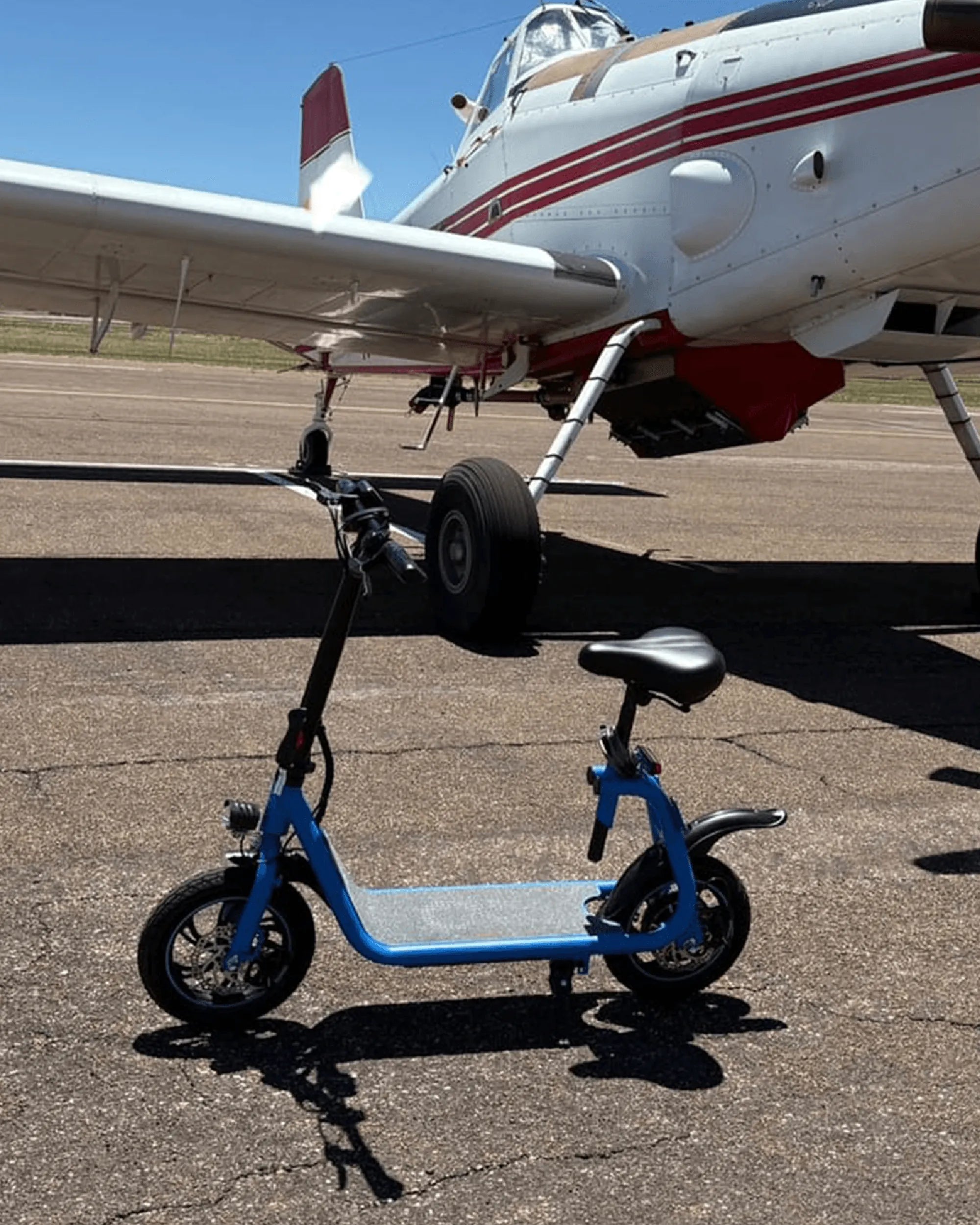
Introduction: From Skeptic to Scooter Convert
I used to watch electric scooter riders zip past my gridlocked car with a mix of pity and suspicion. Were they not terrified? My mind raced with worries: flimsy construction, dead batteries miles from home, and certain doom in a light drizzle. My turning point was a perfect storm of a 30-minute commute stretching to 90, a sharp rise in gas prices, and a growing frustration with crowded, unpredictable public transit. I decided to confront my fears with research, not assumptions.
What I discovered dismantled every preconceived notion. Modern electric scooters are engineered for serious urban mobility, not just recreation. This is the story of how I learned to stop worrying and love electric scooters. It’s a transformation from anxiety to advocacy, powered by data, firsthand experience, and the realization that this wasn't a toy—it was a legitimate, efficient transportation solution. If you're curious but cautious, this guide is for you.
We will systematically debunk the top myths, analyze the tangible benefits, and provide a clear framework for choosing and riding your first scooter safely. The goal is to replace uncertainty with confidence, showing you that the benefits far outweigh the initial fears, provided you have the right information and a reliable machine.
The Reality Check: Debunking Top 5 Electric Scooter Myths
My hesitation was built on a foundation of common misconceptions. Let's dismantle them with facts, using specifications from leading brands like Gyroor, known for UL-certified batteries and robust designs, as a benchmark for what modern scooters offer.
Myth 1: "They're Just Toys, Not Real Transportation."
This was my biggest hurdle. The reality is that performance specs tell a different story. Many commuter-focused models boast top speeds of 18-25 MPH and ranges of 15-40 miles on a single charge. Consider the average U.S. urban commute distance of approximately 11 miles. A scooter with a 20-mile range handles this round-trip easily.
This isn't toy-grade engineering. Brands building for daily use incorporate aircraft-grade aluminum frames, dual braking systems, and sophisticated battery management. For instance, Gyroor scooters feature UL-certified battery packs tested for over 500 charge cycles, a standard for safety and longevity that is a hallmark of serious electric vehicles, not playthings.
Myth 2: "The Battery Will Die on Me Mid-Trip."
Range anxiety is real, but it's largely mitigated by planning and modern technology. First, reputable manufacturers provide realistic range estimates based on standardized testing (e.g., riding at a constant speed with a specific rider weight). It's crucial to buy a scooter whose stated range exceeds your longest regular trip by a 20-30% buffer.
Second, a Battery Management System (BMS) is the unsung hero. It protects the battery from overcharging, deep discharge, and short circuits, ensuring health and providing accurate battery level readings. The UL-certification on brands like Gyroor's batteries is a critical indicator of this protective technology, giving riders a reliable gauge to prevent being stranded.
Myth 3: "They're Too Dangerous for City Streets."
Safety is paramount and is primarily dictated by rider behavior and preparation. Any vehicle is dangerous if used irresponsibly. Key safety features on quality scooters directly address urban hazards: bright headlights and brake lights for visibility, electronic and disc brakes for reliable stopping power, and wider decks for stable footing.
Comparing a well-equipped scooter to alternatives is revealing. A bicycle offers similar exposure but often at higher speeds with less predictable braking. A scooter's lower center of gravity and instant acceleration can help a rider navigate away from potential hazards. The core safety principle is the same: wear a helmet, obey traffic laws, ride defensively, and use lights day and night.
Myth 4: "What If It Rains? Aren't They Useless?"
Water resistance is a key differentiator between casual and commuter-grade scooters. The IP (Ingress Protection) rating is your guide. A rating of IPX4 means resistance to water splashes from any direction. A rating of IPX5, like that found on several Gyroor models, means the scooter can withstand water jets from a nozzle, making it capable of handling heavy rain and wet roads.
This doesn't mean riding through deep puddles or submerging the scooter is advisable. However, a solid IPX5 rating transforms the scooter from a fair-weather friend into a reliable all-weather commuter. It protects the vital electrical components, meaning a sudden shower doesn't spell disaster or leave you searching for an expensive ride home.
Myth 5: "Maintenance Must Be a Nightmare and Expensive."
Relative to a car, e-scooter maintenance is minimal and inexpensive. The primary routine tasks are checking tire pressure (for pneumatic tires), ensuring brakes are adjusted and functional, and keeping the scooter clean. There are no oil changes, smog checks, or complex engine diagnostics.
The most significant factor for long-term cost and hassle is the warranty. A comprehensive warranty covering the battery, motor, and controller for a full year, backed by accessible customer service, is your best insurance policy. Gyroor's 1-year warranty and US-based support exemplify this, providing peace of mind that any rare manufacturing defect will be addressed without exorbitant cost.
The Practical Payoff: How an E-Scooter Transformed My Daily Commute
Debunking myths opened the door, but the real conversion happened on the road. The practical benefits were immediate, measurable, and profound.
Time & Money Saved: The Cold, Hard Numbers
The financial logic is compelling. My 5-mile car commute, with parking, cost roughly $8-$10 daily. Public transit was $5.50. Charging my scooter costs pennies—approximately $0.15 for a full charge covering 20 miles. The annual savings easily run into the thousands, quickly offsetting the scooter's initial cost.
Time savings were even more dramatic. A drive that could take 20-45 minutes became a consistent 18-minute breeze. I eliminated the walk to and from the bus stop and the wait for the bus itself. This door-to-door efficiency added over an hour back to my day, every day. Parking transformed from a daily hunt and expense to a non-issue; I could park literally at the entrance of my destination.
The Joy of the Ride: Unexpected Perks
Beyond metrics, the experience itself is transformative. There's a visceral joy in feeling the breeze, gliding silently past traffic, and experiencing the city from a new perspective. The convenience is unparalleled: no more being packed into a subway car or circling blocks for parking. It's pure, efficient, personal mobility.
This mode of travel also integrates seamlessly with other forms. The folding mechanism on models like Gyroor's makes it easy to carry onto a train for a longer hybrid commute or store under a desk. It provides a first-and-last-mile solution that cars cannot, effectively extending the reach of public transit systems without the hassle.
The Eco-Conscious Bonus
While the personal benefits were my primary driver, the environmental impact is a significant positive side effect. Replacing even a fraction of short car trips with electric scooter rides reduces urban congestion and carbon emissions. An e-scooter has a tiny fraction of the lifecycle carbon footprint of a passenger vehicle, especially when charged on a grid increasingly powered by renewables. It's a tangible way to reduce one's environmental impact without sacrificing convenience.
Choosing Your Steed: A Buyer's Checklist for Your First E-Scooter
Armed with the "why," the "what" becomes critical. Not all scooters are created equal. Use this checklist to match a scooter's specs to your life.
Range & Speed: Matching Specs to Your Life
Calculate your needed range honestly: longest regular round-trip distance + a 20-30% buffer for hills, wind, and battery degradation over time. If your commute is 7 miles each way, look for a scooter with a 20+ mile real-world range. For speed, check local laws (often 15-20 MPH limits on bike lanes) and prioritize a scooter that can comfortably maintain a safe cruising speed, not just a high top speed.
Build Quality & Warranty: Your Insurance Policy
This is where you should not compromise. Prioritize brands that use UL-certified batteries—it's the single most important safety feature. Demand a clear IP water-resistance rating (IPX5 is the commuter standard). Examine the frame material and overall finish. Finally, scrutinize the warranty: a minimum 1-year coverage on the battery and motor, with clear support channels, is essential. Gyroor's combination of UL-certification, IPX5 rating, and 1-year warranty serves as a strong model for these criteria.
Portability & Comfort
Consider weight if you have stairs or need to carry it. A 30-40 lb scooter is manageable for most; over 50 lbs becomes cumbersome. A secure, easy folding mechanism is vital. For comfort, a larger deck provides stable footing, and suspension (especially pneumatic tires or spring-based systems) smooths out rough pavement, making longer rides less fatiguing.
Head-to-Head: Key Commuter Scooter Considerations
| Feature | Budget/Entry-Level | Mid-Range Commuter (e.g., Gyroor Z8) | High-Performance | Why It Matters |
|---|---|---|---|---|
| Real-World Range | 8-12 miles | 18-25 miles | 30-50+ miles | Determines how far you can reliably go. Buffer is key. |
| Top Speed | 15 MPH | 19-22 MPH | 25-40+ MPH | Must align with local laws and riding comfort. |
| Battery Certification | Often unspecified | UL-Certified | UL-Certified | Critical for fire safety and battery longevity. |
| Water Resistance | IPX4 or less | IPX5 | IPX5-IPX7 | IPX5 allows riding in rain, essential for daily use. |
| Suspension | Solid tires (rigid) | Pneumatic tires / Basic spring | Advanced dual suspension | Directly impacts comfort and control on rough surfaces. |
| Warranty | 90 days - 6 months | 1 Year Comprehensive | 1-2 Years | Your protection against manufacturing defects. |
Riding Smart: Essential Safety and Etiquette for the Modern Commuter
Owning a capable scooter is half the equation; riding it responsibly completes it. This is the foundation for long-term, accident-free enjoyment.
Gear Up: The Non-Negotiables
A helmet is non-negotiable, full stop. A bicycle helmet is the minimum; a skate or multi-impact helmet offers more rear-head coverage. Use the scooter's lights always—a bright headlight and brake light make you visible to cars and pedestrians. For night riding, add reflective clothing or accessories. Sturdy, closed-toe shoes and considering gloves for added grip and protection are also wise.
Rules of the Road (and Sidewalk)
Know and follow local laws. In most cities, scooters belong in bike lanes, not on sidewalks where they endanger pedestrians. Ride with traffic, signal your turns, and obey traffic signals. Practice defensive riding: assume cars don't see you, watch for opening car doors, and slow down at intersections. Your agility is an advantage, but predictability keeps you safe.
Pre-Ride Checklist: 60 Seconds to Peace of Mind
Make this a habit: 1) Tires: Check pressure and for damage. 2) Brakes: Squeeze levers to ensure firm engagement. 3) Lights: Confirm headlight and taillight function. 4) Battery: Verify sufficient charge for your trip. 5) Folding Mechanism: Ensure it's locked securely in the riding position. This quick routine catches potential issues before you're in motion.
Frequently Asked Questions (FAQ)
Q: How long does it take to charge a typical e-scooter?
A: Charge times vary by battery size. Most commuter scooters with 10-15Ah batteries take 4-7 hours for a full charge from empty. Using the manufacturer's provided charger is crucial for safety and battery health.
Q: Can I ride it on hills? What should I look for?
A: Yes, but hill-climbing ability depends on motor power (wattage) and torque. A 350W motor can handle moderate inclines; for steeper hills, look for 500W or dual-motor setups. Always check the manufacturer's stated hill grade capability.
Q: Is it difficult to learn how to ride?
A> Most adults pick it up in 10-30 minutes in a safe, open area. The key is starting at the lowest speed setting, getting comfortable with balancing, accelerating, and braking gently before progressing. It's significantly easier than learning to ride a bicycle.
Q: What happens if I get a flat tire?
A> Models with pneumatic (air-filled) tires can get flats. Some brands offer self-sealing tires or tubeless designs to mitigate this. For standard tires, you'll need to replace the inner tube, a straightforward repair similar to a bicycle tire. Many riders carry a small repair kit for longer rides.
Q: How does the warranty work if I need service?
A> Reputable brands like Gyroor have clear warranty processes. Typically, you contact customer support to diagnose the issue. For problems covered under warranty, they often send replacement parts (like a charger or tire) directly to you, or provide instructions for repair at a partnered service center. A strong warranty includes accessible support and minimizes downtime.
Your Journey Awaits: From Worry to Freedom
The journey from skeptic to advocate is paved with information and experience. The initial worries about electric scooters—safety, reliability, practicality—are valid questions, but they have concrete, reassuring answers rooted in modern engineering and smart riding practices. How I learned to stop worrying and love electric scooters was by replacing fear with facts and discovering a tool that gave me time, money, and a renewed sense of freedom in my daily routine.
The transformation isn't just about transportation; it's about reclaiming agency in your commute. It's about opting for efficiency, joy, and sustainability over frustration and cost. The key is making an informed choice: prioritizing safety certifications like UL, demanding real-world performance specs, and choosing a brand that stands behind its product with a solid warranty. When you do, the scooter ceases to be a source of anxiety and becomes a gateway to a better way of moving through your city.
Your own path to worry-free riding starts with research. Assess your commute, define your needs, and explore the options from brands engineered for real riders. The road is waiting.
Ready to explore reliable, commuter-ready electric scooters? Browse the full Gyroor collection, featuring UL-certified batteries, IPX5 water resistance, and a comprehensive 1-year warranty, at gyroorboard.com.
Electric Scooters for Adults 15 mph: The Ultimate Urban Commuter Solution
Can You Make Electric Scooters Faster? Unlocking Speed Potential Safely