



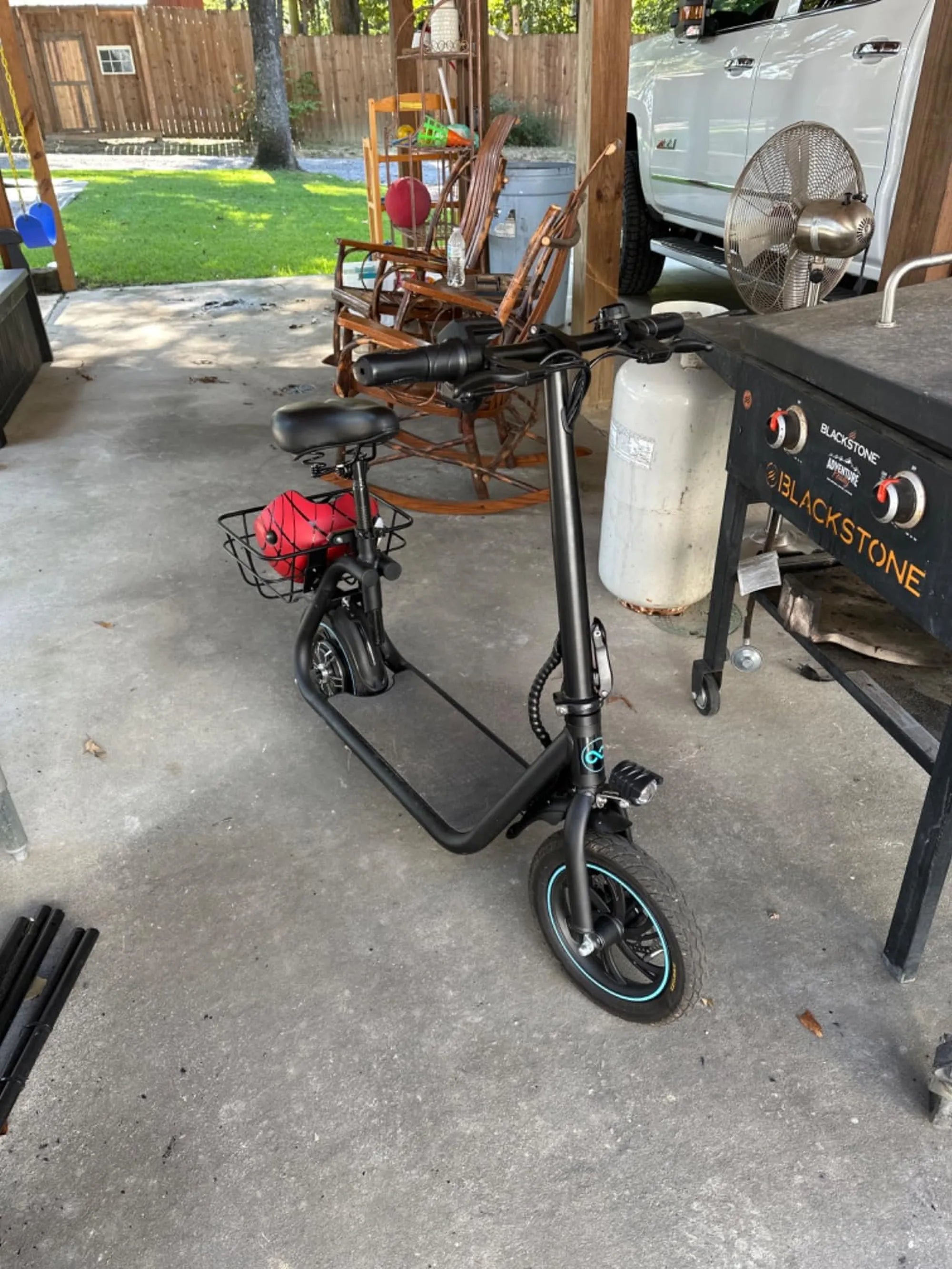
Introduction: Redefining Personal Mobility for Heavier Riders
Finding a reliable electric scooter as a heavier adult can be a frustrating experience of encountering low weight limits, underwhelming power, and stability concerns. This guide cuts through the noise to focus on the engineering and features that truly matter for comfort, safety, and lasting performance. Electric scooters for fat adults: the ultimate guide to comfort and performance is built on a simple premise: your scooter should be engineered to exceed your needs, not just meet minimum specifications.
We will move beyond marketing claims to analyze the key specifications that ensure a safe and enjoyable ride. This includes understanding motor torque, calculating real-world range under load, and identifying the construction quality that supports a larger frame. Brands like Gyroor, trusted by over 100,000 riders, prioritize this heavy-duty engineering with UL-certified batteries and robust designs, setting a benchmark for what riders should demand.
The goal is empowerment through information. By the end of this guide, you will know exactly what to look for in a scooter’s specifications, which features directly impact your comfort, and how to ensure your investment is protected. Let’s begin by decoding the most critical technical details.
Understanding the Key Specifications: What "Heavy-Duty" Really Means
For heavier riders, standard scooter specs are often insufficient. You must prioritize a different set of engineering benchmarks that guarantee safety, durability, and usable performance under maximum load. These are the non-negotiable foundations of a suitable scooter.
Motor Power and Torque: The Heart of Performance
Motor wattage is about more than top speed; it’s about usable power. A 250W motor may struggle to move a heavier rider from a stop or climb a slight incline, leading to sluggish performance and potential motor burnout. For reliable performance, a minimum of 500W is recommended, with 1000W or dual-motor setups being ideal for consistent acceleration and hill-climbing ability.
Torque is the rotational force that gets you moving. High torque is essential for heavier riders to achieve smooth acceleration without straining the motor. Scooters designed for larger capacities, like several in the Gyroor lineup, emphasize high-torque motors that deliver power efficiently, ensuring you can navigate urban environments confidently.
Weight Capacity and Frame Integrity
The advertised weight limit is a starting point, not a target. For safety, longevity, and maintained performance, select a scooter rated for at least 50-100 pounds over your actual weight. This buffer accounts for dynamic forces, cargo, and ensures components are not perpetually stressed at their limit.
Frame integrity is paramount. Look for frames constructed from reinforced, aerospace-grade aluminum alloy with critical stress points—like the stem and deck joints—featuring robust welding. A flimsy frame will develop wobble or fail under constant heavy load, making build quality a primary safety concern.
Battery Life and Range Under Load
Advertised range figures are typically achieved under ideal conditions with a light rider. For a heavier adult, real-world range can drop by 30-40%. Therefore, battery capacity, measured in Watt-hours (Wh), is more important than a simple mileage claim.
A larger battery pack (e.g., 48V 15Ah or higher) is crucial. It provides the necessary energy reserve to deliver the promised power output over a reasonable distance despite the increased load. Always plan your expected range conservatively, and prioritize scooters with high-capacity, UL-certified battery packs for both range and safety.
Top Features for Enhanced Comfort and Stability
Raw power must be matched with design intelligence to create a comfortable and stable ride. These features directly impact ride quality, reducing fatigue and increasing control for larger riders.
Wide, Puncture-Resistant Tires and Suspension Systems
Tire choice is critical for comfort and safety. Pneumatic (air-filled) tires, 10 inches in diameter or larger, offer superior shock absorption compared to small solid tires. They provide better traction and a smoother ride over cracks and bumps. Pair these with a dual spring or hydraulic suspension system to effectively dampen impacts, protecting both the rider and the scooter’s electronics.
This combination ensures stability and control, preventing the jarring vibrations that can lead to loss of balance or discomfort on longer rides. It transforms a commute from a bumpy ordeal into a smooth journey.
Spacious and Robust Deck Design
The deck is your platform for control. A long, wide deck (at least 20 inches long and 8 inches wide) with a pronounced, textured grip tape surface allows for a natural, balanced stance. This is essential for maintaining control during acceleration and braking.
Beyond surface area, the deck’s construction contributes to overall frame rigidity. A robust deck made of thick aluminum acts as a structural backbone, distributing weight evenly and preventing flex, which is a common point of failure in under-built scooters.
Responsive and Dual Braking Systems
Stopping power is exponentially more important with increased mass and momentum. A single braking system is inadequate. Seek out scooters with dual independent braking systems, such as a front disc brake and a rear drum or electronic regenerative brake.
This configuration provides reliable, fade-resistant stopping power in all conditions and offers redundancy. If one system fails, the other can bring you to a safe stop. Responsive brakes are not a luxury; they are a fundamental safety requirement for any rider, especially those at higher weights.
Safety, Warranty, and Reliability: Non-Negotiables
The right scooter is built on a foundation of verified safety standards and backed by strong customer support. These factors protect your investment and your well-being.
The Importance of UL-Certification and Water Resistance
Battery safety is paramount. UL certification (like UL 2271) means the battery pack has been independently tested for electrical and fire safety—a critical consideration for any high-capacity lithium-ion battery. Gyroor, for instance, uses UL-certified batteries tested for over 500 charge cycles as a standard.
Similarly, a water resistance rating of IPX5 or higher indicates the scooter can withstand water jets from any direction. This protects the motor, controller, and battery from rain and road spray, ensuring reliability in various weather conditions and preventing costly water damage.
Understanding Warranty and Support Coverage
A comprehensive warranty is a sign of manufacturer confidence. Look for a minimum 1-year warranty that explicitly covers the frame, motor, battery, and controller. Scrutinize the terms to understand what is included and the process for claims.
Accessible customer support is equally valuable. Brands that offer direct support channels and maintain a stock of common replacement parts, like brake pads and tires, significantly reduce downtime and long-term ownership headaches.
Data-Driven Comparison: Making an Informed Choice
Use the following framework to compare models based on your primary use case. This table illustrates how to evaluate scooters across key heavy-duty criteria.
| Evaluation Criteria | Urban Commuter Focus | Performance / Off-Road Focus | Premium All-Rounder |
|---|---|---|---|
| Target Rider Weight | Up to 300 lbs | Up to 350 lbs | Up to 330 lbs |
| Min. Motor Power | 500W Sustained | 1000W+ Dual Motor | 800W+ High-Torque |
| Real-World Range* | 15-20 miles | 18-25 miles | 20-30 miles |
| Key Features | 10" Pneumatic Tires, Dual Suspension, IPX5 | 10" Off-Road Tires, Dual Suspension, Dual Disc Brakes | Large Deck, Advanced Suspension, UL-Certified Battery |
| Primary Use Case | Paved Paths, City Commutes | Hills, Rough Terrain, Trail Use | Versatile Daily Use, Comfort Priority |
*Range estimates are for a rider at the higher end of the weight capacity and include factors like hills and stop-and-go traffic.
Performance vs. Need: A Simple Evaluation Matrix
Align the scooter’s strengths with your routine. Do you face steep hills? Prioritize motor power and torque. Is your commute long? Battery capacity becomes the top spec. For purely paved, flat paths, a robust commuter model may suffice. This targeted approach prevents overpaying for unneeded features or underbuying on critical ones.
Total Cost of Ownership: Beyond the Sticker Price
The cheapest scooter often has the highest long-term cost. Consider durability, component quality, and warranty support. A scooter with a UL-certified battery from a brand like Gyroor may have a higher initial cost but offers lower risk of premature battery failure and comes with reliable support.
Factoring in the cost and frequency of replacements for tires, brake pads, and potentially the battery itself reveals the true value of a well-built machine designed for heavy-duty use from the start.
Maintenance and Care for Longevity
Proper maintenance is essential to preserve the performance and safety of your scooter, especially under heavy loads. A consistent care routine prevents minor issues from becoming major failures.
Regularly check and maintain optimal tire pressure. Under-inflated tires increase rolling resistance, reduce range, and make the scooter harder to control. Inspect brake pads for wear and test brake responsiveness before every ride. Ensure all bolts, particularly those on the folding mechanism and stem, are tight and secure, as vibration can loosen them over time.
Keep the scooter clean, especially after riding in wet conditions. Wipe down the deck and frame, and avoid directly spraying water into charging ports or the deck. Store your scooter in a dry, temperate place and avoid leaving the battery fully depleted or at 100% charge for extended periods to maximize its lifespan.
Frequently Asked Questions (FAQ) for Heavier Riders
Q: Is it safe to ride a scooter if I'm at the maximum weight limit?
A: It is not recommended. Riding at the absolute limit stresses every component—motor, battery, brakes, and frame—leading to reduced performance, shorter range, accelerated wear, and potential safety issues. Always choose a scooter with a weight capacity at least 50 lbs above your weight for a safety and performance buffer.
Q: How much will my actual range differ from the advertised range?
A: Expect a significant reduction. If you are riding at or near the scooter’s maximum capacity, you can typically expect a 30-40% decrease in range compared to the advertised figure, which is based on ideal conditions with a lighter rider. Hills, frequent stops, and colder temperatures will reduce it further.
Q: Are solid tires or pneumatic tires better for heavier riders?
A: Pneumatic (air-filled) tires are almost always superior for heavier riders. They provide crucial shock absorption, better traction, and a more comfortable ride. While solid tires eliminate flats, they transmit far more vibration to the deck and rider, leading to a harsh ride and potentially contributing to frame fatigue over time.
Q: What does a "dual motor" setup do for me?
A: A dual-motor scooter engages both the front and rear wheels for propulsion. This provides dramatically improved acceleration, much higher torque for climbing steep hills, and better overall traction and control, especially on uneven surfaces. It is a key feature for heavier riders or those in hilly areas.
Q: Are there specific maintenance checks I should perform more frequently?
A: Yes. Heavier use necessitates more vigilant checks. Monitor tire pressure weekly, inspect brake pads monthly for wear, and check the tightness of all critical bolts (stem, folding mechanism, handlebars) every few weeks. Listen for new creaks or rattles, which can indicate something needs tightening or adjustment.
Conclusion: Embracing Mobility with Confidence
Choosing the right electric scooter as a heavier adult is an exercise in prioritizing engineering over aesthetics. The path to comfortable and powerful riding is clear: select a scooter whose weight capacity exceeds your own, whose motor delivers high torque, and whose battery offers a real-world range that suits your life. Demand robust construction, verified safety standards like UL certification, and a warranty that proves the manufacturer stands behind their product.
This approach leads to a vehicle that isn’t just adequate but is genuinely enjoyable and reliable for years. It transforms personal mobility from a compromise into a source of freedom and confidence. You deserve a scooter built to empower your journey, not limit it.
Ready to explore heavy-duty electric scooters engineered for real performance and comfort? Browse the full Gyroor collection, featuring UL-certified batteries, IPX5 water-resistant designs, and models built to support larger riders, at gyroorboard.com.
Electric Scooters in Fayetteville: The Future of Urban Mobility
Electric Scooters for 12 Year Old Boys: Safety, Features, and Fun