



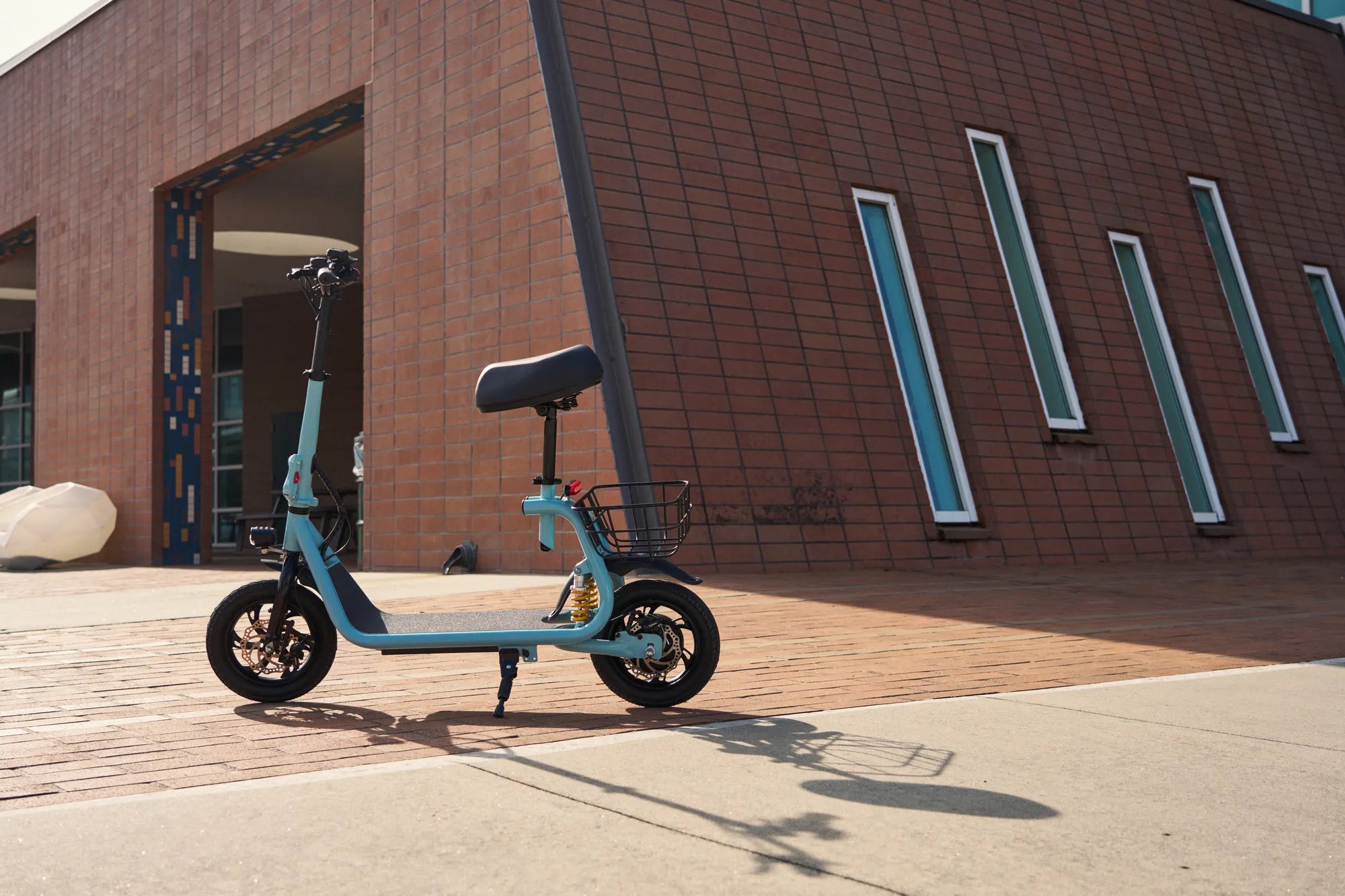
Navigating Wet Weather with Confidence
Can you ride an electric scooter in the rain? This is a critical question for any urban commuter or recreational rider. The answer is nuanced: while modern electric scooters, like those from Gyroor, are engineered with IPX5 water resistance for real-world conditions, safe operation hinges on rider knowledge, technique, and diligent maintenance. This guide delivers a complete, safety-first framework for tackling wet weather. We will demystify water-resistance ratings, outline essential pre-ride checks, teach advanced riding techniques for slick surfaces, and provide a non-negotiable post-ride care routine to ensure your scooter's longevity and your safety.
Understanding Your Scooter’s Water Resistance: The IPX5 Rating Explained
The Ingress Protection (IP) code is an international standard defining protection against solids and liquids. For electric scooters, the second digit, representing liquid ingress, is paramount. An IPX5 rating signifies a specific level of water resistance crucial for riders to understand. The 'X' indicates the enclosure is not rated for dust protection, while the '5' denotes protection against water jets.
Specifically, an IPX5-rated scooter can withstand water projected by a nozzle (6.3mm) from any direction at a pressure of 30 kPa for at least 3 minutes. In practical terms, this translates to robust protection against rain showers and splashes from puddles or wet roads. It is a deliberate engineering standard for typical urban commuting scenarios involving wet weather.
Leading brands like Gyroor design their core models to this standard, using sealed compartments for the battery and controller, gaskets on critical joints, and conformal coating on electronic circuit boards. This integrated approach provides a foundational safety margin for riding in light to moderate precipitation. Trust in this rating is built on rigorous testing; Gyroor's UL-certified battery systems undergo extensive validation to ensure performance and safety are maintained under these specified conditions.
What IPX5 Doesn’t Cover: Knowing Your Limits
Understanding the limitations of an IPX5 rating is arguably more important than understanding its capabilities. No consumer electric scooter is fully waterproof or submersible. Exceeding the rating's scope can lead to immediate failure and long-term damage.
IPX5 does not protect against submersion or prolonged, high-pressure exposure. Riding through deep puddles (generally over 2-3 inches) risks water forcing its way into wheel bearings, the motor hub, and past cable grommets. Torrential downpours or hurricane-level rain exert forces beyond the tested "water jet" specification. Furthermore, high-pressure car washes or direct hose sprays can breach seals not designed for that intensity of concentrated pressure.
The risks are tangible: water ingress can cause short circuits in the battery management system (BMS) or controller, leading to sudden power loss. Corrosion on electrical contacts and within the motor can develop over time, degrading performance and creating potential safety hazards. Adhering to the rating's intent is essential for warranty coverage and safe operation.
Essential Pre-Ride Safety Checklist for Wet Conditions
Before venturing out on damp roads, a meticulous inspection is non-negotiable. This five-minute checklist addresses the critical points of failure exacerbated by wet conditions.
Tire Inspection: Check tread depth and pressure. Worn, smooth tires severely compromise wet traction. Ensure tires are inflated to the manufacturer's recommended PSI; under-inflated tires reduce stability and increase rolling resistance, while over-inflated tires minimize the contact patch.
Lighting and Visibility Systems: Verify that all lights—headlight, taillight, brake light, and any side reflectors—are fully operational. In rain, visibility is drastically reduced for both you and other road users. A functioning brake light is critical for signaling your intentions to vehicles behind you.
Brake Performance Test: Test your brakes at low speed in a safe area. Check pad wear on mechanical disc or drum brakes; thin pads need replacement. Ensure brake levers are firm and responsive. Wet rims can drastically reduce the effectiveness of rim brakes, making disc brakes a superior choice for all-weather riding.
General Mechanical Integrity: Perform a visual scan for any cracks in the frame, stem, or fork. Ensure all bolts, especially those on the folding mechanism and handlebars, are tight. Loose components can lead to catastrophic failures, with risks magnified on slippery surfaces.
Mastering Wet Weather Riding Techniques
Your scooter's hardware is only half of the safety equation. Adapting your riding technique for reduced traction is the other, more critical half. The core principles are anticipation, smoothness, and conservatism.
Speed, Braking, and Cornering: The Triple Threat
Reduce your speed by at least 30-40% compared to dry conditions. Higher speeds dramatically increase stopping distance and reduce reaction time. A lower speed is your primary safety buffer.
Braking must be progressive and early. Apply the electronic brake gently first to slow the motor, then smoothly engage the mechanical brake. Avoid grabbing the brake lever abruptly, which will lock the wheel and cause a skid. If your scooter has dual braking systems, learn to modulate them together smoothly.
Cornering requires a fundamental technique shift. Enter corners at a significantly reduced speed. Avoid leaning your body or the scooter aggressively. Instead, keep your body upright and steer through the turn by turning the handlebars more than you would on dry pavement. Take a wider line through the turn to decrease the lean angle.
Surface Hazards: How to Spot and Avoid Them
Wet weather unveils a landscape of hidden traction hazards. Develop a scanning pattern, looking 10-15 meters ahead to identify and plan avoidance.
Painted Surfaces: Road markings, crosswalk lines, and bike lane symbols become extremely slick when wet. Cross them as perpendicularly as possible and avoid braking or accelerating while on them.
Metal and Composite Surfaces: Manhole covers, drainage grates, railway tracks, and bridge expansion joints offer almost no grip in the rain. Actively steer around them.
Organic Debris: Wet leaves, pine needles, and mud create a slurry-like layer that can instantly eliminate traction. Treat them with extreme caution.
Oily Film: The first 20-30 minutes of a rainstorm lifts oils from the asphalt, creating the slickest conditions. If possible, delay your ride. When riding, follow in the tire tracks of cars, where oil has been partially washed away, rather than in the center of the lane.
Gear Up: Must-Have Rider Equipment for Rainy Rides
Protecting yourself from the elements is essential for maintaining control and comfort. The right gear keeps you dry, visible, and focused.
High-Visibility Waterproof Outerwear: A bright yellow or orange waterproof jacket with reflective strips is crucial. Pair it with waterproof pants or over-trousers. Being seen is your first line of defense against inattentive drivers.
Full-Face Helmet or Visor: A full-face helmet offers the best protection from rain, wind, and impacts. If using a standard helmet, a clear, anti-fog visor is essential to maintain an unobstructed view. Rain on glasses or directly in the eyes is a major distraction and hazard.
Grippy Gloves: Waterproof, non-slip gloves serve multiple purposes. They keep your hands warm and dry, provide a secure grip on wet handlebar grips, and offer protection in the event of a fall.
Sturdy, Closed-Toe Footwear: Wear shoes with deep tread patterns and water-resistant properties. Avoid smooth-soled shoes. Your feet are critical for stability when mounting, dismounting, and bracing during low-speed maneuvers.
Post-Ride Care: Protecting Your Investment
Proper maintenance after a wet ride is not optional; it is the key to preventing corrosion, electrical issues, and premature wear. Begin this routine as soon as you reach your destination.
The Proper Drying and Cleaning Routine
First, power off the scooter. Use a dry, absorbent microfiber cloth or towel to thoroughly wipe down the entire scooter. Pay special attention to the deck (where water pools), the stem, around the brake calipers and discs, the display, and all control buttons.
For deeper cleaning after riding on roads treated with de-icing salts, use a damp cloth (not wet) with a mild, non-abrasive cleaner to wipe down the frame and undercarriage. Salts are highly corrosive to aluminum and steel components. Never use a pressure washer or submerge any part of the scooter. Allow the scooter to air-dry completely in a temperate, ventilated area before folding or storing it.
Battery and Charging Safety Precautions
This is the most critical safety rule: Never attempt to charge a wet scooter. Before even thinking about plugging in the charger, visually and physically inspect the charging port. Use a can of compressed air or a dry cloth to ensure it is completely free of moisture.
Similarly, check the charger plug for water droplets. Only insert the plug when both the port and plug are confirmed to be perfectly dry. Store the scooter and battery in a dry environment with moderate temperatures. Following these steps religiously protects the integrity of the UL-certified battery pack and the entire electrical system.
Electric Scooter Comparison for Wet Weather Performance
Not all scooters are equally suited for damp conditions. Key features like brake type, tire design, and IP rating define all-weather capability. The table below compares hypothetical scooter types, with features aligned with real-world models like those in the Gyroor lineup.
| Scooter Type / Use Case | Ideal Wet-Weather Features | Key Considerations & Limitations |
|---|---|---|
| Urban Commuter (e.g., Gyroor F1 Pro) | IPX5 Rating, Dual Disc Brakes, 10" Pneumatic Tires, Bright LED Lights | Pneumatic tires provide best wet grip but risk punctures. Dual brakes offer redundant stopping power. Excellent for planned commutes in light rain. |
| Performance / Long-Range | IPX5 Rating, Hydraulic Disc Brakes, Wide Deck, Superior Suspension | Hydraulic brakes offer more consistent modulation in wet conditions. Suspension maintains tire contact with uneven wet roads. Higher speeds require even greater rider caution. |
| Entry-Level / Last-Mile | IPX4 or IPX5 Rating, Solid or Honeycomb Tires, Drum or Single Brake | Solid tires eliminate puncture risk but offer less wet-weather traction. Single braking systems require longer stopping distances. Best for short, cautious trips in drizzle. |
| Off-Road / Trail | High Ground Clearance, Knobby Pneumatic Tires, Extreme IP Rating (e.g., IPX6+) | Designed for mud and heavy splashes, but deep water fording remains risky. Knobby tires can hydroplane on wet pavement. Specialized use case. |
Frequently Asked Questions (FAQ)
Q1: Can I ride my Gyroor scooter in heavy rain or a thunderstorm?
A: It is strongly discouraged. The IPX5 rating is designed for light to moderate rain. Heavy rain, especially with standing water or flooding, exceeds the tested protection level. Lightning poses a direct personal safety risk. The prudent choice is to seek shelter and wait for the weather to pass.
Q2: How long should I wait to charge my scooter after riding in the rain?
A: There is no fixed time; the criterion is dryness, not time. After thoroughly wiping the scooter down, allow it to acclimate in a dry indoor environment for several hours. Only charge when you have verified both the charging port on the scooter and the charger plug are completely moisture-free.
Q3: Does riding in the rain void my warranty?
A> For Gyroor, using the scooter within its specified IPX5 rating (light to moderate rain) does not void the warranty. The warranty covers defects in materials and workmanship. However, damage resulting from negligence—such as submersion, charging while wet, or riding through deep floods—is not covered, as it constitutes misuse beyond the product's design parameters.
Q4: Are electric scooters safe on wet roads compared to bicycles?
A: Both vehicles experience reduced traction. However, scooters generally have smaller wheels, which can be more susceptible to slipping on surface irregularities and losing stability in ruts. The standing posture on a scooter also offers a different center of gravity. The core safety principles—reduced speed, gentle braking, and hazard avoidance—apply equally, but scooter riders must be particularly mindful of their smaller tire contact patches.
Q5: What is the single most important tip for first-time rain riders?
A: Slow down. Reducing your speed is the most effective action you can take. It increases your reaction time, decreases stopping distance, and gives you a larger margin for error when encountering unexpected hazards like slick patches or potholes hidden by puddles.
Safety and Preparedness Are Your Best Protection
Successfully and safely riding an electric scooter in the rain is a testament to informed preparation and disciplined execution. It revolves around a three-pillar strategy: comprehensively understanding your machine's engineered limits (the IPX5 rating), mastering a cautious and smooth riding technique tailored for low-traction environments, and committing to a meticulous post-ride maintenance ritual. This guide provides the actionable framework for all three. By adopting these practices, you transform a potentially hazardous condition into a manageable one, ensuring your daily commute or recreational ride continues reliably regardless of a few clouds. Your scooter, when cared for correctly, is built to be a dependable partner. Equip yourself with knowledge, gear, and caution to match its capability.
For riders seeking a scooter engineered with these real-world challenges in mind, explore the Gyroor collection. Featuring IPX5 water resistance, UL-certified battery systems, and robust braking across models, Gyroor designs for the realities of urban mobility. Browse the full Gyroor collection at gyroorboard.com to find a scooter built for your journey, rain or shine.
Sales Data for Electric Scooters 2025: Trends, Predictions & Market Insights
Electric Scooters That Go Up to 30 mph: The Complete Guide