



Introduction to E-Scooter Legality in Ireland
The streets of Dublin, Cork, and Galway have seen a quiet revolution, with electric scooters becoming a common sight for commuting and short trips. For years, their legal status was a confusing grey area, leaving riders and retailers in limbo. That changed decisively in 2023. Understanding the new rules is essential for safe, legal riding and avoiding substantial fines.
This guide provides the definitive, up-to-date resource on everything you need to know about electric scooters legal in Ireland. We break down the Road Traffic and Roads Act 2023, translate legal jargon into clear rider responsibilities, and offer practical advice for choosing a compliant, reliable scooter. Whether you're a daily commuter or a weekend explorer, knowing the law protects you and others.
The Current Legal Framework: The Road Traffic and Roads Act 2023
The pivotal moment for e-scooter legality in Ireland was the enactment of the Road Traffic and Roads Act 2023. This legislation created a new vehicle category called "Powered Personal Transporters" (PPTs), which includes certain e-scooters and e-bikes. This move brought Ireland in line with many other EU member states, providing a clear, regulated path for micromobility.
Prior to this act, e-scooters existed in a legal vacuum. They were not classified as mechanically propelled vehicles, bicycles, or pedestrian conveyances, creating significant risks for riders regarding insurance and liability. The 2023 Act provides that crucial legal definition, stipulating the specific technical criteria a device must meet to be considered a PPT and be used on public roads.
The core intention of the law is to integrate these new forms of transport safely into the existing traffic ecosystem. It balances innovation with public safety by setting performance limits and operational rules. For consumers, this means you can now purchase an e-scooter with certainty, provided it meets the defined standards.
What Defines a Legal E-Scooter (PPT)?
Not every electric scooter on the market is legal for use on Irish public roads. The law sets precise technical specifications that define a compliant Powered Personal Transporter. These are non-negotiable for road legality.
First, the maximum continuous rated power output must not exceed 400 watts. This is a key differentiator from more powerful, off-road models. Second, the maximum design speed must be limited to 25 kilometres per hour (15.5 mph). A scooter capable of exceeding this speed, even if not used at that pace, does not qualify as a PPT under Irish law.
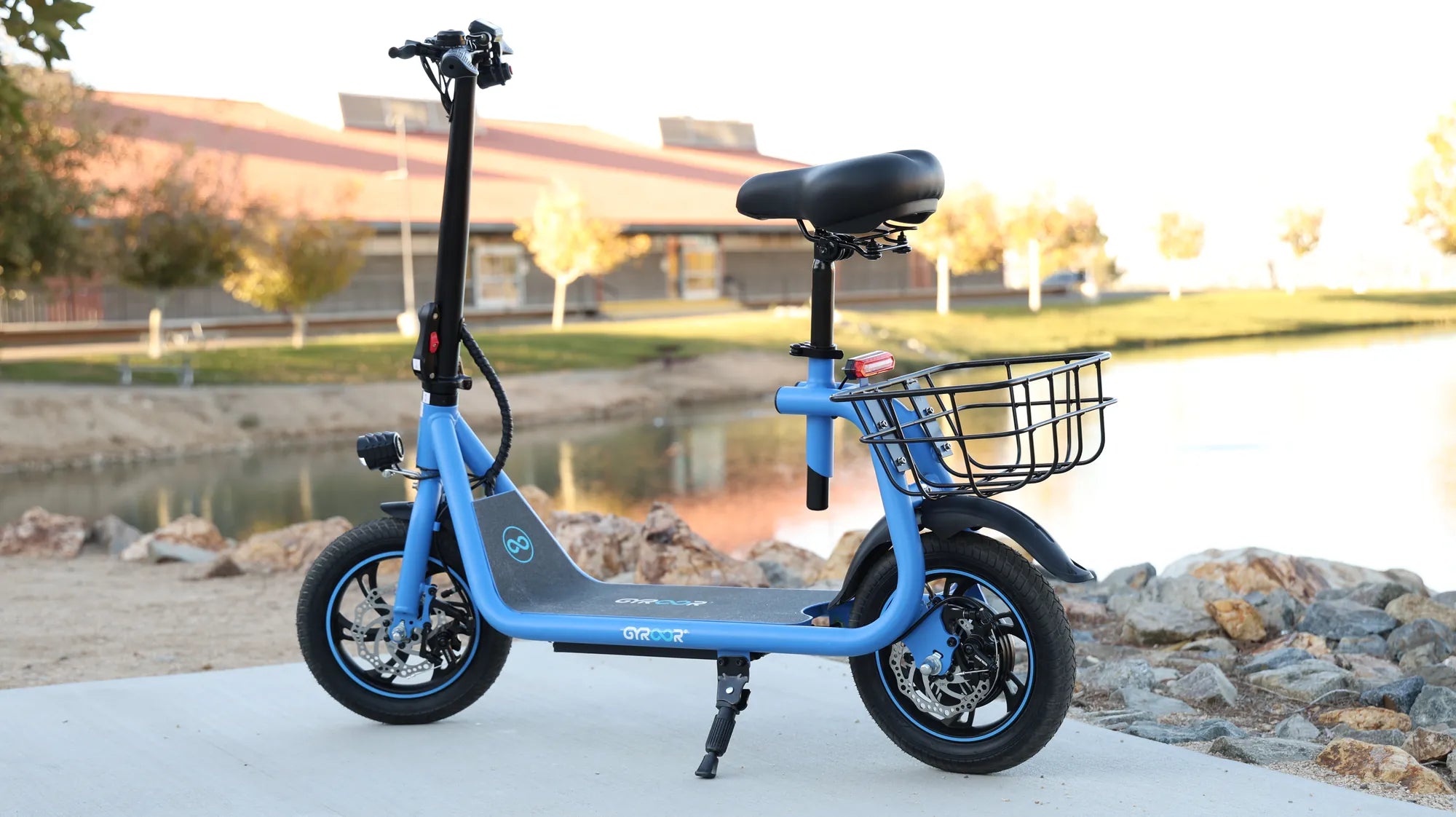
Beyond power and speed, the device must be equipped with specific safety features. It must have an efficient braking system, a front white light and a rear red light for use during lighting-up hours, and a bell or other audible warning device. Reflectors are also required. These features make electric scooters legal in Ireland visible and predictable to other road users.
Key Rules and Requirements for Riders
Owning a compliant e-scooter is only the first step. Riders themselves have a set of legal obligations. Adherence to these rules is not optional; it's enforced under road traffic legislation, with penalties for non-compliance.
The most fundamental rule is that the rider must be at least 16 years of age. It is illegal for anyone younger to operate a PPT on a public road. Furthermore, riders are subject to the same laws regarding driving under the influence of alcohol or drugs as motorists. Garda checkpoints can and do test e-scooter riders.
Perhaps the most significant new requirement is mandatory third-party liability insurance. This is a legal condition for using your e-scooter on any public road or space. This insurance covers you if you cause injury to another person or damage to their property. Riding without it leaves you personally liable for potentially massive costs.
Where You Can and Cannot Ride
The permitted zones for riding a legal e-scooter are clearly defined. You are allowed to ride on public roads, with the explicit exception of motorways. You may also use cycle lanes and cycle tracks where they are available. This makes e-scooters ideal for urban commuting alongside bicycle traffic.
It is expressly prohibited to ride an e-scooter on a footpath. Footpaths are reserved for pedestrians, and riding on them endangers vulnerable users. This rule is strictly enforced to protect pedestrian safety. The designation clarifies that while e-scooters are personal transporters, they are considered vehicles, not pedestrian aids.
For suburban and rural riders, this means sticking to the roadway. In shared spaces or pedestrian zones, you should dismount and push your scooter. Understanding these boundaries is crucial for harmonious and legal integration with all other road and footpath users.
Age, Insurance, and Safety Gear
Let's delve deeper into the rider-specific mandates. The age limit of 16 is absolute. Parents purchasing an e-scooter for a younger teen must understand it can only be used on private land. Public road use is illegal and invalidates any insurance policy.
Insurance can be obtained through specialist brokers who have developed products for e-scooters and e-bikes, as well as some mainstream insurers expanding into the micromobility market. When securing a policy, ensure it explicitly covers your use of a PPT on Irish public roads. Proof of insurance should be carried, either physically or digitally.
While the law does not mandate helmet use for riders aged 16 and over, it is overwhelmingly recommended. Head injuries are a major risk in any collision. Wearing a helmet, along with considering high-visibility clothing, especially in poor light, is a critical component of responsible riding. For those using electric scooters legal in Ireland for daily commuting, this gear is as essential as the scooter itself.
Choosing a Compliant E-Scooter: A Buyer's Guide
With legality defined, choosing the right scooter becomes a matter of compliance, safety, and personal need. The market is flooded with options, but not all are built to the Irish standard or for Irish conditions. A informed purchase decision prioritizes legality, durability, and after-sales support.
Start by verifying the specifications. Any reputable retailer will clearly state if a model is designed for the Irish/EU market with a 400W/25 km/h limit. Be wary of online deals for high-powered "performance" scooters; these are for private land use only and are illegal and uninsurable for the road.
Consider your primary use case. A commuter needs reliability, good range, and portability for last-mile connections. A recreational rider might prioritize comfort and suspension. Brands like Gyroor design models for specific scenarios, ensuring there is a compliant option for every type of rider, from students to professionals.
Must-Have Features for Irish Roads
The legal requirements translate directly into a checklist of must-have features. The 400W motor provides adequate power for Irish hills while remaining efficient and legal. The 25 km/h speed cap is a safety feature, ensuring you travel at a speed compatible with cycle lanes and urban traffic.
Lighting is non-negotiable. Look for integrated, bright front and rear lights, not just add-ons. Good suspension (often a combination of front spring and rear shock absorption) is vital for handling potholes and uneven road surfaces common in Irish cities. Wide, pneumatic (air-filled) tires offer better grip and a smoother ride than small, solid tires, especially in wet conditions.
Finally, a clear, intuitive display showing speed and battery level is essential for staying within legal limits and managing your journey. These features collectively ensure your scooter is not just legally compliant but also practically suited to the demands of Irish infrastructure.
The Importance of Battery Certification and Build Quality
This is where brand reputation and engineering matter most. The battery is the heart of your e-scooter and its most critical safety component. UL-certification, like that used in all Gyroor battery packs, means the battery has undergone rigorous independent testing for electrical, fire, and mechanical safety. It is tested for over 500 charge cycles, ensuring long-term reliability.
Build quality directly impacts safety and longevity. A sturdy aluminum alloy frame can withstand daily use. An IPX5 water-resistance rating is crucial in Ireland's climate. This rating means the scooter can withstand water jets from any direction, protecting the electrical systems from rain and puddles. A scooter without this protection is a significant risk in wet weather.
Choosing a brand with a proven track record, like Gyroor—trusted by over 100,000 riders across North America and Europe—provides peace of mind. Their 1-year comprehensive warranty ensures access to parts and service, which is vital for maintaining a road-legal vehicle over time.
Data and Comparison: The Impact of Regulation
The introduction of the PPT legislation has fundamentally shifted the e-scooter landscape in Ireland. The data and comparisons below illustrate the transition from a risky grey area to a regulated, safer environment for riders and the public.
The clear legal framework has spurred growth in the legitimate retail market, giving consumers protected rights. Insurance companies have developed products, closing a critical safety gap. Most importantly, defined rules of the road create accountability, which is the foundation of safety for all users.
| Aspect | Pre-2023 Grey Area | Post-2023 Regulated Era |
|---|---|---|
| Legal Status | Unclear; not defined in law. | Clearly defined as Powered Personal Transporters (PPTs). |
| Insurance | Extremely difficult to obtain; major liability risk for riders. | Third-party liability insurance is mandatory and available. |
| Technical Specs | No official limits; high-power models mixed with low-power. | Max 400W power, 25 km/h speed limit for road use. |
| Where to Ride | Confusion between footpaths and roads. | Explicitly allowed on roads/cycle lanes, banned on footpaths. |
| Safety Standards | Unregulated; variable build quality and battery safety. | Required lights, bell, brakes; market shifts to certified batteries (e.g., UL). |
| Rider Accountability | Low; difficult for Gardaí to enforce unclear rules. | Clear age (16+) and DUI laws apply; enforceable penalties. |
Navigating Insurance and Warranty Support
For many new riders, insurance and warranties are unfamiliar territories. However, they are pillars of responsible e-scooter ownership. Navigating them correctly is straightforward and provides essential financial and legal protection.
Think of third-party insurance as your fundamental social responsibility. It's not for your scooter; it's for the person you might accidentally collide with. Without it, you are personally responsible for their medical bills or repair costs, which could run into tens of thousands of euros. It is a non-negotiable cost of riding on public property.
The warranty, on the other hand, protects your investment. A comprehensive one-year warranty covering the motor, battery, controller, and frame (like Gyroor's) means that if a manufacturing defect arises, you have recourse. This support is invaluable for a device you rely on daily for transport.
Securing Third-Party Liability Insurance
Start your search with specialist micromobility insurance brokers. They understand the specific risks and have tailored policies for PPTs. Some mainstream car or home insurers may offer it as an add-on, but specialist providers are often more cost-effective and knowledgeable.
When applying, you will need to provide details of your scooter, including its make, model, and proof that it meets the 400W/25km/h legal criteria. The cost is typically an annual premium and is surprisingly affordable given the protection it offers. Always keep your insurance certificate accessible on your phone when riding.
The Value of a Comprehensive Manufacturer Warranty
A strong warranty is a sign of manufacturer confidence. It indicates they stand behind the quality of their components and assembly. For e-scooters, which endure vibrations, weather, and regular charging cycles, this is critical.
Look for a warranty that is straightforward and includes the high-value components: the battery pack, the motor, and the electronic controller. A brand with a network of support, either directly or through authorised service partners, ensures you won't be left stranded if a technical issue occurs. This reliable support structure is what makes brands like Gyroor a trusted choice for over 100,000 riders seeking durable, electric scooters legal in Ireland.
Frequently Asked Questions (FAQ)
Q: Do I need a driver's license, road tax, or NCT for my e-scooter?
A: No. As a Powered Personal Transporter, an e-scooter does not require a driver's license, vehicle registration, road tax, or an NCT (National Car Test). The rider requirements are age (16+) and valid third-party insurance only.
Q: Can I carry a passenger on my e-scooter?
A: Absolutely not. E-scooters legal for road use in Ireland are designed and intended for a single rider only. Carrying a passenger is illegal, makes the scooter unstable, and will void your insurance.
Q: What if my e-scooter has a "boost" mode or can be derestricted to go faster than 25 km/h?
A: If the scooter is capable of exceeding 25 km/h by any means (including aftermarket modification), it is not compliant with the PPT regulations. Using it on a public road is illegal, and you will be unable to obtain valid insurance. Always purchase a model that is permanently speed-limited for the Irish market.
Q: Are e-scooters allowed in bus lanes?
A> You may only use a bus lane if there is a cycle lane marked within it. If the bus lane is solely for buses and taxis, you must use the general traffic lane. Always follow the road signage.
Q: Are there any proposed changes to the e-scooter law?
A> The 2023 Act is the settled legislation. Future changes may relate to refining standards or insurance minimums, but the core framework of 400W, 25 km/h, insurance, and age 16+ is now established policy. Always check official government sources (e.g., Citizens Information, RSA) for updates.
Conclusion: Riding Responsibly into the Future
The legalization of e-scooters in Ireland marks a positive step towards modern, sustainable urban transport. By understanding and adhering to the rules—choosing a compliant, well-built scooter, securing mandatory insurance, and wearing safety gear—you contribute to a safer environment for everyone. Responsible riders demonstrate that micromobility is a viable, low-carbon alternative for short journeys.
Embracing this new mode of transport starts with making an informed choice. Prioritize safety certifications like UL-rated batteries and IPX5 water resistance to ensure your scooter is built for Irish conditions and built to last. With clear laws and reliable equipment, your e-scooter can be a safe, efficient, and enjoyable part of your daily life.
Ready to explore compliant and reliable electric scooters designed for the Irish rider? Browse the full Gyroor collection, featuring UL-certified batteries, IPX5 water-resistant designs, and a comprehensive 1-year warranty, at gyroorboard.com.
Will Electric Scooters Be Legal in UK? The Future of Urban Mobility
Electric Scooters Catching Fire: A Complete Guide to Causes, Risks, and Prevention