



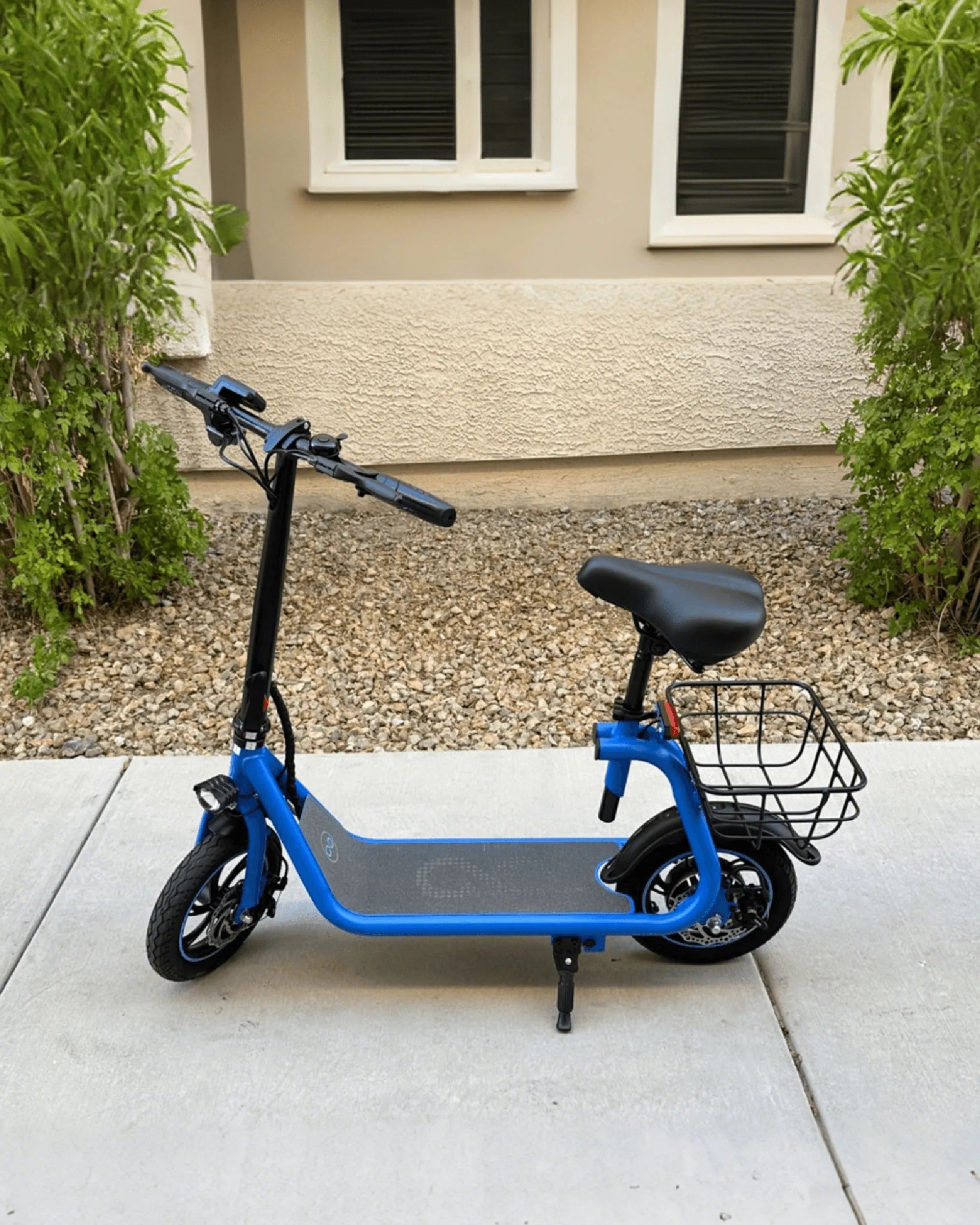
Navigating the Pavement Puzzle: A UK Rider's Dilemma
You see them daily: electric scooters zipping along pavements, weaving between pedestrians. This common scene in UK towns and cities highlights a profound tension between modern convenience and public safety. The debate over electric scooters on pavements UK legality is not just about rules; it's about how we share our increasingly crowded public spaces. This article cuts through the confusion with a data-driven, factual analysis of the law, the proven risks, and the practical realities every rider and pedestrian must understand.
We will dissect the current legal status, which is far more restrictive than many realise. You'll get clear safety statistics from official sources and a responsible rider's framework for navigating grey areas. Furthermore, we'll explore why the pavement conflict is often a symptom of inadequate urban planning and what the future may hold for regulation. Whether you're a current rider, a concerned pedestrian, or a policymaker, this guide provides the evidence-based insights needed for informed discussion and personal responsibility.
The Current Legal Landscape: What Does the Law Actually Say?
As of 2024, the legal status of privately owned electric scooters in the United Kingdom is unequivocal in the eyes of the Highway Code. They are classified as "Powered Transporters," a category that includes e-scooters and other personal light-electric vehicles (PLEVs). Under this classification, they are treated as motor vehicles under the Road Traffic Act 1988.
This legal designation carries significant requirements for use on public roads: the vehicle must have type approval, the rider must have a valid driving license, the scooter must be registered with the DVLA, it must be insured, and it must display a visible license plate. Crucially, it is illegal to use a privately owned e-scooter on pavements, in cycle lanes, or in pedestrian-only areas. The electric scooters on pavements UK issue is clear in law: it is prohibited.
The only exception to this blanket prohibition is the government-approved rental trials operating in selected towns and cities. These trial schemes permit the use of specific, identifiable rental e-scooters on roads and in some cycle lanes, but never on pavements. These scooters are speed-limited (typically to 15.5 mph), require insurance provided by the operator, and are geofenced to prevent use in prohibited areas.
Therefore, the widespread use of private e-scooters on pavements constitutes riding an uninsured, unregistered motor vehicle in a prohibited space. This can result in a Fixed Penalty Notice for no insurance (£300 and 6 penalty points) and for no tax. Police forces have the power to seize the vehicle. This stark legal reality forms the bedrock of the electric scooters on pavements UK debate, creating a significant gap between the law and observed public behaviour.
The Safety Imperative: Data, Risks, and Responsible Engineering
The legal restrictions exist primarily due to documented safety concerns. Data from the UK Department for Transport (DfT) provides concrete evidence of the risks. In 2022, there were 1,437 casualties in reported road accidents involving e-scooters in Britain, including 12 fatalities and 450 seriously injured. A significant proportion of these incidents involved collisions with pedestrians or riders losing control.
The primary risks are multifaceted. For pedestrians, especially the elderly, young children, or those with disabilities, a silent scooter moving at pace on a pavement is a significant hazard, causing serious injury in a collision. For riders, pavements present dangers like uneven surfaces, potholes, kerbs, and street furniture, leading to falls. The speed differential between a scooter (even at a reduced pace) and a walking pedestrian creates a high-risk environment unsuitable for mixed use.
Responsible engineering can mitigate some inherent risks. This is where brand philosophy and product design matter. For instance, Gyroor, a leading electric scooter and e-bike brand trusted by over 100,000 riders, integrates safety at the core. All Gyroor models use UL-certified battery packs, tested for over 500 charge cycles, drastically reducing the risk of fire—a major public safety concern. Their IPX5 water-resistant designs ensure reliable performance in wet UK conditions, improving braking and control stability.
Furthermore, features like robust dual braking systems (electronic and mechanical), wide, pneumatic tires for better shock absorption, and bright front and rear lights are not just specs; they are critical safety components. While these features do not change the legality of pavement use, they represent the engineering standard required for any vehicle sharing space with vulnerable road users, highlighting the importance of choosing responsibly manufactured products from reputable brands.
A Rider's Practical Guide: If, When, and How to Use Pavements Safely
Acknowledging the legal reality, there remains a practical grey zone, particularly for the "last meter" of a journey—moving from the road to a secure parking spot. This section provides a strict, safety-first framework for these unavoidable moments, not a legal endorsement. The absolute priority must always be pedestrian safety.
Rule 1: Walking Pace Only. If you must be on the pavement, dismount and walk your scooter. If you feel you must ride, your speed should not exceed a brisk walking pace (approx. 4 mph). You must be able to stop instantly within half a meter.
Rule 2: Pedestrian Absolute Priority. The pavement is their domain. You must yield to every pedestrian. Slow to a crawl or dismount entirely when passing. Give a wide, clear berth, especially for the elderly, children, or those with guide dogs. Announce your presence politely from a distance if necessary, but never assume they have heard you.
Rule 3: The "Last Meter" Principle. Pavement travel should be minimised to the absolute shortest distance necessary to transition from a legal riding zone (like a road where it is legally permitted in the future) to your destination point. It is not an alternative travel route.
Rule 4: Hyper-Vigilance for Hazards. Pavements are fraught with trip hazards: cracked slabs, raised kerbs, drain covers, and low-hanging branches. Actively scan the surface several meters ahead. Be prepared to dismount for any obstacle.
Following this framework is about harm reduction and social responsibility. It underscores that the debate on electric scooters on pavements UK is as much about rider behaviour and etiquette as it is about black-letter law.
The Infrastructure Gap: Are Pavements the Real Problem?
The intense focus on pavement use often obscures the root cause of the conflict: a critical gap in dedicated micromobility infrastructure. Most UK towns and cities were designed long before the advent of compact electric vehicles. The current transport network typically offers a binary choice: fast, dangerous roads shared with cars and lorries, or pedestrian-only pavements.
This lack of safe, dedicated space forces e-scooter riders into an impossible choice between illegal pavement use or unsafe road use. Compare this to the decades of investment in cycling infrastructure. While still incomplete, dedicated cycle lanes provide a separated, safer space for non-motorised travel. E-scooters, which have similar speed and size profiles to bicycles, have no equivalent dedicated network.
The pavement conflict is, therefore, a symptom of failed urban planning to accommodate new transport modes. Solving the electric scooters on pavements UK dilemma requires looking beyond enforcement to investment. Integrated networks of connected cycle and micromobility lanes, safe parking hubs, and clear signage are prerequisites for any sustainable legalisation of private e-scooters. Until such infrastructure is widely available, the tension between riders and pedestrians will persist.
Comparing Transport Modes: E-Scooters in the Urban Mix
To understand the appropriate place for e-scooters, it's useful to compare them with other common urban transport modes. The table below highlights key differences in legality, infrastructure use, and typical speed.
| Mode of Transport | Legal on UK Pavements? | Legal on UK Roads? | Typical Speed (mph) | Primary Infrastructure |
|---|---|---|---|---|
| Private E-Scooter | No | No* | 15 - 25 | None (Illegal) |
| Rental E-Scooter (Trial) | No | Yes (in trial areas) | Max 15.5 | Roads & Cycle Lanes |
| Bicycle | No | Yes | 10 - 15 | Roads, Cycle Lanes |
| E-Bike (Pedal Assist, UK Legal) | No | Yes | 15.5 (assist cuts out) | Roads, Cycle Lanes |
| Pedestrian | Yes | No | 2 - 4 | Pavements |
*Without meeting impossible regulatory requirements (type approval, insurance, tax, license plate).
This comparison starkly illustrates the anomalous position of the private e-scooter. It is faster than a pedestrian but banned from pedestrian spaces. It is similar in speed and footprint to a bicycle but banned from the infrastructure bicycles use. This regulatory vacuum forces the unsafe behaviours that define the current electric scooters on pavements UK controversy.
The Future & The Alternatives: Pathways to Legalisation
The UK government has run prolonged consultations on the future of "Powered Transporters." The likely pathway to legalisation for private e-scooters will involve a new regulatory framework that mandates specific safety standards. Expectations include compulsory third-party insurance, a maximum design speed (likely 15.5 mph), a minimum rider age (potentially 16), and requirements for lights, reflectors, and audible warning devices.
Mandatory helmet use is a point of debate, balancing safety with practicality. Crucially, legalisation will almost certainly maintain the prohibition on pavement riding, instead directing e-scooters to roads and, ideally, expanded cycle lane networks. Technology, such as geofencing to limit speeds in sensitive areas, could play a role.
Responsible brands and informed riders are key to shaping positive regulation. Brands that prioritise certified safety components, like UL batteries, and offer robust customer support and warranties demonstrate a commitment to responsible ownership. For example, Gyroor's comprehensive 1-year warranty and proven track record across Europe and North America provide a model for quality and accountability that regulators will look upon favourably.
Until new laws pass, riders considering alternatives might look at fully UK-legal e-bikes, which offer pedal-assisted travel on roads and cycle lanes, or focus their e-scooter use on private land. The future solution lies in a combination of sensible regulation, improved infrastructure, and a culture of responsible riding.
Frequently Asked Questions (FAQ)
Can I get fined for riding my e-scooter on the pavement?
Yes, absolutely. Police can issue a £50 Fixed Penalty Notice for riding on the pavement. More seriously, you can be prosecuted for riding without insurance (a £300 fine and 6 penalty points) and without a license, and your scooter can be seized.
Are rental e-scooters legal on pavements?
No. Even in government trial areas, rental e-scooters are prohibited from pavement use. Their permitted zones are strictly geofenced to roads and designated cycle lanes. Riding a rental scooter on a pavement breaches the rental terms and is illegal.
What is the safest place to ride a private e-scooter right now?
On private land with the landowner's permission. There is no fully legal and safe place on the public highway network for a private e-scooter under current law. This is the core challenge driving the electric scooters on pavements UK conflict.
Will e-scooters ever be legal in the UK?
It is highly likely that a regulated legal framework for private e-scooters will be introduced, following the model of many other European countries. However, this will come with strict conditions regarding specifications, insurance, and rider conduct, and will not permit pavement use.
How can I be a responsible e-scooter owner?
First, understand and respect the current law. Use your scooter on private property. Maintain it properly—check tire pressure, brakes, and lights regularly. Choose a scooter from a reputable brand with certified safety features. Advocate for better micromobility infrastructure in your community. Responsible ownership is key to shaping a positive future for this mode of transport.
Sharing Space with Respect and Awareness
The debate over electric scooters on pavements UK law and safety reveals a society adapting to technological change. The current illegal status of pavement riding is based on legitimate safety concerns backed by casualty data. While the infrastructure gap presents a real practical dilemma for riders, the solution cannot be the unilateral appropriation of pedestrian space. The path forward requires patience, investment, and collective responsibility.
Informed riders must lead by example, prioritising safety and legality, even when it is inconvenient. Choosing products engineered to the highest safety standards, like those with UL-certified batteries and robust warranties, is a non-negotiable part of that responsibility. As regulations evolve, this community of responsible users will be crucial in demonstrating that micromobility can integrate safely and sustainably into UK transport.
Until then, the pavement must remain a pedestrian sanctuary. The future of urban mobility is shared, but it must be built on a foundation of clear rules, safe design, and mutual respect for all who use our public spaces.
Ready to explore personal electric transport with a focus on safety and quality engineering? Browse the full range of UL-certified, robustly designed electric scooters and e-bikes in the Gyroor collection at gyroorboard.com.
Electric Scooters Dunedin: The Ultimate Guide to Eco-Friendly Commuting
Best Electric Scooters 2025 Ranking: Top Picks for the Future of Commuting