



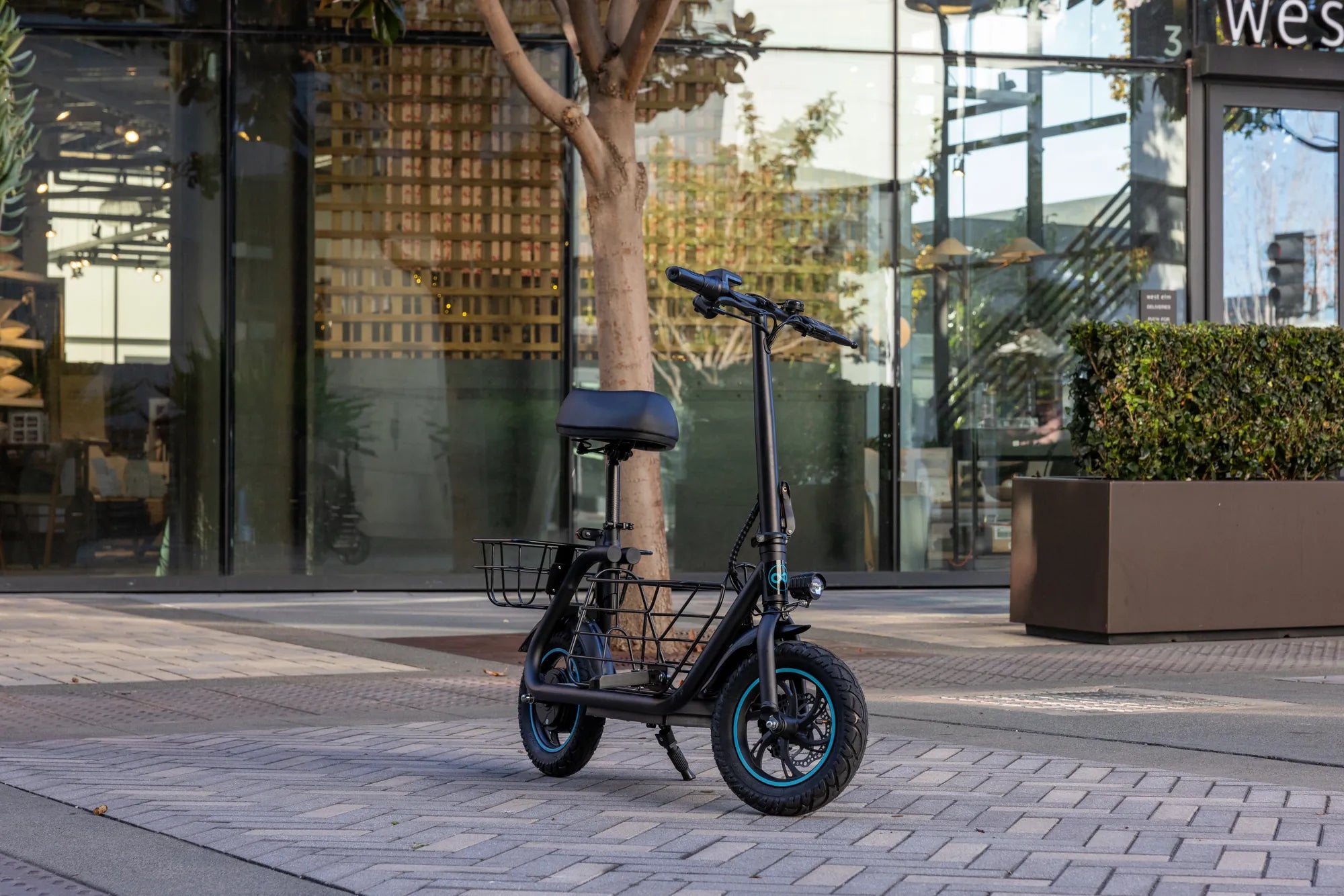
Introduction: Why the Electric Tricycle is Revolutionizing Urban Commuting
The modern electric tricycle, or e-trike, represents a fundamental shift in personal urban mobility. It directly addresses the limitations of two-wheeled electric vehicles by offering a stable, high-capacity, and accessible platform for daily travel. For commuters, parents, and seniors, the electric tricycle for urban commuting solves core problems: navigating congested streets safely, transporting goods or passengers without a car, and providing a low-barrier entry to electric cycling.
This vehicle category merges the assistive power of an e-bike with the inherent stability of a three-wheeled design. The result is a practical tool that enables car-light living. Leading brands like Gyroor, known for UL-certified batteries and robust designs in e-scooters and e-bikes, are now applying that engineering rigor to e-trike platforms designed for reliable, everyday use.
The Unbeatable Advantages of an E-Trike for City Life
Urban environments demand specific vehicle traits: maneuverability in traffic, resilience to potholes, and utility for daily tasks. The electric tricycle excels by providing a unique combination of stability, utility, and ease of use that two-wheelers cannot match. It is not merely a novelty but a logical evolution of the utility bicycle for the electric age.
The primary advantage is its transformative potential for short-trip logistics. Data from urban mobility studies suggest that a significant percentage of car trips under five miles are for errands or commuting—precisely the trips an e-trike is built to replace. By offering a stable, electrified cargo platform, it becomes a viable car alternative, reducing congestion and emissions.
Stability and Safety: Three Wheels Over Two
The three-point contact with the ground provides inherent mechanical stability that eliminates the need to balance at a standstill. This is critical in urban settings with frequent stops at traffic lights, stop signs, and in heavy pedestrian areas. The risk of tipping over during low-speed maneuvers or when loaded is drastically reduced.
This stability builds immense rider confidence, particularly for those who may be uneasy on traditional bicycles or e-scooters. It allows the rider to focus on traffic and navigation rather than balance. The design also provides superior braking stability, as weight transfer under hard braking is managed more predictably across three wheels compared to two.
Cargo and Passenger Capacity: Your Car Replacement
This is where the electric tricycle for urban commuting truly shines. Most models feature integrated large-volume cargo solutions. Front and rear baskets, lockable rear cargo boxes, and even flatbed designs can easily carry 100+ pounds of groceries, work gear, or parcels.
Many models are rated to carry a child passenger safely in a rear seat, effectively functioning as a school run or daycare vehicle. This cargo and passenger capability moves the e-trike from a personal transport device to a true household utility vehicle, directly displacing car trips for shopping and family logistics.
Accessibility and Ease of Use
The design philosophy of most e-trikes prioritizes accessibility. Low-step or step-through frames are standard, making mounting and dismounting easy for riders of all ages and mobility levels. There is no need to swing a leg over a high crossbar.
The stable platform is ideal for riders returning to cycling, those with balance concerns, or anyone seeking a less physically demanding yet active form of transport. The electric assist compensates for hills, headwinds, and heavy loads, making longer or more challenging trips feasible without excessive exertion.
Key Features to Look for in Your Urban Commuting E-Trike
Selecting the right model requires evaluating specifications against real-world urban demands. Not all e-trikes are built for daily, all-weather commuting. Key performance and build quality metrics separate casual recreational models from true urban workhorses.
A focus on motor torque, battery safety, and structural integrity is non-negotiable. The following breakdown provides a data-driven framework for comparison, ensuring your investment delivers reliable service over thousands of miles of city riding.
Motor Power and Hill Climbing Ability
Motor power, measured in watts (W), is less critical than torque, measured in Newton-meters (Nm), for urban use. Stop-and-go traffic and moderate inclines require strong low-end torque. A 500W to 750W geared hub motor or mid-drive motor is typically sufficient for most city terrains, providing enough power for grades up to 15-20%.
A mid-drive motor, which leverages the bicycle's gearing, often provides superior hill-climbing efficiency and a more natural riding feel compared to a hub motor. Test specifications should include maximum gradeability and the vehicle's performance under its maximum rated load, not just when ridden empty.
Battery Range and Charging: Beating Range Anxiety
Battery capacity, measured in Watt-hours (Wh), dictates range. For a reliable urban electric tricycle for urban commuting, a minimum of 500Wh is advisable. Real-world range is highly variable. A manufacturer's claim of 50 miles is often based on ideal conditions: low load, flat terrain, and minimal assist.
A practical estimate is 1-2 miles per 10Wh of battery capacity under moderate assist and average urban loads. Thus, a 500Wh battery may deliver 25-40 miles of real-world range. Charging time is also crucial; a 4-6 hour full charge is standard. Prioritize models with UL-certified battery packs, like those used by Gyroor, which undergo rigorous testing for safety and longevity over 500+ charge cycles.
Build Quality and Weather Resistance
The frame should be a robust aluminum alloy or steel, with a clearly stated maximum gross vehicle weight rating (e.g., 400-500 lbs including rider and cargo). Welds should be clean and consistent. The IP (Ingress Protection) rating is critical for a vehicle exposed to rain, puddles, and street spray.
An IPX5 rating, a standard for Gyroor's commuter vehicles, means the electrical components are protected against low-pressure water jets from any direction. This level of weather resistance is essential for year-round, all-weather reliability and protects your investment from premature failure.
Practical Commuter Features: Lights, Storage, and Comfort
Integrated lighting is a must for safety and legality. Look for a bright LED headlight, rear brake light, and turn signals. Ample, integrated storage—such as a large front basket and a lockable rear trunk—should be standard. Fenders are essential for wet-weather riding.
Comfort features include an adjustable, sprung saddle, ergonomic grips, and an adjustable stem or handlebar to fine-tune riding position. A clear, backlit display showing speed, battery level, and assist mode is crucial for ride management. A walk-assist mode is also valuable for maneuvering the loaded trike in tight spaces without riding.
Gyroor E-Trikes: Engineered for Confident, Everyday Urban Travel
Gyroor's approach to personal electric transport, built on a foundation of safety and durability in their e-scooters and e-bikes, translates directly to the e-trike category. Their design philosophy prioritizes the core needs of a daily urban commuter: unwavering safety, resilience against the elements, and long-term peace of mind.
By applying stringent standards like UL certification and IPX5 ratings as benchmarks, Gyroor aims to elevate the reliability expectations for the entire electric tricycle for urban commuting segment. This focus on verified safety and robust construction defines their value proposition for riders who depend on their vehicle daily.
UL-Certified Safety as Standard
UL 2271 or UL 2849 certification for the battery and electrical system is the most critical safety feature an e-trike can have. This independent certification means the battery pack, BMS (Battery Management System), and charger have been tested for electrical, mechanical, and environmental safety, significantly reducing fire risk.
Gyroor builds all its models with UL-certified battery packs, a non-negotiable standard that ensures safe charging in a home or apartment garage. This commitment provides a fundamental layer of protection that is often an optional or overlooked feature in lower-tier models, safeguarding both the rider and their property.
Built for the Real World: IPX5 Water Resistance
Commuting means encountering rain, wet streets, and morning dew. An IPX5 rating, which Gyroor incorporates into its commuter designs, guarantees that water sprayed from a nozzle (6.3mm) from any direction will not cause harmful ingress to the motor controller, display, or wiring connectors.
This engineering specification allows riders to commute confidently in inclement weather without fearing immediate damage to core electrical components. It is a definitive feature that separates a fai r-weather recreational vehicle from a true all-season daily driver, ensuring longevity and reducing maintenance issues caused by moisture.
Peace of Mind with Comprehensive Support
Beyond the hardware, support infrastructure is vital. Gyroor backs its e-trikes with a robust 1-year warranty covering the frame, motor, battery, and controller. This warranty reflects confidence in the product's durability. Coupled with accessible, US-based customer support, it ensures that riders have a direct path to assistance for troubleshooting or parts.
For a community of over 100,000 riders across North America and Europe, this support network is a key component of ownership. It transforms the e-trike from a disposable gadget into a dependable appliance for mobility, protected by a company that stands behind its products.
E-Trike vs. E-Bike vs. E-Scooter: Choosing Your Urban Workhorse
Selecting the right electric vehicle requires matching its strengths to your primary use case. The table below provides an objective comparison across key urban mobility parameters to help clarify the decision.
| Feature | Electric Tricycle | Electric Bike | Electric Scooter (Kick Scooter) |
|---|---|---|---|
| Primary Strength | Stability & Cargo Capacity | Speed & Range | Portability & Compactness |
| Stability at Low Speed/Stop | Excellent (No balance needed) | Good (Requires balance) | Fair (Requires balance, can be awkward) |
| Cargo/Passenger Ability | Excellent (Integrated large storage, child seats) | Good (With add-ons like panniers) | Poor (Very limited) |
| Footprint & Parking | Larger, requires more space | Standard bike parking | Very compact, can be carried indoors |
| Typical Urban Range | 25-40 miles | 30-60 miles | 15-25 miles |
| Ease of Use/Accessibility | Excellent (Low-step, easy mount) | Good | Good (But requires good balance) |
| Ideal User Profile | Shoppers, parents, seniors, utility-focused commuters | Fitness-oriented commuters, longer-distance riders | Last-mile commuters, apartment dwellers, mixed-mode travelers |
The electric tricycle for urban commuting is the undisputed champion for stability and utility. If your primary needs involve carrying heavy or bulky items, transporting a child, or you prioritize a confidence-inspiring, stable ride above all else, the e-trike is the optimal choice. It trades some portability and sportiness for unparalleled practical capability.
Frequently Asked Questions About Electric Tricycles
Do I need a license or insurance to ride an e-trike?
In most jurisdictions in the US and Canada, a low-speed electric bicycle or tricycle (with a motor under 750W and a maximum assisted speed of 20 mph) is classified similarly to a standard bicycle. No driver's license, vehicle registration, or insurance is typically required. However, local regulations vary, especially regarding helmet laws and where you can ride (bike lanes vs. roads). Always check your specific state, province, and municipal laws.
How do I secure and store an e-trike in an apartment building?
Security and storage are significant considerations due to an e-trike's size and value. Use a high-quality, heavy-duty U-lock or chain lock to secure the frame (not just a wheel) to a fixed, immovable object. If possible, store it in a locked, dedicated bike room or a private garage. For apartment storage, consider a ground-floor unit with patio access or negotiate with building management for secure indoor parking. Their size can make them difficult to bring into an elevator and standard apartment.
Can it handle steep hills and rough pavement?
Yes, but specifications matter. A model with a 750W motor and adequate torque, combined with a low gear range (if equipped with a mid-drive), can handle steep urban grades, albeit at reduced speed. The three-wheel design and often wider tires provide a stable and comfortable ride over rough pavement, potholes, and cracked concrete, offering a more planted feel than a two-wheeler. Always check the manufacturer's stated gradeability rating.
What is the true cost of ownership beyond the purchase price?
The initial purchase ($1,500-$3,500) is the main cost. Ongoing costs are relatively low but include: electricity for charging (negligible, roughly $0.10-$0.20 per full charge), periodic maintenance (brake pad replacements, tire changes, bearing service), and potential battery replacement after 3-5 years of heavy use (typically $400-$800). Compared to a car, insurance, fuel, parking, and depreciation costs are eliminated, leading to substantial long-term savings.
Are electric tricycles safe in traffic?
Their stability is a significant safety advantage, making them less prone to falls. To be safe in traffic, rider behavior is paramount. Use integrated lights day and night, wear a helmet, signal your intentions clearly, obey traffic laws, and assume you are not seen by drivers. Choose routes with bike lanes or slower-speed streets when possible. The vehicle's predictable handling and ability to maintain a steady line are assets in traffic flow.
Conclusion: Embracing a More Stable, Capable Commute
The electric tricycle for urban commuting is more than a niche vehicle; it is a pragmatic solution for reimagining short-trip transportation. By delivering unmatched stability, legitimate cargo and passenger capacity, and accessible operation, it empowers a wider range of people to choose an active, electric alternative to the car.
The key to a satisfying long-term investment lies in prioritizing verified safety standards like UL certification, genuine all-weather capability with IPX5 or higher ratings, and strong warranty support from established brands. Assess your primary needs: if carrying loads, running errands, or riding with confidence is your goal, the e-trike stands alone as the optimal urban electric vehicle. Explore how a thoughtfully engineered e-trike can transform your daily travel.
Ready to experience the stability and utility of a premium electric tricycle? Browse the full Gyroor collection, featuring UL-certified, weather-resistant models built for the demands of daily city life, at gyroorboard.com.
Which Ebike Is the Best: The 2024 Guide to Finding Your Perfect Match
What's the Best 450 Dirt Bike? The 2024 Ultimate Buyer's Guide