



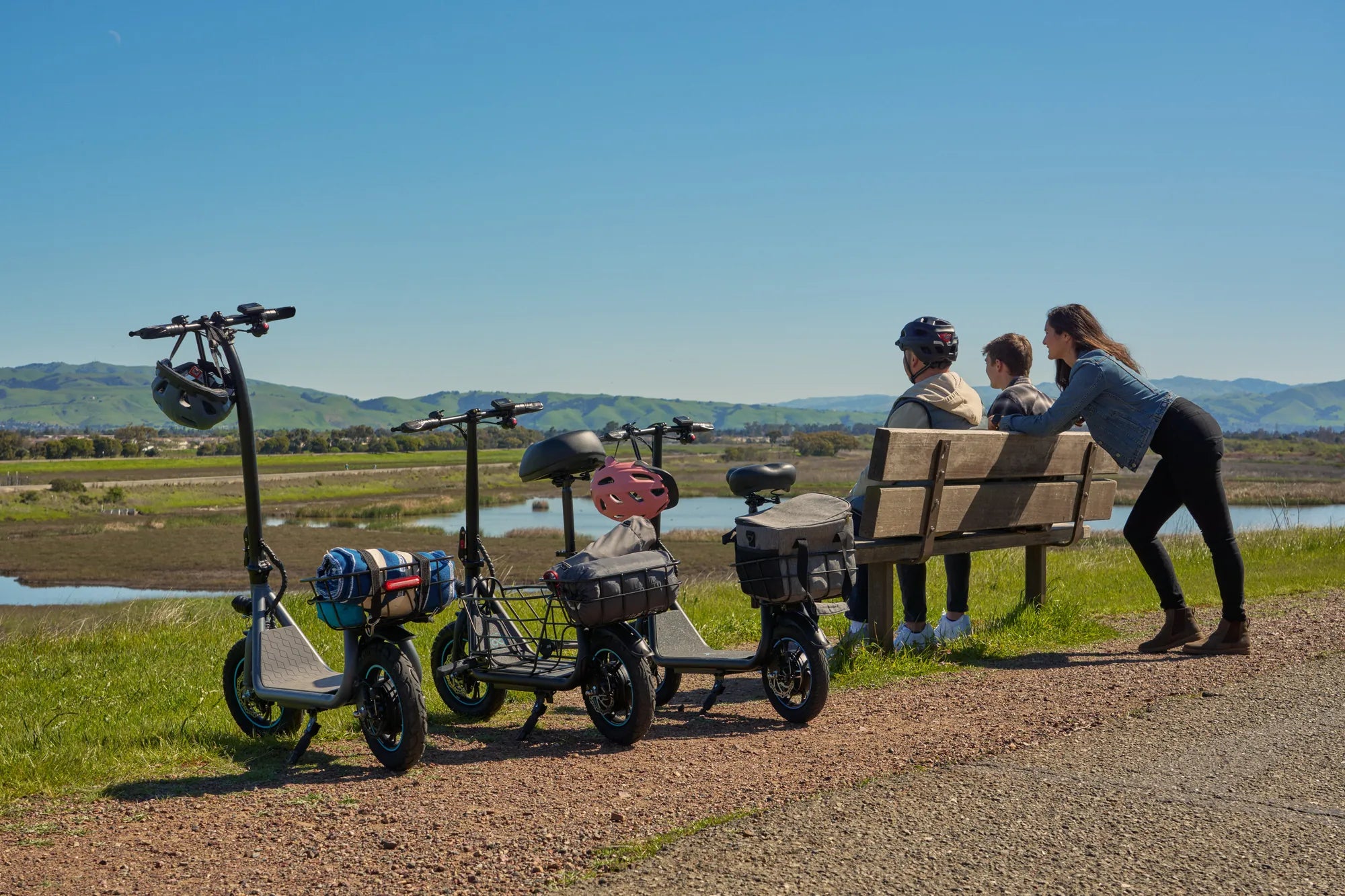
Finding Your Perfect E-Bike Match
Asking which ebike is the best is like asking which vehicle is the best—it completely depends on where you’re going, who’s riding, and what you need to carry. The truth is, there is no single "best" e-bike for everyone. The market has exploded with options tailored for commuters, mountain trail adventurers, cargo-hauling parents, and casual cruisers.
Your perfect e-bike is the one that disappears beneath you, seamlessly amplifying your pedaling to match your specific lifestyle and terrain. This guide is designed to cut through the marketing noise. We will provide a structured, data-driven framework to help you identify the key decision factors, from motor type and battery safety to intended use and budget.
By the end, you'll have a clear checklist to evaluate any model. You'll understand why features like UL certification for batteries are non-negotiable for safety and how to ensure your investment delivers long-term value and joy. Let's find which ebike is the best for you.
Key Factors to Consider Before You Buy
Purchasing an e-bike is a significant investment. To avoid buyer's remorse, start by honestly assessing your personal needs and constraints. Rushing into a purchase based on a flashy ad or a single spec sheet is a recipe for disappointment.
The right e-bike should feel like a natural extension of your daily life, not a complicated piece of tech you have to constantly manage. We'll break down the primary considerations into three core areas: how you'll use it, what you can spend, and the technical specs that translate to real-world performance.
Defining Your Primary Use Case
Your riding purpose is the most critical filter. An e-bike built for rugged singletrack will be overkill and uncomfortable for a smooth city commute, and vice versa. Clearly defining your use case narrows the field instantly.
Commuter/City: Designed for pavement, stop-and-go traffic, and practicality. Key features include an upright riding position, integrated lights and fenders, a rear rack, and moderate power for consistent assist. Portability via a folding mechanism can be a major plus for mixed-mode transit.
Cruiser/Comfort: Focused on leisurely rides on paved paths or boardwalks. These prioritize a relaxed, feet-forward seating position, wide cushioned saddles, and smooth, stable handling. They often feature swept-back handlebars and lower step-through frames for easy mounting.
Mountain (eMTB): Built for off-road trails with full suspension or robust hardtail frames, wide, knobby tires for traction, and powerful hydraulic disc brakes. The motor must provide high torque for climbing and be durable against impacts and mud.
Cargo/Utility: Engineered to carry heavy loads, whether groceries, children, or gear. They have elongated wheelbases for stability, reinforced frames, and massive carrying capacity via front or rear platforms. Motor power and battery capacity are paramount.
Setting a Realistic Budget
E-bike prices range from under $1,000 to over $10,000. Understanding what you get at each tier prevents you from overpaying for unneeded features or, more dangerously, underpaying for compromised safety and reliability.
Budget Tier ($1,000 - $2,000): At this level, you'll find capable commuters and cruisers with basic components. Expect hub-drive motors, mechanical disc brakes, and entry-level drivetrains. Scrutinize battery certification closely; this is where safety corners are sometimes cut.
Mid-Range Tier ($2,000 - $4,000): The sweet spot for most serious riders. This range typically includes better mid-drive or premium hub motors, hydraulic disc brakes, higher-quality batteries with known cell brands, and more robust frames from reputable manufacturers.
Premium Tier ($4,000+): Here you pay for top-tier components from brands like Shimano, SRAM, or Bosch, ultra-lightweight frames (often carbon fiber), the latest motor technology with sophisticated torque sensing, and exceptional build quality and warranty support.
Understanding Motor & Battery Specifications
Motor and battery specs are often shrouded in jargon. Let's decode them into practical implications for your ride.
Motor Types: Hub motors (in the wheel) are common, affordable, and offer simple direct power. Mid-drive motors (at the cranks) leverage the bike's gears, providing more natural pedaling feel, better hill-climbing efficiency, and balanced weight distribution, but at a higher cost.
Wattage & Torque: Wattage (e.g., 250W, 750W) indicates power potential, but torque (measured in Newton-meters, Nm) is what you feel when accelerating or climbing. A high-torque motor (e.g., 80+ Nm) is crucial for hills and cargo.
Battery Fundamentals: Voltage (V) and Amp-hours (Ah) together determine watt-hours (Wh = V * Ah), the true measure of capacity. A 48V, 15Ah battery is a 720Wh pack. Larger Wh generally means longer range. The most critical factor is battery safety—insist on UL 2271 or UL 2849 certification to mitigate fire risk.
How Gyroor E-Bikes Stack Up: A Brand Overview
In a crowded market, Gyroor has established itself as a leader in reliable, value-driven electric mobility, trusted by over 100,000 riders across North America and Europe. The brand's philosophy centers on delivering robust performance without compromising on the foundational pillars of safety and durability.
Gyroor's approach is not about chasing the highest top speed or the most extreme torque figure. Instead, it focuses on creating e-bikes that offer consistent, dependable performance for everyday riders. This is achieved through rigorous testing, quality component selection, and a customer-centric warranty policy.
The product lineup is strategically designed to cover the most popular use cases, from urban commuting to off-road exploration. Each model is built with an understanding of the real-world conditions riders face, be it rain, potholes, or the need for secure storage. This practical engineering makes Gyroor a compelling contender when you're determining which ebike is the best for daily reliability.
Gyroor's Commitment to Safety & Durability
This commitment is most evident in two core technologies applied across their range. First, every Gyroor e-bike uses UL-certified battery packs, tested for over 500 charge cycles. This isn't just a spec; it's a peace-of-mind guarantee that the most critical and potentially hazardous component meets stringent independent safety standards.
Second, an IPX5 water-resistant rating is standard. This means the electrical components can withstand water jets from any direction, making the bike capable of handling rainy commutes or wet roads without fear of short-circuiting. This combination of certified battery safety and weather resistance forms a bedrock of reliability that protects both the rider and the investment.
This engineering philosophy extends to a comprehensive 1-year warranty on the frame, motor, battery, and controller. It reflects a confidence in the product's longevity and ensures support is available, a crucial consideration for long-term ownership satisfaction.
Matching Gyroor Models to Rider Profiles
Gyroor's lineup directly addresses the primary use cases we defined earlier. For the urban commuter or college student, their folding e-bike models offer a perfect blend of portability and performance, with compact storage and adequate power for city hills.
For riders seeking comfort and stability on varied terrain, including light trails or beach paths, Gyroor's fat-tire e-bikes are ideal. The wide tires provide immense cushioning and traction, while the powerful motor handles sand or gravel with ease. This makes the question of which ebike is the best for recreational exploring easy to answer.
Their classic commuter-style e-bikes, often featuring step-through frames, are tailored for everyday errands and casual riding, emphasizing comfort, easy mounting, and integrated practical features like racks. By aligning models with specific rider intents, Gyroor simplifies the selection process.
Beyond the Brand: Essential Features Comparison Framework
Whether considering Gyroor or another brand, you need a neutral checklist to compare models apples-to-apples. The following table and list break down the components that most significantly impact ride quality, safety, and cost.
| Feature | Option A (Common) | Option B (Premium) | Why It Matters |
|---|---|---|---|
| Frame Material | Aluminum Alloy | Carbon Fiber | Aluminum offers great strength-to-weight and value. Carbon is lighter and absorbs vibration but is costly. |
| Brake Type | Mechanical Disc | Hydraulic Disc | Hydraulic offers superior stopping power, less hand fatigue, and better modulation in all conditions. |
| Motor Position | Hub-Drive (Rear/Front) | Mid-Drive | Mid-drive offers better weight balance, efficiency on hills, and natural pedal feel by using bike's gears. |
| Drivetrain | 7-Speed Derailleur | Internally Geared Hub / Belt Drive | Internal hubs and belt drives require far less maintenance, are cleaner, and are more durable for commuting. |
| Tire Size | 27.5" x 2.1" | 26" x 4.0" (Fat Tire) | Standard tires are efficient on pavement. Fat tires provide unmatched comfort, traction on soft surfaces, and stability. |
| Display & Controls | Basic LCD | Smartphone-Integrated Bluetooth | Basic displays show speed/battery. Smart systems offer navigation, ride tracking, and anti-theft features. |
Additional Critical Components:
- Suspension: A front suspension fork smooths out bumps. Full suspension (front and rear) is essential for serious mountain biking but adds weight and cost.
- Integrated Accessories: Built-in lights, fenders, and rear racks add significant value and convenience for commuters, as opposed to aftermarket add-ons.
- Weight Capacity: Always check the manufacturer's stated maximum weight capacity (rider + cargo) to ensure the bike is rated for your needs.
The Test Ride Checklist
Never buy an e-bike without a test ride. It's the only way to assess the intangible "feel." Use this checklist during your ride.
First, assess the fit and comfort. Is the riding position natural? Can you easily reach the ground? Is the saddle comfortable? Next, test the motor engagement. Does it respond smoothly and predictably when you start pedaling, or is it jerky? Try different assist levels.
Find a hill or incline. Does the motor provide adequate power to climb without excessive strain? Test the brakes at a safe, low speed. Do they stop the bike confidently and smoothly? Finally, check the handling. Does the bike feel stable at speed and manageable at low speeds or when maneuvering?
Making the Final Decision & Ensuring Long-Term Value
You've defined your needs, understood the specs, and possibly test-ridden a few models. Now, synthesize this information. The best e-bike for you is the one that scores highest on your personal priority matrix: it fits your use case, falls within your budget, has the safety features you require, and felt good to ride.
At this stage, shift your focus from just the bike to the ecosystem around it. Investigate the brand's customer service reputation and the warranty details. A 1-year comprehensive warranty, like Gyroor's, is a strong indicator of quality. Check the availability of replacement parts, especially for proprietary components like battery packs.
Consider the total cost of ownership. A slightly more expensive bike with a UL-certified battery and hydraulic brakes may save you money on maintenance and replacements in the long run. Your decision should balance upfront cost with projected reliability and support, ensuring your e-bike remains a valued asset for years.
Frequently Asked Questions (FAQ)
Q1: Do I need a license or insurance to ride an e-bike?
A: In most of the US and Canada, Class 1 and 2 e-bikes (max 20 mph with motor assist) are regulated like regular bicycles and do not require a license, registration, or insurance. Local laws vary, so always check your municipal and state/provincial regulations.
Q2: How much does it cost to maintain an e-bike annually?
A: Expect to spend $150-$300 per year on routine maintenance (brake pad replacements, tire changes, chain lubrication, and annual tune-ups). This is less than a car but more than a traditional bike due to the electrical system checks.
Q3: How can I prevent my e-bike from being stolen?
A: Use a high-quality U-lock or heavy-duty chain lock, always locking the frame and a wheel to a fixed object. Remove the battery if possible. Consider a secondary cable lock for the other wheel. GPS trackers integrated into the frame offer the best recovery chance.
Q4: What's the real-world range I can expect from a charge?
A>Manufacturer ranges are optimistic. For a realistic estimate, take the battery's watt-hour (Wh) rating and divide by 20 for aggressive riding with lots of hills and throttle use, or divide by 15 for moderate pedal-assist riding. A 500Wh battery typically yields 25-33 miles in real-world conditions.
Q5: Can I ride an e-bike in the rain?
A>Yes, if it has an appropriate water-resistance rating (look for IPX4 or higher, like Gyroor's IPX5). Avoid deep puddles and submerging the bike. Dry and lubricate the chain after wet rides to prevent rust. The electrical components on a properly rated bike are sealed against rain.
Your Best E-Bike Awaits
The journey to find which ebike is the best ends not with a universal answer, but with a personalized one. By methodically evaluating your use case, budget, and the essential features that guarantee safety and durability, you transform a potentially overwhelming decision into a clear, confident choice.
Remember that the best e-bike is the one you'll ride consistently, the one that feels reliable in all conditions, and the one supported by a brand that stands behind its product. Prioritizing certified battery safety, weather-resistant construction, and a solid warranty isn't just smart shopping—it's an investment in years of enjoyable, worry-free riding.
Your perfect electric companion is out there, designed to turn errands into adventures and commutes into joys. Start your search with confidence, using the framework from this guide. To explore a range of e-bikes built on a foundation of UL-certified safety, IPX5 water resistance, and proven reliability, browse the full Gyroor collection at gyroorboard.com.
Ebike Motor Replacement: The Complete Guide to Diagnosing, Costing, and Installing
Electric Tricycle for Urban Commuting: The Ultimate Guide to Stable, Practical Transport