



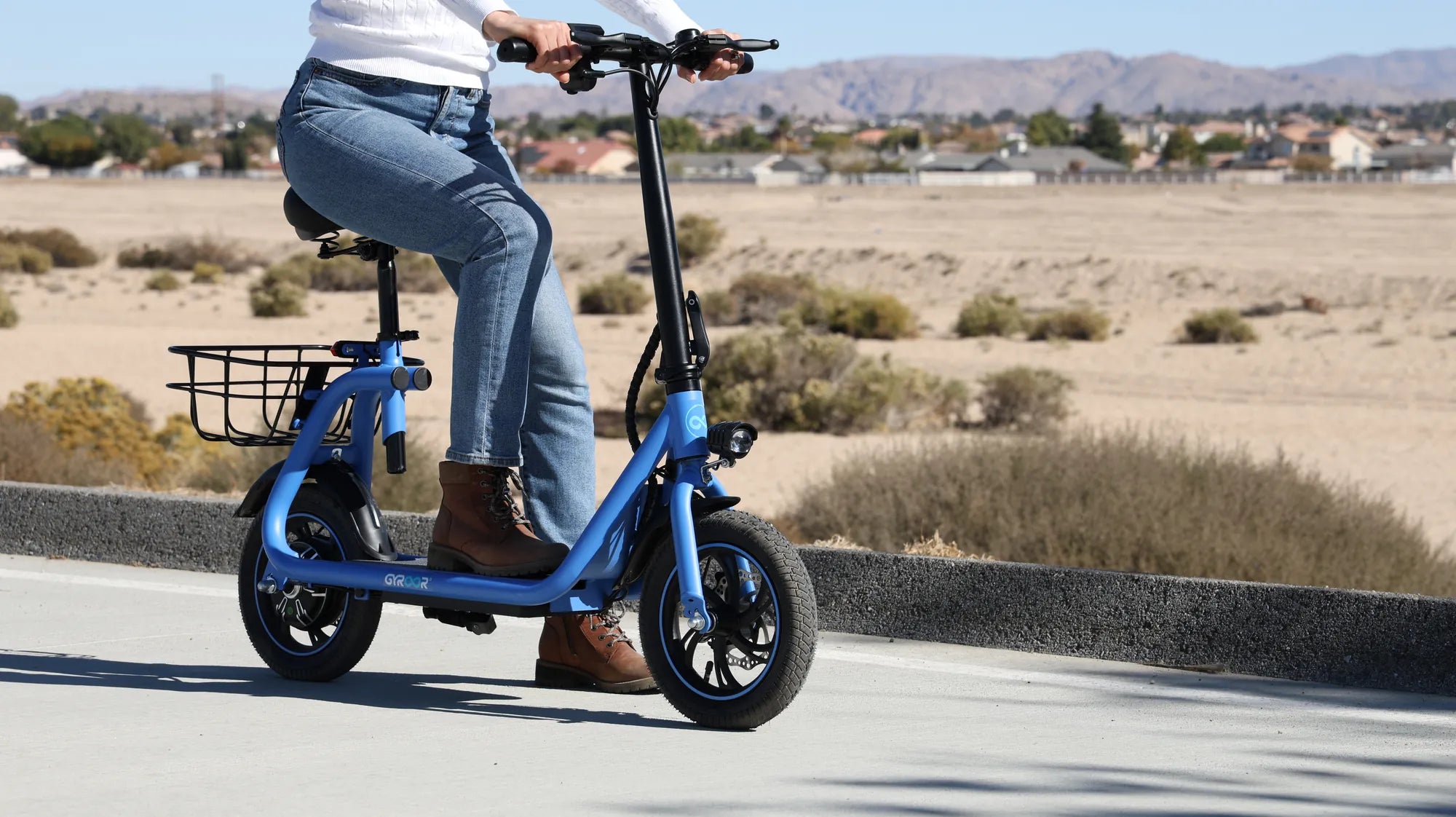
Introduction: Understanding the Lifespan of Your Electric Scooter
How long can electric scooters last? The answer isn't a simple number. A scooter's functional life is a complex equation determined by build quality, usage patterns, maintenance, and environmental factors. This comprehensive guide moves beyond marketing claims to provide a data-driven framework for understanding and maximizing your electric scooter's lifespan.
We will analyze the key components that wear out, from the battery to the brakes. You'll get realistic estimates for total mileage, years of service, and the cost of ownership over time. For brands committed to longevity, like Gyroor—a leading electric scooter and e-bike brand trusted by over 100,000 riders across North America and Europe—features such as UL-certified batteries and IPX5 water resistance are not just specs but direct investments in durability.
The Core Factors Determining Electric Scooter Longevity
To accurately predict how long can electric scooters last, you must examine the interplay of several critical factors. These elements determine whether a scooter becomes a reliable multi-year companion or a short-lived disappointment.
Think of lifespan in two dimensions: the battery's electrochemical life and the scooter's mechanical and structural integrity. Both must be considered for a complete picture.
Battery Life: The Heart of the Matter
The battery is the scooter's most expensive consumable part. Most modern scooters use lithium-ion cells, rated for a specific number of charge cycles. A "cycle" is defined as using 100% of the battery's capacity, which can be spread over multiple partial charges.
Quality varies drastically. Premium, name-brand cells from manufacturers like LG or Samsung, often found in UL-certified packs, typically retain over 80% of their original capacity for 500-800 cycles. Lower-quality, unbranded cells may degrade significantly after only 300 cycles. A robust Battery Management System (BMS), which Gyroor integrates, is essential for protecting cells from overcharge, deep discharge, and overheating—the main enemies of battery life.
Build Quality and Component Durability
The scooter's physical construction sets its durability ceiling. The frame material—typically aluminum alloy or steel—must withstand constant vibration and impacts. A welded aluminum frame is generally lighter and more rust-resistant than steel.
Component quality is equally vital. The motor's bearings and windings, the electronic controller's heat dissipation, the brake calipers and pads, and the tire compound all have finite lifespans. Scooters built with automotive-grade connectors, sealed controllers, and reinforced folding mechanisms inherently last longer.
Riding Conditions and Environmental Stress
How and where you ride is a major lifespan determinant. Consistent riding on rough, potholed roads transmits more shock to the frame, wheels, and electronics than smooth pavement. Rider weight and frequent carrying of cargo increase stress on the motor, battery, and suspension.
Environmental exposure is a silent killer. Water ingress can corrode electronics and connectors. Dust and dirt accelerate wear on moving parts. Extreme heat accelerates battery degradation, while extreme cold temporarily reduces range and can make plastics brittle. This is why an official IP rating for water and dust resistance, such as Gyroor's IPX5 rating, is a critical spec for real-world longevity.
Breaking Down the Numbers: Mileage, Years, and Cycles
Let's translate these factors into tangible numbers. While individual results vary, data from user reports and manufacturer testing establishes clear benchmarks for how long can electric scooters last.
Expected Total Mileage Range
Over its entire life, from new to end-of-service, a quality electric scooter can deliver between 1,500 and 5,000+ miles. This wide range reflects the quality spectrum.
Entry-level or toy-grade scooters may reach only 1,000-1,500 miles before major component failure. Mid-tier commuter models, with better components, commonly achieve 2,000-3,500 miles. High-performance or premium commuter scooters built with dual motors, superior batteries, and robust frames can reliably surpass 4,000-5,000 miles with proper care.
Average Functional Lifespan in Years
In terms of calendar years, a well-maintained scooter used for daily commuting (approx. 5-10 miles per day) can provide 3-5 years of reliable service. For occasional or recreational use (a few times per month), that lifespan can extend to 5+ years.
The "functional" lifespan ends when repair costs exceed the scooter's value or key components like the frame become unsafe. Regular maintenance is the key to reaching the upper end of this range.
Battery Lifespan and Replacement Timeline
Battery lifespan is best measured in charge cycles, not years. A scooter used 5 days a week might consume one full cycle per week, totaling about 50 cycles per year.
A battery with a 500-cycle lifespan would, therefore, last about 10 years in this scenario before hitting 80% capacity. However, calendar aging also occurs; batteries slowly degrade even when not used. Practically, most riders can expect 2-4 years before noticing a significant (20-30%) reduction in range. Signs of a failing battery include drastically reduced range, the scooter dying unexpectedly above 0% charge, or the battery pack swelling.
The Maintenance Multiplier: How Care Extends Lifespan
Proactive maintenance is the single greatest factor under your control for extending how long your electric scooter can last. A neglected premium scooter will fail sooner than a meticulously cared-for budget model.
Battery Care Best Practices
Treating the battery well pays the highest longevity dividend. Avoid routinely draining it to 0% or charging to 100% for storage. The ideal long-term storage charge is 40-60%. Let the battery cool to ambient temperature after a long ride before charging.
Always use the manufacturer's provided charger. Off-brand chargers with incorrect voltage or poor current regulation can damage the BMS and cells. For seasonal storage, charge (or partially charge) the battery every 2-3 months.
Routine Mechanical and Electrical Checks
Establish a simple pre-ride checklist. Inspect tire pressure weekly; under-inflated tires increase rolling resistance, strain the motor, and risk pinch flats. Check that all bolts, especially around the folding mechanism and stem, are tight.
Listen for new noises from the motor or wheels. Clean the scooter regularly with a damp cloth, avoiding high-pressure water jets even on water-resistant models. Keep the brake disc and calipers clean for optimal stopping power and pad life.
Knowing When to Seek Professional Service
Don't ignore warning signs. Persistent electrical issues (error codes, cutting out), significant wobbles in the wheel or stem, grinding sounds from the motor, or brake failure require professional diagnosis. Attempting complex repairs without expertise can cause safety hazards and void warranties.
Using authorized service channels ensures genuine replacement parts and technician expertise. This preserves the scooter's integrity and safety over the long term.
How Gyroor's Engineering Prioritizes Longevity
Brand philosophy directly influences product lifespan. Gyroor designs its scooters with durability as a core principle, integrating features that directly address common failure points.
The UL-Certified Battery Advantage
Gyroor's commitment to using UL-certified battery packs is a major differentiator. UL certification involves rigorous testing for electrical, mechanical, and environmental safety. This means the cells are high-quality, the BMS is sophisticated, and the pack construction prevents internal short circuits.
In practice, this translates to more consistent performance over more charge cycles and a drastically reduced risk of premature failure or safety incidents. It's a foundational investment in the scooter's core lifespan.
IPX5 Water Resistance: Real-World Durability
An IPX5 rating means the scooter's electronics can withstand low-pressure water jets from any direction. For commuters, this is the difference between a scooter that survives a sudden downpour and one that suffers corrosion and electrical shorts.
This protection extends the life of the controller, display, wiring harness, and motor connections by shielding them from moisture and road spray, common causes of intermittent faults and failures.
Warranty and Support: The Long-Term Safety Net
Gyroor's 1-year comprehensive warranty provides a clear commitment to product reliability. More importantly, it ensures access to genuine parts and technical support. Being able to replace a worn throttle or faulty controller with an OEM part, rather than a questionable generic, maintains the scooter's original performance and safety profile for years.
Lifespan Comparison: Key Scooter Categories
Not all scooters are built for the same duty cycle. This table compares general lifespan expectations across different categories, illustrating how intended use and build quality correlate with durability.
| Scooter Category | Typical Build Focus | Expected Total Mileage | Realistic Service Life (Years) | Primary Lifespan Limiters |
|---|---|---|---|---|
| Lightweight / Last-Mile | Portability, low weight | 1,000 - 2,000 mi | 2-3 years | Smaller battery cycles, lighter-duty motor, simpler construction |
| Commuter / Mid-Range | Range, comfort, reliability | 2,500 - 4,000 mi | 3-5 years | Battery degradation, tire wear, brake maintenance |
| Performance / Off-Road | Power, suspension, ruggedness | 3,500 - 5,500+ mi | 4-6 years | Suspension component wear, high-power motor stress, physical impacts |
| Premium / Max-Range | Advanced tech, premium materials, max durability | 4,000 - 6,000+ mi | 5+ years | Ultimate limit is battery replacement cost; frame and core electronics are very durable |
Models like those in Gyroor's commuter and performance lineups are engineered to meet or exceed the benchmarks in their respective categories, with a focus on the higher end of the mileage and year ranges through quality components.
Cost of Ownership Over Time: The Longevity Calculation
Understanding how long can electric scooters last is essential for calculating true cost of ownership. The initial purchase price is just the first part of the equation.
Factoring in lifespan reveals value. A $500 scooter that lasts 1,500 miles costs about $0.33 per mile (excluding electricity). A $1,200 scooter that lasts 4,800 miles costs $0.25 per mile. The higher-quality scooter often has a lower cost per mile and per year of service.
Maintenance costs are relatively low but essential. Budget for periodic tire replacements ($20-$50 each), brake pads ($15-$30), and eventual battery replacement ($150-$400). A scooter with a modular design and good parts availability, like Gyroor's models, keeps long-term maintenance feasible and affordable.
Frequently Asked Questions (FAQ)
What is the single biggest thing I can do to make my scooter last longer?
Proper battery care is paramount. Avoid extreme states of charge, use the correct charger, and store it properly. This protects the most expensive and degradation-prone component.
Can I replace the battery when it dies, and how much does it cost?
Yes, on most quality scooters the battery is a replaceable component. Cost varies by capacity, typically ranging from $150 to $400. Always purchase a genuine replacement battery from the manufacturer or an authorized dealer to ensure compatibility and safety.
How does rider weight affect scooter lifespan?
Rider weight significantly impacts wear. Consistently riding at or above the scooter's maximum weight limit stresses the motor, battery, brakes, tires, and frame more quickly, potentially reducing total lifespan by 20-30%.
Is it worth repairing an older scooter, or should I just buy a new one?
If the frame is solid and the repair cost (e.g., a new battery or motor) is less than 50% of the price of a comparable new model, repair is usually worthwhile. It's also more sustainable. If the frame is cracked or multiple major systems are failing, replacement is likely the better option.
Do electric scooters have a "mileage shelf life" even if not used?
Yes, primarily due to battery calendar aging. Lithium-ion batteries degrade slowly over time, even when sitting on a shelf. After 3-5 years in storage, a new battery may have lost a notable portion of its original capacity. Always check the manufacture date of a scooter or battery before purchasing.
Investing in Long-Term Value and Reliability
The question of how long can electric scooters last is ultimately answered by the synergy of intelligent engineering and conscientious ownership. Choosing a scooter built with longevity in mind—featuring certified batteries, robust water resistance, and a solid warranty—provides a durable foundation. Pairing that with regular maintenance and proper battery care unlocks its full potential lifespan.
View your electric scooter not as a disposable gadget but as a legitimate transport solution. By investing in quality and committing to care, you can ensure thousands of reliable miles. For a range of scooters designed from the ground up for durability and backed by comprehensive support, explore the engineering behind long-lasting electric mobility.
Ready to invest in a scooter built to last? Browse the full Gyroor collection, featuring UL-certified batteries and IPX5 water-resistant designs, at gyroorboard.com.
Best Electric Scooters Under $200 2025: Affordable Urban Mobility
Popular Electric Scooters India 2025: The Future of Urban Mobility