



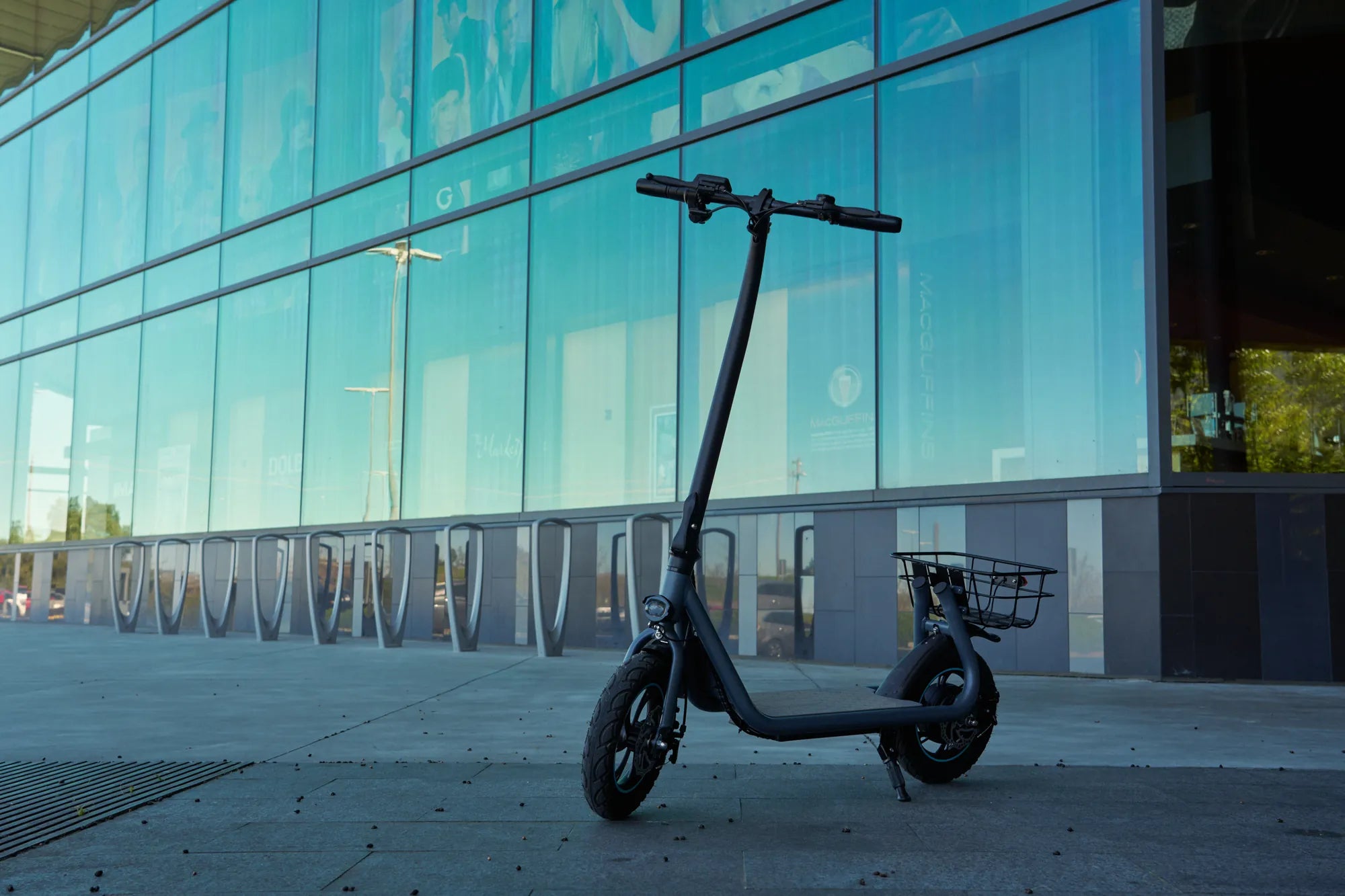
Introduction: The Rise of Electric Scooters in India's Urban Landscape
India's cities are at a mobility crossroads. With relentless urbanization, crippling traffic congestion, and severe air quality challenges, the need for efficient, sustainable personal transport has never been more urgent. Electric scooters have emerged as a pivotal solution, redefining last-mile and intra-city connectivity. This article delves into the landscape of Popular Electric Scooters India 2025: The Future of Urban Mobility, moving beyond hype to provide a factual analysis of market trends, critical purchase factors, and the evolving ecosystem that will define the next generation of urban transport.
You will learn what truly matters when selecting an e-scooter for Indian conditions, from battery safety in extreme heat to navigating monsoon roads. We will analyze the technological shifts towards smart connectivity and advanced battery systems. Furthermore, we will examine the practical economics of ownership, comparing it directly with conventional petrol scooters. The future of urban mobility in India is electric, two-wheeled, and intelligent—understanding this landscape is key to making an informed choice.
The 2025 Indian E-Scooter Buyer's Checklist: Beyond Just Price
The initial purchase price is just one component of the e-scooter ownership equation. For 2025, informed Indian buyers must evaluate a holistic set of criteria that ensure long-term satisfaction, safety, and value. The focus has shifted from mere affordability to total cost of ownership, reliability, and feature sets that enhance daily utility.
A myopic view on upfront cost can lead to higher expenses later through frequent repairs, poor battery life, and inadequate after-sales support. The market is maturing, and consumers are prioritizing brands that offer transparency, robust engineering, and peace of mind. This checklist serves as a foundational guide to navigate the increasingly crowded and sophisticated market for popular electric scooters in India 2025.
Performance & Range: Matching Your Daily Commute
Manufacturer-claimed range figures are often derived under ideal laboratory conditions. The real-world range in India is impacted by factors like stop-start traffic, rider weight, road inclines, and frequent use of headlights. A scooter claiming a 70 km range might deliver 45-55 km in typical urban conditions.
For most urban commuters, a practical real-world range of 40-80 km per charge is sufficient. Assess your daily travel distance and add a 30-40% buffer for detours and battery degradation over time. Performance isn't just about top speed; consider torque and acceleration, which are crucial for safely merging into fast-moving traffic and navigating congested roads.
Safety & Certification: Non-Negotiables for Indian Roads
Indian road conditions demand uncompromising safety standards. The battery is the heart of the scooter and its greatest potential hazard if poorly made. Look for certifications like AIS 156 (India's specific standard for EV safety) or global standards like UL 2271, which test for electrical, mechanical, and thermal safety, preventing fires from thermal runaway.
Build quality extends to the frame, suspension, and braking systems. A combination of disc brakes (front) and drum brakes (rear), often with Combined Braking System (CBS) or even ABS on higher-end models, is essential for controlled stops on unpredictable surfaces. Bright LED lighting and effective reflectors are vital for visibility during early mornings, late nights, and in poor weather.
After-Sales & Warranty: Ensuring Long-Term Peace of Mind
The strength of a brand's after-sales network is arguably more important than the scooter itself for long-term ownership. Before purchasing, verify the service center proximity to your location and inquire about spare parts availability and typical turnaround times for repairs.
A comprehensive warranty is a direct indicator of manufacturer confidence. Scrutinize the warranty document: it should clearly cover the battery pack (for a defined number of years/charge cycles), the motor, and the controller separately. A strong warranty, like the 1-year comprehensive coverage offered by global brands such as Gyroor, significantly reduces long-term financial risk and protects your investment.
Key Trends Shaping India's E-Scooter Market in 2025
The Indian electric scooter market is undergoing rapid technological evolution. The popular electric scooters India 2025 will be defined not just by electrification, but by digital integration and user-centric innovation. These trends are responding directly to consumer demands for greater convenience, intelligence, and connectivity in their daily commute.
From software-defined features to new energy solutions, these advancements are making e-scooters smarter, more adaptable, and more integrated into the user's digital life. The following trends are setting the benchmark for what consumers will expect as standard in the coming year.
Smart Connectivity & App Integration
The modern e-scooter is becoming a connected device. Smartphone apps are now central to the ownership experience, offering features like real-time GPS tracking, detailed ride statistics (route, speed, battery consumption), and geo-fencing alerts. These apps allow for remote battery status checks, firmware updates (Over-The-Air), and anti-theft alarms that notify the owner if the scooter is moved.
This connectivity transforms the scooter from a simple vehicle into a data-rich mobility platform. It enables predictive maintenance alerts, enhances security, and provides users with insights to optimize their riding habits for better range and efficiency.
Advanced Battery Tech & Swapping Networks
Battery anxiety remains a key adoption barrier. The response is twofold: improved battery technology and alternative energy solutions. We are seeing a gradual shift towards batteries with higher energy density (offering more range in the same size) and support for slightly faster charging, though safety limits charging speed to protect battery longevity.
Concurrently, battery swapping networks are expanding, particularly for commercial fleets and in dense urban areas. This model, popularized by several Indian startups, offers a "refuel" in minutes, solving the problem for users without access to convenient overnight charging. It decouples battery cost from the vehicle and can mitigate concerns about long-term battery degradation.
Design Evolution: Balancing Style and Practicality
Design is moving beyond utilitarian looks to embrace style without compromising function. Ergonomics are being tailored for diverse Indian body types, with optimized seat height and footboard space. The most significant practical evolution is in storage capacity.
Generous under-seat storage, capable of holding a full-face helmet, is becoming a highly sought-after feature. Designs are also incorporating more rugged elements to convey durability, while using premium materials and finishes in touchpoints like the handlebar and seat to elevate the perceived quality and riding experience.
Spotlight on Reliability: Why Certifications and Build Quality Matter
In a market flooded with options, long-term reliability becomes the ultimate differentiator. This is where global engineering standards, applied to Indian conditions, set a crucial benchmark. Brands that invest in certified components and robust construction are defining the reliability standards for popular electric scooters in India 2025.
For a brand like Gyroor, with over 100,000 riders across North America and Europe, this focus on verified safety and durability is core. Their approach highlights features that should be considered essential, not premium, for the demanding Indian environment.
The Importance of UL-Certified Batteries for Indian Climates
India's extreme summer temperatures, where ambient heat can exceed 45°C, pose a severe challenge to lithium-ion batteries. UL certification (or its Indian equivalent, AIS 156) involves rigorous stress testing for thermal and electrical stability.
This certification ensures the battery management system (BMS) is sophisticated enough to prevent overheating, overcharging, and short circuits. It is a critical safeguard against thermal runaway—a chain reaction leading to fire—directly addressing a top consumer safety concern and ensuring the battery pack's longevity through hundreds of charge cycles.
IPX5 Water Resistance: Ready for Monsoons and Dust
A high Ingress Protection (IP) rating is non-negotiable. An IPX5 rating means the scooter's electrical components are protected against low-pressure water jets from any direction, making it resilient against heavy monsoon rains, road spray, and puddle splashes.
This level of sealing also protects against dust, which is ubiquitous in many Indian cities. Without proper protection, dust and water ingress can lead to corrosion, electrical failures, and premature motor wear, resulting in costly repairs and downtime. It is a fundamental feature for all-weather, all-road reliability.
The Value of a Comprehensive Warranty
A transparent and extensive warranty is a contract of confidence from the manufacturer. It shifts long-term risk from the buyer to the brand. A 1-year warranty that explicitly covers the battery, motor, and controller demonstrates that the manufacturer stands behind the core components of their product.
This is especially important for the battery, the most expensive single component. A good warranty policy will specify the battery's guaranteed capacity retention (e.g., 70% after 500 cycles) over a period, ensuring performance doesn't drop off prematurely. It is a key factor in calculating the true total cost of ownership.
The Practical Rider's Perspective: Cost, Convenience, and Community
Adopting an electric scooter is a lifestyle choice driven by practical economics and daily convenience. To move from consideration to purchase, riders need a clear, data-driven understanding of how an e-scooter fits into their life and finances compared to a traditional petrol scooter.
This analysis must go beyond fuel savings to include maintenance, regulatory benefits, and the realities of charging infrastructure. Let's break down the practicalities that define the ownership experience for the urban Indian commuter.
Total Cost of Ownership Analysis
The economic advantage of electric scooters becomes clear over time. The following table provides a simplified 5-year comparative analysis between a typical 110cc petrol scooter and a mid-tier electric scooter, factoring in current fuel and electricity prices in major Indian cities.
| Cost Component | Petrol Scooter (110cc) | Electric Scooter | Notes |
|---|---|---|---|
| Ex-Showroom Price | ₹ 85,000 | ₹ 1,10,000 | Higher upfront EV cost |
| FAME II Subsidy | N/A | ₹ -15,000 (approx.) | Direct reduction |
| Effective Purchase Price | ₹ 85,000 | ₹ 95,000 | Post-subsidy |
| Fuel/Electricity Cost (5 yrs) | ₹ 75,000 | ₹ 7,500 | Assumes 40 km/day, Petrol @ ₹110/ltr, Electricity @ ₹8/unit |
| Maintenance (5 yrs) | ₹ 20,000 | ₹ 5,000 | EVs have fewer moving parts (no oil changes, clutch, etc.) |
| Estimated 5-Year TCO | ₹ 1,80,000 | ₹ 1,07,500 | Electric scooter shows significant savings |
This analysis shows a substantial saving, even with a higher initial investment. State-level incentives, toll waivers, and lower registration fees can improve the EV's economics further.
Charging Solutions for Urban Living
Charging is a primary practical concern. For homeowners, installing a dedicated 5A/15A socket in a parking area is the simplest solution. Most e-scooters can fully charge overnight (6-8 hours). For apartment dwellers, solutions include seeking society permission for a personal meter/charging point in common parking, using portable removable batteries that can be charged indoors, or utilizing public charging points.
The network of public charging stations and battery swap stations is growing, particularly in metropolitan areas. Apps like PlugShare and brand-specific station locators are helping riders find charging options, making medium-distance trips more feasible.
Navigating Regulations and Incentives
The regulatory environment for EVs in India is highly favorable. The FAME II scheme provides direct purchase subsidies. Many states offer additional incentives, such as road tax and registration fee waivers. The registration process for low-speed electric scooters (below 25 km/h and 250W) is often simpler, though for higher-speed models, standard motorcycle registration and a valid driving license are mandatory.
It is crucial to check the latest policies in your specific state, as incentives and tax structures can vary. Riding an approved, certified vehicle ensures eligibility for these benefits and guarantees compliance with safety regulations.
FAQ: Electric Scooters in India
Q: What is the real-world range I can expect on Indian roads?
A: Expect 20-30% less than the manufacturer's claimed range. For a scooter advertised at 70 km, a realistic range is 45-60 km, depending on traffic, weight load, terrain, and use of accessories like lights.
Q: Are electric scooters safe to use in heavy monsoon rain?
A>Yes, if they have a sufficient IP rating. Look for a minimum of IPX5 for protection against water jets. Avoid submerging the scooter in deep water, and always check that charging ports are securely sealed before riding in the rain.
Q: How do I charge my e-scooter if I live in an apartment without a dedicated parking spot?
A>Options include: 1) Using a removable battery model and charging the battery inside your home. 2) Collaborating with your apartment association to install shared charging points. 3) Utilizing nearby public charging stations or battery swap stations for a small fee.
Q: What is the typical lifespan of an e-scooter battery, and how much does replacement cost?
A>A quality battery should last 3-5 years or 500-800 full charge cycles while retaining 70-80% of its original capacity. Replacement costs vary but can range from ₹ 15,000 to ₹ 40,000, depending on capacity. A good warranty can cover premature degradation.
Q: Are there any government subsidies currently available for buying an electric scooter?
A>Yes, the central FAME II scheme provides a subsidy. Many state governments (like Delhi, Maharashtra, Gujarat) offer additional incentives including purchase subsidies, road tax exemption, and registration fee waivers. Check your state transport department's website for the latest details.
Looking Ahead: The Road to 2025 and Beyond
The trajectory for urban mobility in India is decisively electric. The popular electric scooters India 2025 will be those that successfully integrate smart technology with unwavering commitment to safety and robust after-sales ecosystems. They will be defined not by being the cheapest, but by offering the most reliable and intelligent solution to the daily commute.
As infrastructure improves and consumer awareness grows, the adoption of e-scooters will accelerate, fundamentally reshaping cityscapes and reducing the environmental and economic costs of transportation. The future belongs to brands that prioritize certified quality, user-centric design, and long-term rider trust.
For riders seeking a blend of global safety standards, proven reliability, and practical performance, exploring established brands is a prudent step. Discover a range of UL-certified, IPX5 water-resistant electric scooters and e-bikes designed for demanding urban environments. Browse the full Gyroor collection at gyroorboard.com to find a vehicle that matches your commute and your confidence.
How Long Can Electric Scooters Last: A Comprehensive Guide to Lifespan & Durability
Best Electric Scooters Around £1000: Top Picks for Performance & Value