



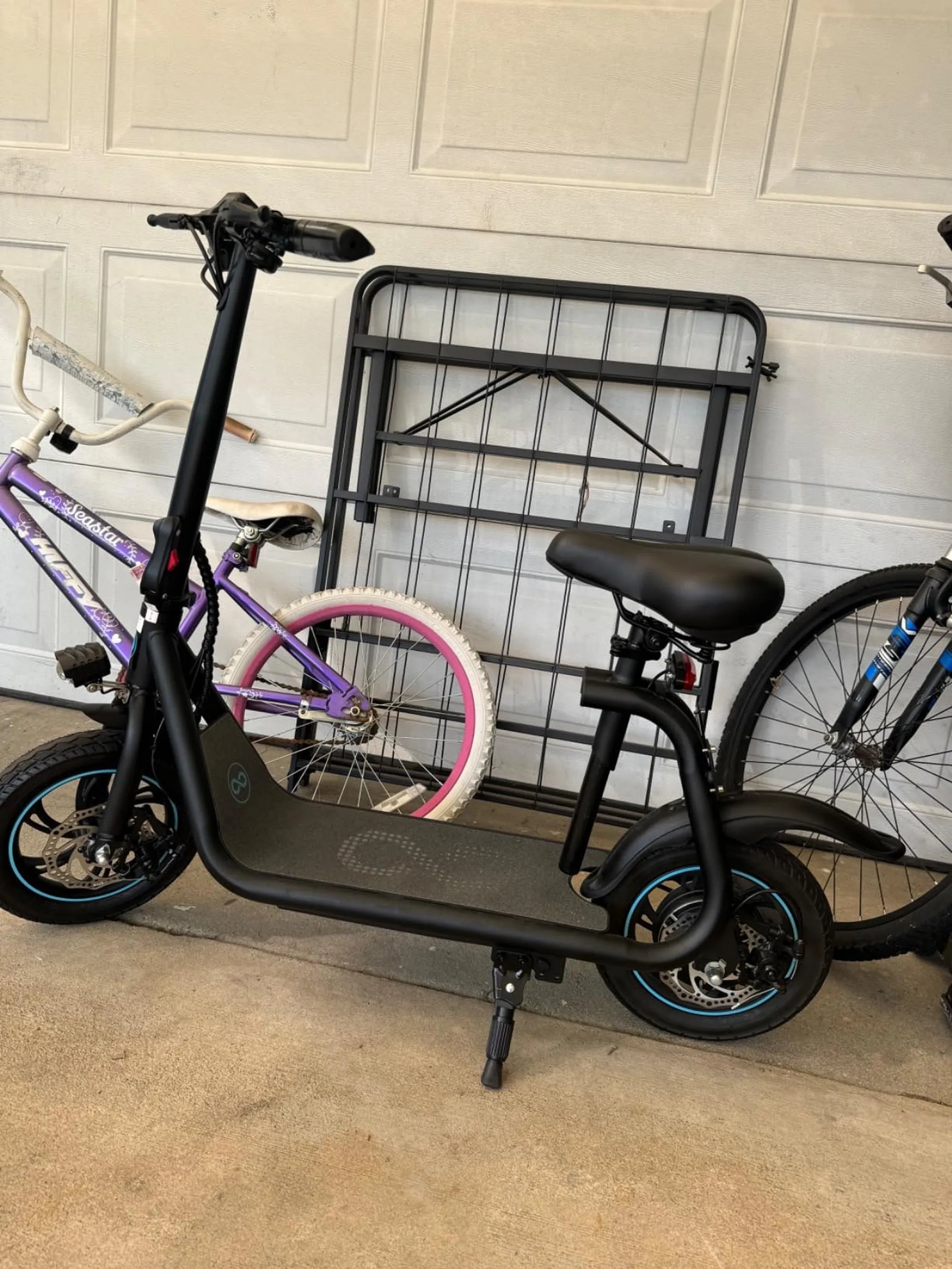
Introduction: Finding Your Perfect Mobility Companion
Regaining or maintaining your independence is a powerful goal, and selecting the right mobility scooter is a pivotal step on that journey. The process of how to choose the right mobility scooter can feel overwhelming with countless models and technical terms. This guide exists to demystify that process, transforming complex specifications into clear, actionable advice. You will learn to prioritize your unique lifestyle needs over marketing hype, ensuring your investment brings freedom and reliability for years to come.
We will explore the critical questions you must ask yourself before browsing, decode the technical jargon, and compare the features that matter most for daily use. As a leader in personal electric mobility, Gyroor designs its range with a core philosophy: safety and reliability are non-negotiable. This means every model features UL-certified battery packs, IPX5 water-resistant construction, and is backed by a comprehensive 1-year warranty—standards that should form the foundation of your search.
By the end of this guide, you will possess a detailed checklist and the confidence to make an informed decision. The right mobility scooter isn't just a vehicle; it's a key to greater autonomy, social connection, and everyday joy. Let's begin by understanding the personal factors that will guide your choice.
Key Factors to Consider Before You Buy
Before examining a single specification sheet, start with introspection. The most successful purchase aligns perfectly with your daily life, physical needs, and personal environment. This foundational step prevents the common mistake of buying a scooter that is technically impressive but practically unsuitable for your routine. Think of this as creating a personal profile that you will use to filter all available options.
Ignoring this stage often leads to frustration—a scooter that's too large for your home, lacks the power for your neighborhood hills, or cannot support your weight safely. By clearly defining your parameters first, you streamline the entire selection process, moving from hundreds of models to a handful of ideal candidates. This user-centric approach ensures your final choice feels like a natural extension of your lifestyle, not a cumbersome piece of equipment.
Assessing Your Primary Use Case
Your primary use case is the single most important filter. Will you use the scooter predominantly indoors in tight spaces like an apartment or mall? For indoor dominance, a compact, nimble model with a tight turning radius is essential. Conversely, if your life happens outdoors—visiting parks, navigating suburban sidewalks, or running errands—you need a scooter built for durability and longer distances with larger, more robust tires.
Consider the blend of activities. Do you plan to use it for grocery shopping, requiring onboard storage or the ability to attach a basket? Will you use it for leisurely neighborhood cruises on paved paths, or do you need to traverse slightly rougher terrain like packed gravel or grass? Each scenario dictates different needs: shopping demands storage and stability, cruising prioritizes comfort and range, and mixed terrain requires enhanced motor power and tire design. Documenting your typical week will reveal your true use case.
Understanding Rider Specifications
Honest assessment of rider specifications is critical for safety and comfort. First, consider your weight. The scooter's weight capacity is not a suggestion; it's a strict engineering limit that affects stability, battery life, and motor performance. Always choose a scooter with a capacity that exceeds your weight, providing a safety buffer and ensuring the scooter isn't perpetually stressed at its maximum limit.
Next, evaluate your height and physical abilities. The steering tiller's adjustability must accommodate your arm length for comfortable, controlled steering. Can you easily operate the controls, which may include levers or buttons? Consider your ability to disassemble the scooter for transport if needed; some models require lifting a 30-50 pound battery pack or frame section. Matching the scooter's physical interface to your capabilities ensures it is a tool for independence, not a source of strain.
Breaking Down the Technical Specifications
Technical specifications are the blueprint of a scooter's capabilities. Understanding them empowers you to compare models objectively and predict real-world performance. This knowledge moves you from relying on sales pitches to making data-driven decisions. We'll translate common specs from engineering jargon into practical impacts on your daily rides.
Focus on the specifications that directly correlate to the needs identified in your personal profile. A high top speed is irrelevant if you need a slow, precise scooter for indoor navigation. Conversely, a minimal range becomes a major limitation if you enjoy long outdoor excursions. In this realm, Gyroor’s commitment to UL-certified batteries and IPX5 water resistance stands out as a baseline for safety and durability that should be non-negotiable in your search.
Motor Power & Performance
Motor power, measured in watts (W), determines a scooter's ability to handle inclines and maintain speed. A common range is from 200W for basic indoor/flat terrain models to 500W or more for outdoor and all-terrain use. For flat suburban sidewalks, a 250W-350W motor is often sufficient. If your route includes moderate hills, a 400W+ motor is advisable to prevent the scooter from slowing down significantly or straining the system.
Performance isn't just about power; it's about control. Look for models with variable speed settings and smooth acceleration. A scooter that jerks forward can be unsettling. The motor should provide enough torque to start smoothly from a stop, especially on a slight incline. Remember, a more powerful motor will consume battery faster, so balance is key. Your assessment of local terrain from the previous section directly informs the motor power you require.
Battery Range & Charging (The Heart of Your Scooter)
The advertised "maximum range" is almost always a best-case scenario: a light rider on perfectly flat, smooth terrain at low speed. Your real-world range will be less. To estimate it, consider applying a 30-40% reduction to the advertised figure. Factors that decrease range include rider weight, frequent stopping and starting, uphill travel, use of lights, and colder temperatures.
Battery safety is paramount. This is where Gyroor’s use of UL-certified battery packs is crucial. UL certification means the battery has undergone rigorous independent testing for safety, stability, and reliability over hundreds of charge cycles. It significantly reduces the risk of overheating or failure. Also, note the charging time and location of the charging port; a convenient, accessible port makes daily maintenance easier. Choose a scooter whose realistic range comfortably exceeds your longest typical journey.
Build Quality, Safety & Warranty
The scooter's construction determines its longevity and your safety. Examine the frame material—typically steel or aluminum alloy—for a feel of solidity. The braking system is critical: many scooters use electromagnetic (electronic) brakes combined with manual or disc brakes for redundancy. Effective lighting (front and rear) and reflectors are essential for visibility if you ride near dusk.
The IPX5 water-resistant rating, a standard on Gyroor scooters, means the scooter can withstand water jets from any direction. This protects against rain, puddles, and accidental spills, preventing electrical shorts. Finally, scrutinize the warranty. A robust 1-year warranty that covers the frame, motor, and electronic components indicates the manufacturer's confidence in their product. Reliable after-sales support is part of the product's value, ensuring help is available if needed.
Comfort, Convenience & Customization
Once performance and safety boxes are checked, comfort features define your daily experience. A scooter that meets all technical requirements but is uncomfortable to sit on or difficult to manage will seldom be used. These elements address ergonomics and practicality, turning a functional device into a pleasurable, seamless part of your routine.
Consider how long you intend to sit in the scooter during typical outings. A quick trip to the mailbox has different comfort requirements than a two-hour visit to a botanical garden. Convenience features like storage and portability reduce friction, making the scooter easier to use and more likely to be incorporated into various activities. This layer of selection is about personal preference and fine-tuning.
Seat & Ergonomics
The seat is your primary point of contact. Look for ample padding, breathable material, and dimensions that properly support you. Seat width and depth are important; a seat that is too narrow or shallow becomes uncomfortable quickly. Many premium seats offer adjustable height, slide-ability, and swivel functionality. A swivel seat that locks in position makes getting on and off significantly easier and safer.
Ergonomics extend beyond the seat. Are the armrests adjustable or padded? Can the tiller (steering column) be adjusted for both angle and height to achieve a natural, relaxed driving position? Controls should be within easy reach and require minimal force to operate. Spending time evaluating comfort in a showroom or during a test drive is invaluable. Discomfort leads to fatigue, which can diminish your enjoyment and even affect safe operation.
Portability & Storage
If you plan to transport your scooter in a car, portability is key. Many travel or compact scooters are designed to disassemble into 2-4 pieces, with the heaviest part (often the rear section with motor and battery) typically weighing 30-50 lbs. Check if you can manage this weight. Some models offer a lightweight lithium battery that can be removed separately to reduce lift weight.
Onboard storage solves daily hassles. Options include integrated under-seat compartments, rear wire baskets, or the ability to attach aftermarket bags. Consider what you'll carry: groceries, a purse, a small oxygen concentrator, or a pet. Having a dedicated, secure space for these items enhances convenience and safety, keeping walkways clear and items from falling. A simple basket can dramatically increase the utility of your scooter.
Comparison: Mobility Scooter Types & Best Uses
This comparison table illustrates how different scooter categories align with specific user needs and environments. Use it as a quick reference after completing your personal needs assessment.
| Type | Best For | Typical Specs | Key Considerations |
|---|---|---|---|
| Compact/Portable | Indoor use, apartment living, frequent car transport, air travel. | Range: 10-15 miles, Weight Cap: 250-300 lbs, Motor: 200-300W, Disassembles easily. | Tight turning radius, light weight for lifting, may have smaller wheels. Check airline policies if flying. |
| Standard 3-Wheel | Outdoor paved paths, shopping, suburban use, good maneuverability. | Range: 15-25 miles, Weight Cap: 300-350 lbs, Motor: 300-400W, Often has a basket. | Stable on flat terrain, good for wider sidewalks. Less stable on steep inclines than 4-wheel. |
| Standard 4-Wheel | Outdoor use with more stability, riders needing extra balance, light uneven terrain. | Range: 20-30 miles, Weight Cap: 350-500 lbs, Motor: 400-500W, Larger frame. | Excellent stability, handles slight slopes better. Larger turning radius, less maneuverable in tight spaces. |
| Heavy-Duty/All-Terrain | Rough paths, grass, gravel, steep hills, higher weight capacities. | Range: 20-35+ miles, Weight Cap: 400-500+ lbs, Motor: 500W+, Large pneumatic tires. | Most powerful and durable. Heavier, less portable, and more expensive. Essential for challenging outdoor use. |
Making the Final Decision: A Practical Checklist
Combine all your research into this actionable checklist. Print it out and score potential scooters against each line item. The model that ticks the most boxes, especially the non-negotiable ones related to safety and core needs, is your winner.
Primary Use Case Match: Does it fit your primary environment (indoor/outdoor/mix) and activities (shopping, cruising, etc.)?
Weight Capacity & User Weight: Does the scooter's capacity exceed your weight by a comfortable margin (recommended 50+ lbs buffer)?
Required Real-World Range: Does the estimated real-world range (advertised range * 0.7) exceed your longest regular trip?
Terrain & Motor Power: Is the motor powerful enough (in watts) for the inclines and surfaces you will encounter?
Must-Have Comfort Features: Does the seat, tiller adjustability, and storage meet your comfort and convenience needs?
Safety Certifications: Does it have a UL-certified (or equivalent) battery and a good water resistance rating (IPX4 or higher)?
Warranty & Service Support: Is there a comprehensive warranty (1-year minimum) and accessible customer service?
Before purchasing, if at all possible, arrange a test drive. Feel the controls, test the comfort, and gauge its maneuverability. Verify the retailer's return policy and assembly/setup support. This final diligence ensures complete confidence in your significant investment.
FAQ: Your Mobility Scooter Questions Answered
Q1: What’s the difference between a mobility scooter and an electric scooter?
A mobility scooter is designed primarily for seated operation by individuals with mobility challenges, featuring a seat, tiller steering, and a stable multi-wheel base (3 or 4 wheels). An electric scooter (like those from Gyroor) is typically a stand-up, kick-start scooter used for urban commuting and recreation. Mobility scooters prioritize stability, comfort, and ease of use at lower speeds.
Q2: How important is the water-resistant (IPX5) rating?
It is very important for practicality and safety. An IPX5 rating means you can confidently ride in light rain, through puddles, or on damp grass without worrying about water damage causing an electrical short. It protects your investment and ensures reliability in everyday weather conditions.
Q3: Why should I care about a UL-certified battery?
A UL-certified battery has passed stringent safety tests for electrical, mechanical, and environmental hazards. It drastically reduces the risk of fire, overheating, or premature failure. For a device you sit on and charge in your home, this certification is a critical safety feature, not just a technical detail.
Q4: Can I take my mobility scooter on public transportation or in a car?
Many public transit systems allow compact, portable mobility scooters, but policies vary. Always check with your local provider. For car transport, many travel scooters disassemble to fit in a trunk. Check the weight of the heaviest piece to ensure you can lift it, or consider a model with a lightweight, removable battery.
Q5: What does the 1-year warranty typically cover?
A strong 1-year warranty should cover defects in materials and workmanship for the frame, motor, controller, and other electronic components. It often includes the battery as well, though sometimes for a shorter period (e.g., 1 year). Always read the warranty terms to understand what is included and the process for making a claim.
Conclusion: Embark on Your Journey with Confidence
Knowing how to choose the right mobility scooter empowers you to make a decision that will enhance your independence and quality of life for years. The process hinges on honest self-assessment, understanding key specifications like real-world range and motor power, and insisting on foundational safety features. By methodically working through your primary use case, rider specifications, and the detailed checklist provided, you transform a potentially confusing purchase into a clear, confident choice.
Remember, the right scooter is the one that disappears into the background of your life, reliably and comfortably enabling the activities you value. It should feel secure, be easy to use, and come with the peace of mind that comes from robust construction and dependable support. Your journey toward greater freedom is important, and your vehicle for that journey should be chosen with care and knowledge.
When you're ready to explore a range of mobility solutions built on a foundation of safety, durability, and thoughtful design, consider the standards set by trusted brands. Gyroor exemplifies this approach across its product line, ensuring every ride is supported by UL-certified batteries, water-resistant engineering, and comprehensive customer care. Browse the full Gyroor collection at gyroorboard.com to see how innovative design can meet your need for reliable, independent mobility.
Touring Scooter vs Motorcycle: The Ultimate Commuter & Travel Comparison
Next Scooter: The 2024 Guide to Smarter, Safer Personal Mobility