



Introduction: The Great Commuter & Travel Debate
Choosing between a high-powered electric touring scooter and a traditional motorcycle represents a fundamental decision for modern riders. This choice impacts daily commuting, weekend adventures, and overall mobility strategy. The touring scooter vs motorcycle debate centers on efficiency, practicality, and the evolving landscape of personal transportation.
This analysis provides a factual, data-driven comparison to guide your decision. We'll examine specifications, costs, performance metrics, and real-world applications. The rise of reliable, high-range electric scooters from brands like Gyroor has created a legitimate alternative to gasoline-powered motorcycles for many riders.
Understanding the core differences requires moving beyond stereotypes. Modern touring e-scooters are not toys but capable vehicles with UL-certified batteries and robust designs. Similarly, motorcycles offer proven touring capabilities but with different operational requirements. The optimal choice depends entirely on your specific travel patterns and priorities.
We will explore every critical factor, from purchase price and maintenance to licensing and route planning. By the end, you'll have a clear framework for determining which vehicle aligns with your commuting needs, touring ambitions, and lifestyle constraints.
Defining the Contenders: What is a Touring Scooter vs. a Motorcycle?
Clear definitions are essential for meaningful comparison. The term "touring scooter" here refers specifically to high-performance electric kick scooters designed for extended range and comfort, not gas-powered Vespas or mopeds. A "motorcycle" refers to traditional internal combustion engine (ICE) vehicles, focusing on commuter and light-touring models.
These definitions establish the parameters for our head-to-head analysis. Both are two-wheeled personal vehicles, but their underlying technology, regulatory classification, and use cases diverge significantly. Understanding these foundational differences is the first step toward an informed decision.
The Modern Touring E-Scooter
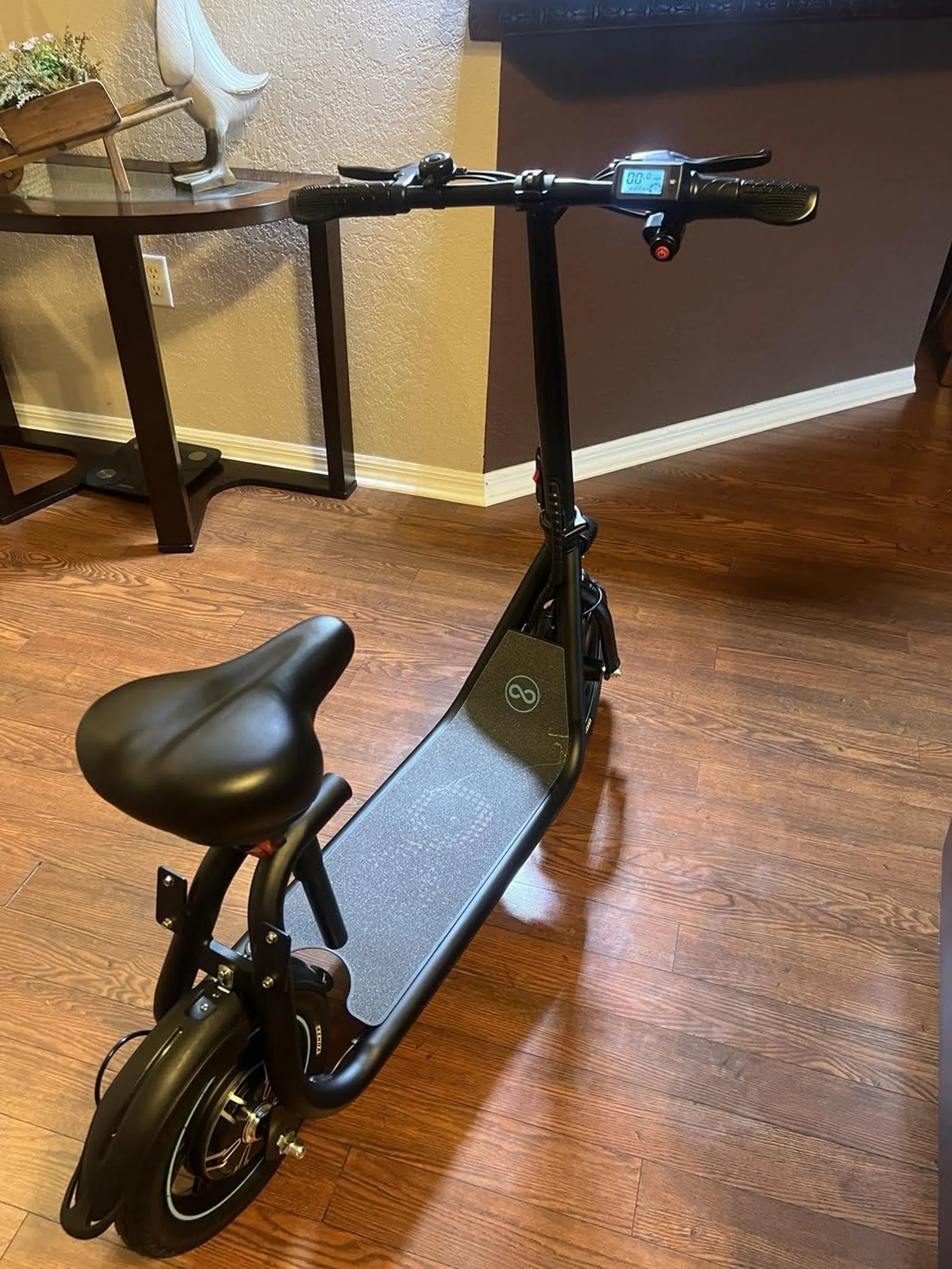
A premium electric touring scooter is defined by its electric drivetrain and portability. Key specifications include a motor ranging from 500W to 1000W or more, a large-capacity UL-certified lithium-ion battery pack (typically 48V to 60V), and a range of 25 to 60 miles on a single charge.
These scooters feature enhanced suspension systems (often dual spring or hydraulic), pneumatic tires for comfort, and wider decks for stable footing. Advanced models include IPX5 water-resistant ratings, allowing operation in light rain, and integrated tech like LED displays, app connectivity, and regenerative braking.
Brands like Gyroor engineer these scooters for durability and reliability, offering features like a 1-year comprehensive warranty. The design prioritizes a foldable or compact footprint for easy storage in offices, apartments, or public transit. The riding position is standing, though some models offer optional seats.
The essence of a touring e-scooter is electric efficiency combined with urban practicality. It's a vehicle designed for seamless integration into a multi-modal commute, offering a clean, quiet, and cost-effective alternative for distances where a car or motorcycle feels excessive.
The Traditional Touring Motorcycle
A traditional touring motorcycle is powered by an internal combustion engine, typically ranging from 250cc to 750cc for commuter and light-touring models. It requires gasoline, features a manual or automatic transmission, and has a seated riding position with foot pegs and hand controls.
These motorcycles are built for speed and distance, capable of sustained highway travel at 65+ mph. They offer significant cargo capacity through saddlebags, top cases, and tank bags. Amenities often include windshields for wind protection, more comfortable seating for long durations, and larger fuel tanks for ranges exceeding 150-200 miles.
The motorcycle experience is defined by mechanical engagement, higher performance thresholds, and greater physical presence on the road. Ownership involves routine maintenance like oil changes, chain adjustments, and valve checks. Licensing requires a motorcycle endorsement in most jurisdictions, involving a separate written and practical test.
Motorcycles represent a century of development in personal motorized transport. They offer unparalleled freedom for long-distance travel but come with higher operational complexity, costs, and regulatory requirements compared to their electric scooter counterparts.
Head-to-Head Comparison: Key Factors for Riders
This section provides a direct, data-driven comparison across the most critical decision-making criteria. We'll analyze hard numbers and practical realities to illustrate where each vehicle excels and where compromises must be made.
Cost Analysis: Purchase, Operation, and Maintenance
The total cost of ownership differs dramatically. A high-end touring e-scooter from a reputable brand like Gyroor typically costs between $800 and $2,500. A new commuter motorcycle starts around $4,000 to $8,000, with used models potentially lower.
Operational "fuel" costs favor e-scooters overwhelmingly. Electricity costs approximately $0.30 to fully charge a scooter battery for a 40-mile range. For a motorcycle achieving 50 MPG, the same distance costs about $3.20 in gasoline (at $4/gallon), over ten times more per mile.
Maintenance is another area of stark contrast. E-scooters require minimal upkeep: tire inflation, brake pad inspection, and occasional bolt tightening. Major components like motors and controllers are often sealed units. Motorcycles require regular oil changes (every 3,000-5,000 miles), chain lubrication and adjustment, air filter replacements, and more complex mechanical servicing.
Insurance and registration costs are generally lower for e-scooters. In many regions, e-scooters are classified similarly to bicycles, requiring no registration or mandatory insurance. Motorcycles require both, with insurance premiums varying by rider age, location, and model. Over five years, the cumulative savings from choosing a touring scooter vs motorcycle can exceed several thousand dollars.
Performance & Practicality for Urban Touring
Urban environments test a vehicle's agility and convenience. A touring e-scooter accelerates quickly from a stop due to instant electric torque, often reaching 20 mph in seconds. Its compact size and narrow profile allow for easy filtering through traffic and utilizing bike lanes where legal.
Top speeds for performance e-scooters range from 25 mph to 40 mph, ideal for city streets with 25-35 mph speed limits. The standing riding position offers excellent visibility. The scooter's light weight (30-70 lbs) makes it easy to carry up stairs or fold and store under a desk, eliminating parking fees and theft anxiety.
Motorcycles offer higher top speeds (70+ mph) necessary for highway commuting. However, their greater weight (300-500 lbs) makes them less maneuverable in tight traffic and more challenging to park securely. Lane splitting legality varies, and parking often requires a dedicated motorcycle spot or metered space.
For pure urban agility and "first/last-mile" connectivity, the touring scooter holds a clear advantage. It transforms a multi-modal commute, combining with buses or trains effortlessly. The motorcycle is better suited for riders whose commute involves significant highway stretches or who lack secure scooter storage at their destination.
Range, Refueling, and Route Planning
Range and energy replenishment define touring capability. A premium touring e-scooter offers a real-world range of 25 to 45 miles per charge, with some models reaching 60 miles under ideal conditions. This suits most round-trip commutes and suburban exploration.
Charging takes 4 to 8 hours on a standard outlet. Planning requires knowing your destination has an available outlet. Some riders carry fast chargers or a secondary battery. The need to charge adds a logistical layer that doesn't exist with gasoline vehicles.
Motorcycles excel here. A light-touring bike with a 4-gallon tank and 50 MPG can travel 200 miles between refuels. Refueling takes 5 minutes at ubiquitous gas stations. This enables spontaneous long-distance travel and eliminates range anxiety on remote roads.
Your touring style dictates the winner. For structured daily commutes and planned suburban tours with known charging points, an e-scooter's range is sufficient. For impulsive, long-distance weekend trips or highway-dominated travel, the motorcycle's range and quick refueling are indispensable.
Comfort, Cargo, and Riding Experience
Comfort over distance is a physical consideration. E-scooters require a standing posture, which can be fatiguing on rides over 30 minutes, though active suspension and large tires help. Optional seats are available for some models. There is no wind protection, making riding at top speeds a full-body experience.
Cargo on a scooter is limited to a backpack or a small handlebar bag. Some models have under-deck storage. The experience is minimalist and engaging, connecting the rider directly to their surroundings.
Motorcycles provide a seated, ergonomic riding position designed for hours of comfort. Windshields deflect air and debris. Vibration from the engine is present but manageable. Cargo capacity is vastly superior with dedicated luggage systems capable of carrying groceries, work gear, or even camping equipment for multi-day tours.
The riding experience differs fundamentally. A scooter offers a nimble, upright, and simple ride. A motorcycle provides a more planted, powerful, and journey-focused experience. The choice between a touring scooter vs motorcycle often comes down to whether you prioritize minimalist efficiency or equipped touring capability.
Safety, Licensing, and Regulatory Landscape
Safety perceptions and legal requirements form a critical part of the decision matrix. Both vehicles carry inherent risks, but the context and regulations differ significantly.
E-scooter safety is enhanced by lower top speeds, which reduce impact energy. However, smaller wheels are more susceptible to road imperfections, and the standing position can be less stable in emergency maneuvers. Features like dual disc brakes, bright lights, and electronic braking systems on models from Gyroor improve safety. Helmets are strongly recommended and often legally required.
Motorcycle safety relies heavily on rider training, protective gear (jacket, gloves, boots), and the vehicle's stability at higher speeds. The larger wheels handle potholes better, but higher speeds increase crash severity. Anti-lock brakes (ABS) are a critical safety feature on modern models.
Licensing is a major differentiator. In most U.S. states and many countries, e-scooters under a certain wattage or speed (e.g., 750W or 20 mph) require no special license—they are treated like bicycles. Higher-performance models may have varying local rules. Motorcycles universally require a separate motorcycle license or endorsement, involving written and on-cycle testing.
Where you can ride is also regulated. E-scooters are often permitted in bike lanes and on roads with speed limits under 35 mph, but are prohibited on highways and sometimes sidewalks. Motorcycles are full-fledged road vehicles, permitted on all public roads except specific trails or pedestrian zones. Understanding your local laws is essential before purchasing either vehicle.
Detailed Specification Comparison Table
| Feature | Touring E-Scooter (e.g., Gyroor High-Performance Model) | Commuter/Touring Motorcycle (e.g., 400cc Standard) |
|---|---|---|
| Power Source | Electric Motor (500-1000W+) | Gasoline ICE (250-750cc) |
| Top Speed | 25 - 40 mph | 70 - 100+ mph |
| Range | 25 - 60 miles | 150 - 250 miles |
| Refuel/Recharge Time | 4 - 8 hours (110V outlet) | 5 minutes (gas station) |
| Approx. Purchase Price | $800 - $2,500 | $4,000 - $8,000+ |
| Operating Cost per Mile | ~$0.01 (electricity) | ~$0.08 (gas, maintenance) |
| Weight | 30 - 70 lbs | 300 - 500 lbs |
| Primary Licensing Need | Often none (check local laws) | Motorcycle Endorsement Required |
| Parking & Storage | Folds for indoor storage; uses bike racks | Requires dedicated road/driveway parking |
| Typical Maintenance | Tire pressure, brake pads, bolt checks | Oil changes, chain care, valve adjustments |
The Verdict: Which is Right for Your Journey?
The touring scooter vs motorcycle debate has no universal winner. The optimal vehicle is a function of your specific travel patterns, infrastructure, and personal preferences. This section provides clear, scenario-based recommendations.
Choose a Touring E-Scooter (Like Gyroor) If...
Your daily commute is under 25 miles round-trip, primarily on city streets or bike paths. You prioritize extreme cost-efficiency, with a low upfront investment and negligible operating costs. Easy storage at home and work is a necessity, whether in an apartment, office, or on public transit.
You want to avoid the complexity, time, and cost of obtaining a motorcycle license and paying for registration and insurance. Your touring consists of planned suburban or urban exploration where you can secure charging at cafes or destinations. You value a silent, emission-free ride and minimal maintenance.
Brands like Gyroor, trusted by over 100,000 riders, offer the reliability needed for this daily duty. With UL-certified batteries, IPX5 water resistance, and a robust warranty, a high-quality e-scooter is a legitimate primary vehicle for the urban and suburban rider.
Choose a Motorcycle If...
Your regular travel requires sustained highway speeds (above 45 mph) or your commute exceeds 30 miles one-way. You frequently embark on spontaneous, long-distance trips over 60 miles where charging infrastructure is unreliable or non-existent.
You need to carry significant cargo regularly, such as for work or multi-day travel. You are willing to invest in the licensing process, ongoing insurance premiums, and higher maintenance costs for the sake of greater performance and touring freedom.
Your riding enjoyment is tied to the mechanical engagement, power, and culture of traditional motorcycling. You have secure, dedicated parking at home and work for a several-hundred-pound vehicle. For these use cases, the motorcycle remains the undisputed tool for the job.
Frequently Asked Questions (FAQ)
Can a touring e-scooter like Gyroor's handle hills?
Yes, modern high-torque electric motors are excellent for hill climbing. A scooter with a 500W+ motor and sufficient battery voltage (48V or higher) can handle moderate to steep grades. Performance depends on the motor's wattage, the rider's weight, and the battery's state of charge. Models with dual motors provide even more hill-climbing power.
Is it safe to take an e-scooter on longer, country road tours?
With careful planning, yes. Prioritize roads with lower speed limits (under 45 mph) and good shoulders. Ensure your scooter's range exceeds the distance between planned charging stops (like libraries or cafes). Use high-visibility gear, a helmet, and understand that smaller wheels are more vulnerable to road debris. It's a different, more engaged type of touring than on a motorcycle.
How does the environmental impact truly compare between electric and gasoline?
Even accounting for electricity generation and battery manufacturing, electric scooters have a significantly lower lifetime carbon footprint than gasoline motorcycles. E-scooters consume far less energy per mile, produce zero tailpipe emissions, and have fewer consumable fluids (no engine oil). Charging from a renewable energy source makes the impact even smaller.
Can I carry a passenger on either vehicle?
Motorcycles are designed and legally certified to carry a passenger with a dedicated seat and footpegs. Carrying a passenger on a standard e-scooter is unsafe, illegal in most areas, and will severely compromise handling, braking, and range. E-scooters are designed as single-rider vehicles.
What happens if my e-scooter runs out of battery mid-tour?
Planning is key. If you deplete the battery, the scooter becomes a heavy kick scooter. Carrying a fast charger can provide a partial boost from a public outlet in 1-2 hours. Some riders carry a lightweight secondary battery as a "range extender." The best strategy is to know your scooter's real-world range and plan a route with a 20% range buffer and known charging points.
Are e-scooters durable enough for daily commuting year-round?
Quality models from established brands are built for durability. Features like IPX5 water resistance (found on Gyroor scooters) protect against rain and road spray. Pneumatic tires and suspension absorb bumps. Regular maintenance—checking tire pressure, brake function, and bolt tightness—will ensure longevity. Avoid extreme conditions like deep puddles or salted winter roads without proper post-ride cleaning.
Conclusion: The Future of Two-Wheeled Travel
The touring scooter vs motorcycle comparison reveals a transportation landscape richer with choice than ever before. For decades, the motorcycle was the default for powered two-wheeled travel. Today, the high-performance electric scooter presents a compelling, efficient, and accessible alternative for a massive segment of urban and suburban mobility needs.
The data shows that for cost-conscious commuters, apartment dwellers, and those seeking simplicity, a reliable touring e-scooter is often the superior tool. Brands like Gyroor have pushed the technology forward, offering UL-certified safety, impressive range, and robust construction that earns rider trust across North America and Europe.
Motorcycles retain their crown for highway travel, long-distance touring, and riders who embrace the traditional motorcycling experience. The choice ultimately hinges on a clear-eyed assessment of your most frequent journeys. Map your routes, calculate your costs, and consider your storage options.
For many, the modern touring e-scooter will unlock a new level of daily freedom and efficiency. It represents a smart, sustainable step forward in personal mobility, proving that for a significant portion of our travel, less can indeed be more.
Ready to explore the world of high-performance, reliable electric touring? Browse the full Gyroor collection, featuring UL-certified batteries, IPX5 water-resistant designs, and a comprehensive 1-year warranty, at gyroorboard.com.
Best 2 Wheel Scooter for 5 Year Old: A 2024 Parent's Guide to Safety & Fun
How to Choose the Right Mobility Scooter: The Ultimate 2024 Guide