



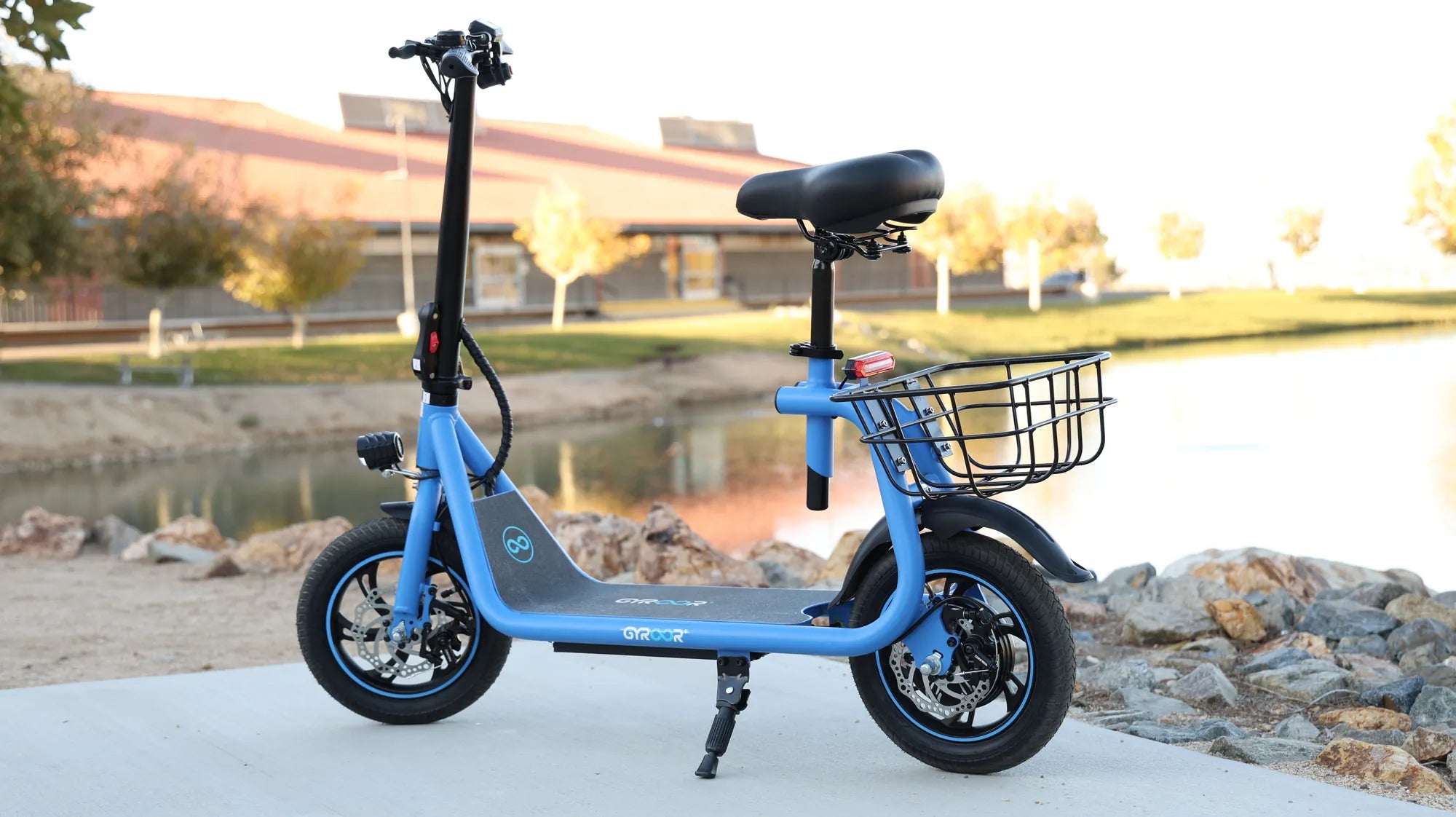
Introduction: Embracing the Freedom of Adult Scooter Riding
Learning how to ride a scooter for adults opens a gateway to practical, eco-friendly, and exhilarating personal mobility. Whether for a short commute, running errands, or simply enjoying the outdoors, a scooter provides an efficient alternative to traffic and crowded transit. This comprehensive guide is designed for the adult novice, providing a structured path from first steps to confident city riding.
We'll cover every critical aspect: essential safety preparation, fundamental riding techniques, advanced maneuvering for urban environments, and long-term maintenance. As a brand trusted by over 100,000 riders across North America and Europe, Gyroor's engineering principles—like UL-certified batteries and IPX5 water-resistant designs—inform our practical advice, ensuring you learn not just the mechanics but also the mindset for safe, enjoyable riding.
The Essential Pre-Ride Checklist: Safety & Preparation
Before you engage the throttle, thorough preparation is non-negotiable. A proper pre-ride routine establishes the foundation for safety and prevents common mishaps. This process takes only minutes but significantly reduces risk.
Investing time here ensures your first experience with how to ride a scooter for adults is positive and controlled. Rushing this stage is the most frequent mistake new riders make. Let's break down the three pillars of preparation: your gear, your scooter, and a final safety scan.
Gear Up: Non-Negotiable Safety Equipment
A certified helmet is the single most important piece of safety equipment. Look for ASTM or CPSC certification. It should fit snugly without wobbling. Never compromise on this.
Sturdy, closed-toe shoes with flat soles are essential for secure footing. Sandals or flip-flops offer zero protection and can lead to loss of control. For additional safety, consider padded gloves, knee pads, and elbow pads, especially during the learning phase.
High-visibility clothing or reflective accessories are crucial for dawn, dusk, or night riding. Many urban incidents occur because riders are not seen. A small investment in a reflective vest or ankle bands dramatically increases your visibility to drivers.
Know Your Scooter: A Quick Model Orientation
Familiarize yourself with every control before moving. Locate the thumb throttle (usually on the right handlebar), the brake levers (left often for rear brake, right for front), the bell, and the power button. Understand your dashboard: battery indicator, speedometer, and light controls.
Identify the folding mechanism if your scooter has one. Practice locking and unlocking it while the scooter is off to avoid accidental collapse while riding. Check the position of the charging port. Understanding features like Gyroor's IPX5 water-resistance rating tells you the scooter can handle light rain and puddles, but never submerge it.
The Pre-Ride Inspection: 60-Second Safety Scan
Perform this quick check every time you ride. First, inspect tire pressure and condition. Under-inflated tires reduce range and stability, while over-inflation makes for a harsh ride and increases puncture risk. Look for embedded debris or excessive wear.
Squeeze the brake levers to ensure they engage firmly and the brakes respond without squealing or grinding. Test both the electronic brake (if equipped) and the mechanical disc or drum brake. Turn on the headlight and taillight to confirm they are functional.
Check that the handlebar stem is securely locked and does not wobble. Give the deck a gentle shake to ensure it's firmly attached. Finally, verify your battery has sufficient charge for your planned trip. Starting with a full charge from a UL-certified battery system, like those used by Gyroor, provides peace of mind regarding safety and range.
Mastering the Basics: Your First Ride Step-by-Step
Now, with gear on and scooter checked, it's time for your first powered movement. Find a flat, smooth, and car-free area like an empty parking lot or a quiet cul-de-sac. This environment is critical for building initial confidence without external pressures.
The core sequence for learning how to ride a scooter for adults is: Mount, Balance, Start, Glide, Stop, Dismount. We will walk through each phase methodically. Do not attempt to go fast. Focus on control and feel.
Finding Your Stance & Balance
Stand beside the scooter, holding both handlebars. Place your dominant foot firmly on the deck, typically towards the rear. Your other foot should remain on the ground. Adopt a slight athletic stance: knees softly bent, back straight, head up looking forward—not down at your feet.
Gently push off with your grounded foot and coast for a few meters. Practice this several times to get a feel for balancing on the moving deck. The goal is to become comfortable with the scooter's stability before introducing power. Your hands should have a firm but relaxed grip on the handlebars; avoid a death grip.
Starting, Accelerating, and Maintaining Speed
Once you can coast comfortably, you're ready to use the throttle. From a stopped position with one foot on the deck, push off gently. As you gain a walking-pace momentum, apply very gentle, gradual pressure to the thumb throttle.
The acceleration should be smooth, not jerky. Start by aiming to maintain a slow, steady speed of 5-8 km/h (3-5 mph). Practice riding in a straight line, focusing on a point in the distance. Use subtle handlebar adjustments to correct your path. This initial stage is about developing throttle control and forward stability.
The Art of Braking and Stopping Safely
Learning to stop is more important than learning to go. Locate a clear stopping point ahead. Gradually squeeze the brake levers with even pressure. Avoid slamming the brakes, which can cause the wheels to lock or throw you forward.
Practice using primarily the rear brake first (often the left lever), as it provides more stable, skid-resistant stopping. The front brake is more powerful but requires careful application to avoid pitching over the handlebars. Come to a complete stop, place your non-dominant foot on the ground, and then step off. Repeat the start-stop cycle until it becomes fluid.
Leveling Up: Advanced Skills for Confident Commuting
After mastering straight-line riding and controlled stopping, you're ready for skills that transform your scooter into a viable commuter tool. This stage focuses on predictability, hazard awareness, and smooth vehicle control in dynamic environments.
These techniques are essential for anyone moving beyond parking lots and into bike lanes or shared paths. They form the practical application of knowing how to ride a scooter for adults in the real world.
Navigating Turns and Maneuvering
Turning is a combination of leaning and steering. To turn right, gently push your right handlebar forward while shifting your body weight slightly to the right. Look through the turn towards your exit path; your body and scooter will naturally follow.
Always slow down before entering a turn. Sharp, low-speed turns require more handlebar input, while wider, higher-speed turns rely more on lean. Practice making large, sweeping turns in your safe area before attempting tighter maneuvers. Avoid jerky movements, which can upset stability.
Handling Common Urban Obstacles
City streets present cracks, potholes, rain grooves, and curbs. The universal rule is to slow down when approaching an obstacle. For linear cracks or grooves, cross them as perpendicularly as possible to prevent the wheel from catching.
For smaller bumps or potholes, you can use a technique called "unweighting." Just before impact, slightly bend your knees and lift your body weight off the deck, allowing the scooter to absorb the shock while you remain stable. A scooter with good suspension and robust construction, like many in Gyroor's lineup, provides a significant advantage here.
Riding in Traffic: Rules and Etiquette
When riding in traffic, you are a vehicle operator. Obey all traffic signals and signs. Ride in the direction of traffic, never against it. Use designated bike lanes whenever available.
Signal your intentions clearly. Use hand signals for turns and stops. Practice defensive riding: assume cars do not see you. Avoid blind spots, especially of large vehicles. Make eye contact with drivers at intersections. Your predictability is your best protection. Know your local laws regarding sidewalk riding, as these vary widely.
Data-Driven Insights: Scooter Riding Best Practices
Beyond technique, efficient and safe riding is supported by understanding the data and mechanics of your scooter. Adopting these best practices maximizes performance, safety, and the longevity of your investment.
This knowledge separates casual riders from informed owners. It's the final layer in mastering how to ride a scooter for adults responsibly.
Maximizing Your Range & Battery Life
Your scooter's advertised range is achieved under ideal conditions. Real-world range is affected by rider weight, terrain (hills drastically reduce range), temperature (cold weather reduces battery efficiency), and riding style. Aggressive acceleration and frequent hard braking are the biggest drains.
To maximize range: maintain optimal tire pressure, use smooth and gradual acceleration, leverage cruise control if available, and plan routes with fewer steep inclines. A well-maintained, UL-certified battery system, standard on Gyroor scooters, ensures stable performance and safety over its 500+ charge cycle lifespan.
Maintenance Schedule for Long-Term Reliability
Proactive maintenance prevents failures. Follow this simple schedule:
Weekly: Check tire pressure and tread. Test brake function and pad wear. Wipe down the scooter to remove dirt and debris.
Monthly: Inspect and tighten all bolts (handlebar stem, folding mechanism, wheel axles). Check for any loose wiring or connectors. Lubricate the folding mechanism if needed.
As Needed: Replace brake pads when worn. Check suspension components for smooth operation. Inspect the deck and frame for any cracks or stress points.
Adhering to this routine not only keeps you safe but also upholds the validity of comprehensive warranties, like Gyroor's reliable 1-year coverage.
Choosing Your Scooter: A Data Comparison for Adults
Selecting the right scooter is foundational to your riding experience. The ideal model balances power, range, portability, and durability for your specific needs. Below is a comparison of common adult scooter configurations, highlighting how different designs serve different primary use cases.
| Primary Use Case | Key Features to Prioritize | Typical Spec Range | Gyroor Model Example Traits |
|---|---|---|---|
| Last-Mile Commute (Short trips from transit) | Portability (lightweight, easy fold), Compact size, Reliability | Range: 15-25 km, Motor: 250-350W, Weight: <15 kg | Ultra-compact folding, IPX5 rating for weather resilience, reliable daily start. |
| Urban Exploration (Longer recreational rides) | Comfort (suspension, deck size), Range, Riding stability | Range: 30-50 km, Motor: 350-500W, Dual suspension | Long-range battery options, front & rear suspension, wider deck for foot comfort. |
| Performance & Hills (Challenging terrain, speed) | Motor Power, Braking System, Build Quality | Motor: 500W+, Dual mechanical brakes, Robust frame | High-torque motors, dual disc brake systems, reinforced stem for high-speed stability. |
This table illustrates that understanding your primary need—be it folding for a train commute or power for a hilly route—directly informs the best choice. Features like UL-certification and IP ratings should be baseline requirements, not just nice-to-haves.
Frequently Asked Questions (FAQ) for New Adult Riders
New riders consistently have similar, practical concerns. Addressing these clearly builds confidence and ensures you have the correct information before heading out.
Q1: Do I need a license or registration to ride an electric scooter?
Laws vary significantly by jurisdiction. In most regions in North America and Europe, low-speed electric scooters (under 32 km/h or 20 mph) are regulated similarly to bicycles and do not require a driver's license, vehicle registration, or insurance for private use. However, some cities have specific age restrictions, helmet laws, or ban sidewalk riding. Always check your local municipal and state/provincial regulations before your first ride.
Q2: How do I carry things like groceries or a laptop while riding?
The safest method is a well-fitting backpack, which keeps the weight centered on your body and doesn't affect the scooter's handling. Some scooters have a small cargo hook on the stem for a lightweight bag, but avoid hanging heavy items that can unbalance the steering. Handlebar bags or baskets are generally not recommended as they can interfere with control and cabling.
Q3: What should I do if I get a flat tire?
First, identify your tire type. Many commuter scooters use solid or airless foam-filled tires that cannot go flat. If you have pneumatic (air-filled) tires and get a flat, you will need to repair or replace the inner tube. Carrying a small bicycle tire repair kit and a portable pump can be a lifesaver. For most riders, the simplest solution is to know the location of a local bike or scooter repair shop that can service your model.
Q4: Is it safe to ride in the rain or on wet pavement?
While many modern scooters, including those from Gyroor with an IPX5 rating, are designed to withstand water splashes and light rain, riding in wet conditions requires extreme caution. Reduce your speed significantly, increase following distance, avoid sharp turns, and brake much earlier and more gently. Remember, traction is reduced, and metal surfaces like manhole covers and painted road lines become extremely slippery. It is best to avoid heavy rain altogether.
Q5: How do I secure my scooter when I need to park it in public?
Use a high-quality, hardened steel U-lock or a heavy-duty chain lock. Always lock the scooter's frame (not just the wheel or stem) to a fixed, immovable object like a dedicated bike rack. If possible, take the removable battery with you, as it is a valuable component. For added security, some scooters have electronic lock features via a companion app that disables the motor.
Conclusion: Your Journey Begins Here
Mastering how to ride a scooter for adults is a rewarding skill that combines practical transportation with a sense of freedom. The journey is built on three pillars: meticulous preparation, deliberate practice in a safe environment, and the ongoing commitment to defensive riding and proper maintenance. Start slowly, respect the learning curve, and gradually expand your riding boundaries as your skills solidify.
Choosing a reliable partner for this journey is crucial. A scooter engineered with safety as a core principle—featuring certified batteries, water-resistant construction, and robust warranty support—allows you to focus on the ride itself. With over 100,000 riders trusting Gyroor for their daily commute and adventure, you can embark on your new riding life with confidence. The road awaits.
Ready to start your ride? Browse the full Gyroor collection, featuring UL-certified, IPX5-rated models for every type of adult rider, at gyroorboard.com.
Scooter Tyre for 8inch: The Complete Guide to Performance & Safety
Ebike Conversion Kit with Battery and Charger: The Complete DIY Guide