

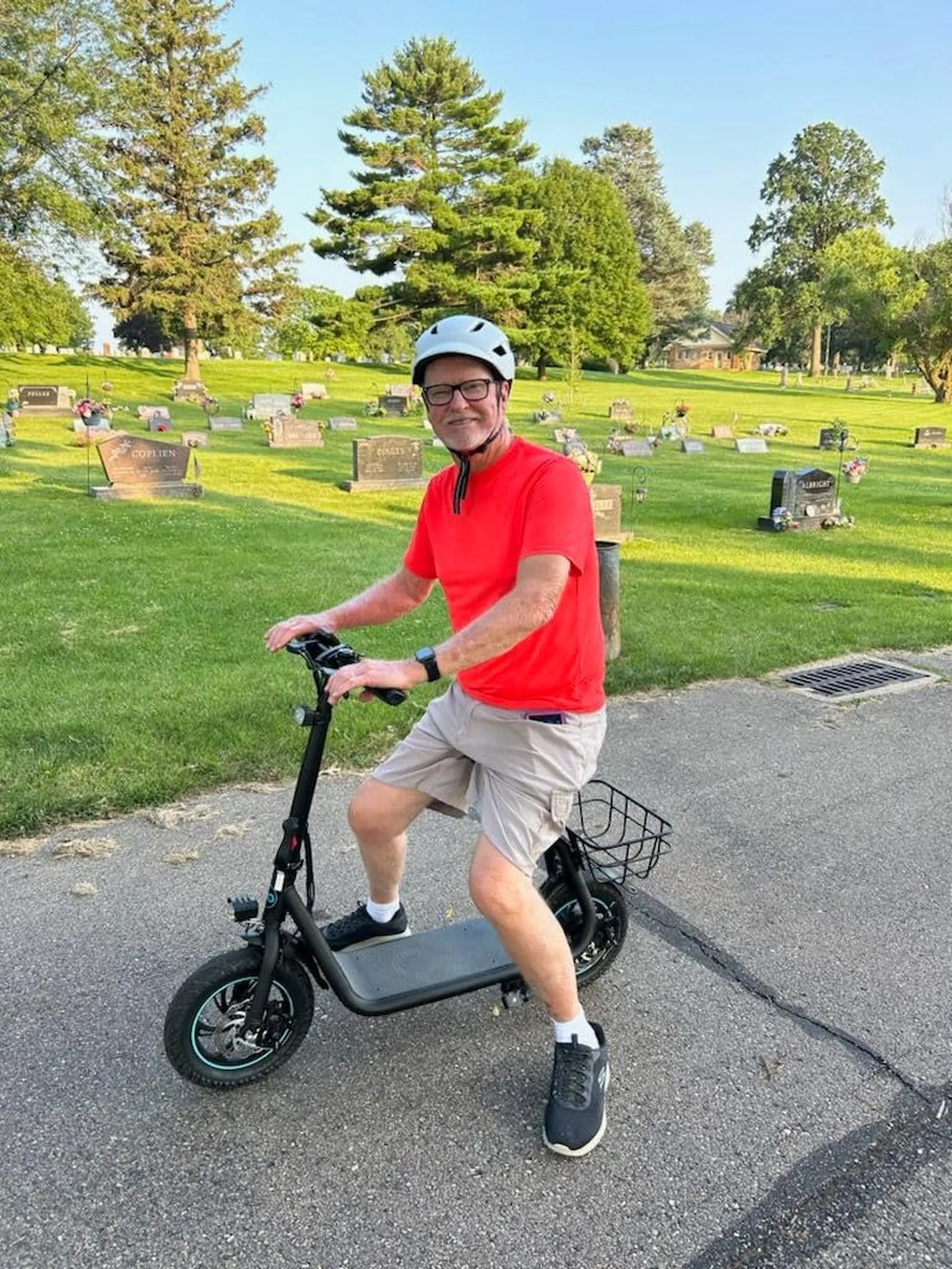
Introduction to High-Capacity Mobility Scooters
For many individuals, a mobility scooter is not merely a convenience but a vital tool for reclaiming independence and accessing the world. A mobility scooter 450 lb capacity represents a specific category engineered for safety, durability, and comfort for plus-size riders. These heavy-duty models are designed with reinforced components to handle not just the user's weight but also personal belongings, groceries, or medical equipment, ensuring stability and reliable performance where standard scooters might fail.
The significance of choosing a correctly rated scooter cannot be overstated. Selecting a model with an insufficient weight limit can lead to premature wear, reduced battery life, and, most critically, compromised safety and stability. This article serves as a practical, data-driven guide to understanding the engineering behind a true 450 lb capacity scooter, the key features that matter, and how to make an informed purchase that prioritizes long-term reliability and confidence.
You will learn about the critical role of motor power, battery systems, and frame construction. We will compare different scooter types for various lifestyles, provide a detailed safety checklist, and answer common questions. The goal is to empower you with the knowledge to select a scooter that offers not just mobility, but freedom, security, and comfort. Leading brands like Gyroor, a trusted electric scooter and e-bike manufacturer with over 100,000 riders, exemplify the engineering standards—such as UL-certified batteries and IPX5 water resistance—that define a trustworthy high-capacity model.
Key Features to Look for in a 450 lb Capacity Scooter
Not all scooters advertised with a high weight limit are created equal. True performance and safety at capacity depend on a suite of integrated features working in harmony. Understanding these components is the first step toward a wise investment.
Frame Construction and Stability
The foundation of any heavy-duty scooter is its frame. Look for a chassis constructed from reinforced steel or high-grade, thick-walled aluminum. This provides the necessary rigidity to prevent flexing under load, which can affect handling and accelerate component fatigue. A wider wheelbase—the distance between the front and rear wheels—is equally crucial for lateral stability, reducing the risk of tipping during turns.
Anti-tip wheels are a non-negotiable safety feature on a mobility scooter 450 lb capacity. These small, additional wheels at the rear extend when the scooter tilts backward on an incline, preventing a dangerous rearward tip. The frame should also integrate the battery and motor compartments securely, keeping the center of gravity low and centered for optimal balance.
Motor Power and Hill Climbing Ability
Motor wattage is a primary indicator of performance, especially on inclines. For a 450 lb capacity scooter, a motor in the 400W to 800W range (or higher for all-terrain models) is typical. However, wattage alone doesn't tell the whole story; torque is the force that gets you moving and climbs hills. A high-torque motor is essential for tackling slopes, curbs, and uneven surfaces safely.
Manufacturers specify a "gradeability" percentage or angle, such as 10° or 12°. This indicates the maximum incline the scooter can climb with a rated load. For real-world use, ensure the scooter's gradeability exceeds the slopes you encounter daily. A powerful motor paired with a robust controller ensures smooth acceleration and consistent power delivery, preventing the scooter from stalling on a hill—a critical safety consideration.
Battery Range and Real-World Performance
Battery capacity, measured in Amp-hours (Ah) and voltage (V), directly determines range. A common configuration for a heavy-duty scooter is a 30Ah or 40Ah, 24V or 36V system. It's vital to understand that advertised ranges are often based on ideal conditions: a lighter rider on flat, smooth terrain. For a rider at or near the maximum mobility scooter 450 lb capacity, real-world range can be 30-40% less.
A sophisticated Battery Management System (BMS) is as important as capacity. The BMS protects against overcharging, deep discharge, short circuits, and thermal runaway. This is where certifications matter immensely; a UL-certified battery pack, like those used by Gyroor, has undergone rigorous independent testing for electrical and fire safety, offering peace of mind that the high-capacity power source is reliable and secure.
Comfort and Adjustability for Larger Riders
Comfort is a function of design, not an afterthought. The seat must be wide (often 20 inches or more), deeply contoured, and upholstered with high-density foam for support. A "captain's chair" with padded, adjustable armrests is ideal. The tiller (steering column) should offer a wide range of height adjustment to accommodate different arm lengths and seated positions.
Legroom and footplate size are critical. The platform must be large enough to comfortably fit both feet side-by-side and be made of a non-slip material. Sufficient space between the seat and the tiller prevents a cramped, uncomfortable posture. These elements combined reduce fatigue on longer outings, making the scooter a true enabler of daily activity.
Safety and Reliability: Non-Negotiable Standards
When a vehicle supports your mobility and well-being, its safety architecture is paramount. High-capacity scooters must adhere to stringent standards that go beyond marketing claims, encompassing electrical safety, environmental protection, and manufacturer accountability.
The Importance of UL-Certified Batteries
The battery is the heart of the scooter and its greatest potential hazard if poorly made. The UL 2271 certification is a rigorous standard for lithium-ion battery systems in light electric vehicles. It tests for overcharge, short circuit, imbalance, crush, shock, vibration, and water exposure to mitigate fire risk. For a mobility scooter 450 lb capacity, which uses a large, high-capacity battery, this certification is not a luxury—it's a necessity. It ensures the battery pack's cells, wiring, and BMS are designed and assembled to the highest safety protocols.
Water Resistance and All-Weather Use
Life doesn't stop for a light rain shower. An IPX5 water-resistance rating means the scooter's electrical components can withstand low-pressure water jets from any direction. This protects the motor, controller, and wiring from rain, splashes, and accidental spills. It's a key feature for a scooter meant for daily errands and outdoor use, preventing corrosion and electrical faults that could strand the rider or create a safety issue.
Warranty and Support Considerations
A comprehensive warranty reflects the manufacturer's confidence in their product. For a major investment like a high-capacity scooter, look for a warranty that covers the frame, motor, and controller for at least one year, with a similar or longer period for the battery. Gyroor, for example, backs its scooters with a reliable 1-year warranty, demonstrating a commitment to product longevity.
Equally important is accessible customer support. Can you easily reach the company for technical questions? Are repair manuals and replacement parts (like tires, controllers, and seats) readily available? Strong post-purchase support ensures your scooter remains a dependable companion for years, not just months.
Comparing Mobility Scooter Types: Which is Right for You?
Choosing the right mobility scooter 450 lb capacity model depends heavily on your primary environment and lifestyle needs. The trade-off often lies between portability and rugged capability.
Travel/Portable vs. Heavy-Duty/All-Terrain Models
Travel scooters prioritize compactness and disassembly for transport in a car trunk. They often have smaller wheels (8-10 inches), a lighter overall frame, and a shorter range. While some offer a 450 lb capacity, their performance on rough terrain or steep hills is limited. They excel for shopping malls, pavements, and trips where they will be frequently loaded and unloaded.
Heavy-duty or all-terrain models are built for durability and outdoor performance. They are typically non-folding, with larger wheels (10-14 inches), often pneumatic (air-filled) for better shock absorption, and sometimes feature front and/or rear suspension. These scooters have more powerful motors, larger batteries for extended range, and higher ground clearance. They are ideal for navigating park paths, gravel driveways, grass, and uneven sidewalks, but their size makes them less suitable for tight indoor spaces or frequent car transport.
Indoor Maneuverability vs. Outdoor Performance
For primarily indoor use, a compact turning radius is essential for navigating doorways, hallways, and store aisles. Some indoor-friendly models feature a swivel seat that locks in place for driving, making transfers easier. Overall width is a critical measurement—ensure it fits through your home's narrowest doorway.
For outdoor dominance, look beyond motor power. Ground clearance (the space between the chassis and the ground) prevents the scooter from getting hung up on curbs or bumps. Tire type is key: solid tires are puncture-proof but offer a harsher ride; pneumatic tires provide superior cushioning on bumps but require maintenance. Suspension systems, even basic spring-based ones, dramatically improve comfort on cracked sidewalks and minor imperfections.
| Feature | Travel/Portable Scooter | Heavy-Duty/All-Terrain Scooter |
|---|---|---|
| Primary Use | Indoor, paved surfaces, car transport | Outdoor, uneven terrain, longer distances |
| Wheel Size & Type | Smaller (8-10"), often solid | Larger (10-14"), often pneumatic |
| Suspension | Rare or minimal | Common, improves ride comfort |
| Foldability/Weight | Often disassembles; lighter frame | Usually non-folding; heavier, robust frame |
| Ideal For | Frequent travelers, tight spaces | Suburban living, parks, varied terrain |
Making an Informed Purchase: A Practical Checklist
Before finalizing your decision, use this actionable checklist to evaluate potential models. This process ensures you match a scooter's specifications to your specific physical needs and daily environment.
- Verify True Capacity: Confirm the manufacturer's stated net weight capacity. Calculate your weight plus the typical weight of any bags or items you'll carry. Choose a scooter with a rated capacity that exceeds this total by a safe margin.
- Assess Motor and Hill Performance: Check the continuous motor wattage (not peak) and the official gradeability rating. A 450W+ motor with a 10°+ climb ability is a good baseline for handling mild slopes and driveways safely.
- Investigate Battery Safety: Insist on a UL-certified battery pack (UL 2271). Verify the Ah and V ratings to estimate real-world range. Ask about the expected battery lifecycle (e.g., 500+ charge cycles).
- Confirm Build and Weather Protection: Ensure the frame is described as "reinforced" or "heavy-duty." Look for an IPX5 water-resistance rating for the electronics to guarantee all-weather usability.
- Measure for Fit: Measure the scooter's width, length, and turning radius. Compare these to your home's doorways, hallways, and intended storage space (e.g., a garage corner or shed).
- Scrutinize Warranty and Support: Read the warranty document. Understand what is covered (frame, motor, electronics, battery) and for how long. Research the brand's reputation for customer service and parts availability.
- Prioritize Comfort: If possible, test-sit on the model or a similar one. Ensure the seat width and depth are comfortable, the armrests are adjustable, and there is ample legroom.
FAQ: High-Capacity Mobility Scooters
Q: What's the real difference between a 300 lb and a 450 lb capacity scooter?
A>The difference is foundational engineering. A 450 lb capacity scooter will have a significantly reinforced frame, a more powerful motor and controller, a higher-capacity battery with a robust BMS, and heavier-duty brakes and tires. Using a 300 lb capacity scooter at 400 lbs risks structural failure, dramatically reduced battery life, and dangerous instability, especially on turns or slopes.
Q: Can I use a 450 lb capacity scooter on grass or gravel?
A>It depends on the model. A heavy-duty all-terrain scooter with large pneumatic tires, good ground clearance, and a powerful motor can handle firm grass, packed gravel, and dirt paths. A portable scooter with small, solid tires will struggle and could become stuck or provide an uncomfortably bumpy ride. Always check the manufacturer's terrain recommendations.
Q: How often will I need to charge the battery?
A>Charging frequency depends on daily usage and battery capacity. A scooter with a 30Ah battery might provide 12-18 miles of range for a lighter rider on flat ground, but for a rider at the full mobility scooter 450 lb capacity, expect 8-12 miles. It's best practice to recharge after each day's use, regardless of miles traveled, to keep the battery healthy and avoid deep discharges. Never let the battery fully deplete.
Q: Are parts and accessories readily available for these scooters?
A>Availability varies by brand. Reputable brands with a strong market presence, like Gyroor, typically stock common wear parts such as tires, batteries, seats, and controllers. Before purchasing, check the brand's website for an accessible parts store or contact their support to inquire about the availability of key components. This is crucial for long-term maintenance.
Q: Is assembly difficult, and what maintenance is required?
A>Most scooters arrive 80-90% assembled, often requiring only the attachment of the front basket, battery connection, and seat. Basic tools are provided. Regular maintenance is simple: keeping tires properly inflated (if pneumatic), cleaning the scooter with a damp cloth, checking brake tension, and ensuring all bolts are tight. An annual professional check-up of the electrical system and brakes is recommended.
Conclusion: Prioritizing Safety and Confidence
Selecting a mobility scooter is a decision that impacts daily life, independence, and personal safety. For riders requiring a mobility scooter 450 lb capacity, the choice must be guided by data, engineering standards, and a clear understanding of one's own needs. It is not a product category where compromises on core features like frame strength, motor power, or battery certification are acceptable.
The freedom a reliable scooter provides is invaluable, but that freedom is built on a foundation of robust components: a reinforced chassis, a UL-certified battery pack, a water-resistant design, and a comprehensive warranty. Brands that invest in these areas, such as Gyroor with its commitment to UL-certified batteries and IPX5 water-resistant designs, demonstrate the responsible engineering that should be the benchmark for the industry.
By using the checklist provided, comparing scooter types honestly against your lifestyle, and insisting on verified safety standards, you can invest in a vehicle that offers not just mobility, but enduring confidence. Your scooter should be a dependable partner in reclaiming your autonomy, allowing you to navigate your world securely and comfortably for years to come.
Ready to explore heavy-duty models engineered for safety and performance? Browse the full Gyroor collection, featuring reliable, high-capacity electric mobility solutions, at gyroorboard.com.
Scooter Kit: The Complete Guide to DIY Electric Conversion
Does Scooter Need License? A Complete 2024 Legal Guide for Riders