

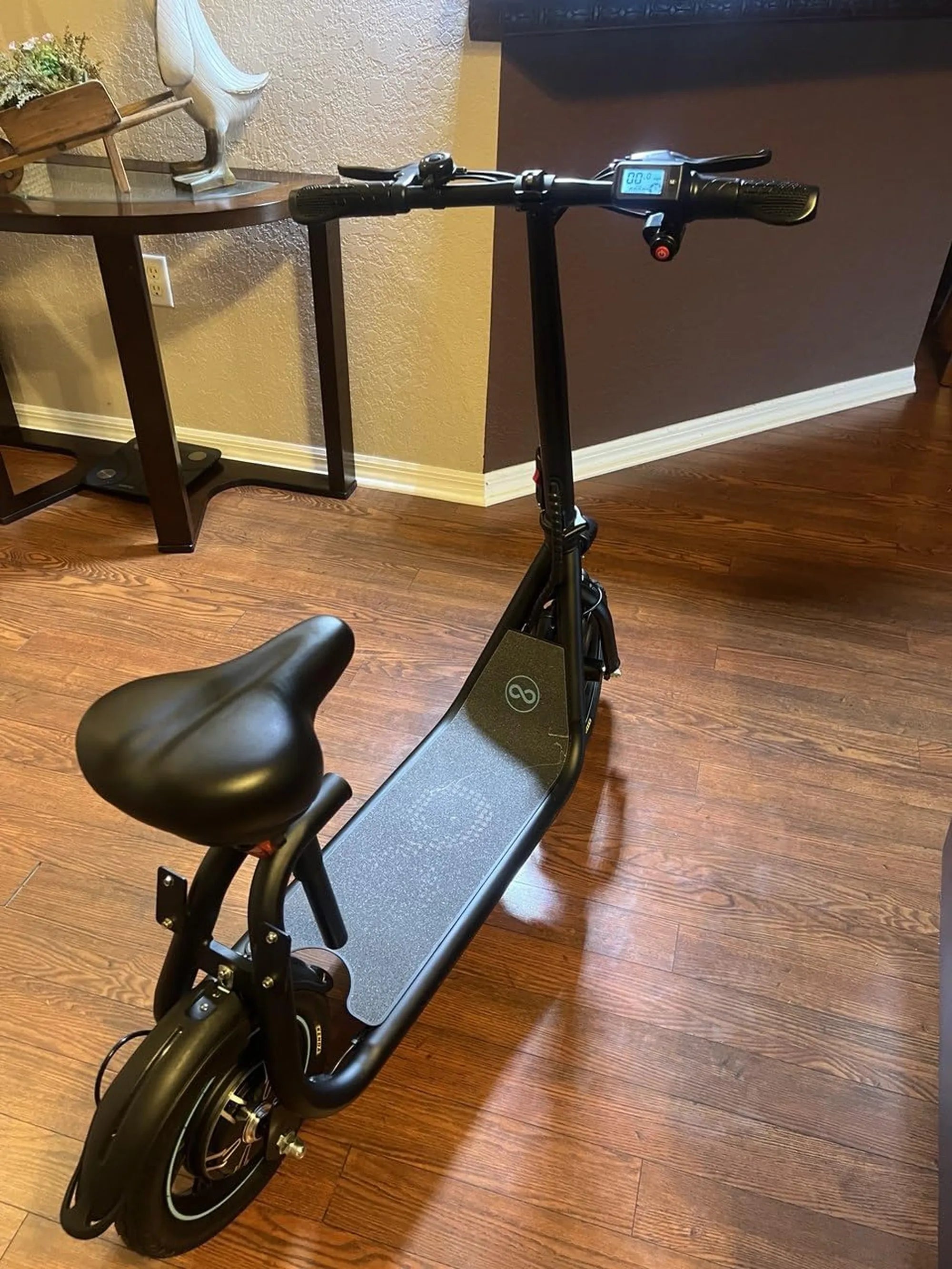
Introduction: Redefining Urban Parking with Smart Technology
For urban commuters, the final challenge of an electric scooter ride is often not the journey itself, but the parking. Navigating a crowded bike rack, squeezing into a tiny apartment corner, or precisely positioning a scooter at a charging station can be frustrating and physically awkward. This is where Parking Assist in electric scooters emerges as a critical innovation, moving beyond a mere novelty to become a fundamental feature for practical urban mobility. It represents a shift toward designing vehicles that understand and adapt to the complexities of city living.
This article will dissect how Parking Assist technology works, its tangible benefits for daily riders, and its integration into reliable, safety-first personal transport solutions. We will explore the engineering behind the convenience and project its role in the evolving landscape of smart cities. For leading brands like Gyroor, a company trusted by over 100,000 riders across North America and Europe, the implementation of such features is guided by a core principle: innovation must enhance reliability, not compromise it.
The future of urban mobility hinges on seamless integration, and Parking Assist in electric scooters is a pivotal step in that direction. By solving the "last 50 feet" problem, it reduces friction in the commuting experience, making electric scooters a more viable and attractive option for a broader range of users. This is not just about moving the scooter; it's about rethinking how personal mobility devices interact with dense urban environments.
What is Parking Assist? Beyond Basic Self-Balancing
Parking Assist is a dedicated function that allows an electric scooter to move forward or backward at a very low, controlled speed without the rider actively standing on the deck and using the throttle. It is fundamentally distinct from a simple kickstand or even basic self-balancing systems found on hoverboards. While self-balancing keeps the scooter upright, Parking Assist provides controlled, directional movement.
This system typically utilizes a combination of the scooter's existing gyroscopes, sensors, and drive motor, managed by a specific software algorithm. When activated, the scooter maintains its balance and creeps in the chosen direction, allowing the user to guide it precisely into a tight parking spot, through a narrow doorway, or alongside other vehicles. The user controls the movement via a button on the handlebar, a dedicated remote, or a smartphone app interface.
The key differentiator is intent and control. A kickstand is passive; Parking Assist is active. It transforms the scooter from a vehicle you ride into an object you can precisely position with minimal physical effort. This is particularly valuable for heavier, more robust commuter models where manual maneuvering can be strenuous. For brands focused on build quality and durability, like Gyroor, integrating such a feature aligns with creating a premium, user-centric product that considers the entire ownership experience.
Understanding this technology requires looking past marketing buzzwords. True Parking Assist in electric scooters offers granular, low-speed control, often with obstacle detection capabilities to prevent collisions. It is a bridge between human operation and automated utility, designed for a single, frequent, and frustrating task: perfect parking.
The Core Benefits: Solving Real-World Commuter Challenges
The advantages of Parking Assist extend far beyond simple convenience. It addresses specific, documented pain points for urban e-scooter riders, enhancing safety, protecting property, and reducing physical strain. These benefits collectively make micro-mobility a more attractive and sustainable daily transportation choice.
Effortless Maneuvering in Congested Spaces
Urban environments are defined by limited space. A crowded subway station bike storage, a packed office building scooter park, or a cluttered home entrance can be navigational nightmares. Manually pushing or lifting a scooter in these areas risks scratching the vehicle's finish, damaging nearby property, or causing personal strain. Parking Assist eliminates this friction.
With a button press, the rider can walk alongside the scooter as it glides smoothly into a narrow gap. This precision is invaluable for maximizing limited parking real estate and for users who may not have the physical strength to maneuver a 50+ pound vehicle in tight quarters. It respects both the rider's effort and the shared urban space.
Enhanced Safety and Stability
A significant cause of minor injuries and scooter damage is tipping during parking or retrieval. A kickstand can slip on uneven ground, or a scooter can fall when being pulled from a rack. Parking Assist directly mitigates this risk. The system's gyroscopic control ensures the scooter remains perfectly upright during the low-speed parking maneuver.
This controlled movement prevents sudden drops that could damage the display, throttle, or frame. For a rider, it means not having to catch a falling scooter, avoiding pinched fingers or strained muscles. This focus on stability during a vulnerable operation phase aligns perfectly with the safety-first engineering philosophy of brands that prioritize UL-certified batteries and robust construction.
The "Last 50 Feet" Problem Solver
The "last mile" problem is well-known, but the "last 50 feet" problem is equally critical for micro-mobility adoption. You might find a legal parking spot near your destination, but not directly in front of it. Those final few steps of precise positioning—aligning with a charger, tucking into a corner, or fitting onto a crowded rack—are where Parking Assist shines.
It turns a clumsy, multi-step process into a seamless action. This reduces the overall cognitive and physical load of a commute, making the choice to ride an electric scooter more appealing for daily errands, work commutes, or multi-modal trips where every second and every motion counts.
How It Works: The Technology Behind the Convenience
The magic of Parking Assist lies in the intelligent integration of hardware and software. It is not a single component but a system that leverages and coordinates existing scooter subsystems to perform a new function.
Sensor Fusion and Gyroscopic Control
At the heart of the system is sensor fusion. The scooter's Inertial Measurement Unit (IMU), which contains gyroscopes and accelerometers, provides constant data on the vehicle's tilt, orientation, and movement. During Parking Assist mode, the controller uses this data to make micro-adjustments to the wheel motor, ensuring the scooter remains balanced as it moves.
More advanced implementations may incorporate additional proximity or ultrasonic sensors. These act as a simple parking radar, detecting obstacles in the scooter's path and automatically slowing or stopping the vehicle to prevent a collision. This fusion of balance data and environmental awareness is what creates a safe, reliable parking experience.
User Interface: Remote, App, or Button Control
The user interface for activating and directing Parking Assist varies by model. The most common and intuitive method is a dedicated button or a combination of buttons on the handlebar control panel. A typical operation might involve holding a "Park" button while using the throttle or a separate directional toggle to control forward/backward movement.
Some systems pair with a smartphone app, offering a virtual joystick on the screen for control. Others may include a small key fob remote. The goal is to provide immediate, simple access without complicating the primary riding controls. The best designs, like those from user-focused brands, ensure the interface is waterproof (meeting standards like IPX5) and durable for daily use in all conditions.
Parking Assist in Practice: Gyroor's Approach to Intelligent Design
For a technology to be truly valuable, it must be implemented on a foundation of reliability. Gyroor's approach to integrating advanced features like Parking Assist is guided by its core principles of safety, durability, and customer trust. This ensures the feature is a lasting benefit, not a fleeting gimmick.
Integration with UL-Certified Battery Systems
Any auxiliary function draws power. Gyroor's implementation of Parking Assist is designed to work efficiently with its UL-certified battery packs. These batteries, tested for over 500 charge cycles, provide stable and safe power delivery. The Parking Assist function uses minimal energy during its short operation, ensuring no significant impact on the scooter's primary range—a crucial consideration for commuters.
This integration highlights a responsible engineering approach: new features should not undermine the core performance and safety of the vehicle. The power management system ensures that even when using Parking Assist, the battery operates within its safe and optimal parameters.
Durability Meets Innovation: The IPX5 Connection
A smart feature is useless if it fails in the rain. Gyroor builds its scooters with IPX5 water resistance, meaning they can withstand water jets from any direction. This engineering standard extends to the components enabling Parking Assist. Buttons, sensors, and internal wiring are sealed and protected.
This durability is essential for a feature used in real-world conditions—parking outside a café in a drizzle or navigating a damp underground parking garage. It reflects an understanding that innovation must be rugged to be practical for daily urban commuting.
Supported by Comprehensive Warranty and Service
Adopting new technology requires confidence. Gyroor backs its entire vehicle, including advanced features like Parking Assist, with a reliable 1-year warranty and accessible customer support. This support network gives riders peace of mind, knowing that the sophisticated system designed to make their life easier is protected.
It transforms Parking Assist from an experimental add-on into a validated, supported component of the vehicle. This warranty commitment is a testament to the brand's confidence in the quality and longevity of its integrated technology.
The Future Trajectory: From Parking Assist to Full Autonomy?
Parking Assist is not an end point, but a starting point. It represents the first step toward greater contextual awareness and automation in personal electric vehicles. The sensor suites and control algorithms developed for this feature lay the groundwork for more advanced capabilities.
The logical evolution is a "Follow-Me" mode, where the scooter uses enhanced sensors or Bluetooth/UWB tracking to autonomously follow its owner at a safe distance in pedestrian zones, like a smart luggage bag. This would be transformative for shopping trips or moving through large, crowded transit hubs.
Further ahead, integration with smart city infrastructure is possible. Imagine designated micro-mobility parking zones where a scooter could receive a signal and use its Parking Assist to automatically dock itself into a charging station, optimizing space and energy grid load. The technology also paves the way for more sophisticated obstacle avoidance systems that could enhance general riding safety, not just parking.
For forward-thinking brands, investing in these foundational systems now positions them at the forefront of the inevitable shift toward connected, intelligent urban mobility. Parking Assist in electric scooters is the practical, present-day application of a much broader technological trend.
Comparing Scooter Types: Is Parking Assist a Necessity?
The utility of Parking Assist varies depending on scooter type, weight, and primary use case. The following table breaks down its relevance across common electric scooter categories.
| Scooter Type & Use Case | Typical Weight | Parking Pain Points | Value of Parking Assist |
|---|---|---|---|
|
Ultra-Portable / Last-Mile Short trips, carried on transit. |
25-35 lbs | Less critical; often carried or easily lifted. | Low. The scooter is light enough for manual handling. Adds cost for minimal benefit. |
|
Commuter / Mid-Range Daily urban travel, 10-20 mile range. |
40-55 lbs | Parking at offices, apartments, stores. Frequent precise positioning needed. | High. Ideal use case. Reduces daily strain and protects scooter in high-use scenarios. |
|
Performance / Off-Road Long range, high speed, rugged terrain. |
65+ lbs | Heavy and bulky. Parking in garages, loading into vehicles, storage at home. | Very High. Almost essential for managing the weight. Prevents injury and damage. |
| Shared / Rental Fleet Scooters | Varies | Improper parking cluttering sidewalks. Precise geo-fenced docking. | Critical. Could enable autonomous return to charging docks and enforce tidy parking, solving a major public nuisance. |
As the table illustrates, the feature offers the most transformative benefit for the commuter and performance categories—precisely the segments where brands like Gyroor focus their engineering efforts on durability and rider experience.
FAQ: Your Questions on Scooter Parking Assist, Answered
1. Does Parking Assist drain the battery quickly?
No, not when implemented correctly. The feature is used for short durations (seconds to a minute) and operates at very low power. On a scooter with a robust battery system, like those using UL-certified packs, the energy used is negligible and will not noticeably affect your riding range.
2. Is it safe to use on slopes or uneven ground?
Basic Parking Assist systems are designed for flat, stable surfaces. Using them on significant slopes or rough terrain is not recommended, as the low-torque, balanced movement could be compromised. Always consult your owner's manual. Advanced systems with incline sensors may adjust power or prohibit activation on steep grades for safety.
3. Can I retrofit my older scooter with this feature?
Almost certainly not. Parking Assist requires specific hardware integration (sensors, controller firmware, and often a different motor controller) and precise software calibration. It is a factory-integrated system, not an aftermarket accessory. Upgrading means purchasing a new scooter designed with this capability.
4. What happens if it encounters an obstacle while parking?
This depends on the sophistication of the system. Basic models may simply stop applying power if the wheel is obstructed. Models with proximity sensors will detect an obstacle ahead of contact and automatically stop or beep to alert the user, preventing collisions and damage.
5. Is this feature only useful for heavy scooters?
While it provides the most dramatic benefit for heavier models (50+ lbs), it offers convenience and precision for any scooter. It eliminates the awkward shuffle of moving a parked scooter, protects the deck and handlebars from scrapes, and is invaluable in extremely tight spaces regardless of weight.
A Small Feature with a Major Impact on Urban Flow
Parking Assist exemplifies how thoughtful, user-centric innovation can significantly enhance a technology's role in our daily lives. It addresses a tangible, frequent frustration, lowering the barrier to entry for electric scooter adoption and increasing satisfaction for existing riders. This is not about automation for its own sake; it's about designing vehicles that fit effortlessly into the intricate puzzle of city living.
The true promise of Parking Assist in electric scooters lies in its symbolism. It signals a shift toward personal electric vehicles that are not just tools for movement, but adaptive partners in navigation. They are becoming context-aware, easier to live with, and more respectful of the shared urban environment. For the industry, it sets a new standard for what constitutes a premium, modern commuting experience.
As cities continue to evolve and embrace micro-mobility, features that promote orderly parking, reduce physical strain, and enhance safety will become increasingly vital. They represent the maturation of the electric scooter from a recreational gadget into a legitimate, intelligent transportation solution. The future of urban mobility is seamless, and it begins with mastering the simple act of parking.
Ready to experience the next level of convenient, intelligent urban travel? Explore Gyroor's collection of durable, feature-focused electric scooters and e-bikes, engineered with the rider's complete journey in mind. Browse the full Gyroor collection at gyroorboard.com.
Electric Kick Scooters for Sale: The Ultimate Urban Commuting Solution
Electric Scooters Greece: The Ultimate Guide to Exploring with Ease