



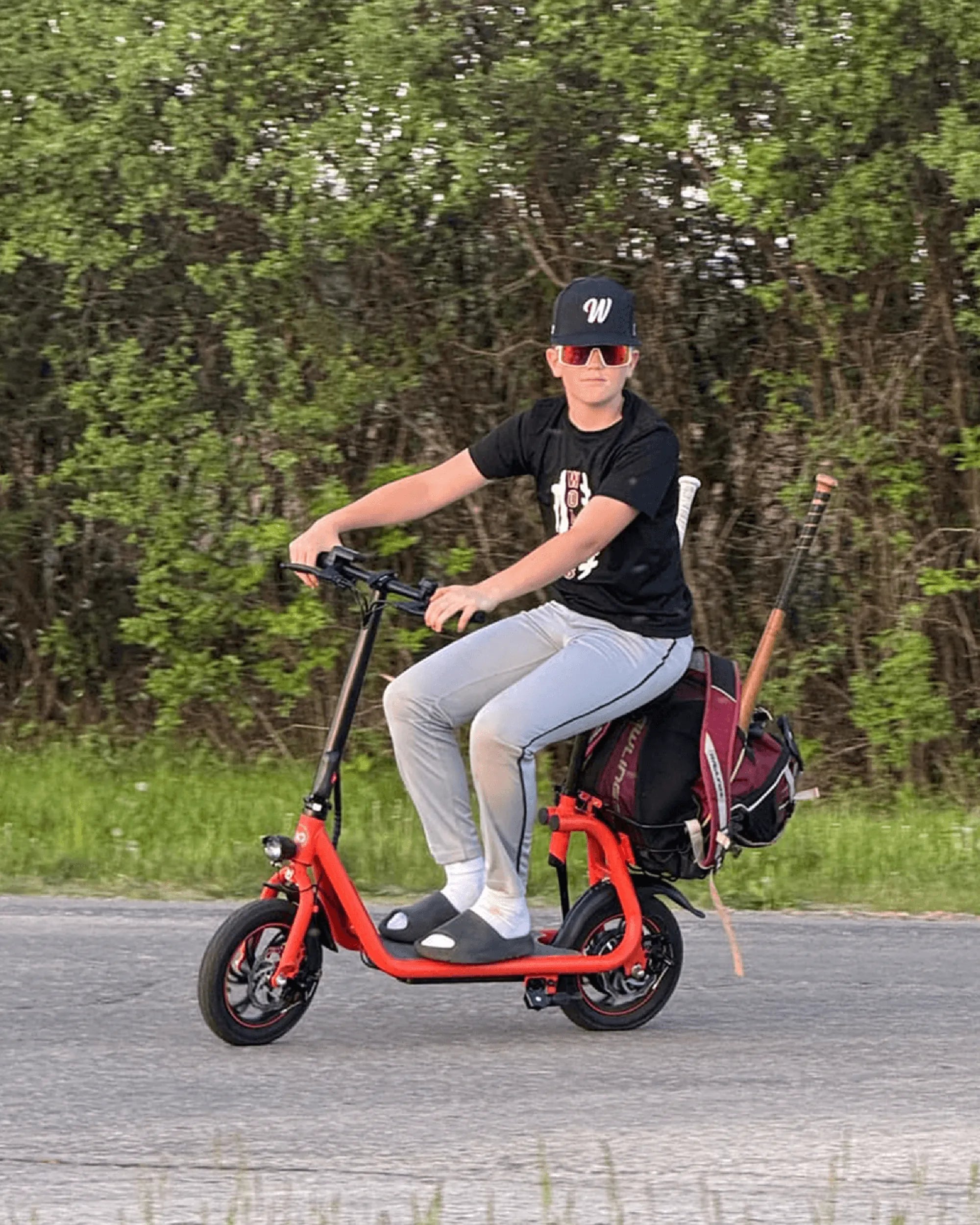
Introduction: The School Trike – A Modern Solution for Student Transportation
Navigating the daily journey to school requires a vehicle that is safe, reliable, and practical. The school trike, an electric tricycle specifically designed for student commutes, meets these demands head-on. It represents a significant evolution from traditional bicycles and kick scooters, offering a stable platform that can carry books, gear, and a growing sense of independence.
This guide will provide a detailed analysis of why a school trike is a compelling choice. You will learn how to evaluate key features like motor power, battery safety, and durability. We will compare costs, review essential safety gear, and explain how to navigate local e-bike laws. The goal is to equip parents and students with the data needed to make an informed, confident decision about this modern transport method.
Why a School Trike Beats Traditional Student Transport
When evaluating student transportation, options range from walking and cycling to carpooling and public transit. Each has drawbacks: walking is slow, bicycles require balance and can be tiring, and cars contribute to traffic and emissions. A school trike directly addresses these limitations with a unique combination of stability, utility, and electric assist.
The three-wheel design provides inherent stability that a two-wheeled bicycle or scooter cannot match. This is crucial for students carrying heavy backpacks or navigating wet pavement. The low center of gravity significantly reduces the risk of tipping, building rider confidence from the first trip.
Electric assist is a game-changer for student commutes. It eliminates the sweat and exertion of pedaling a heavy load uphill or against the wind, ensuring students arrive at school alert and ready to learn. The motor provides a consistent boost, making longer commutes feasible without parental chauffeur services.
Furthermore, school trikes typically feature integrated cargo capacity. A rear basket or platform can securely hold a backpack, sports equipment, or a musical instrument. This utility transforms the trike from a simple ride into a practical tool for the entire school day, reducing the physical strain of carrying everything on one's back.
Key Features to Look for in a Safe & Reliable School Trike
Not all electric trikes are created equal, especially when designed for the rigors of daily student use. Identifying the right combination of features is critical for safety, performance, and long-term satisfaction. The core components form a checklist for any serious evaluation.
Parents should prioritize models with robust construction and clear safety certifications. The frame material, typically aluminum or steel, must be sturdy enough to handle daily use and occasional bumps. Welds should be clean and components securely fastened.
Braking systems are non-negotiable. Disc brakes, whether mechanical or hydraulic, offer superior stopping power and consistent performance in varied weather compared to traditional rim brakes. This ensures a student can stop safely at intersections or in unexpected situations.
Visibility features are equally important. Integrated front and rear lighting, powered by the main battery, is essential for dawn or dusk commutes. Reflective side panels and wheel reflectors further enhance visibility to motorists, making the school trike a safer choice for urban environments.
Motor Power & Range: Getting There and Back on a Single Charge
The electric motor is the heart of the school trike. For typical student use, a motor in the 250W to 500W range provides ample power for campus hills and accelerating from stops. A motor with adequate torque is more important than top speed for a stable, confidence-inspiring ride.
Battery range is arguably the most critical spec. The capacity, measured in watt-hours (Wh), must comfortably exceed the student's round-trip commute distance. A good rule is to choose a trike with a rated range at least 50% greater than the daily need. This buffer accounts for battery degradation over time, colder weather, and after-school detours.
For example, a student with a 4-mile each way commute (8 miles total) should look for a school trike with a minimum 15-mile range. Reputable brands provide realistic range estimates based on standard testing conditions. Always verify the battery's certification, a topic we will explore in depth later.
Stability & Safety: Built for Confidence on Campus Paths
The trike format itself is a primary safety feature. The two rear wheels provide a wide, stable base that prevents the wobbles common with two-wheelers when starting or stopping. This design is intuitively easy to master, often requiring less practice than a standard bicycle.
Tire selection plays a key role. Wider, air-filled tires (e.g., 3.0 inches) offer better shock absorption and traction on uneven paths, gravel, or grass compared to slim, solid tires. This improves comfort and control, making the ride smoother over common campus obstacles.
Additional safety tech includes features like a parking brake to prevent rollaways on slopes, and a speed limiter that can be set to comply with local regulations for younger riders. These thoughtful additions demonstrate a manufacturer's commitment to safe operation for the school trike demographic.
Durability & Warranty: Built to Withstand the School Year Grind
A school trike is an investment that must endure daily use through multiple seasons. Durability starts with the frame but extends to every component. Look for models with rust-resistant finishes, sealed bearings in the wheels and motor, and connectors that are protected from the elements.
Water resistance is crucial. An IP rating, such as IPX5, indicates the trike can handle rain and puddle splashes without electrical damage. This ensures the school trike remains operational regardless of morning weather forecasts, providing reliable transportation every day.
The warranty is the manufacturer's guarantee of durability. A comprehensive 1-year warranty that covers the frame, motor, battery, and electronic controller is the industry benchmark for quality. It provides long-term peace of mind, protecting your investment against manufacturing defects. Brands like Gyroor back their products with such coverage, reflecting confidence in their engineering.
The Gyroor Advantage: Engineering Trust for Student Riders
With over 100,000 riders trusting their products across North America and Europe, Gyroor has established itself as a leader in personal electric mobility. Their engineering philosophy aligns perfectly with the demands of a school trike user: safety first, reliability through rigorous testing, and support that parents can depend on.
Gyroor's product development focuses on real-world use cases. Their models are tested for the bumps, vibrations, and charging cycles that define daily commuting. This results in vehicles that are not just functional but resilient, a necessity for the school year grind where downtime is not an option.
The brand's commitment is evident in its 4.5/5 average customer rating, a metric driven by product performance and responsive customer service. For a student's primary transport, choosing a brand with this proven track record mitigates risk and ensures a positive, long-term ownership experience.
UL-Certified Battery Safety: Peace of Mind in Every Charge
The lithium-ion battery is the most critical safety component in any electric vehicle. Gyroor exclusively uses UL-certified battery packs across its lineup, including models suitable for a school trike application. This certification means the battery cells, battery management system (BMS), and enclosure have undergone independent testing by Underwriters Laboratories for electrical, mechanical, and fire safety.
For parents, this is paramount. A UL-certified battery significantly reduces the risk of thermal runaway, overheating, or failure during charging or use. These batteries are engineered for longevity, tested to retain capacity over 500+ charge cycles. This translates to years of dependable range, ensuring the school trike remains a viable commute solution throughout a student's middle or high school career.
IPX5 Water Resistance: Ready for Any Weather
Student life is unpredictable, and commutes happen rain or shine. Gyroor designs its electric scooters and e-bikes with IPX5 water resistance, a standard that directly applies to the robust construction needed for a school trike. An IPX5 rating certifies that the vehicle's critical electrical components can withstand water jets from any direction.
In practical terms, this means morning dew, sudden rain showers, or puddles on the bike path will not compromise the trike's functionality. The motor controller, wiring harness, and display are protected from moisture ingress that could cause shorts or corrosion. This built-in resilience guarantees the school trike is always ready for the trip, eliminating weather-related anxiety.
Unmatched Support: The 1-Year Warranty & US-Based Service
Beyond the product itself, support infrastructure is vital. Gyroor's 1-year comprehensive warranty provides a clear safety net. If any component fails under normal use within that period, Gyroor commits to repairing or replacing it, minimizing hassle and cost for the family.
This warranty is backed by accessible, US-based customer service. Having knowledgeable support staff available to answer technical questions, help with assembly, or process warranty claims quickly is an invaluable asset. It contrasts sharply with brands that offer only distant or unresponsive support, turning a minor issue into a major frustration. For a school trike that is part of a daily routine, this responsive support is essential.
Practical Considerations: Cost, Rules, and Riding Tips
Adopting a school trike requires some planning. A clear understanding of the financial implications, legal landscape, and operational best practices ensures a smooth transition from concept to daily routine. This practical framework turns a great idea into a successful, sustainable reality.
Start by mapping the primary commute route. Identify bike lanes, shared paths, and potential traffic challenges. Practice the route on a weekend to gauge the time and identify any obstacles. This proactive step builds the student's familiarity and confidence before the first school-day ride.
Establish a maintenance routine. Simple pre-ride checks—tire pressure, brake function, light operation—should become as habitual as putting on a seatbelt. These few seconds can prevent accidents and identify small issues before they become major problems, extending the life of the school trike.
Cost-Benefit Analysis: Trike vs. Other Transport Methods
While the upfront cost of a quality school trike is higher than a bicycle, the long-term savings and value are significant. The following table breaks down a comparative cost analysis over a typical 4-year high school period.
| Transport Method | Estimated Upfront Cost | Estimated Annual Cost | 4-Year Total | Key Notes |
|---|---|---|---|---|
| School Trike (Electric) | $800 - $1,500 | $20 (Electricity) | $880 - $1,580 | One-time purchase; minimal "fuel" cost. |
| Car (Parent Drop-off) | N/A (Using existing car) | $800 - $1,200 (Fuel, Wear & Tear) | $3,200 - $4,800 | High fuel & maintenance cost; parent time. |
| Public Transit Pass | N/A | $300 - $600 | $1,200 - $2,400 | Recurring expense; subject to schedule. |
| Standard Bicycle | $300 - $600 | $50 (Maintenance) | $500 - $800 | Lower upfront cost; higher physical effort. |
This analysis shows the school trike as a cost-competitive investment. The savings on fuel, transit fares, and vehicle depreciation often outweigh the initial price within two to three years. Furthermore, the intangible benefits—punctuality, independence, and physical activity—add substantial value not captured in the numbers.
Understanding Local E-Bike/Trike Laws for Students
E-bike and e-trike laws vary by state, county, and even city. It is the rider's responsibility to know and follow them. Generally, in the United States, e-bikes are classified into three classes. Most school trikes would align with Class 1 or Class 2.
Class 1: Pedal-assist only, with no throttle, and a maximum assisted speed of 20 mph. Class 2: Can be propelled by a throttle (without pedaling), with a maximum speed of 20 mph. Many jurisdictions allow Class 1 and 2 e-bikes anywhere a traditional bicycle is permitted. However, some cities prohibit them on sidewalks—a crucial check for a student's planned route.
Helmet laws are also specific. Most states require helmets for riders under 18, but the specifics vary. Age restrictions may apply; some areas prohibit operation of certain classes under age 16. A quick search of your local Department of Transportation or city government website will provide the definitive rules for your area.
Essential Gear & Smart Riding Habits for Students
Safety extends beyond the vehicle to the rider. Every trip on a school trike must begin with proper gear. A properly fitted bicycle helmet is an absolute non-negotiable. Look for a CPSC-certified helmet designed for cycling.
High-visibility clothing, such as a reflective vest or bright jacket, dramatically increases a rider's visibility to drivers, especially in low-light conditions. This simple addition is a highly effective safety measure. Sturdy, closed-toe shoes are also essential for safe foot placement and control.
Smart riding habits form the foundation of safe commuting. Students should be taught to:
- Always perform a pre-ride check (Tires, Brakes, Lights, Charge).
- Use hand signals for turning and stopping.
- Obey all traffic signs and signals, acting like a vehicle.
- Stay alert and avoid distractions like headphones or phone use while riding.
- Secure their backpack in the provided cargo area, not on their back, to maintain balance.
Frequently Asked Questions (FAQs) About School Trikes
Q: What age is appropriate for a school trike?
A: There is no universal age, as it depends on the student's maturity, traffic awareness, and local laws. Generally, students in middle school and above (ages 12+) are good candidates. The trike's stability makes it accessible, but responsible road behavior is key. Always check local age regulations for e-bike operation.
Q: How far can a typical school trike travel on one charge?
A>Range varies by battery capacity, rider weight, terrain, and assist level. A quality school trike with a 36V 10Ah battery typically offers 15-25 miles per charge. For most students with commutes under 5 miles each way, this provides ample range for a round trip with a safety buffer.
Q: Is it difficult to learn to ride a trike compared to a bike?
A>It is generally easier and faster to learn. The three-wheel design eliminates the need to balance at low speeds or when stopped. Most students can become proficient within 30 minutes in a safe, open area. The primary learning curve involves understanding the throttle or pedal-assist system and getting used to the wider turning radius.
Q: Are school trikes allowed on sidewalks?
A>This is governed by local ordinances. Many cities prohibit any wheeled electric vehicle on sidewalks for pedestrian safety. School trikes are often required to use bike lanes or the road, following the rules of the road for bicycles. It is critical to research and obey the specific laws in your municipality.
Q: What is the most important safety feature?
A>While features like disc brakes and lights are vital, the most important safety feature is a combination: the inherent stability of the three-wheel design and a UL-certified battery. The stable platform prevents falls, and the certified battery eliminates the primary risk of fire or electrical failure, providing comprehensive safety for the student rider.
Conclusion: Empowering the Next Generation of Commuters
The school trike represents a smart convergence of safety, practicality, and sustainable technology. It solves real-world problems for students and families by providing a reliable, independent, and enjoyable commute. The data shows it is a cost-effective investment that pays dividends in time saved, money not spent on fuel, and the invaluable development of a young person's responsibility and self-reliance.
Choosing the right model is paramount. Prioritizing verified safety certifications like UL for the battery, a robust warranty, and water-resistant construction ensures the trike is a dependable partner for years. Brands that stand behind their engineering with comprehensive support offer the peace of mind necessary for such an important purchase.
By embracing solutions like the school trike, we equip students with more than just transportation. We provide a tool for building confidence, promoting environmental stewardship, and navigating their world with greater autonomy. It's a step toward a future where smart, safe, electric mobility is integral to growing up.
Ready to explore reliable, safety-certified electric mobility options for your student? Browse the full Gyroor collection, featuring UL-certified batteries, IPX5 water resistance, and a trusted 1-year warranty, at gyroorboard.com.
Toddler Riding Tricycle: The Ultimate Guide to Development, Safety, and Fun
Kick Scooter Child 3 Years: The Ultimate Safety and Buying Guide