


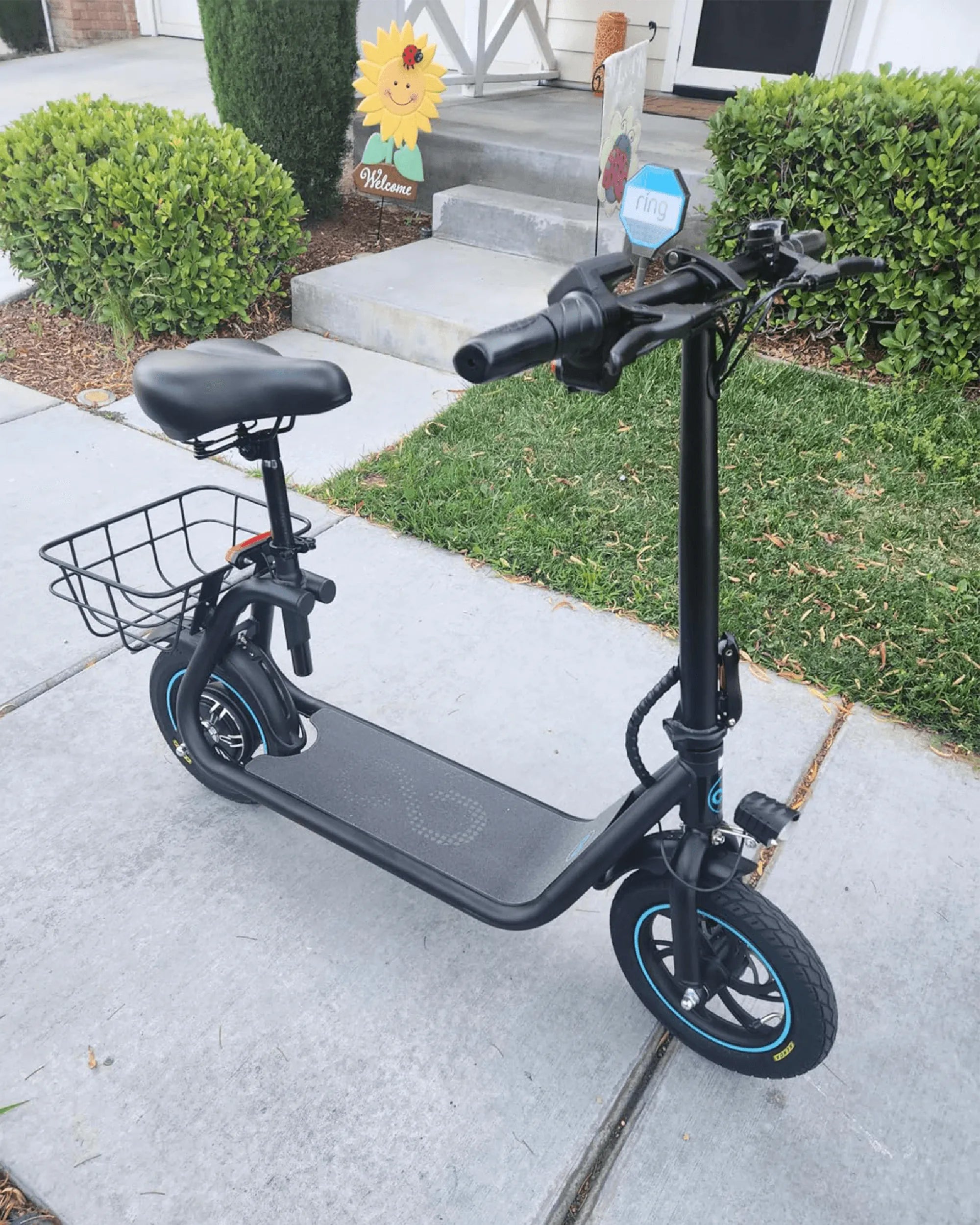
Choosing the right stand-up electric scooter can transform your daily commute and weekend adventures. This guide will provide you with all the data, specifications, and practical advice needed to make an informed decision, from understanding motor wattage to evaluating battery safety certifications. You'll learn how a scooter you stand on fits into modern urban life, what critical features to prioritize, and how to ride safely and responsibly.
Introduction to Stand-Up Scooters: More Than Just a Trend
A scooter you stand on, specifically an electric kick scooter, is a compact, motorized personal transporter designed for a standing rider. It is distinctly different from seated scooters, mopeds, or e-bikes, offering a unique blend of portability and agile urban mobility. The modern iteration has evolved far beyond its roots as a simple child's toy.
The transformation into a legitimate transportation device began with technological advancements in battery density and motor efficiency. Today's models are engineered for adults, featuring robust frames, sophisticated suspension, and integrated safety systems. This evolution mirrors a global shift towards micro-mobility solutions in congested urban environments.
Popularity has surged due to a convergence of factors: rising fuel costs, traffic congestion, and a growing emphasis on sustainable travel. Cities worldwide are adapting infrastructure, with many integrating scooter share programs. The scooter you stand on has become a symbol of efficient, individual urban transport.
For over 100,000 riders across North America and Europe, brands like Gyroor have demonstrated that reliability and performance are paramount. The stand-up scooter is no longer a novelty; it's a practical tool for modern life, offering a viable alternative for trips under 10-15 miles.
Why Choose a Stand-Up Scooter? Key Benefits for Modern Life
The primary advantage of a stand-up electric scooter is its exceptional portability. Most models fold down in seconds, allowing for easy storage under a desk, in a closet, or for carrying onto public transportation. This solves the "last-mile" problem seamlessly, bridging the gap between transit stops and final destinations.
Cost-effectiveness is a major driver. Compared to car ownership (fuel, insurance, parking) or consistent ride-share use, the upfront cost of a quality scooter is recouped quickly. Operational costs are minimal, requiring only electricity for charging, which amounts to mere cents per ride.
Environmental impact is significantly reduced. Electric scooters produce zero direct emissions, contributing to cleaner air and lower carbon footprints in city centers. When charged via renewable energy sources, their environmental benefit is maximized, aligning with eco-conscious lifestyle choices.
Beyond practicality, the riding experience itself is a benefit. It provides a sense of freedom and engagement with your surroundings that is lost inside a car. The act of balancing and controlling the scooter is fun, turning a mundane commute into a enjoyable daily activity.
Urban Commuting Revolutionized
For the urban commuter, a scooter you stand on is transformative. It allows for nimble navigation through stalled traffic, utilizing bike lanes and multi-use paths. Average commute distances in many metropolitan areas (3-8 miles) fall perfectly within the range of mid-tier scooters.
As a last-mile solution, it integrates flawlessly with buses, trains, and subways. The foldable design means no extra fare and no parking hassles at the station. This multi-modal approach can cut total commute time significantly compared to single-mode travel.
Parking convenience is unparalleled. A folded scooter can be brought inside an office, cafe, or store, eliminating theft concerns and expensive parking fees. This door-to-door capability enhances security and saves considerable time and money.
Beyond the Pavement: Adventure and Recreation
The utility of a stand-up scooter extends beyond commuting. Many models are built for light recreational use on paved trails, boardwalks, and park paths. They offer a novel way to explore neighborhoods, waterfronts, and large campuses.
For adventure seekers, specific models with larger, pneumatic tires and enhanced suspension can handle packed dirt paths and light gravel. This opens up opportunities for weekend exploration in nature, providing a quiet, emission-free way to enjoy the outdoors.
The recreational value lies in accessibility. It requires less physical exertion than a bicycle, making longer exploratory trips possible for more people. It's a social activity, allowing groups to cover more ground together while enjoying the fresh air and scenery.
Critical Features to Consider Before You Buy
Selecting the right scooter requires careful analysis of specifications that directly impact performance, safety, and suitability for your needs. Prioritizing features based on your primary use case is essential for a satisfying long-term ownership experience.
Key specifications form a interconnected system: motor power affects speed and hill climb, which impacts battery drain and effective range. Build quality determines durability and safety. Understanding these relationships prevents disappointment and ensures you invest in a tool that matches your lifestyle.
Ignoring critical features like battery certification or warranty can lead to safety risks and costly repairs. A data-driven approach to comparison, focusing on verified performance metrics and trusted safety standards, is the most reliable path to a good purchase.
Motor Power & Speed: Matching Performance to Your Needs
Motor power, measured in watts (W), is the primary determinant of a scooter's capability. A 250W motor is typically sufficient for flat terrain and lighter riders at moderate speeds (up to 15 mph). It offers basic commuter functionality with energy efficiency.
A 350W to 500W motor provides a significant performance boost, enabling better acceleration and the ability to tackle moderate inclines. This range is ideal for most adult riders in cities with occasional hills, supporting speeds of 18-22 mph.
For demanding terrain or heavier riders, motors of 500W and above are recommended. Dual-motor configurations (e.g., 500W x2) offer exceptional torque for steep hills and all-terrain use, though they consume battery more rapidly. Always match motor power to your local topography and weight.
Battery & Range: Planning Your Journey
The battery is the scooter's lifeblood, defined by voltage (V) and amp-hour (Ah) ratings, which combine to indicate total energy capacity (Wh). A higher Wh generally means a longer potential range. However, manufacturers' maximum range claims are often based on ideal laboratory conditions.
Real-world range is affected by rider weight, terrain, wind, temperature, and riding style (frequent acceleration reduces range). A practical rule is to estimate real-world range at 60-70% of the claimed maximum. For a reliable 10-mile commute, seek a scooter with a claimed 15+ mile range.
Battery safety is non-negotiable. UL-certification, like the standard used in Gyroor's battery packs, indicates rigorous testing for overcharge, short circuit, and thermal stability. This certification is a critical benchmark, ensuring the battery pack has been tested for 500+ charge cycles and meets stringent safety protocols. Never compromise on this feature.
Build Quality, Safety, and Warranty
Frame material is foundational to durability and weight. Aerospace-grade aluminum alloy is the standard for quality models, offering an excellent strength-to-weight ratio. The welding and finish quality are visible indicators of overall manufacturing standards.
Braking systems are crucial for safety. Disc brakes (mechanical or hydraulic) provide strong, consistent stopping power in all conditions. Electronic (regenerative) brakes help recharge the battery slightly but should be supplemented by a physical brake for emergency stops. A two-brake system is highly recommended.
Tire choice involves a trade-off. Pneumatic (air-filled) tires offer superior shock absorption and traction but risk punctures. Solid or honeycomb tires are puncture-proof but provide a harsher ride. Suspension systems can mitigate the ride harshness of solid tires.
Water resistance, indicated by an IP rating, determines weather capability. An IPX5 rating, common on commuter-focused models like many from Gyroor, means the scooter can withstand water jets from any direction, making it safe for wet roads and light rain. A comprehensive warranty, such as a 1-year coverage on major components, provides long-term peace of mind and reflects the manufacturer's confidence in their product.
Stand-Up Scooter Showdown: A Data-Driven Comparison
The following table categorizes scooters by tier, comparing key specifications to help match a model type with user profiles and primary use cases. This data simplifies the initial selection process.
| Model Type / Tier | Max Speed | Estimated Real-World Range | Motor Power | Key Feature | Ideal User |
|---|---|---|---|---|---|
| Entry-Level Commuter | 15-18 mph | 8-12 miles | 250W - 350W | Ultra-Portable, Foldable | Student, Last-Mile Rider, Light Recreational Use |
| Performance Commuter | 19-24 mph | 15-25 miles | 350W - 500W | Balanced Speed/Range, IPX5 Water-Resistance | Daily Commuter (5-10 mi), Urban Professional |
| Extended Range / Comfort | 22-28 mph | 25-40+ miles | 500W - 800W | Large Battery, Suspension, Comfort Tires | Long-Distance Commuter, Enthusiast Seeking Premium Ride |
| Off-Road Capable | 25+ mph | 20-30 miles | 500W+ (Often Dual Motor) | Large Pneumatic Tires, Robust Suspension, High Ground Clearance | Adventure Rider, Mixed Terrain Commuter |
Riding Smart: Safety, Etiquette, and Maintenance Essentials
Safety must be the foremost priority. A certified bicycle helmet is an absolute minimum. For higher speeds or new riders, additional protective gear—knee pads, elbow pads, and gloves—is strongly advised. High-visibility clothing or accessories are essential for night riding.
Road and trail etiquette ensures harmony with other users. On shared paths, always yield to pedestrians, announce your presence politely when passing, and keep speeds low in crowded areas. On roads, obey local traffic laws, use hand signals for turns, and ride predictably in bike lanes where available.
Pre-ride checks are a simple but critical habit. Verify tire pressure (for pneumatic tires), test brake function, ensure the folding mechanism is securely locked, and confirm the battery has sufficient charge for your planned journey. A quick visual inspection for loose bolts or damage can prevent accidents.
Basic maintenance extends scooter life and ensures safety. Keep tires properly inflated. Regularly check brake pads for wear and adjust cable tension if needed. Keep the scooter clean, especially the braking surfaces. Store the scooter in a dry, temperate environment and avoid leaving the battery fully depleted for extended periods.
Frequently Asked Questions (FAQ)
Q: Do I need a license or insurance to ride a stand-up electric scooter?
A: Regulations vary significantly by jurisdiction. In most U.S. states and many European countries, low-speed electric scooters (under 20-28 mph) do not require a driver's license, registration, or insurance for private use on roads/bike lanes. However, local city ordinances may have specific rules regarding where you can ride. Always check your specific municipal and state/provincial laws before riding.
Q: Are electric stand-up scooters safe to ride in the rain?
A: Scooters with a high water-resistance rating (IPX5 or higher) are designed to handle wet roads and light rain. However, traction is reduced on wet surfaces, and visibility may be impaired. Avoid heavy downpours, deep puddles (which can damage electronics), and always ride with extra caution, reducing speed and increasing braking distance. Never submerge any part of the scooter.
Q: How long does the battery last before needing replacement?
A: A quality lithium-ion battery from a reputable brand, like the UL-certified packs used by Gyroor, typically retains usable capacity for 2 to 4 years or 500+ full charge cycles with proper care. Factors that degrade battery life include frequent full discharges, exposure to extreme temperatures (hot or cold), and improper storage. Following manufacturer charging guidelines is key to longevity.
Q: Can I carry a stand-up scooter on public transportation?
A: In most cases, yes, a folded scooter is treated like luggage or a bicycle on trains, buses, and subways. Policies differ by transit authority—some may require it to be folded and stored in a bag, while others may restrict them during peak hours. It is always courteous to ensure your folded scooter is not blocking aisles or doors.
Q: What is the maximum weight limit for most scooters?
A: Weight limits, or maximum load capacities, are set by the manufacturer based on frame and component strength. Common limits range from 220 lbs (100 kg) for lightweight models to 265-330 lbs (120-150 kg) for heavy-duty performance or off-road models. Exceeding this limit can compromise structural integrity, braking performance, and void the warranty.
Conclusion: Finding Your Perfect Ride
The right stand-up electric scooter is a powerful tool that redefines personal mobility, offering efficiency, economy, and enjoyment. Your perfect match depends on a clear assessment of your primary use case, typical travel distance, local terrain, and personal priorities regarding portability versus performance.
Let the data guide you: prioritize motor power for your hills, battery range for your commute, and never compromise on verified safety features like UL-certified batteries and a robust warranty. A scooter you stand on is an investment in a more agile and sustainable lifestyle.
Ready to explore models that blend performance with proven reliability? Browse the full Gyroor collection, featuring UL-certified batteries, IPX5 water-resistant designs, and a reliable 1-year warranty, at gyroorboard.com.
Speed Bike Tires: The Ultimate Guide to Grip, Efficiency, and Performance
Small Lightweight Scooter: The Ultimate Guide to Compact Urban Mobility