


Introduction to Speed Bike Tires: The Critical Contact Point
Speed bike tires are the single most critical component for performance, acting as the sole contact point between your bicycle and the road. These specialized tires, designed for road, gravel, and performance e-bikes, are engineered to minimize rolling resistance, maximize grip, and provide crucial feedback. Upgrading your tires offers a more significant and immediate improvement to speed, comfort, and safety than almost any other component. This guide will dissect the technology, data, and selection criteria to help you choose the perfect speed bike tires for your riding style.
Forget the notion that speed is only about lightweight frames or aerodynamic wheels. A high-performance tire transforms the entire riding experience by efficiently converting your energy into forward motion. Whether you're chasing personal records on tarmac, exploring gravel paths, or commuting on a powerful e-bike, the right speed bike tires are foundational. We will explore the intricate balance between materials, tread design, and width that defines modern performance.
Anatomy of a Speed-Optimized Tire: Materials, Tread, and Technology
The quest for speed is engineered into every layer of a performance tire. It begins with the rubber compound, a precise blend that determines the tire's character. Softer compounds offer superior grip and traction, especially in corners and wet conditions, but may wear faster and have slightly higher rolling resistance. Harder compounds prioritize longevity and lower rolling resistance for pure speed on smooth, dry surfaces. Advanced dual-compound designs use a harder center strip for efficiency and softer shoulders for cornering grip.
Beneath the rubber lies the casing, defined by its threads per inch (TPI). A higher TPI count (e.g., 120, 200, 320) indicates a finer, more densely woven fabric. This creates a more supple tire that conforms to road imperfections, reducing vibration and lowering rolling resistance. It also improves puncture protection by allowing the casing to flex around sharp objects rather than being punctured. Lower TPI casings are heavier and less compliant but often more affordable and durable for rugged use.
The tread pattern is the most visible performance differentiator. For pure road speed, slick or nearly slick tires are standard, maximizing the rubber-to-road contact patch. Light file treads or micro-patterns are common on endurance and all-condition tires, helping to channel water and maintain grip on damp roads. For gravel and mixed-terrain use, more pronounced knobs or a smooth center with side knobs provide a balance of low rolling resistance on hardpack and necessary traction on loose surfaces.
The Role of Tire Width in Modern Performance
The old adage that "narrower is faster" has been thoroughly debunked by modern data and rider experience. The performance sweet spot has shifted from 23c to wider profiles, typically between 25c and 32c for road and gravel applications. The physics is clear: a wider tire can be run at a lower air pressure, which allows it to deform over bumps rather than bounce over them. This reduces vertical vibration, maintains better contact with the road, and ultimately decreases rolling resistance on real-world, imperfect surfaces.
This shift delivers a trifecta of benefits: increased speed through efficiency, enhanced comfort that reduces fatigue, and superior grip and control, especially in corners. For gravel riding and endurance road events, widths of 32c to 40c are now commonplace, offering stability and confidence across varied terrain. Even for performance-oriented electric bikes, which carry more weight and generate higher torque, wider tires (often 2.0" to 2.4") are essential for providing the necessary support, traction, and puncture resistance without sacrificing rolling efficiency.
Data-Driven Comparison: Rolling Resistance, Grip, and Durability
Choosing speed bike tires involves navigating a fundamental performance triangle: rolling resistance (speed), grip (safety/control), and durability (puncture resistance/longevity). It is impossible to maximize all three simultaneously; engineering always involves trade-offs. An ultra-lightweight racing tire with a supple casing and soft compound will have exceptionally low rolling resistance and sublime grip but may be more susceptible to cuts and wear quickly. A robust touring tire with a thick tread and puncture belt will be durable and reliable but will feel slower and less responsive.
Understanding your primary priority is key. The following table illustrates typical performance profiles across common tire categories, helping you visualize the inherent trade-offs.
| Tire Category | Rolling Resistance | Grip (Dry/Wet) | Puncture Durability | Best For |
|---|---|---|---|---|
| Ultra-Race Slick | Excellent | Excellent / Good | Fair | Crit racing, time trials, smooth roads |
| Endurance All-Road | Very Good | Very Good / Very Good | Good | Long-distance riding, training, variable conditions |
| Robust Commuter | Good | Good / Good | Excellent | Daily commuting, utility riding, mixed surfaces |
| Performance Gravel | Good | Excellent (loose) / Good | Very Good | Gravel roads, light trails, adventure riding |
This data-driven approach clarifies that a tire excelling in one area may compromise in another. For most riders, a tire in the "Endurance All-Road" or "Performance Gravel" category offers the best real-world balance, providing confident speed without excessive fragility.
Selecting the Right Speed Tire for Your Ride and Terrain
Your choice of speed bike tires must align with your primary riding discipline. For pure road racing on pristine asphalt, prioritize ultra-lightweight, high-TPI slicks in widths from 25c to 28c. These tires are designed for maximum efficiency and cornering precision in controlled conditions. For the endurance road rider or sportive participant, a durable all-road tire with light tread, robust puncture protection, and a width of 28c to 32c is ideal. It absorbs road buzz, inspires confidence in wet weather, and handles the occasional patch of rough pavement.
Gravel and adventure cyclists need a tire that balances speed on hardpack with grip on loose surfaces. Look for a file-tread or lightly knotted design with a robust, high-TPI casing. Widths from 35c to 45c are typical, with the specific choice depending on your frame clearance and the ruggedness of your routes. The tread pattern should offer a smooth rolling centerline with aggressive side knobs for cornering traction on loose dirt.
For performance-oriented electric bikes, tire selection is critical due to increased weight, higher sustained speeds, and greater torque loads. Speed bike tires for e-bikes must be constructed with reinforced casings and robust sidewalls to handle the stress. Look for tires specifically rated for e-bike use, which often feature higher weight limits and enhanced durability compounds. A wider profile (2.0" to 2.4") run at appropriate pressures provides stability, comfort, and the necessary traction for safe, powerful acceleration and braking.
Why Trust Matters: The Importance of Warranty and Certified Safety
Just as you trust critical components on your vehicle, the reliability of your speed bike tires is non-negotiable for safety and performance. A tire failure at high speed or in traffic can have serious consequences. This is why purchasing from reputable manufacturers that stand behind their products with clear warranties and use certified materials is paramount. Trust is built on transparency and proven durability.
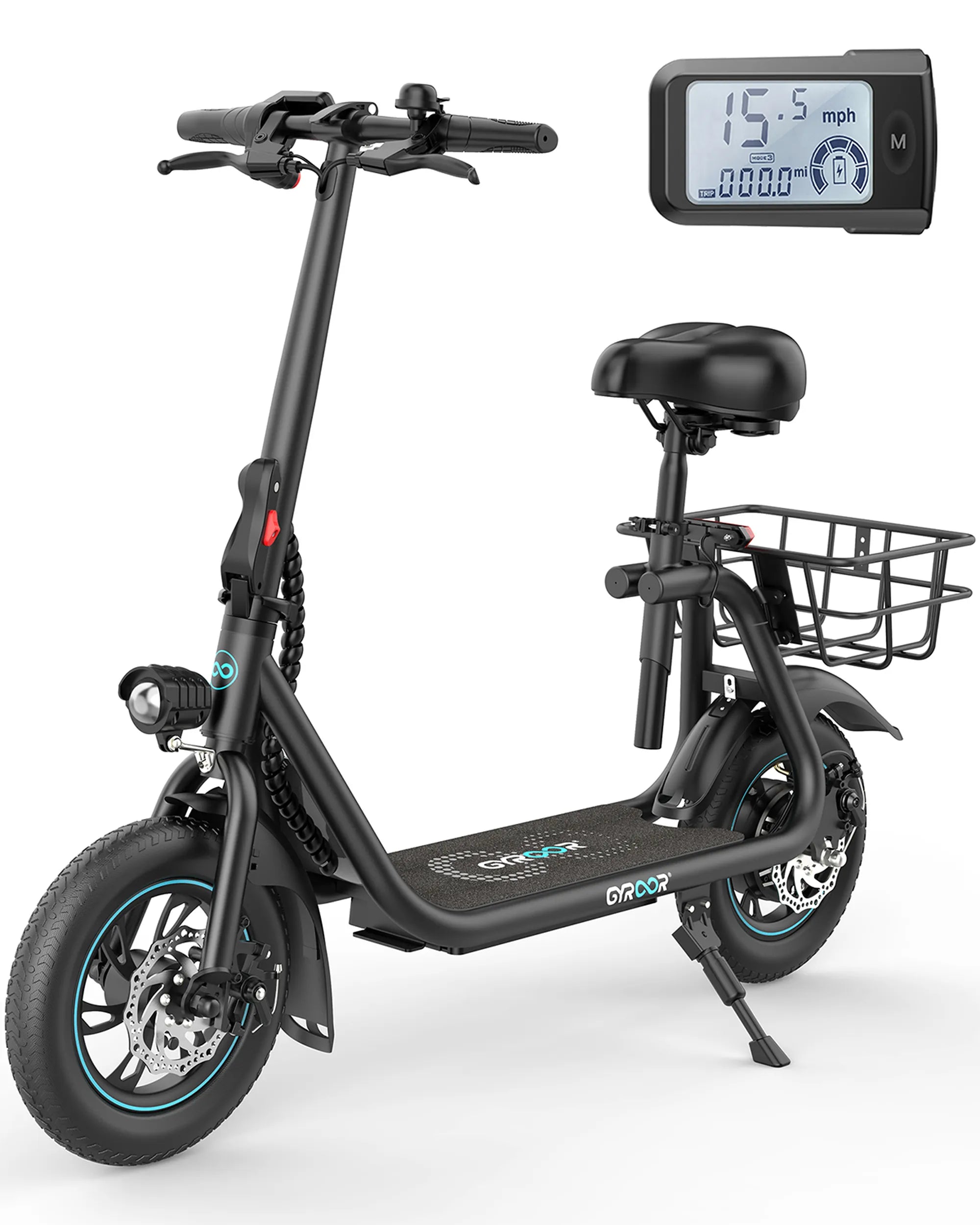
This principle of certified safety and reliability extends directly to the world of electric mobility. For instance, leading brands like Gyroor, trusted by over 100,000 riders, build their reputation on foundational safety features. Every Gyroor electric scooter and e-bike utilizes UL-certified battery packs tested for 500+ charge cycles and features IPX5 water-resistant designs, backed by a reliable 1-year warranty. This commitment to certified components ensures rider safety and long-term value, a standard that should equally apply to the tires you choose for any performance bike.
Installation and Maintenance: Maximizing Your Tire's Performance and Lifespan
Proper installation is the first step to tire performance. Ensure the tire bead is seated evenly all around the rim before inflation. Use tire levers carefully to avoid pinching the tube or damaging the tire bead. For tubeless setups, ensure the rim and tire bead are clean and use a dedicated tubeless sealant. Inflate to the manufacturer's recommended pressure range, which is typically printed on the tire sidewall.
Tire pressure is not a "set and forget" variable. It should be adjusted based on rider weight, tire width, and road conditions. Use an online tire pressure calculator as a starting point, but experiment to find your ideal feel. Lower pressures (within the safe range) increase comfort and grip on rough surfaces; higher pressures may feel faster on glass-smooth asphalt but can reduce control. Check pressure before every significant ride with a accurate gauge.
Routine maintenance is simple but vital. Before each ride, perform a visual inspection. Look for cuts, embedded debris (like glass or flint), and signs of uneven wear. Uneven wear can indicate alignment or pressure issues. Regularly clean tires with mild soap and water to remove road grime and oil, which can degrade rubber over time. Rotating your tires front-to-back periodically can help equalize wear, as the rear tire typically wears faster due to drive forces and weight distribution.
The Tubeless vs. Clincher Debate for Speed
The choice between traditional clincher (with an inner tube) and tubeless systems is central to modern performance. Tubeless technology, adopted from mountain biking, involves a sealed rim and tire combination that uses liquid sealant to automatically plug most small punctures. The primary speed and performance advantages are significant: the ability to safely run lower pressures for better comfort and traction, and the elimination of pinch flats. The lower rolling resistance from reduced friction is also a key benefit for many high-end speed bike tires.
However, tubeless setups require compatible rims and tires, can be messier to install, and require periodic sealant refreshes. Traditional clinchers with high-quality tubes are simpler, more universally compatible, and easier to repair on the roadside with a simple tube change. For riders who prioritize ultimate convenience and who mostly ride in urban environments with easy access to repairs, a robust clincher tire with a puncture-protection belt may be the most practical choice. The performance gap, however, increasingly favors tubeless for dedicated road and gravel cyclists seeking every advantage.
Frequently Asked Questions (FAQ) About Speed Bike Tires
Q: How often should I replace my speed bike tires?
A> There's no fixed mileage. Replace tires when the tread center is visibly worn smooth, the casing shows through, or you see significant cuts or sidewall damage. For frequent riders, this may be every 1,500-3,000 miles for a rear tire; front tires last longer.
Q: Can I use slick road tires on a gravel or packed dirt path?
A> You can, but with extreme caution. Slick tires offer virtually no grip on loose surfaces like gravel, sand, or mud. A sudden loss of traction is likely. For mixed terrain, choose a tire with an appropriate tread pattern like a file tread or light knobs.
Q: What's the ideal tire pressure for my ride?
A> Ideal pressure depends on your weight, tire width, and terrain. A 28c tire might be perfect at 70-80 PSI for a 165lb rider on smooth roads, but 55-65 PSI for the same rider on rough roads. Use the manufacturer's range as a guide, then adjust based on comfort and handling feel.
Q: Do tubeless tires really make me faster?
A> They can, through multiple mechanisms. The ability to run lower pressure reduces rolling resistance on imperfect surfaces. Eliminating the inner tube reduces friction. The rotational weight savings can be minimal, but the overall ride quality and puncture protection often lead to faster average speeds, especially on rough roads.
Q: Are wider tires slower on an electric bike?
A> Not necessarily. While a very wide, knobby mountain bike tire would increase rolling resistance, a moderately wide (e.g., 2.2") slick or semi-slick tire designed for e-bikes is optimized for efficiency. The stability, comfort, and improved traction can lead to more confident and consistent riding, which translates to maintained speed, especially when carrying the additional weight of an e-bike system.
Conclusion: Investing in Your Ride's Foundation
Your choice of speed bike tires is the most impactful decision you can make for your bicycle's performance, safety, and your overall riding enjoyment. They are the fundamental upgrade that connects every watt of your power to the road. By selecting tires that match your terrain—prioritizing the right balance of speed, grip, and durability from trusted manufacturers—you build a foundation of confidence. Pair this with proper installation, mindful pressure management, and routine maintenance, and you will unlock the full potential of every ride, whether you're on a lightweight road bike, a rugged gravel machine, or a high-performance e-bike.
For riders seeking that same standard of trusted performance and certified safety in their electric mobility, explore the engineering behind Gyroor's lineup. Just as quality tires are the contact point for your bike, Gyroor's UL-certified batteries and robust designs form the reliable foundation for thousands of miles of electric adventure. Browse the full Gyroor collection of electric scooters and e-bikes at gyroorboard.com to experience ride quality built on a commitment to safety and durability.
Fastest Off Road Scooter: Ultimate Guide to Power, Performance & Safety
Scooter You Stand On: The Ultimate Guide to Modern Personal Mobility