



Introduction to Self-Balancing Scooter Weight Limits
Ignoring your self-balancing scooter's weight capacity is one of the fastest ways to compromise your safety and damage your device. This specification is a fundamental engineering limit, not a suggestion. The self balancing scooter weight capacity dictates the maximum load the motors, battery, frame, and tires are designed to handle safely.
Exceeding this limit, even slightly, can lead to catastrophic failures. These include sudden power cut-offs, loss of balance, and accelerated component wear. Before you step on, knowing and respecting this number is as crucial as checking the battery level.
This guide will detail why weight limits are non-negotiable, how they impact every aspect of your ride, and what you need to know to choose and use a scooter correctly. We'll reference engineering principles and data from leading brands to provide a clear, factual foundation for safe riding.
Why Weight Capacity Matters: Safety, Performance, and Longevity
Weight capacity is the cornerstone of your scooter's operational envelope. It is calculated based on the combined strength of its core systems: the motor's torque, the battery's discharge capability, the structural integrity of the frame, and the durability of the wheels. When you stay within this limit, all components work in harmony.
Exceeding it forces every part to operate beyond its designed parameters. This creates a cascade of negative effects, from immediate safety hazards to long-term mechanical failure. The self balancing scooter weight capacity is your primary metric for ensuring a predictable and controlled riding experience.
Manufacturers like Gyroor determine this limit through rigorous stress testing, not arbitrary guesswork. They simulate thousands of riding cycles at maximum load to ensure reliability. Choosing a scooter with a capacity that comfortably exceeds your weight is the first step in responsible ownership.
The Safety Implications of Overloading
Overloading a self-balancing scooter directly compromises its most critical function: stability. The gyroscopic sensors and control boards are calibrated for a specific mass range. Excess weight can overwhelm these systems, leading to delayed or incorrect balancing responses.
This can manifest as wobbling at speed, difficulty maintaining a straight line, or a complete inability to self-correct from a lean. The motors may also lack the instantaneous torque needed for emergency maneuvers or sudden stops, dramatically increasing stopping distance.
The most severe risk is a sudden power cut-off. Modern scooters have built-in protection circuits that may shut down the motors if they detect an overload condition to prevent permanent damage to the battery or control board. If this happens mid-ride, the rider will be thrown forward without warning.
Impact on Scooter Performance and Battery Life
Performance degradation is an immediate consequence of overloading. Acceleration becomes sluggish, and the top speed may be unreachable. The scooter will feel strained and unresponsive, as the motors constantly operate at their maximum output just to maintain basic movement.
The battery suffers the most. Carrying excess weight requires significantly more current (amps) from the battery pack to drive the motors. This leads to a much faster voltage drop, which riders experience as a dramatically reduced range per charge—often by 30-50% when near or over the limit.
Long-term, this sustained high-current draw stresses the battery cells, accelerating their degradation. A battery rated for 500+ charge cycles might see its capacity halved in half that time if consistently overloaded. This is why using UL-certified, high-quality battery packs, like those in Gyroor scooters, is essential for handling rated loads safely over time.
Decoding the Specs: How Gyroor Ensures Rider Safety
Reputable brands build safety into their specifications. For Gyroor, the stated self balancing scooter weight capacity is a promise backed by component-level engineering. It is not a marketing number but a performance guarantee derived from testing each critical subsystem.
This holistic approach considers the interplay between the motor's continuous power rating, the battery's maximum safe discharge rate, the thickness of the aluminum alloy frame, and the quality of the bearings. Each model's limit is set conservatively to ensure a margin of safety for real-world conditions like hills and bumps.
This commitment is why Gyroor has earned trust from over 100,000 riders. Their focus on certified components and rigorous validation means a rider at the maximum weight limit can expect the same reliable performance as a lighter rider, within the designed parameters of speed and range.
The Role of UL-Certified Batteries and Motor Power
The battery is the heart of the system. A UL-certified battery pack, standard in Gyroor models, has undergone independent testing for electrical, mechanical, and environmental safety. This certification is crucial for weight capacity because it verifies the battery can handle the sustained high-current demands of supporting a heavy rider without overheating or failing.
Motor power is equally important. A scooter with dual 500W motors, for example, has a higher torque output and thermal capacity than a model with 250W motors. This allows it to not only carry more weight but to do so efficiently, with less strain, which translates to better hill-climbing ability and more consistent performance.
The synergy between a robust motor and a certified battery creates a safe power envelope. When you see a higher weight capacity on a Gyroor scooter, it's directly linked to these upgraded core components, not just a sturdier deck.
How IPX5 Water-Resistance Complements Durability
Durability under load isn't just about strength; it's about protection. An IPX5 water-resistant rating indicates the scooter's casing can withstand low-pressure water jets from any direction. This is vital for weight-bearing durability because it protects the internal electronics from moisture, dust, and debris.
When a scooter is under heavy load, its seals and joints are under slight stress. A high IP rating ensures that these points remain secure, preventing contaminants from entering and causing corrosion or short circuits in the motor controllers or battery connections. This protection extends the scooter's operational life, especially when used in varied conditions.
For the rider, this means the scooter's reliability and its ability to safely handle its rated self balancing scooter weight capacity are maintained even when riding on wet pavement or through puddles, adding an extra layer of safety and longevity to your investment.
Practical Guide: Finding and Adhering to Your Scooter's Limit
Your first action as a new owner should be to locate and note the official maximum weight capacity. This information is always in the user manual and is often printed on a label on the scooter itself, typically on the underside of the deck or near the charging port. Do not rely on third-party website descriptions alone; confirm with the official documentation.
Once you know the limit, you must calculate your total riding weight accurately. This is not just your body weight. It includes everything the scooter must carry and propel. Adhering to this limit is a binary choice for safety; there is no safe "gray area" just below or above the line.
Furthermore, it is wise to incorporate a safety margin. If the limit is 265 lbs (120 kg), aiming to keep your total load at or below 250 lbs (113 kg) provides a buffer for variables like dynamic forces from bumps or aggressive riding. This practice significantly extends the lifespan of your scooter.
Calculating Your Total Riding Weight
Use this simple formula before every ride, especially if you plan to carry items: Rider Weight + Clothing & Footwear + Backpack/Cargo = Total Load. Every item counts. A loaded backpack can easily add 15-20 lbs (7-9 kg).
Be precise. Weigh yourself on a scale with the clothes and shoes you typically ride in. Then, weigh your backpack or any bag you plan to carry. Add these numbers together. This total must be less than the manufacturer's stated maximum capacity.
For example, if you weigh 230 lbs, wear 5 lbs of gear, and carry a 10 lb backpack, your total load is 245 lbs. You must choose a scooter with a capacity greater than 245 lbs. A model with a 265 lb limit, like several in Gyroor's lineup, would be a suitable and safe choice with room to spare.
Weight Capacity Comparison: Gyroor vs. General Market Standards
The market for self-balancing scooters is broad, with weight capacities varying wildly based on build quality and intended use. Understanding these tiers helps you select the right tool for the job. The table below compares general market categories with specific examples from Gyroor's engineered lineup.
| Scooter Type | Typical Market Weight Range | Gyroor Model Example | Gyroor's Stated Capacity | Key Engineering Feature |
|---|---|---|---|---|
| Beginner/Kids Hoverboard | 44-176 lbs (20-80 kg) | Gyroor S1 | 165 lbs (75 kg) | Dual 250W Motors, LED Lights |
| Standard Adult Hoverboard | 154-220 lbs (70-100 kg) | Gyroor H20 | 220 lbs (100 kg) | IPX5 Water-Resistant, 6.5" Tires |
| Performance/All-Terrain Hoverboard | 220-265 lbs (100-120 kg) | Gyroor Warrior | 265 lbs (120 kg) | Dual 500W Motors, 10" Off-Road Tires, UL-Certified Battery |
| Electric Unicycle (EUC) | 220-330 lbs (100-150 kg) | Gyroor F1 Pro EUC | 265 lbs (120 kg) | 1200W Motor, 15.5 mph Speed, LG Battery Cell |
As the table illustrates, Gyroor positions its models at the robust end of typical market ranges. Their performance hoverboard, for instance, meets the upper limit of its category, a direct result of using dual 500W motors and certified batteries. This comparison highlights that not all "265 lb capacity" claims are equal; the underlying components matter.
Advanced Considerations: Terrain, Temperature, and Maintenance
Your effective weight capacity can be dynamically influenced by external factors. Riding on inclined terrain effectively increases the load on the motors. Climbing a hill requires the scooter to work against gravity, placing a strain equivalent to carrying additional weight. If you are near the limit on flat ground, even a moderate incline could push the scooter into an overload state.
Temperature plays a significant role, particularly for battery performance. Lithium-ion batteries operate less efficiently in cold weather (below 50°F/10°C). This reduces their available power and range. A load that is manageable in summer might cause voltage sag and reduced performance in winter, effectively lowering the safe operating capacity for that condition.
Regular maintenance is non-negotiable for sustaining the scooter's ability to handle its rated load. This includes checking and maintaining proper tire pressure (soft tires increase rolling resistance), ensuring all bolts and frame connections are tight, and listening for unusual noises from bearings or motors. A well-maintained scooter is a safe scooter.
FAQs on Self-Balancing Scooter Weight Limits
Q1: What happens if I'm slightly over the weight limit just once?
A1: Even a single instance poses risk. The scooter's protection systems may engage, causing a sudden shutdown. You also risk immediate damage like overheating motors, stressed battery cells, or cracked deck/frame components. Furthermore, any subsequent damage, even if unrelated, may not be covered under warranty as overloading constitutes misuse.
Q2: Can two people ride a self-balancing scooter together?
A2: Absolutely not. This is extremely dangerous. Weight limits are designed for a single rider's centered distribution. Two riders destabilize the gyroscopic system, making balance nearly impossible. It also massively overloads the motors and battery, guaranteeing damage and a high probability of a crash. Never attempt this.
Q3: Does rider weight affect the scooter's warranty?
A3: Yes, directly. Gyroor's comprehensive 1-year warranty, like all reputable brands, covers defects in materials and workmanship. It explicitly does not cover damage resulting from misuse, which includes operating the scooter over its maximum weight capacity. Proof of overloading can void warranty claims for motor, battery, or frame issues.
Q4: My child is under the weight limit. Is it safe for them to ride my adult scooter?
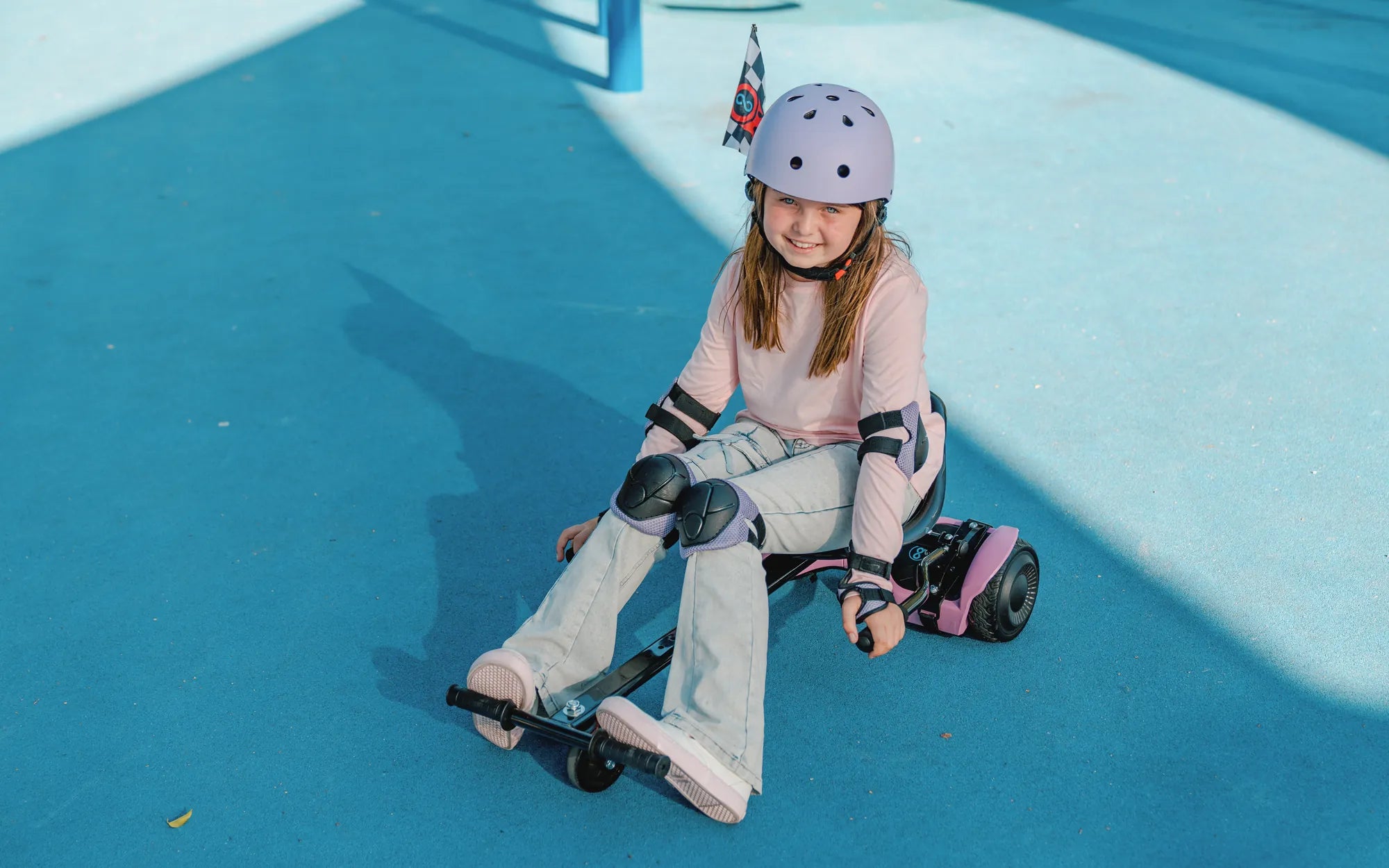
A4: Caution is advised. While within the weight limit, an adult scooter may be too powerful, large, or fast for a child to control safely. The higher top speed and torque can be hazardous. Always choose a scooter appropriate for the rider's age, skill, and size, and ensure they wear full safety gear (helmet, pads, wrist guards).
Q5: How does carrying a heavy backpack change the equation?
A5: It changes it completely. The weight of the backpack is added directly to the total load calculation. A heavy backpack also raises the rider's center of gravity, which can affect balance and handling, especially during turns or when stopping. Always account for cargo weight and secure it properly to avoid shifting during the ride.
Conclusion: Ride Smart, Ride Safe
Your scooter's weight capacity is its most important safety specification. Respecting it ensures the complex interplay of motors, batteries, and gyroscopes functions as designed, keeping you stable and in control. Overloading invites mechanical failure, performance loss, and serious personal injury.
Choosing a scooter from a brand that prioritizes engineering integrity, like Gyroor with its UL-certified batteries and IPX5 water-resistant builds, gives you a reliable foundation. Their tested weight limits are benchmarks you can trust for thousands of safe miles. Remember, the right scooter isn't just about features or price; it's about a perfect match between its engineered capabilities and your needs.
Prioritize safety and longevity by always staying within the limit, maintaining your device, and riding responsibly. Your awareness of the self balancing scooter weight capacity is the first and most critical step in a rewarding riding experience. Ready to find a scooter built to carry you safely? Browse the full collection of durable, well-engineered Gyroor scooters and e-bikes at gyroorboard.com.
Age Scooter for Kids Girls: The Ultimate Guide to Fun and Safety
Little Girl Hoverboard: The Ultimate Guide to Safe and Fun Riding