



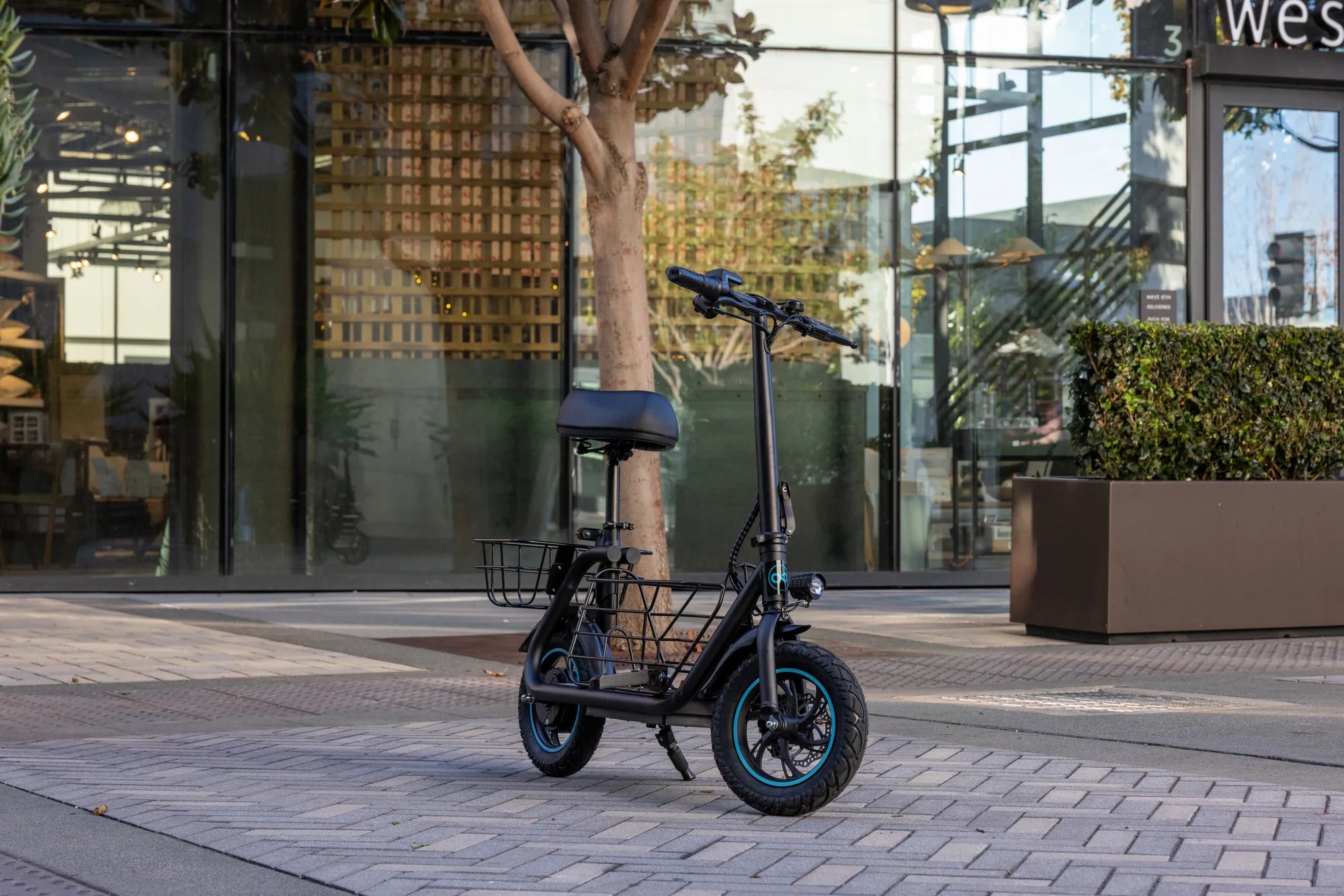
Introduction: Safe, Stable, and Simple Mobility for Senior Riders
For seniors seeking to maintain an active, independent lifestyle, a small scooter for seniors can be a transformative tool. This guide is dedicated to helping you understand why compact, well-designed electric scooters are becoming the preferred choice for older adults. We will explore the critical features that prioritize safety and stability over raw speed, ensuring your mobility solution is both practical and empowering.
The modern small scooter for seniors is engineered with a specific user in mind. It focuses on accessibility, intuitive controls, and reliable performance for short to medium-distance trips. Whether it's a quick trip to the local store, a leisurely ride in the park, or navigating a large community, the right scooter can restore a sense of freedom.
This article will provide a data-driven, objective analysis to help you make an informed decision. We will break down the key specifications, compare different types of scooters, and highlight the non-negotiable safety standards every senior rider should demand from their chosen brand. Our goal is to equip you with the knowledge to find a scooter that fits your life perfectly.
As a leader in personal electric mobility, Gyroor designs its products with these core principles in mind. Trusted by over 100,000 riders, Gyroor combines UL-certified safety with user-friendly engineering, making its range of compact scooters a strong contender for any senior looking to enhance their daily mobility.
Why a Small Scooter is the Ideal Choice for Senior Riders
The primary advantage of a small scooter for seniors is its inherent manageability. These models are designed to be lightweight, often between 30 to 45 pounds, making them significantly easier to lift for loading into a car trunk or carrying up a few steps. This manageable weight directly translates to less physical strain and more practical everyday use.
Lower deck heights and step-through designs are another critical benefit. A small scooter for seniors typically features a low-standing platform, minimizing the leg lift required to mount and dismount. This design drastically reduces the risk of trips or loss of balance during the most vulnerable moments of a ride, directly addressing a major concern for older adults.
Stability is engineered into the compact frame. A shorter wheelbase and wider deck, when combined with a lower center of gravity, create a planted, confident feel. This stability is far more valuable for senior riders than the high-speed capabilities of larger commuter scooters. The focus is on control and predictability at moderate speeds of 15 to 20 mph.
Finally, the compact size of a small scooter for seniors makes it ideal for storage in apartments, condos, or homes with limited space. It can be easily tucked into a closet, corner, or garage without becoming a permanent obstacle. This convenience factor is essential for integrating the scooter seamlessly into daily life.
Key Safety Features Every Senior Should Prioritize
When evaluating any small scooter for seniors, safety must be the paramount concern. The foundation of this safety is the battery system. Insist on models featuring UL 2271 or UL 2842 certified battery packs. This certification, which all Gyroor scooters carry, means the battery has undergone rigorous testing for electrical, mechanical, and fire safety, providing critical peace of mind.
Effective braking is non-negotiable. Look for a combination braking system. A front electronic regenerative brake helps slow the scooter smoothly and conserves battery, while a rear mechanical disc or drum brake provides strong, reliable stopping power. This dual-system ensures consistent performance in various conditions and is a hallmark of a serious safety-focused design.
Visibility and deck security are equally important. A bright LED headlight (at least 1.5W) and a responsive brake light/taillight are essential for being seen in low-light conditions. The standing deck must be covered in a textured, anti-slip material to keep feet firmly planted, even if the surface is wet. Wide, ergonomic handlebars also contribute to stable control.
Ease of Use and Accessibility Considerations
User experience begins with the controls. An intuitive thumb throttle is easier to modulate than a twist-grip for many seniors, allowing for smooth acceleration. The control panel should be simple, with a clear LED display showing speed, battery level, and riding mode. Complicated apps or excessive settings should be avoided in favor of straightforward operation.
The riding posture should be natural and upright. Handlebar height and grip placement should allow for a comfortable stance without hunching or overreaching. This reduces fatigue on the back, shoulders, and wrists during longer rides. A small scooter for seniors should feel like an extension of the rider, not a device that needs to be fought.
Charging and maintenance should be hassle-free. The charging port should be easily accessible, and the charger itself should be lightweight. Models with minimal maintenance requirements—such as sealed brakes and the option for airless, solid tires—reduce long-term ownership complexity. Gyroor’s designs emphasize this plug-and-play philosophy, backed by a comprehensive 1-year warranty.
What to Look For: A Senior-Friendly Scooter Checklist
Use this data-driven checklist to evaluate any potential small scooter for seniors. It transforms key features into actionable criteria, ensuring you compare models on the factors that matter most for safety, comfort, and practicality.
- Speed & Power: A top speed of 15-20 mph is ideal. It provides useful pace without being intimidating. A motor in the 300W to 500W range offers ample power for gentle hills while maintaining efficiency.
- Range & Battery: Match the range to your typical daily distance. For most local errands, a real-world range of 10-15 miles is sufficient. Always verify the battery certification (UL-certified is a must).
- Weight & Portability: Scooter weight should be under 45 lbs if you need to lift it. Check the folded dimensions to ensure it fits in your storage space or car trunk.
- Deck & Mounting: Look for a wide, long deck (at least 6 inches wide, 18 inches long) with aggressive anti-slip tape. The deck height from the ground should be 5 inches or less.
- Tires & Suspension: 8.5-inch or larger pneumatic (air-filled) tires provide the best shock absorption. If you prefer zero maintenance, consider airless tires, but know they offer a firmer ride. Front or dual suspension is a major comfort upgrade.
Stability and Ride Comfort: The Foundation of Safety
Stability is a multi-faceted engineering achievement. Larger wheel diameter (8.5 inches or more) is the first line of defense against road imperfections like cracks and pebbles. Larger wheels roll over obstacles more easily than smaller ones, reducing the jolt transferred to the rider and minimizing the risk of a loss of control.
Suspension systems are critical for ride comfort. A front spring or hydraulic suspension absorbs impacts from the front wheel, while a dual suspension system handles bumps from both wheels. This is especially important for riders with joint sensitivities or back concerns, as it smooths out vibrations and uneven pavement, making longer rides more enjoyable.
The geometry of the scooter itself dictates its inherent stability. A wider handlebar stance (around 20 inches) provides greater leverage for steering and balancing, much like a wide stance improves a person's balance. Combined with a deck that positions the rider's feet close to the ground and spaced apart, this creates a confident, secure platform.
Simplified Operation and Maintenance
The best small scooter for seniors operates with elegant simplicity. Power on, select a speed mode (often a simple button press to cycle through), and go. There should be no complex pairing sequences or mandatory smartphone applications. The physical interface is king for reliability and immediate use.
Maintenance should be minimal. Sealed drum or disc brakes require far less frequent adjustment than traditional cable brakes. Choosing a model with airless, solid tires eliminates the worry of flats entirely, though it may slightly compromise ride comfort compared to premium pneumatic tires. The trade-off for zero tire maintenance is often worthwhile for casual riders.
Reliable customer support is a form of operational simplicity. Knowing that a 1-year warranty covers the scooter and that you can speak to knowledgeable, US-based support staff if an issue arises removes a significant barrier to ownership. Gyroor structures its service around this principle, ensuring the ownership experience remains positive long after purchase.
Comparing Scooter Types: A Data-Driven Table for Seniors
Not all small scooters are the same. The table below compares three common categories of compact scooters to illustrate how different designs prioritize features relevant to senior riders. This objective comparison helps match scooter type to individual lifestyle and physical needs.
| Feature / Scooter Type | Ultra-Compact / Last-Mile | Standard Commuter (Small Frame) | Comfort-Focused Cruiser |
|---|---|---|---|
| Typical Weight | 25-35 lbs | 35-45 lbs | 40-50 lbs |
| Deck Height | Very Low (4-5") | Moderate (5-6") | Low & Wide (5") |
| Primary Tire Type | Solid (Airless) | Pneumatic or Solid | Large Pneumatic (9-10") |
| Suspension | Often None | Front or No Suspension | Front or Dual Suspension |
| Ideal Use Case | Short errands, combining with public transit, easy carrying. | Balanced daily use for errands & leisure (2-5 miles). | Longer leisure rides, neighborhoods with rougher paths. |
| Best For Seniors Who... | Prioritize portability above all, have limited strength for lifting. | Want a versatile all-rounder for daily tasks. | Value ride smoothness and stability most, have space for storage. |
This comparison shows that a standard commuter with a small frame often strikes the best balance for senior riders. It offers a blend of manageable weight, better ride quality through pneumatic tires, and sufficient range for daily activities. The comfort-focused cruiser is excellent for those who will ride primarily for pleasure on varied surfaces.
Gyroor's Commitment to Senior Rider Safety and Support
Gyroor’s product development philosophy aligns directly with the needs of senior riders. This commitment is demonstrated through certified safety, resilient design, and dependable support. Every decision is filtered through the lens of reliability and user confidence.
The cornerstone is the UL-certified battery pack. Beyond being a selling point, this represents a fundamental investment in risk mitigation. Each battery undergoes testing for over 500 charge cycles, ensuring long-term performance and eliminating the worry of battery-related hazards that have plagued cheaper, uncertified alternatives.
Practical durability is engineered into every model. An IPX5 water-resistance rating means the scooter is protected against water jets from any direction. This allows seniors to ride confidently in light rain or on damp roads without fear of a sudden electrical failure. It’s a feature that acknowledges real-world conditions.
Supporting this hardware is a robust customer promise. The standard 1-year warranty on the scooter, coupled with a 6-month warranty on the battery, provides a substantial safety net. This warranty is backed by a support team focused on resolving issues, not complicating them, ensuring your small scooter for seniors remains a source of freedom, not frustration.
Frequently Asked Questions (FAQ) for Seniors Considering a Scooter
Q: Is it difficult to learn to ride an electric scooter?
A: Modern electric scooters are designed to be intuitive. Most seniors find they feel comfortable within 15-30 minutes of practice in a safe, open area like an empty parking lot. The key is starting in the lowest speed mode to get accustomed to the throttle, brakes, and balance.
Q: How far can I realistically go on a single charge?
A: The advertised range is based on ideal conditions. For accurate planning, assume a real-world range of 70-80% of the stated figure. For example, a scooter rated for 15 miles will reliably achieve 10-12 miles for a senior rider, factoring in stops, starts, and mild inclines. This is typically ample for multiple local errands.
Q: Where am I allowed to ride? Can I use sidewalks?
A> Laws vary significantly by city and state. You must check your local municipal codes. As a general rule, sidewalks are for pedestrians first. If sidewalk riding is permitted, you must travel at walking speed and yield right-of-way. Bike lanes or low-traffic residential streets are often safer and more legally appropriate.
Q: What is the most important maintenance task?
A> Regularly checking tire pressure (if you have pneumatic tires) is crucial. Under-inflated tires make steering harder, reduce range, and increase the risk of pinch flats. For airless tires, simply inspect them for excessive wear. Secondly, periodically test your brakes to ensure they are engaging smoothly and firmly.
Q: What if I have a technical problem or need a part?
A> Choose a brand with clear support channels. Gyroor, for instance, provides a 1-year warranty and accessible US-based customer service. Before buying, verify the company’s reputation for responsiveness and the availability of common replacement parts like inner tubes, brake pads, and chargers.
Conclusion: Regaining Freedom and Independence with Confidence
Choosing the right small scooter for seniors is an investment in autonomy and quality of life. By focusing on certified safety features, stable design, and ease of use, you can select a vehicle that seamlessly integrates into your routine. The goal is not just transportation, but the confidence to engage with your community on your own terms.
The data and comparisons provided here empower you to look beyond marketing claims. Prioritize UL-certification for fire safety, a stable wheelbase and deck for physical security, and a reputable brand that stands behind its product with a meaningful warranty and support. These factors matter more than top speed or flashy extras.
A well-chosen scooter from a trusted manufacturer like Gyroor removes barriers. It turns a trip to the pharmacy, a visit to a friend, or a morning coffee run from a logistical challenge into a simple, enjoyable activity. This renewed sense of capability is the true value of personal electric mobility for seniors.
Begin your journey by assessing your primary needs—portability, comfort, or range—and use the checklist provided to evaluate models. Take the first step toward enhanced independence by exploring a range of scooters designed with your safety and simplicity in mind. Browse the full Gyroor collection at gyroorboard.com to find a scooter engineered for your lifestyle.
55cc Scooter: The Ultimate Guide to Urban Commuting & Ownership
Scooter and Bike Difference: The Ultimate 2024 Comparison Guide