



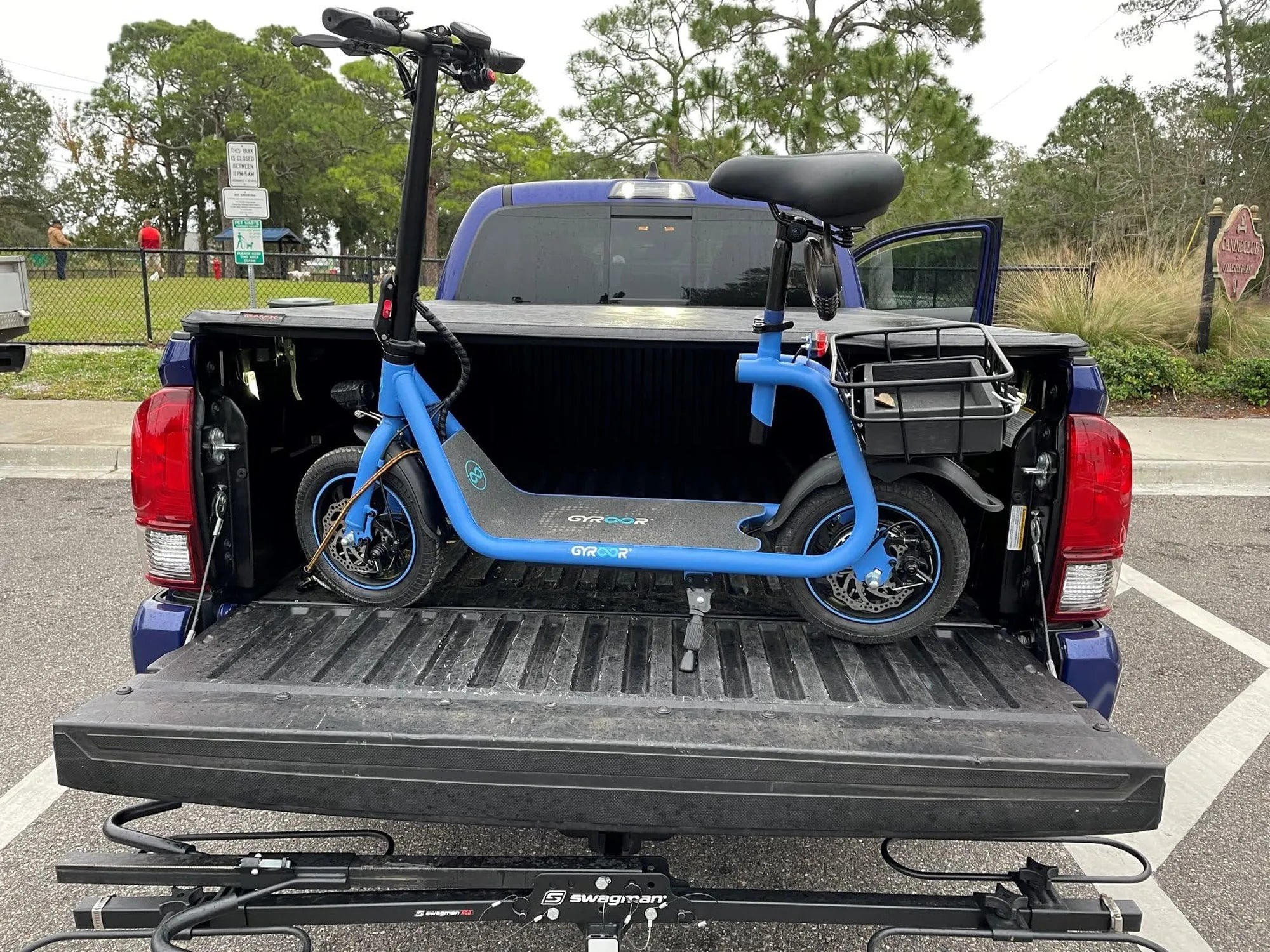
Navigating the legal landscape for electric scooters in Australia can feel like a maze. The simple answer to "Are Electric Scooters Legal in Australia?" is: it depends entirely on which state or territory you're in. There is no single national law, creating a patchwork of regulations that range from fully legal to strictly prohibited. This complete guide provides the clarity you need, offering a detailed, state-by-state breakdown of current laws, trials, and practical advice for riding safely and legally with a compliant personal scooter.
Understanding Australia's National Framework and Key Terms
Before diving into state specifics, it's crucial to grasp the common legal framework. All Australian states and territories base their road rules on the Australian Road Rules (ARR). Under this framework, an e-scooter is typically classified as a "motor vehicle" or a "wheeled recreational device," depending on its power and intended use. This classification is the root of the legal complexity.
Key terms every rider must understand include power output, measured in watts (W). Many states set a maximum wattage, often 200W or 250W, for a scooter to be considered a low-powered personal mobility device rather than a motor vehicle. Speed limits are equally critical, with different limits often applying to footpaths, shared paths, and bike lanes.
Another vital distinction is between "footpaths" and "road-related areas." Most states that permit private e-scooters allow them on footpaths and shared paths, but rarely on roads themselves unless specifically designated. Understanding these definitions is the first step to compliant riding.
State-by-State Legality Breakdown: Where Can You Ride?
Laws are hyper-local. What's legal in Brisbane may be illegal just across the border. This section provides a clear snapshot of the current status across all eight states and territories. Always verify with your local transport authority before riding.
Australian Capital Territory (ACT)
The ACT has permanently legalised the use of privately owned e-scooters. Riders must be 16 or older. Scooters are limited to 25 km/h on shared paths and 15 km/h on footpaths. The maximum continuous rated power output must not exceed 500 watts. Helmets are mandatory. Riding is permitted on footpaths, shared paths, and local streets with a speed limit of 50 km/h or less.
New South Wales (NSW)
NSW maintains the strictest laws among mainland states. Privately owned e-scooters are illegal to use on public roads, footpaths, and shared paths. Their use is confined strictly to private property. However, the government is running a series of shared e-scooter trials in selected Local Government Areas (LGAs). Only these approved rental scooters can be used within the designated trial zones under specific trial rules.
Northern Territory (NT)
The Northern Territory allows e-scooters with a power output not exceeding 200 watts. They can be ridden on footpaths, shared paths, and bicycle paths. Riding on the road is generally prohibited unless crossing. A helmet is required, and the rider must be at least 16 years old. The speed limit is 15 km/h on footpaths and 25 km/h on shared paths.
Queensland (QLD)
Queensland is one of the most permissive states. E-scooters with a maximum power of 500W are legal. They can be ridden on footpaths (where the speed limit is 12 km/h), shared paths, and bicycle paths (25 km/h). On local roads with a speed limit of 50 km/h or less, they are also permitted, but riders should keep left. Helmets are mandatory for all ages.
South Australia (SA)
South Australia has legalised e-scooters under a trial framework that has been made permanent. Privately owned e-scooters must have a maximum power output of 500W and a maximum speed of 25 km/h. They are allowed on footpaths (at walking speed when near pedestrians), shared paths, and bicycle lanes. They are not permitted on roads. Riders must be 16 or over and wear a helmet.
Tasmania (TAS)
Tasmania permits e-scooters with a motor not exceeding 200 watts. They are allowed on footpaths and shared paths but not on roads. The speed limit is 15 km/h. Riders under 16 must be supervised by an adult. Helmets are compulsory for all riders.
Victoria (VIC)
Victoria has legalised low-powered e-scooters state-wide. The rules differ for private and rental scooters. For privately owned e-scooters, the motor must not exceed 200 watts. They can be ridden on footpaths and shared paths at a maximum speed of 20 km/h, but are not allowed on roads or bicycle lanes. Helmets are mandatory for all riders.
Western Australia (WA)
Western Australia allows e-scooters with a maximum power of 200 watts. They can be used on footpaths, shared paths, and local roads with a speed limit of 50 km/h or less, provided there is no adjacent path. The speed limit is 10 km/h on footpaths and 25 km/h elsewhere. Riders must be 16 or older, and helmets are compulsory.
New South Wales & Victoria: A Deep Dive into Major Hubs
Given their population size, the regulations in NSW and Victoria are of particular interest to many Australians and warrant a closer look.
In New South Wales, the ban on private scooters is firm outside of trial areas. The government's trial approach focuses on regulated, geo-fenced rental schemes in specific LGAs like the City of Sydney, Parramatta, and others. These trials impose strict rules: helmets are mandatory, riding is prohibited on footpaths in CBD areas, and speed limits (often 20 km/h) are enforced via app technology. This creates a stark contrast where a rental scooter is legal in one suburb, but a privately owned, identical model is illegal everywhere on public land.
Victoria presents a different model with its state-wide legalisation. However, the 200W power limit for private scooters is a significant restriction, effectively ruling out many higher-performance models designed for hills or longer commutes. It's essential for buyers in Victoria to check the motor's continuous rated power, not just peak power. Furthermore, the prohibition on roads and bike lanes means riders are largely confined to paths, requiring extra caution around pedestrians.
Safety, Compliance, and Responsible Riding
Legal riding is intrinsically linked to safe riding. Compliance isn't just about avoiding fines; it's about protecting yourself and others. The most fundamental rule across all permitting states is the mandatory use of an approved bicycle helmet. This is non-negotiable and the single most effective safety measure.
Beyond the helmet, responsible riding involves situational awareness. On shared paths, you must always give way to pedestrians. Using a bell or polite voice to alert others before overtaking is a best practice. Riding at a safe speed for the environment is crucial—slowing down to walking pace near pedestrians, even if the legal limit is higher.
Your scooter's maintenance is a key part of compliance. Regularly check tire pressure, brake functionality, and ensure all lights are working if riding in low-light conditions. Many states require a front white light and a rear red light if riding at night. Reflective clothing or accessories further enhance your visibility.
Finally, respect the rules of the path. Don't ride under the influence of alcohol or drugs. Keep your scooter's modifications within legal limits—installing a more powerful motor instantly makes your scooter illegal and uninsurable for on-road use. Responsible ownership ensures the continued positive perception of e-scooters as a legitimate form of urban transport.
Choosing the Right E-Scooter for Australian Regulations
Selecting a scooter that complies with your state's laws is the first and most important purchasing decision. For states like Victoria, Tasmania, NT, and WA, the 200W limit is a primary filter. For QLD, ACT, and SA, you can consider models up to 500W, offering more power for hills.
Beyond power, consider build quality and safety features from a reputable brand. Gyroor electric scooters are engineered with compliance and safety in mind. A critical feature is the UL-certified battery pack, which undergoes rigorous testing for stability and longevity over 500+ charge cycles, addressing a major safety concern. The IPX5 water-resistant rating on many models provides peace of mind against sudden rain, a practical necessity for commuters.
Look for models with reliable braking systems (disc brakes or electronic regeneration), good suspension for comfort on varied paths, and adequate range for your needs. A 1-year comprehensive warranty, like that offered by Gyroor, is a sign of manufacturer confidence and protects your investment.
| State | Max Power (W) | Key Speed Limits | Recommended Gyroor Model Type |
|---|---|---|---|
| VIC, TAS, WA, NT | 200W | 15-25 km/h (paths) | Compact, UL-certified commuter models |
| QLD, ACT, SA | 500W | 25 km/h (paths), 12 km/h (footpaths in QLD) | Mid-range commuter with enhanced hill-climbing ability |
| NSW (Private) | N/A (Illegal on public land) | N/A | For private property use only |
Frequently Asked Questions (FAQs)
Do I need a license, registration, or insurance to ride an e-scooter?
No. In all Australian states where private e-scooters are legal, you do not need a driver's license, vehicle registration, or compulsory third-party (CTP) insurance. However, it is highly recommended to check if your personal contents or liability insurance policy provides any coverage for e-scooter-related incidents.
Can I ride my e-scooter on the road?
Generally, no. Most states explicitly prohibit riding on roads, with limited exceptions. In Queensland and the ACT, you may ride on local roads with a speed limit of 50 km/h or less. In WA, it's permitted if there is no adjacent path. In all cases, you must never ride on roads with a dividing line or median strip. Always prioritise paths where available.
What are the penalties for illegal riding?
Penalties vary by state but can be severe. In NSW, riding an unregistered motor vehicle (which a non-compliant scooter may be classified as) on public land can result in fines of over $2,000 and demerit points on your driver's license. In other states, fines for riding without a helmet, on prohibited paths, or with an overpowered scooter typically range from $100 to $1,000.
Are the rules different for rental e-scooters?
Yes, often significantly. Rental schemes operated by companies like Neuron and Lime are frequently governed under specific trial permits granted by local councils. These permits may allow them in areas where private scooters are banned (like NSW trials) or have different geofenced speed and parking rules. Always follow the in-app instructions for the rental service you are using.
How can I be sure my scooter's power is legal?
The legal limit refers to the motor's continuous rated power, not its peak power. This should be clearly stated in the manufacturer's specifications. Reputable brands like Gyroor provide accurate technical data. If only peak power (e.g., "500W peak") is advertised for a model marketed in a 200W state, it is likely non-compliant for continuous use.
The Final Verdict: Ride Informed, Ride Safe
The legality of electric scooters in Australia is defined by a complex, state-based regulatory system that is still evolving. The key to confident and legal riding is to know your local rules intimately—check your state's transport department website for the latest updates before you buy or ride. Choosing a scooter from a trusted brand that prioritises certified safety features, like UL-certified batteries, is an investment in both compliance and peace of mind. As urban mobility advances, informed and responsible riders help shape a positive future for e-scooters nationwide. Ready to find a scooter that matches your local laws and lifestyle? Browse the full Gyroor collection at gyroorboard.com to explore UL-certified, reliable models designed for the realities of Australian commuting.
Electric Scooters 4 to 6 Hours Charging Time: What You Need to Know
Top Electric Scooters Buying Guide 2025: Everything You Need to Know