



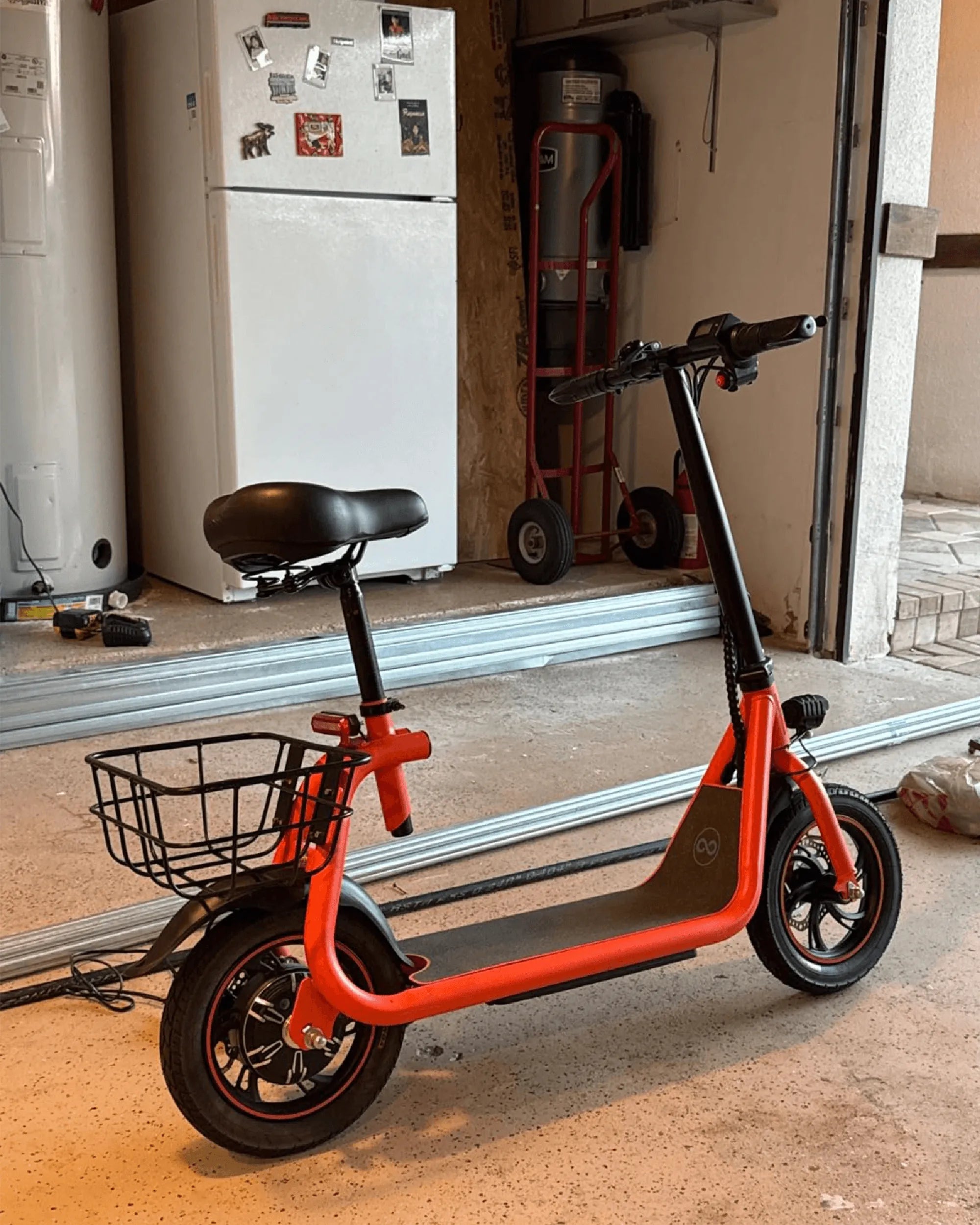
Navigating the legal landscape for electric scooters in the UK is confusing. This guide cuts through the noise to deliver a clear, factual, and up-to-date explanation of the rules as they stand in 2024. You will learn the critical legal distinction between private and rental e-scooters, understand the specific requirements of government trials, and grasp the potential consequences of illegal riding. We also explore the technical specifications likely needed for future legalization and compare e-scooters to their fully legal counterparts, e-bikes. As a brand trusted by over 100,000 riders, Gyroor is committed to rider safety and legal awareness, building products that anticipate future regulations.
The Current Legal Status: Private vs. Rental E-Scooters
The UK's legal framework for electric scooters creates two entirely separate categories with different rules. Understanding this split is the first step to riding legally and safely.
Private electric scooters, which you purchase from a retailer, are currently classified as "Powered Transporters" by the UK government. Under existing laws—primarily the Highway Act 1835 and the Road Traffic Act 1988—they are considered motor vehicles. However, they cannot meet the requirements for motor vehicles, such as type approval, registration, and mandatory insurance. Consequently, it is illegal to ride a private e-scooter on public roads, cycle lanes, pavements, or in any public space. Their use is confined strictly to private land with the landowner's permission.
In stark contrast, government-approved rental e-scooters operate under specific, time-limited trial schemes. These trials, which began in 2020 and have been extended multiple times, are legal in designated towns and cities across the UK. Rental scooters from approved operators like Lime, Tier, and Voi are the only e-scooters permitted for use on public roads and cycle lanes. This legal distinction is absolute and forms the cornerstone of all UK e-scooter regulation.
Why Aren't Private E-Scooters Fully Legal Yet?
The prohibition of private e-scooters on public roads stems from several unresolved regulatory hurdles tied to their classification as motor vehicles.
First, there is no mandatory type-approval process for e-scooters. This means there are no universal, legally enforced standards for critical safety components like brakes, lighting, and structural integrity. Second, obtaining specific insurance for a private e-scooter is extremely difficult because the vehicle itself is not a recognized, approvable risk category for most insurers on public highways.
Additional barriers include the lack of standardized signaling capability (like indicators) and concerns about rider behavior, such as pavement riding and speeding. The government has conducted consultations on creating a new vehicle category for "low-speed, zero-emission vehicles," which could include e-scooters, but this requires primary legislation. Until a new regulatory framework is passed by Parliament, private e-scooters remain in legal limbo on public land.
Riding a Rental E-Scooter: Rules of the Trial Schemes
If you are using a trial scheme rental scooter, you must adhere to a strict set of rules. Violating these can result in fines and penalty points on your driving license.
You must have a full or provisional driving license for categories AM, A, or B (moped, motorcycle, or car). You must be at least 18 years old. Rental e-scooters are only to be used on public roads (except motorways) and in cycle lanes. It is illegal to ride them on pavements. The scooter is for a single rider only; carrying a passenger is prohibited.
You must not use a mobile phone while riding. While not a legal requirement, wearing a helmet is strongly recommended. Each rental operator has a geofencing system that creates slow-speed zones and no-ride zones (e.g., on pavements), and riders must end their trip in designated parking areas to avoid clutter. These rules are enforced by the operators and local authorities.
The Risks of Illegal Riding: Fines, Penalties, and Seizure
Riding a private e-scooter on public land carries significant and enforceable legal consequences. Police forces across the UK are increasingly issuing penalties.
The most common offense is driving without insurance. This can result in a £300 fixed penalty notice and 6 penalty points endorsed on your driving license. If you do not have a valid license, you could face additional fines and prosecution. Riding on the pavement is an offense under section 72 of the Highway Act 1835, which can lead to a fixed penalty notice.
Perhaps the most impactful penalty is seizure. Under police powers, a privately owned e-scooter used illegally on a public road can be impounded. To reclaim it, the owner must produce proof of ownership and insurance and pay a recovery fee and daily storage charges. If not claimed, the scooter can be crushed. These measures underscore that the law on private e-scooter use is actively enforced.
What Makes an E-Scooter "Road Legal"? Future-Proofing Your Ride
While private e-scooters are not yet legal for road use, future UK type-approval will mandate specific safety and construction features. Choosing a scooter built to these anticipated standards is a responsible way to future-proof your investment.
Battery Safety: A UL-certified battery pack is non-negotiable. This independent certification, which Gyroor models carry, ensures the battery has passed rigorous tests for electrical, mechanical, and fire safety, reducing the risk of failure. Build Quality & Weather Resistance: An IPX5 water-resistance rating is crucial for UK weather, protecting the scooter's electronics from rain and spray. A robust frame design is also essential.
Lighting and Audible Warning: Integrated, permanently fitted lights are a must: a white front light and a red rear light, both visible from a reasonable distance. A working brake light is also expected. An audible warning device, like a bell, will likely be required. Braking Systems: Effective braking on both wheels, typically via disc or electronic regenerative brakes, is critical for safe stopping in all conditions.
E-Scooter vs. E-Bike: Understanding the Key Legal Difference
Many riders wonder why e-bikes are freely legal on roads and cycle paths while e-scooters are not. The answer lies in the specific legal definition of an Electrically Assisted Pedal Cycle (EAPC).
| Feature | Legal E-Bike (EAPC) | Private E-Scooter (Current Status) |
|---|---|---|
| Legal Basis | Electrically Assisted Pedal Cycles (EAPC) Regulations 1983 (amended) | Classified as a "Powered Transporter" / Motor Vehicle |
| Primary Propulsion | Must have functional pedals; motor provides assist only | Throttle-controlled; no pedals required |
| Maximum Assisted Speed | 15.5 mph (25 km/h) | N/A (Illegal on public roads) |
| Maximum Motor Power | 250W continuous rated power | No legal limit for road use defined |
| Road Legality | Fully legal on roads/cycle lanes if criteria met; treated as bicycle | Illegal on all public roads, paths, and pavements |
| Requirements | No license, tax, or insurance required; riders aged 14+ | Would require type approval, insurance, license if legalized |
E-bikes benefit from a clear, long-standing regulatory framework that integrates them into the existing highway code as bicycles. E-scooters, as a new form factor, require the creation of a new regulatory category, which is a complex legislative process.
FAQ: Your Electric Scooter Legal Questions Answered
Can I ride my private e-scooter if I have insurance?
No. While a handful of specialist insurers may offer third-party liability policies for private e-scooters, this does not make the vehicle itself legal. The fundamental issue is the lack of type approval and the vehicle's classification. Insurance is one requirement; the scooter also needs to be registered and approved for road use, which is currently impossible.
Are there any plans to legalize private e-scooters?
The government has expressed intent to legalize private e-scooters through the Transport Act 1985 (amended by the 2023 Transport Act), which creates a mechanism for regulating new vehicle types. However, no definitive timeline or detailed regulations have been published. It remains under review, pending safety data from the rental trials.
What about electric skateboards, monowheels, and hoverboards?
All these personal light electric vehicles (PLEVs) fall under the same "Powered Transporter" classification as private e-scooters. The same laws apply: they are illegal to use on public roads and pavements. Their use is restricted to private land.
Where can I find trial area locations?
The official and most accurate source is the GOV.UK website. Search for "e-scooter trials: guidance for users" to find a list of participating local authorities and maps of their trial areas. These locations are subject to change as trials are extended or concluded.
Could I be prosecuted for drunk driving on an e-scooter?
Yes. Since a private e-scooter used on a public road is classified as a motor vehicle, the same drink-drive laws apply. You could be charged with driving while over the prescribed alcohol limit, which carries severe penalties including a driving ban, a large fine, and potentially a prison sentence.
Conclusion: Riding Responsibly and Looking Ahead
The definitive answer to "Are electric scooters legal in the UK yet?" is nuanced but clear. For the vast majority of people, the only legal way to ride an e-scooter on public roads is through an official rental scheme in a trial area. Private e-scooter ownership is for use on private land only. Ignoring this distinction risks substantial fines, penalty points, and seizure of your vehicle. As regulations evolve, choosing a scooter from a reputable brand like Gyroor, which prioritizes UL-certified batteries, IPX5 water resistance, and robust construction, ensures you are prepared for future standards. For now, stay informed through official government channels, ride rental scooters responsibly within trial rules, and explore fully legal, pedal-assisted alternatives like e-bikes for your daily commute. Discover Gyroor's range of quality, safety-focused electric scooters and e-bikes designed for the future of urban mobility. Browse the full Gyroor collection at gyroorboard.com.
Top Electric Scooters for Commuting 2025: The Future of Urban Travel
Affordable Electric Scooters Under $500: The Ultimate Budget-Friendly Commuter Guide